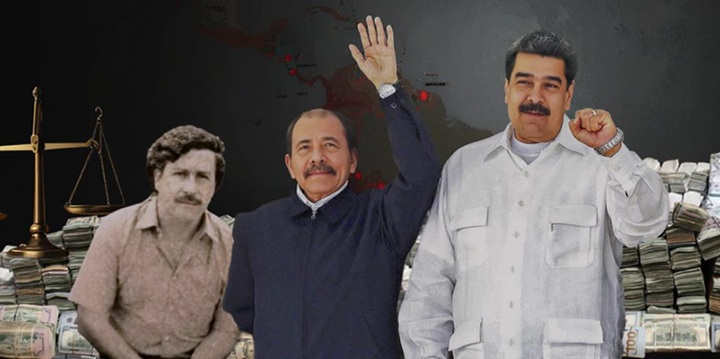
Two factors are becoming clear now that the United States has announced, through a report, that it will withdraw its Department of Justice anti-drug agency, called the Drug Enforcement Administration (DEA), from Nicaragua.
«The United States will conclude DEA operations in Nicaragua in 2025, in part due to the lack of cooperation from Nicaraguan agencies,» states the U.S. Department of State’s International Narcotics Control Report. It adds, «Inadequate security resources for both maritime and land operations severely hinder the country’s ability to combat drug trafficking.»
The first is political. “Although (Daniel) Ortega has talked about a wall against drugs in Nicaragua, that’s just propaganda. The truth is that they (the Ortega regime and his wife Rosario Murillo) never felt they were going to be allies of the United States, but rather aligned with Russia and China. They have always seen the United States as an enemy, and they also had to ally themselves with Venezuela, which is involved in drugs,” said a political analyst who prefers to remain anonymous to avoid retaliation from the Ortega-Murillos.
Read also: Preso sin delito: la historia del médico Yerri Estrada
The second is a combination of urgent financial resources with a tradition of corruption and links to drug trafficking groups.
The first Sandinista regime
Since the 1980s, when Ortega led the first Sandinista regime, he maintained ties with drug trafficking groups. In 1984, in exchange for money, he gave refuge in Nicaragua to Colombian drug lord Pablo Escobar and other leaders of the Medellín Cartel, when the latter were fleeing Colombian justice because Escobar had ordered the assassination of Justice Minister Rodrigo Lara Bonilla.
Then, in the 1990s, after he had lost power, Ortega traveled to Colombia to meet with leaders of the Revolutionary Armed Forces of Colombia (FARC), a guerrilla group that, to finance itself, turned to drug trafficking.
More recently, between 2006 and 2008, the then-US ambassador to Managua, Paul Trivelli, indicated in reports sent to Washington that during the 2006 election campaign, Ortega obtained money from international drug trafficking, promising that once he came to power, he would release drug traffickers captured by the police and the army.
In another of the cables Trivelli sent to Washington, he described Ortega as unscrupulous, capable of anything to get money.
Hand in hand with the DEA
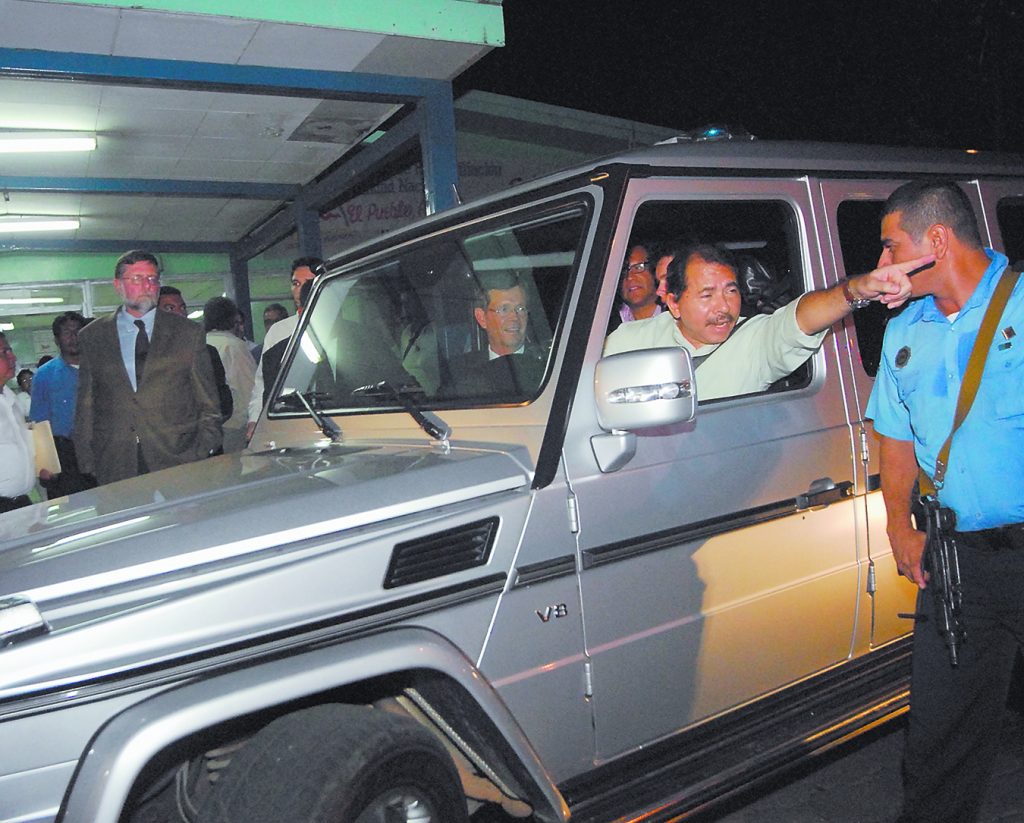
Although Ortega tried to pretend that his government was working hand in hand with the DEA to combat drug trafficking since his return to power in 2007, things changed in 2018 following the protests in April of that year.
In a report titled «International Narcotics Control Strategy,» released by the State Department in March of this year, U.S. authorities explain that the sanctions imposed on the Ortega-Murillos, due to the crimes they have been committing against the population since then, led the dictators to cooperate less and less with the DEA, and now Nicaragua’s ability to confront drug trafficking is greatly weakened.
Ortega, the police, and the army insist that they continue to serve as a containment wall; however, in the absence of reliable statistics, the United States doubts this argument.
A Nicaraguan security expert, speaking on condition of anonymity, told the Spanish newspaper El País last June that the containment wall has been a «myth» and that it can only be possible if Nicaraguan authorities work hand in hand with the United States.
This containment wall, as the dictatorship speaks of, has been questioned on numerous occasions, such as in January 2024, when more than a ton of cocaine from the port of Corinto, Nicaragua, was seized in Russia at the Grand Port of St. Petersburg. In May of that same year, 116 kilos of cocaine that had also been shipped from the port of Corinto were seized in Italy.
Reluctant from the Start
Daniel Ortega has been reluctant to collaborate with the DEA since returning to power in 2007, when he said the United States was only giving Nicaragua «crumbs» to fight drug trafficking and asserted that Washington should invest more in supporting the country. «They really should invest here, because we’re doing the work for them (the United States) here,» Ortega said at a police event in February 2007, a month after returning to power.
Furthermore, from the outset, Ortega was opposed to the United States establishing bases in Central America to combat drug trafficking.
“Our position has been the following: that the United States should strengthen the corresponding institutions in the Central American countries. We must strengthen the Honduran police in Honduras, the forces specialized in the fight against drug trafficking. We must give them more resources, more means, more technology, but not fill them with US bases. That is not the way. Because what they are doing there is occupying the country and completely reducing, to a minimum, the capabilities and experience that Honduras has had there in terms of its fight against drug trafficking and organized crime,” Ortega told Russian Today (RT), for example, in 2013.
Since 2008, Ortega expressed his discontent with the DEA, saying that «high-ranking police chiefs receive payments from the DEA,» which allegedly led many of them to disobey the first commissioner, Aminta Granera.
Read also: Sheila Santana, una artista costarricense orgullosa de sus raíces nicaragüenses
Then, in March 2010, Ortega dismantled a special group of plainclothes police officers dedicated to combating drug and arms trafficking and working in coordination with the DEA, claiming that this elite police group, called the Anti-Corruption Unit, facilitated «political intervention» by the United States.
It was a team of 35 police officers, assembled during Enrique Bolaños’ administration, trained by the DEA to combat drug trafficking and corruption within the police force itself.
Problems with Seizures
According to a 2011 United Nations report, «Cocaine from South America to the United States,» Nicaragua seizes «impressive quantities of cocaine,» most of which occurs along the coasts in underdeveloped areas, such as the Caribbean.
However, the United States complains that the dictatorship of Daniel Ortega and Rosario Murillo is not transparent about both the drugs seized and the money seized.
The police reported, for example, that 1.29 tons of cocaine were seized in the first nine months of 2024 and that cash seizures increased from $1.5 million in 2023 to $2.1 million in 2024, although no arrests were made during that period.
In 2020, the German media outlet DW reported that the police seized more than $10 million from organized crime that year, but reported less seized drugs, something that experts viewed as suspicious.
Meanwhile, Insight Crime, an organization dedicated to studying organized crime in Latin America and the Caribbean, in a 2020 article written by journalist Parker Asmann, noted: “The Nicaraguan National Police has recorded the seizure of enormous amounts of drug money, while cocaine seizures have decreased compared to previous years. This raises the question of how this organization finds the money and where it is sent after recovery.”
Little by little, the quantities of drugs seized in Nicaragua have been decreasing, DW reports, citing statistics from the Nicaraguan police.
Between 2007 and 2009, authorities seized 36,000 kilos of cocaine. Ten years later, between 2017 and 2019, the amount dropped to 16,000 kilos.
However, the Ortega-Murillos’ narrative, through Army Chief Julio César Avilés, is that the country «prevents the trafficking of approximately 700 tons (700,000 kilos) of drugs annually as part of the Containment Wall strategy.»
Regarding money, according to Insight Crime, between 2017 and the end of June 2020, the police seized $38 million from drug traffickers.
However, according to a security expert who spoke to DW, «what’s most surprising is not knowing where that money goes.»
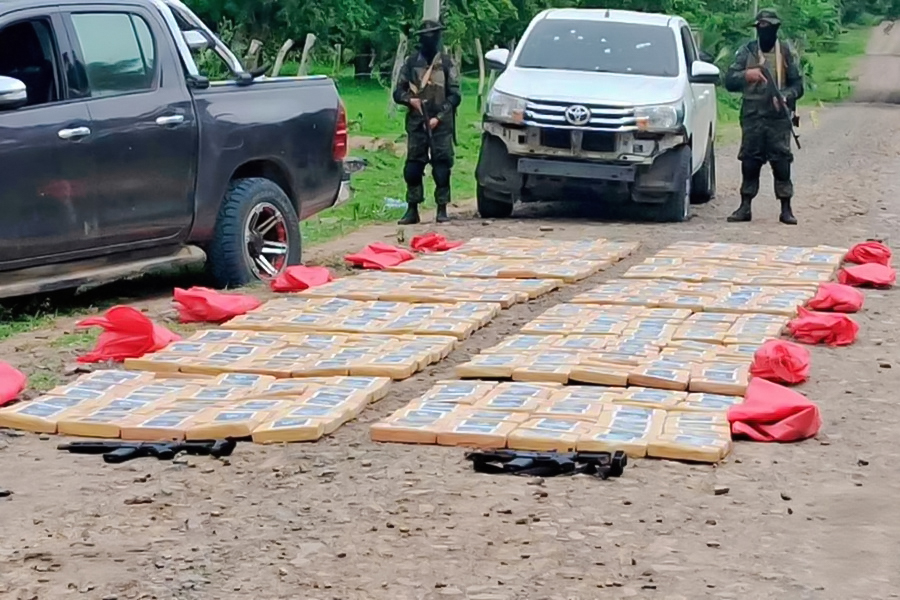
Some researchers suggest that one theory behind the decrease in drug seizures in recent years in Nicaragua is that the police and army have focused more on pursuing opponents of the Ortega-Murillos than on organized crime. In 2014, for example, Envío magazine indicated that security and intelligence agencies were focused on pursuing armed groups that emerged in those years rather than on drug seizures.
Another reason for the decrease in seizures could be that drug trafficking is now using more air and sea routes, and Nicaragua lacks sufficient air or naval resources.
The Political Factor
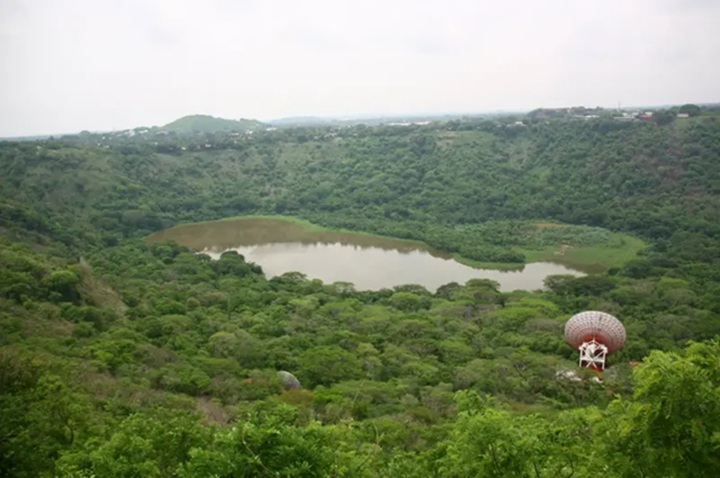
In 2017, Daniel Ortega and Russian dictator Vladimir Putin agreed to install a Russian satellite station in Nicaragua to «combat drug trafficking,» something that greatly concerned the United States, a rival of the Russians in every respect.
In this regard, experts consulted by the newspaper El País indicate that Central America is not relevant to either Russia or the cartels that operate through its networks, so Russian cooperation with Nicaragua to combat drug trafficking «cannot have a real or positive effect.»
However, the situation is due to the fact that, for political and historical reasons, Ortega consistently wages a war of words against the United States and has aligned himself with countries aligned with Russia, such as Cuba, Venezuela, Iran, China, and even North Korea. This situation has spread to all areas of the country, including security.
Read also: La batalla de una familia nicaragüense por justicia en España
Ortega’s relationship with Venezuela is well known, a country recently accused by the United States of drug trafficking. He claims that the country’s top leaders head the so-called Cartel of the Suns, especially President Nicolás Maduro and the president of the National Assembly, Diosdado Cabello.
Last August, the United States even offered a $50 million reward for information leading to Maduro’s arrest, making him the prime target of the Narcotics Rewards Program (NRP).
Ortega’s relationships are almost always with figures internationally accused of crimes or drug trafficking. One of his closest friends in the region was former President Juan Orlando Hernández, currently convicted of drug trafficking in the United States, for example.
Consequences of the DEA’s Withdrawal
As things stand, and now with the DEA out of the Nicaraguan spotlight, the question looms as to whether the Ortega-Murillos will lead Nicaragua to become a narco-state, as Venezuela is already considered.