IMF staff recommended that Daniel Ortega’s regime accelerate the diversification of export markets to cushion the impact of tariffs and sanctions imposed by the administration of Donald Trump. At the same time, they warned that Washington’s migration measures will reduce remittance inflows this year.
Although the outlook with the United States is unfavorable for the economy that sustains the dictatorship of Daniel Ortega and Rosario Murillo, the reality is that Trump’s measures—at least those announced so far—do not point to a deep economic weakening of the regime.
On the contrary, all indications suggest that the government had already prepared for a moderately adverse scenario with the United States and Trump, strengthening macroeconomic indicators and implementing more restrictive fiscal measures.
So far, the regime’s economic operator and president of the Central Bank, Ovidio Reyes, has avoided discussing the effects that Trump’s imposition of two tariffs on Nicaragua’s trade with the U.S. market will have, as well as the consequences of U.S. migration policy on Nicaraguan remittances.
Read also: U.S. says Nicaragua Serves as a Base for Russian Operations in the Western Hemisphere
However, IMF staff presented scenarios to the regime in which the effects would be limited as the Nicaraguan economy adapts to the new reality, assuming Trump does not adopt harsher measures—especially those related to the Section 301 investigation by the Office of the United States Trade Representative (USTR).
Remittances Will Withstand Trump’s Offensive
The United States is the source of more than 70 percent of remittances and the main destination for Nicaragua’s exports.
On migration, the IMF told the government that if the United States were to deport all beneficiaries of parole programs and Temporary Protected Status (TPS) in 2026, remittance inflows would fall by 5.97 percent compared with the projected USD 6.315 billion in 2025.
According to figures included in the IMF’s Article IV report, the regime expects remittance inflows this year to reach USD 5.938 billion, a decline of USD 377 million compared with last year. Nevertheless, projections through 2030 indicate that remittances will stabilize and return to a growth path in subsequent years.
By the end of the five-year period (2025–2030), the economy would be receiving USD 6.911 billion in remittances (in 2030), despite IMF expectations that by then around 100,000 Nicaraguans will have been deported from the United States. This figure includes 70,000 beneficiaries of parole programs and 2,200 under TPS or temporary protection, which was eliminated last year.
Growth of Remittances
Even so, remittances are expected to resume growth starting next year, reaching USD 6.164 billion. In 2028 they would rise to USD 6.404 billion, and in 2029 to USD 6.652 billion, according to official figures discussed between IMF staff and the government.
“Remittances as a share of GDP remain elevated over the medium term, converging to about 25 percent of GDP by 2030,” the IMF said.
After months of keeping the figure undisclosed, the government revealed to the IMF that last year it had projected remittance inflows to grow by USD 1.072 billion compared with 2024, despite Trump’s anti-immigration measures during his first year in office. In 2024, remittances totaled USD 5.243 billion.
Read also: How the U.S. Could Target Ortega-Murillo Family Businesses Through Venezuela’s Political Shift
“Given the termination of the CHNV parole program and TPS, as well as the expected increase in deportations of all undocumented migrants, remittances are projected to decline by 3.5 percent of GDP in 2026. Thereafter, remittances are expected to decline as a share of GDP but at a slower pace, given that the relatively small share of Nicaraguans at risk implies a moderate number of additional deportations after 2026,” according to IMF projections.
In other words, as a share of GDP, remittances will gradually decline, even though in nominal terms they will continue to grow—supporting domestic consumption and helping to keep the economy expanding.
IMF: Speed Up Market Diversification
In response to the scenarios presented by IMF staff, regime officials said that despite the number of Nicaraguans expected to return to the country, they see “no need for additional measures for returning migrants beyond existing labor policies, as these policies do not distinguish between migrants and other job seekers.”
On the trade front, no deficits are expected either. On the contrary, together with remittances, exports will continue to be the main lifeline of the Ortega dictatorship over the next five years—unless the regime fails in its stated effort to diversify markets as quickly as possible.
“The authorities agreed with staff that to sustain higher medium-term growth, it is necessary to boost human and physical capital, diversify exports, and continue promoting trade facilitation to attract investment. They agreed that expanding exports to new markets is essential to strengthen growth and resilience. They noted that while they are working in these areas, diversification is a gradual process that takes time to materialize,” the report states.
In this context, the IMF notes that Nicaragua’s exports are expected to reach USD 6.738 billion, more than USD 600 million above the USD 6.129 billion projected for last year.

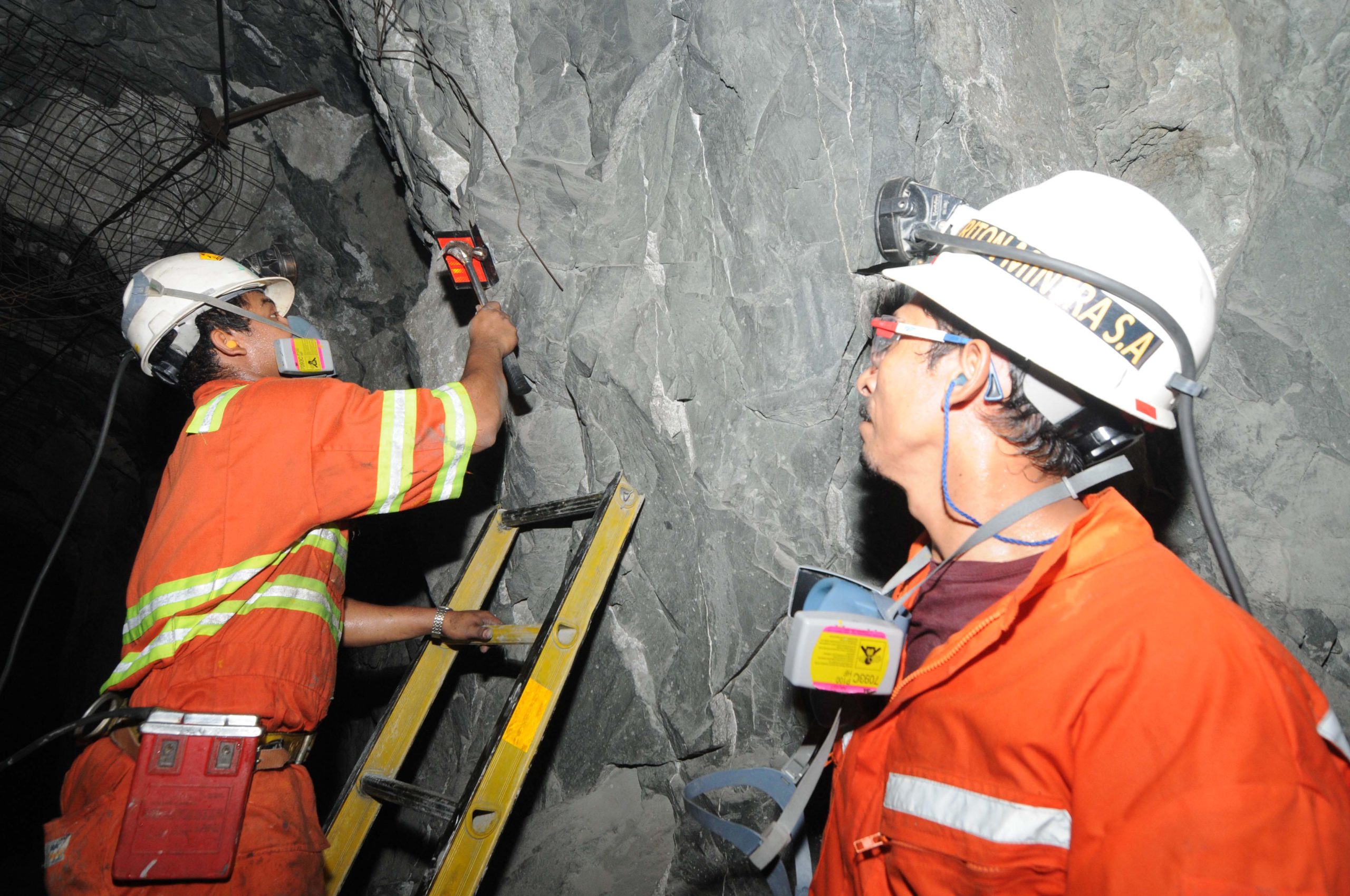
than 70 percent of remittances and the main destination for Nicaragua’s exports. Chase Castor/Getty Images/AFP
Impact of Tariffs on Exports
Despite the gradual imposition of an additional tariff on products outside the DR-CAFTA framework—which starts at zero this year and increases over the next two years—Nicaragua’s export revenues are expected to reach USD 7.685 billion by 2030.
Exports are projected at USD 6.915 billion in 2027, USD 7.106 billion in 2028, and USD 7.364 billion in 2029.
“Exporters are adapting to the new trade environment and the 18 percent tariff on non-agricultural products other than gold, in part by compressing profit margins, supported by Nicaragua’s relatively low labor and electricity costs,” the IMF said.
In addition to low labor costs, the Fund expects the country to continue benefiting from favorable prices for its two main export products—gold and beef—which will continue to offset any impact from U.S. trade and sanctions policy.
You may be interested: Remittances to Nicaragua Hit Record $6.2 Billion as Migrants in the U.S. face Growing Pressure
Commodities´ High Prices Offset the Impact of Tariffs
“High international prices for gold, beef, and coffee have offset the impact of tariffs,” the IMF noted, adding that last year the impact of U.S. tariff increases had not yet been observed in exports or growth, as they occurred in a context of very favorable terms of trade and strong demand.
The IMF also pointed out that Nicaragua is benefiting from the use of quotas agreed under DR-CAFTA. “In 2025, around 70 percent of total exports to the United States originated under CAFTA, with even higher utilization rates for key export products—for example, nearly 100 percent for beef and around 80 percent for textiles and apparel.”
“These high utilization rates limit exposure to higher effective tariffs and are expected to generate strong incentives for firms to benefit from lower effective tariffs by reorienting supply chains toward CAFTA-compliant production, including greater use of regional inputs, and by strengthening compliance with rules of origin,” the report said.
Other Factors Mitigating Tariffs
The additional tariffs imposed by Trump on Nicaragua beyond the 18 percent apply to products that do not meet the rules of origin established in the trade agreement. The tariff was set at zero percent on January 1, 2026, and will rise to 10 percent on January 1, 2027, and to 15 percent on January 1, 2028.
“Looking ahead, there are other mitigating factors that would moderate the impact of higher tariffs. Since mid-November 2025, the United States has announced universal tariff reductions for a wide range of agricultural products, including coffee and beef, reducing the effective tariff burden for Nicaragua to around 14 percent. Gold and some agricultural product prices are expected to remain high due to strong global demand and limited supply,” the IMF said.
It also cited as a positive factor for Nicaragua that “beef continues to benefit from temporarily lower production among major producers, the United States and Brazil. These products represent a significant share of Nicaragua’s exports. In addition to relatively low labor and electricity costs, Nicaragua also benefits from solid transport infrastructure and access to both the Pacific and Caribbean coasts, which supports its competitiveness.”