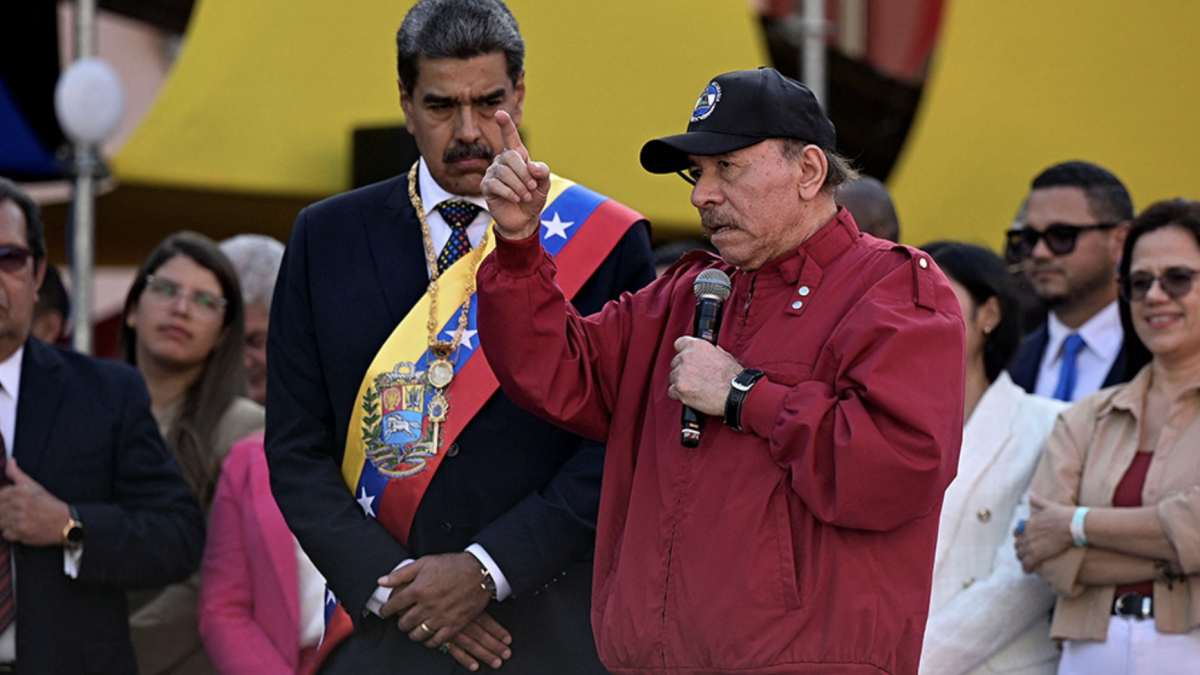
Shifts in Venezuela’s political landscape following the fall of dictator Nicolás Maduro on January 3, in a U.S. military operation, and President Donald Trump’s growing influence in the region, have revived questions about debts the Ortega-Murillo family still allegedly owes to the Venezuelan people.
Analysts agree that if the United States were to push for repayment—through diplomatic pressure or additional sanctions—Nicaragua could be targeted over the diversion of funds managed by Albanisa, a company criticized for operating outside Nicaragua’s national budget law. According to independent investigations, these funds benefited private businesses linked to the Ortega-Murillo family and allies of the Ortega regime.
Economist Enrique Sáenz told LA PRENSA in a previous interview that the handling of these funds amounted to “the largest privatization in Nicaragua’s economic history, because Ortega and the companies under his control appropriated all of that cooperation.”
Criticism of the fund’s use stems from the lack of transparency surrounding their destination. Aside from a handful of companies uncovered through journalistic investigations—spanning the media industry, including the purchase of television channels, and fuel-related businesses—the details remain unknown. The ruling family also used the money to acquire properties, including a hotel in Managua.
It Can Start With Already-Sanctioned Companies
Nicaraguan political scientist Félix Maradiaga told LA PRENSA that the United States could strike hard at the Ortega-Murillo family’s corrupt business network through the trial of Nicolás Maduro in New York, which began in January 2026.
“This process exposes a vast scheme of corruption and money laundering. The dirty businesses of the Ortega-Murillo family—such as Albanisa, Bancorp, and Albacaruna—were built on billions of dollars in subsidized Venezuelan oil since 2007, diverted to enrich the regime. The U.S. already sanctioned these entities in 2019 for corruption, freezing assets and targeting several operators,” he said.
Read also: Remittances to Nicaragua Hit Record $6.2 Billion as Migrants in the U.S. face Growing Pressure
According to Maradiaga, testimony related to Petróleos de Venezuela (PDVSA) could reveal further links to the Ortega-Murillo regime. “We still don’t know the full scope, but the Chávez–Ortega ties are undeniable. In El Carmen, nervousness is growing,” he added, referring to the Managua neighborhood that houses the presidential compound.
In Venezuela, a partial reform of the Organic Hydrocarbons Law, approved in its first reading on January 22, 2026, could intensify pressure on Nicaragua in the context of historical debts derived from Chávez-era oil agreements.
Under the new framework, which prioritizes production-sharing contracts in which private operators assume risks and costs without generating debt for the Venezuelan state, the likelihood of debt forgiveness or opaque refinancing—such as that which benefited Albanisa in the past—is sharply reduced.
A Longstanding Debt
Venezuelan cooperation with Nicaragua has been under scrutiny for years. Juan Guaidó, recognized by the United States as Venezuela’s interim president in 2019, publicly demanded repayment of what the Venezuelan opposition described as “embezzled” funds under Hugo Chávez—demands that could include money sent to Managua.
Eliseo Núñez, political analyst and former Nicaraguan lawmaker, stressed in an interview with LA PRENSA that these funds were never a gift. “That money was provided under an agreement with Albanisa and is definitely collectible by Venezuela,” he said.
“By unofficial estimates, the amount is around $5 billion. A 2019 audit of Bancorp showed that Albanisa held about $2.5 billion in liquid and liquidatable assets from that operation,” which Venezuela could legally demand.
The Key Role of Albanisa
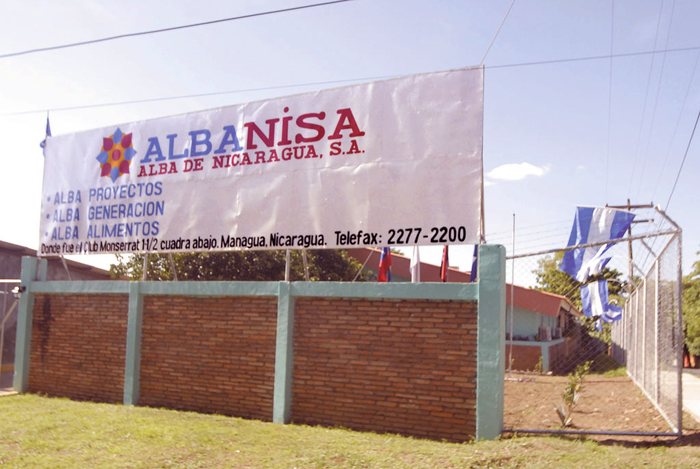
Under the governments of dictators Hugo Chávez (1999–2013) and Nicolás Maduro (2013–2026) in Venezuela, and Daniel Ortega (in power since 2007) in Nicaragua, massive oil revenues were channeled to Managua, primarily through mechanisms such as Albanisa—a joint venture between Venezuela’s state-owned PDVSA and Nicaragua’s Petronic.
This cooperation strengthened Ortega’s regime, enabling it to finance social assistance programs that boosted domestic popularity and international standing. But it was all marked by chronic lack of transparency.
Official data and independent investigations indicate that Nicaragua received more than $4.95 billion in Venezuelan funds since Ortega returned to power in 2007. These resources mainly took the form of so-called “petrodollar” loans, derived from the sale of Venezuelan crude during a period of high oil prices.
Through Albanisa, Ortega’s government was able to purchase crude on favorable terms and resell it at a substantial profit. Part of the oil was paid for in cash, while the remainder became long-term debt at low interest rates.
Read also: China Rewards Central American Allies With Major Projects While Nicaragua Gets Little
At its peak, these petrodollars provided a vital boost to Nicaragua’s economy, financing not only social programs but also trade initiatives, energy subsidies, and agricultural and forestry projects.
The boom, however, did not last. In 2018, cooperation collapsed by 73.4 percent compared to 2017, shrinking to just $27.2 million in PDVSA loans. The decline was largely attributed to Venezuela’s deep economic and political crisis under Maduro, who faced accusations of illegitimacy from more than 50 countries, including the United States.
Further Deterioration Expected
Ricardo Lizano, a retired journalist and former Costa Rican ambassador to Venezuela, told LA PRENSA that “relations between the Trump administration and the Nicaraguan government are going to deteriorate even further than they already have.”
Delcy Rodríguez, Maduro’s successor, has opened the Chavista regime to cooperation with Washington, accepting investment in the oil industry and the restoration of the U.S. diplomatic mission in Caracas.
“I think Nicaragua will be affected,” Lizano said. “It will be affected because the Venezuelan government, for whatever reason—by agreement or by distancing—will move closer, at least trying to better understand the U.S. government. That will imply that Venezuela, in some way, distances itself from governments that are hostile to the United States.”
“Even before the geopolitical situation that brought Venezuela closer to the United States, Venezuelan-Nicaraguan cooperation had already been declining. They may share ideological affinities, they may maintain political ties, but there are no longer any resources,” Lizano concluded.
Of interest: Former Close Legal Advisor to Nicaraguan Dictators says: «Ortega and Murillo Must Step Aside»