Nicaragua is among the countries in the region that shows the greatest loyalty to China. However, the reality is that its alliance came at a time when the Asian giant had already changed its strategy of buying loyalty through handouts. In December, both countries marked the fourth anniversary of their relationship, but Beijing’s generosity is still not visible in Managua.
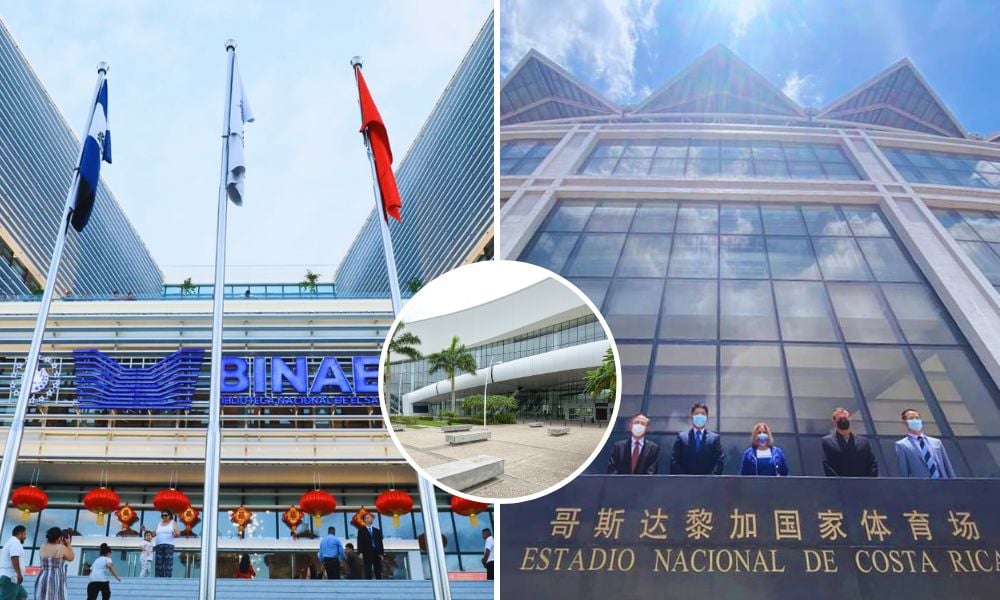
This contrasts sharply with Costa Rica, which celebrated the same milestone by inaugurating a US$100 million stadium, or El Salvador, which did so while building a US$50 million library that was inaugurated the following year.
The Ortega-Murillo dictatorship broke diplomatic ties with Taiwan on December 9, 2021, and immediately established relations with Beijing, although commercial ties had always remained in place. On December 9 of last year, that relationship turned four years old.
While neighboring countries received multimillion-dollar donations from China during their first four years of diplomatic relations, Nicaragua has received little more than multimillion-dollar promises. Even then, these have not taken the form of donations, but rather loans that—although approved—have largely not been disbursed. They exist only on paper.
China’s promises to Nicaragua
In fact, when the first agreements were signed in October 2023, the loan offer was broad. It included the Punta Huete International Airport, a railway, two hydroelectric power plants, and the revival of the Tumarín and Mijolka hydroelectric projects. It also encompassed the Coastal Highway, the construction of a deepwater port in Bluefields, and the continued replacement of public transportation buses with Chinese-made vehicles—now known to be purchased at market prices.
Read also: Nicaraguan Regime Transfers Gold Concessions to Unknown Chinese Companies to Evade U.S. Sanctions
The Punta Huete airport, which the dictatorship said would be the most modern in Central America, was the large-scale project that seemed closest to becoming reality. The National Assembly approved a loan of more than US$440 million, but the project ultimately failed to materialize. The regime was forced instead to announce renovation works at the Augusto C. Sandino International Airport, with Chinese support, scaling down its ambitions to a modest investment of nearly US$17 million.
Although no official figures were initially provided for the total cost of the projects, estimates suggested they exceeded US$4 billion. Over time, however, the offer was significantly reduced. According to official reports, between 2023 and 2025 credit agreements totaling around US$1.5 billion were signed. As for non-reimbursable credits, China’s generosity has yet to appear in Nicaragua’s official donor reports.
Chinese buses in Nicaragua
After the announcement of this package of projects, loan agreements began to be signed, most of them with private companies that charge high interest rates and commissions. Following the initial announcement, the offer was sharply scaled back. Of the large projects initially announced, those still standing are the Punta Huete airport—now to be built by the Chinese firm CAMC Engineering Co., Ltd. (CAMCE) at a cost close to US$500 million—and a segment of the Coastal Highway, financed by the state-owned CSCEC International at a cost of US$248 million.
Also included is the purchase of Chinese buses to replace the country’s urban and interurban public transport fleet. It is now known that these buses are bought at market prices, meaning the primary beneficiary is the Chinese manufacturer, which has expanded its client base.
Nicaragua has already purchased more than 2,000 Chinese Yutong buses, although their official price has not been disclosed. What is known is that public transport operators pay more than US$200,000 for each bus.
Read also: China Closes in on the U.S. as Nicaragua’s Top Goods Supplier
From hydroelectric plants to photovoltaic projects
The promise to build hydroelectric plants and revive the Tumarín and Mijolka projects has been left behind. In the case of Mijolka, it was one of the first promises China made to Nicaragua in 2022, just months after the Ortega-Murillo regime aligned itself with Beijing.
Over time, however, these projects were replaced by smaller photovoltaic power plants. The Chinese firm China Communications Construction Company (CCCC) has signed several agreements to build at least five photovoltaic plants, but has yet to complete any of them.
Another Chinese company, CAMC Engineering Co., Ltd. (CAMCE), has also signed several agreements, including one to build three liquefied petroleum gas (LPG) storage spheres in Miramar, León, and another for the National Emergency System (SINAREM).
In addition, one company signed an agreement to build the Nuevas Victorias housing project, consisting of 920 social housing units. Although new phases of the project—being developed on state-owned land—are already being discussed, construction of the first phase has not yet been completed. These homes are sold by the Ortega-Murillo regime to families in need.
Costa Rica was the first ally
Nicaragua’s relationship with the Asian giant differs markedly from Costa Rica’s early experience. The southern neighbor established relations with China in June 2007, becoming the first country in the region to do so and benefiting from China’s earlier, more generous strategy.
In March 2011, four years into the alliance, authorities from both countries inaugurated the National Stadium, a project that involved an investment of about US$100 million donated by China. To this day, China continues to invest in the maintenance and improvement of this iconic facility.
The Chinese firm China Harbour Engineering Company (CHEC) is also involved in the construction of Route 32, and there are offers to develop other, smaller-scale projects. Among China’s promises are the construction of the La Carpio Technical Vocational School and the National Museum’s collection center.
Panama was the second to align with China
The second country in the region to establish ties with China was Panama, which did so in June 2017 and immediately joined China’s Belt and Road Initiative. Before Donald Trump returned to the U.S. presidency, Panama’s relationship with China was similar to the one Beijing now maintains with Nicaragua.
Until January 2025, when Trump took office, Panama had not received major Chinese donations. Under a financing scheme similar to Nicaragua’s, Panama inaugurated the Panama Convention Center in 2021—four years after establishing relations with China. The center cost US$207 million and was built by China Construction America, a subsidiary of the state-owned China State Engineering Corporation.
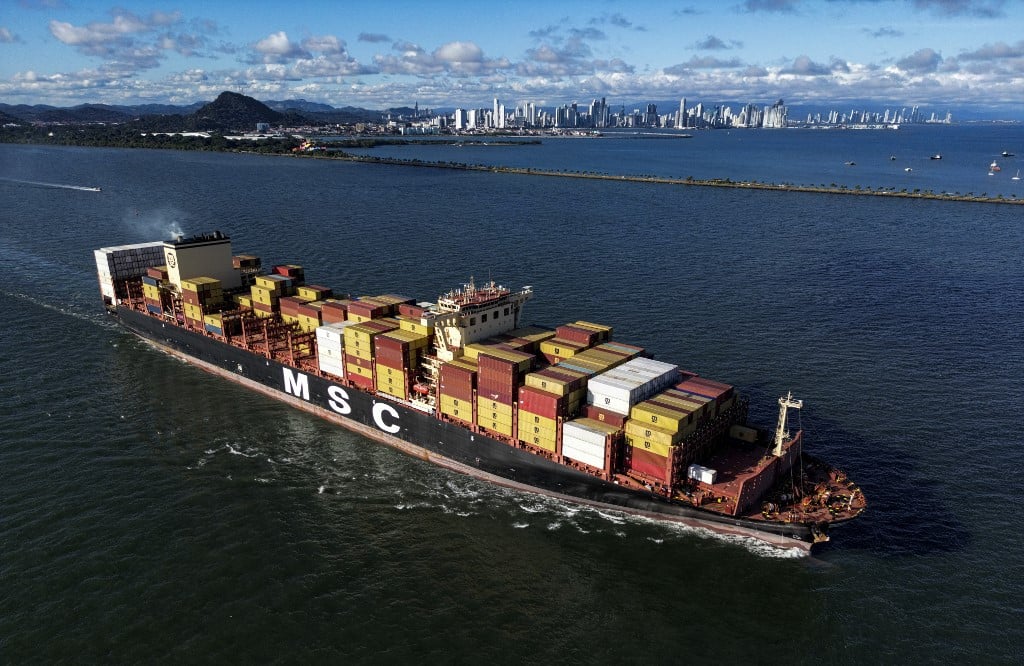
In 2024, Panama also inaugurated the Amador Cruise Port, the first of its kind, at a cost of US$165 million. It was built by a consortium formed by China Harbour Engineering Company (CHEC) and Belgium’s Jan de Nul.
China also planned to build a fourth bridge over the Panama Canal and other projects, but Washington’s pressure following US president Trump’s return to power forced Panama to distance itself from Beijing. Although Panama has not broken diplomatic ties with China, it did not renew its participation in the Belt and Road Initiative. Several infrastructure projects will no longer be built by Chinese companies, which could also lose their contracts to operate the Balboa and Cristóbal ports. Other Chinese firms, however, maintain a strong presence in mining, trade, and telecommunications.
El Salvador was the third to establish ties
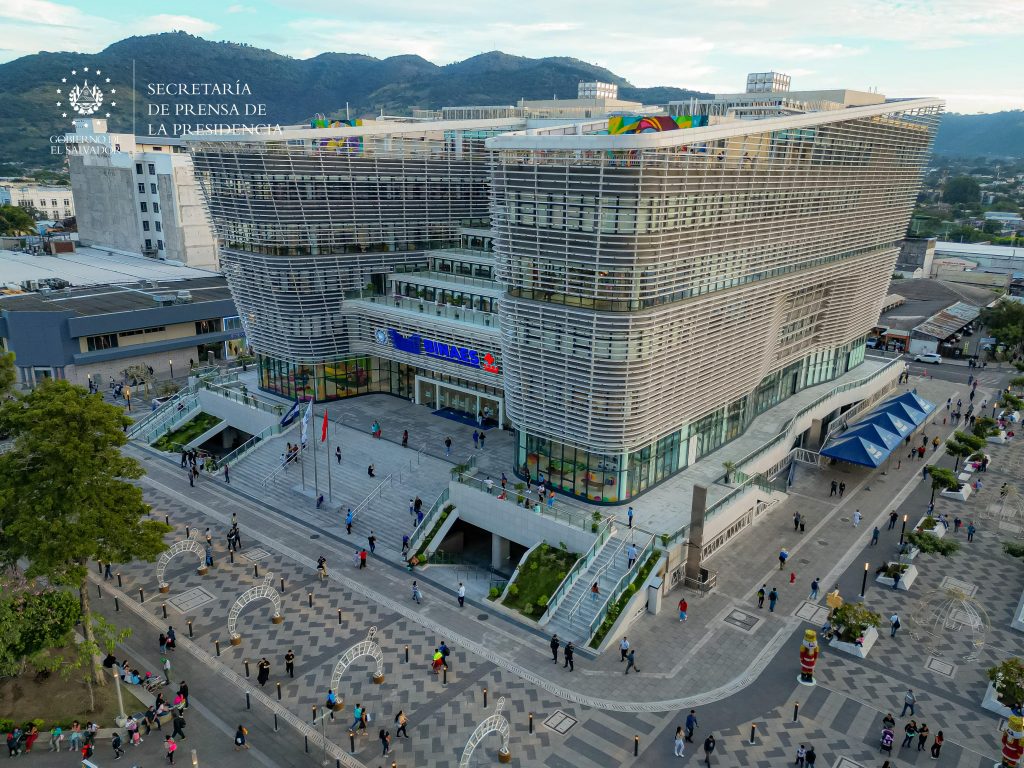
The third country in the region to establish relations with China was El Salvador, which did so in August 2018. Four years later, it began building the National Library of El Salvador (BINAES), considered the largest and most modern in the region. Its 24,000 square meters across seven floors were built with US$54 million donated by China and US$10 million provided by El Salvador as counterpart funding.
According to the Salvadoran government, other China-financed projects moving forward include a tourist pier in La Libertad costing US$24 million, a water treatment plant at Lake Ilopango costing US$40 million, and a new National Stadium for 52,000 spectators—the largest in Central America—at a cost of US$100 million. However, China’s 2022 promise to purchase all of El Salvador’s external debt never materialized.
Honduras’ recent alliance and Guatemala’s distance
The fourth country in the region to align with China was Nicaragua in December 2021, followed by Honduras in March 2023. Given its recent change, Honduras has not yet received anything significant; for now, discussions focus on minor projects such as school improvements. While making small donations, the two sides are negotiating the construction of port projects and the El Tablón dam, a key project for flood control and potable water supply in the Sula Valley.
However, Honduras’ relationship with China could follow the same path as Nicaragua’s. Due to high interest rates, commissions, and execution conditions, these projects heavily favor Chinese companies, which also take their time in disbursing the financing they commit to.
According to specialists, this reflects a shift in China’s strategy: it has stopped being “generous” with Latin America. Its approach has moved from generous lending to a more commercial model, with stricter contracts that ensure the right to import a significant portion of labor from China. Analysts believe this shift was driven by U.S. pressure and the region’s growing debt burden.
In Central America, China still has only Guatemala left to win over. Guatemala has maintained an alliance with Taiwan since 1934, an arrangement the current government recently reaffirmed. Only time will tell whether Guatemala changes course—and whether, in light of China’s strategic shift, some countries reconsider their alliances with the Asian giant and prioritize national interests over Chinese ones.