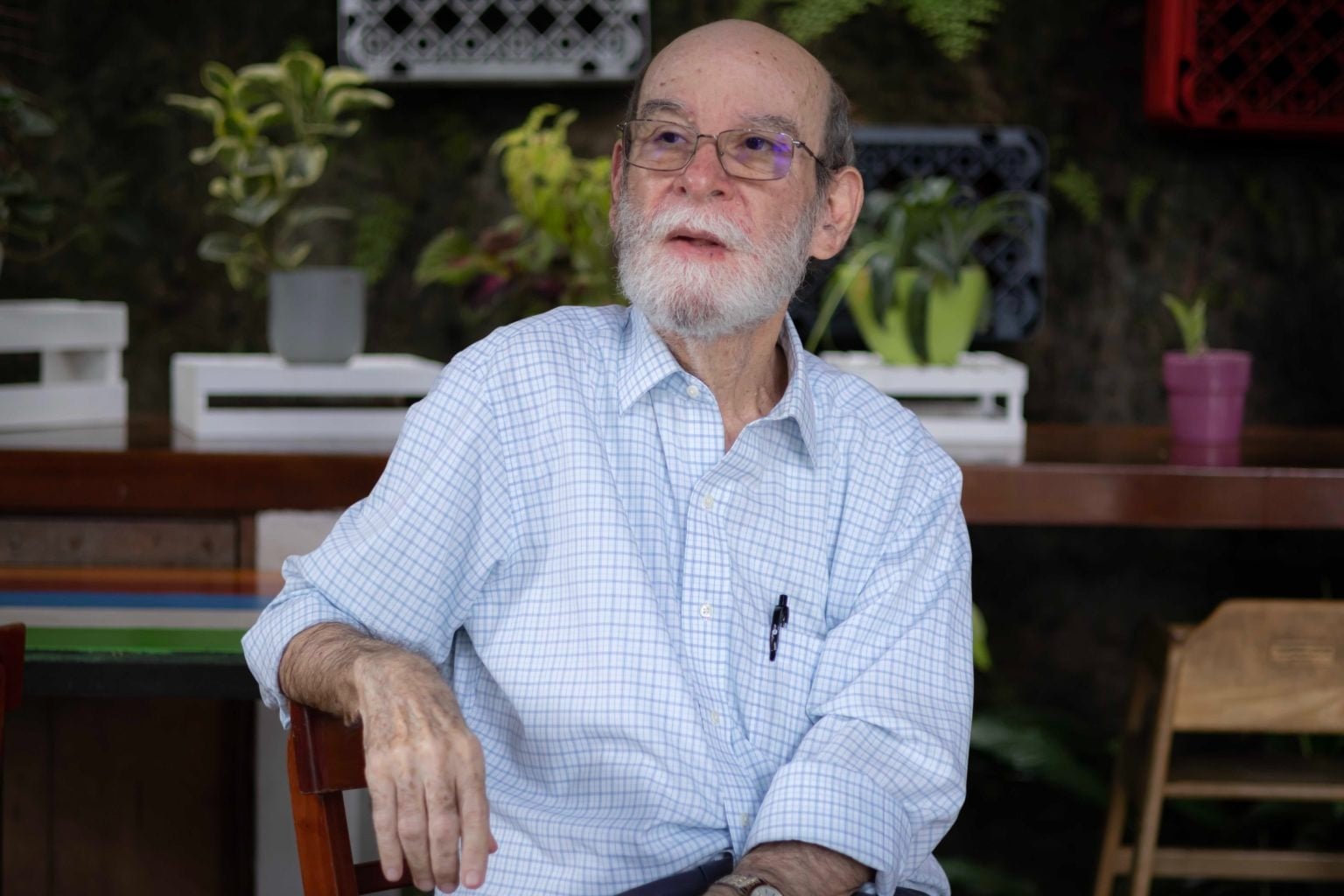
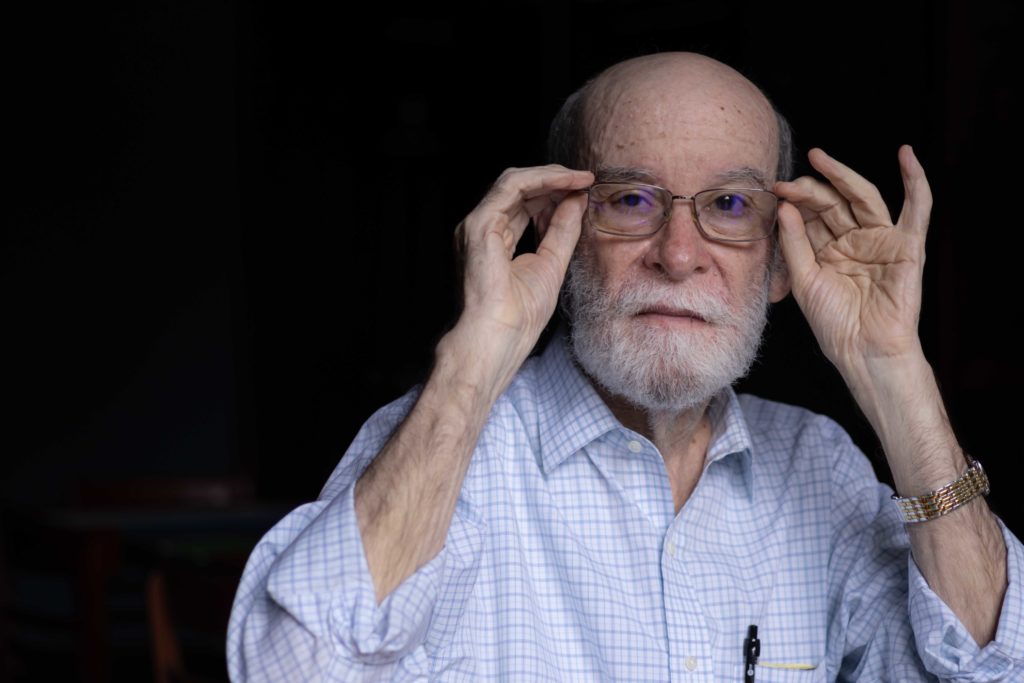
The former justice of the Supreme Court of Justice (CSJ), Rafael Solís—who was Daniel Ortega’s right-hand man in judicial matters and godfather at Ortega’s wedding to Rosario Murillo—marked seven years in exile on January 10. He does so with his eyes on the situation in Nicaragua and on what has happened in Venezuela. According to him, the capture of Venezuelan dictator Nicolás Maduro by the U.S. military is an opportunity for his former political bosses to leave power without causing more deaths or suffering among Nicaraguans.
In this interview, former justice Rafael Solís points out that instead of undertaking major constitutional reforms or forming a civic–military junta, the regime’s top leaders should show goodwill and hand over power to other figures from the real opposition.
The former justice says that exile has not been easy and recounts how his views have changed on certain issues. Although at one point he supported the armed struggle, for example, today he believes it is not an option for Nicaraguans. He suggests that the opposition could set aside issues such as the “co-presidency” and look for ways to bring elections forward, but he emphasizes that with Ortega and Murillo out of power and no longer controlling state institutions—especially the electoral authority and the Army—how would security be guaranteed? The former justice proposes that the Army guarantee security without interfering in politics.
Mr. Solís, you know Ortega and Murillo very well. After Maduro’s capture by the U.S. military, how have you seen them react?
I expected their reaction. It has been a mix of three factors. On the one hand, they hardened their stance and jailed a lot of people. The second factor is a possible state of fear—seeing that if they could do this to Maduro, in a country like Venezuela with such strong security, including Cuban security around him, of course they are thinking it could also happen in Nicaragua in the future. And seeing Maduro and Cilia Flores in a New York court, appearing as defendants in a trial, dressed in orange—and handcuffed—are striking images.
The third factor is that they (Ortega and Murillo) may believe there could be traitors within their ranks, because the prevailing thesis in Venezuela is that there was internal betrayal that led to Maduro’s location, his being sold out, and so on. The most obvious thing is that they have received a message from the United States and the (Donald) Trump administration, which is what worries them the most.
How does the “Trump factor” fit into your proposal?
It is decisive. If it were not for the Trump factor and what just happened in Venezuela, proposing a constitutional reform that contemplates them leaving power would be madness. No one would be proposing it in Nicaragua. That is the reality. There wouldn’t even be the possibility of negotiations, not even to bring elections forward. They would continue calmly with their project of dynastic succession for 2027. The triggering element has been Trump, and even more specifically Trump’s actions in Venezuela.
In short, what is best for the country is for Ortega and Murillo to submit constitutional reforms together with their resignation. But there is always the possibility, as some political leaders have pointed out, that they will maintain their decision to stay in power—to die with their boots on: power or death. That would be very serious for the country.
Do you believe, as many Nicaraguans do, that the Ortega–Murillo dictatorship could fall?
Obviously, this adds a new component to Nicaragua’s situation. Everyone says that the fall of one dictatorship near another generates a domino effect. After what happened on January 3, it seems to me there are two major groups proposing different scenarios: those who believe things should be done peacefully and through civic means—we are the majority—and those who believe, and I think they are the minority, that the use of force is still valid.
On January 10, Ortega and Murillo canceled the celebration of their 19 years in power…
There was talk about Daniel Ortega’s health, which has always been the subject of speculation. Many people say that all the meetings last week were presided over only by Rosario because he has been in poor health. In addition to his health, I believe they also considered the political factor.
Appearing at a public event before all their supporters, delivering their usual anti-American speech in the middle of this situation, would have been provocative toward Trump. And delivering an extremely soft, conciliatory speech—which would have been the right thing to do—would not have pleased the hardline Sandinista base. So they preferred to cancel the event, both for Ortega’s health and for political reasons.
Had you previously proposed the armed solution?
Two years ago I spoke about that, and over time I have retracted it. I believe the use of force is not necessary to find a solution for Nicaragua. I don’t think it is the right path at this moment. It would be a very long conflict, under any armed variant. And the number of deaths would be enormous. I think we must work on civil, civic, constitutional scenarios.
If armed struggle is no longer an option, what do you now see as a way out from Ortega?
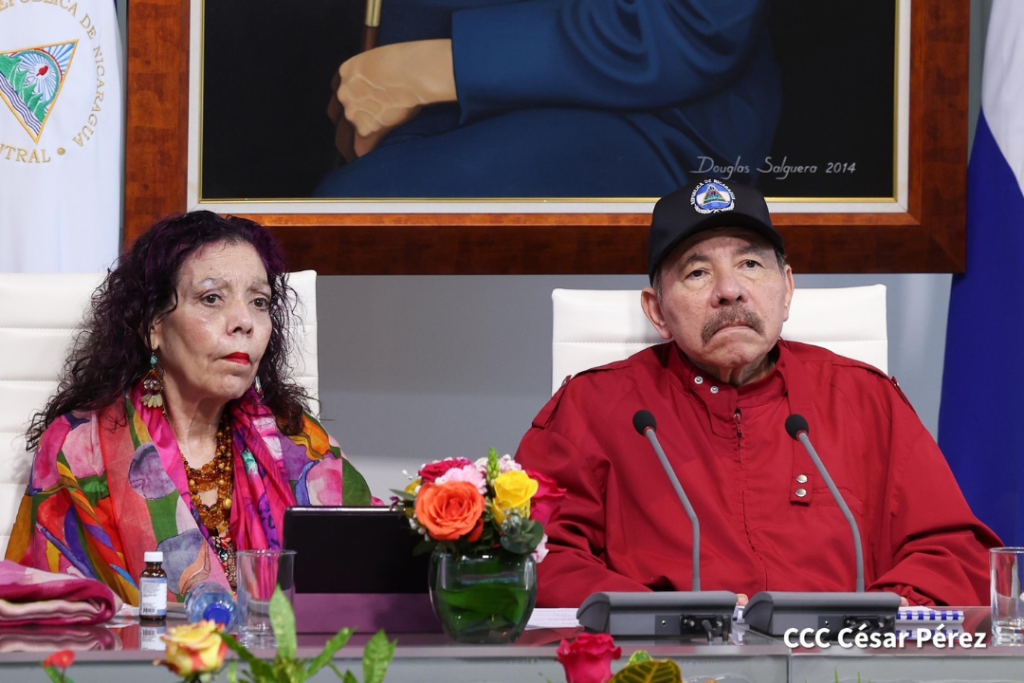
From their perspective, their first option—today, January 12—continues to be succession. Rosario may or may not run as a candidate in 2027, or they may install Laureano and continue with a family dynastic succession for 20 years. They have already been in power for 19 consecutive years and have been in permanent campaign mode around Rosario and the children, especially Laureano, who is the most visible. I do not see this as a realistic option.
Nicaragua cannot endure a succession. The second option they may be considering seems more feasible in Daniel and Rosario’s minds: trying to bring elections forward by a few months, continuing to release political prisoners, but always remaining in power, and later calling for a national dialogue only with the so-called “puppet parties” that remain in the National Assembly. I do not see the real opposition—including political parties whose legal status was canceled and who are mostly in exile—participating in a national dialogue while Ortega and Murillo remain in power. Those are the scenarios they may be discussing with their children, close allies, and some members of the Army.
And which option do you see as viable?
There is a third scenario: a soft landing—peaceful—which I think they (Ortega and Murillo) should be considering. It would involve a limited constitutional reform that includes the possibility of both of them resigning, accompanied by a series of measures that signify they are leaving power, and that elections will take place without them in office. That does not mean Sandinismo would not participate in those elections, but it would do so without them.
The idea of resignation was first publicly proposed in 2018 by student leader Lesther Alemán, then by the students who supported him, later by the political parties that supported him, and then by COSEP (business patrons´organization, now nonexistent) in a public statement. Finally, it was proposed by the Catholic Church. The letter delivered to Daniel and Rosario by three bishops—sometime in early June, I believe—insisted on the possibility of both of them resigning and calling early elections.
They took the letter and never met with the bishops again, saying it was part of a coup attempt and that the bishops were complicit. If they see it with maturity, from the country’s perspective, and even for future reconciliation, the best option would be for both of them to step aside through a major constitutional reform, even one that keeps the co-presidency and other figures they created, to avoid sterile debates, but with different people in those positions. Or a civic or civic–military junta could be created.
Would you be comfortable with a continued “co-presidency”?
Personally, like the entire opposition, I have opposed the figure of co-presidency. However, I would see it as a compromise solution. It doesn’t matter if it’s justified by gender parity—one woman and one man. But the co-vice presidents should also be named, which has never happened; there is only a small reference to them in the Constitution. I would strengthen that figure, because then you have four people—two co-presidents and two co-vice presidents, two women and two men—and give the co-vice presidents some powers, at least legislative ones, such as signing bills.
The other option is a harder one: creating a civic or civic–military junta. Some analysts this week have spoken of a civic–military junta, but I think it is better for the Army to continue playing its role outside politics—although I am well aware that it has intervened in politics.
Looking ahead, it is preferable to have a civic junta that brings together different opposition figures and even considers including someone from historic Sandinismo. Moving from co-presidency to a governing junta would complicate constitutional reform discussions. If elections are going to be for president and vice president, and for a National Assembly with constituent powers, it is unnecessary to eliminate co-presidency now, as that would only delay things by months.
A reform to bring elections forward
There would need to be a constitutional reform to move elections up to November 2026 instead of November 2027. Additionally, the National Assembly would have to regain the power to appoint new co-presidents and the never-appointed co-vice presidents.
The constitutional reform they carried out stripped the Assembly of those powers. Under the current Constitution, if Ortega and Murillo end their term through death or resignation, the president of the National Assembly assumes the presidency and must call elections within 60 days. The Assembly does not currently have the authority to appoint two or four leaders as envisioned. What matters is showing the will to step aside and submitting both the reform and the resignation to the Assembly, which could at least open a negotiation period while the reforms are debated.
The opposition has flatly rejected the co-presidency.
Yes, because it was them—especially because of the power Rosario accumulated. And it is true that this figure does not exist anywhere else in the world.
Would you suggest keeping it?
Not permanently—only for a few months. Then elections would be held only for president and vice president, with a National Assembly that has both constituent and legislative powers to draft a new Constitution. Even if co-presidency was unpopular, it has functioned for a year and a half and does exist. It could provide some pluralism, having a man and a woman. It is not a normal figure, since it exists nowhere else in the world.
If there is national consensus after broad discussion that a governing junta would be better, then further constitutional reforms could create a civic or even civic–military junta. I am open to that. But I think tolerance around the co-presidency, with different people and for only a few months, could work.
What about justice? Many want Ortega and Murillo prosecuted.
That is very important, but it should be addressed later, within a framework of transitional justice, as the UN and OAS have indicated, and discussed by the new constituent Assembly elected in November 2026. Introducing it now would kill any negotiation. It is valid, but extremely delicate.
Even during the second dialogue in 2019, it was never discussed because Ortega and Murillo refused to include it on the agenda. Regarding immunity, I would favor discussing it in these partial constitutional reforms—whether immunity remains as it is, covering the next term, or whatever is agreed upon in negotiations. Many countries grant immunity to former heads of state for the following term. Chile tolerated Pinochet until he died; they made him a lifetime senator, and democracy was already in place.
Life in exile
How do you assess your resignation and exile today, seven years later?
I still believe it was the right decision. There were several reasons that pushed me to resign, and many remain valid—especially their response to the April protests, with excessive force that led to an estimated 350 deaths. Then came the consolidation of all power in Daniel and Rosario, under the argument that there had been a coup attempt. That confirmed my decision then and still does today.
Have there been moments when you wished you hadn’t resigned?
It has crossed my mind, because exile is hard. I also considered staying underground in Nicaragua after resigning. In hindsight, exile was the better choice; otherwise, I would most likely still be imprisoned.
What is Rafael Solís’s exile like?
It is an exile filled with longing. I liked living in Nicaragua. I love my country and miss living there. There is also sadness in seeing how things have hardened and reached such a difficult point. If it weren’t for these recent events in Venezuela, they likely wouldn’t even be considering adjusting their course. So far, they are only thinking about freeing political prisoners. Despite everything, I feel exile has been worth it.
How did Roberto Samcam’s murder affect you?
Roberto was my brother, and it deeply affected me because of our close friendship.
How do you live after Samcam’s death?
It was a harsh message they sent us, and I try to live my life taking every possible precaution.