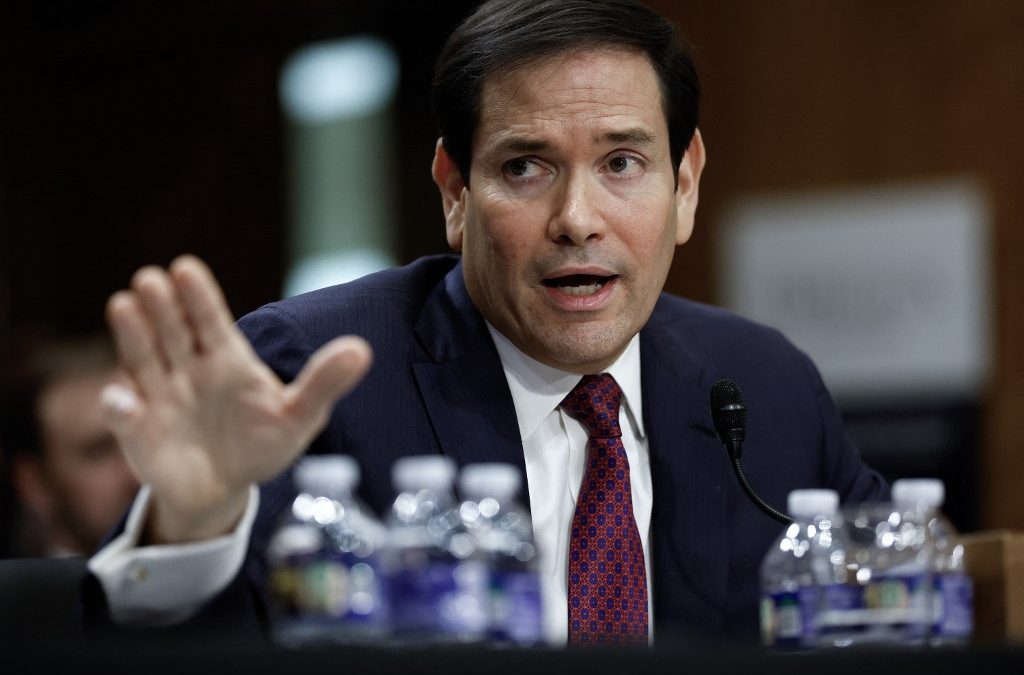
U.S. Secretary of State Marco Rubio identified Nicaragua as one of the locations serving as a base for Russian operations in the Western Hemisphere during remarks Wednesday before the Senate Foreign Relations Committee.
Rubio explained the rationale behind the military operation that culminated on January 3 with the capture of Venezuelan dictator Nicolás Maduro and his wife, Cilia Flores, both accused of drug trafficking.
“In our hemisphere, we had a regime led by an accused narcotrafficker that became the base of operations for virtually every competitor, adversary, and enemy in the world. For Iran, its main operational hub in the Western Hemisphere was Venezuela. For Russia, its principal base of operations in the Western Hemisphere—along with Cuba and Nicaragua—was Venezuela,” argued U.S. Secretary of State Marco Rubio.
Read also: Nicaraguan Regime Transfers Gold Concessions to Unknown Chinese Companies to Evade U.S. Sanctions
He also pointed to China as another threat to the United States. Rubio said Beijing had an oil agreement with Venezuela under which, during Maduro’s leadership, China received discounts of up to $20 per barrel. In the end, Venezuela did not receive payment, as the oil was used to service the country’s debt to the Asian power.
Military cooperation between Putin and Ortega
Nicaragua’s ties with Russia have strengthened by mutual agreement between the regimes of Daniel Ortega and Vladimir Putin, with particularly strong expression in the military sphere in recent years. In the 1980s, during his first term in power, Ortega aligned the country with the Soviet Union, while the United States financed the Contra forces seeking to overthrow his government.
According to a recent report by LA PRENSA, cooperation from the Russian autocrat has bolstered the repressive capabilities of Nicaragua’s dictatorship through a Russian training center operating in Managua, which was sanctioned by the United States in 2024.
Between 2017 and 2024, at least 2,353 police officers from 13 Latin American countries graduated from the Russian-run school, according to data previously disclosed by Russia’s ambassador, Alexander Khokholikov.
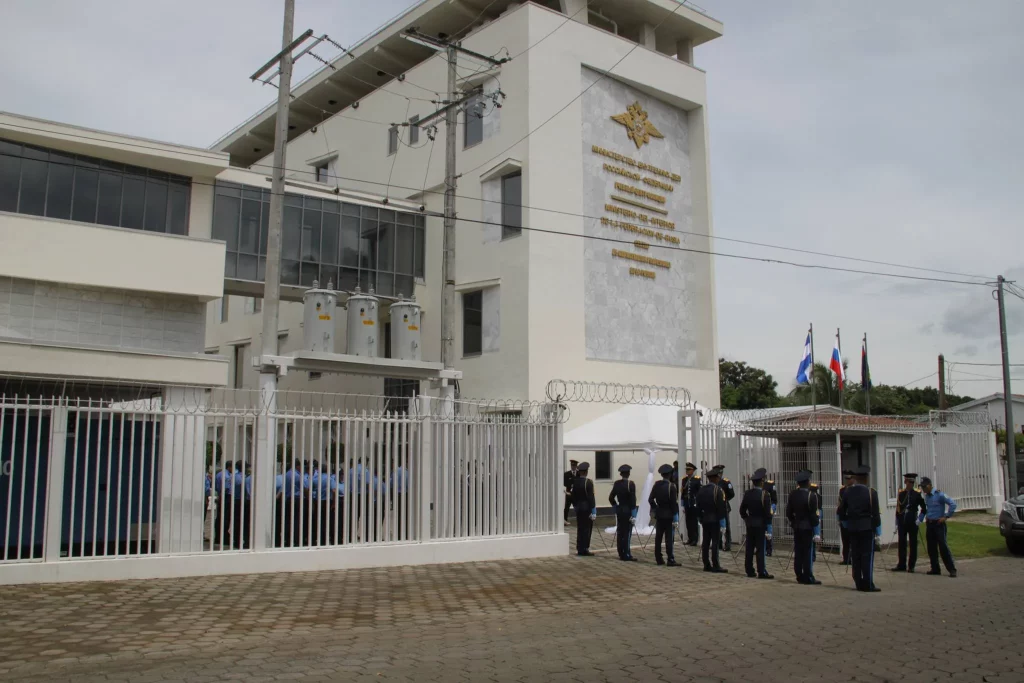
In 2023, Ortega acknowledged that his allies had supported his government in confronting what he called coup plotters. “The center is to better confront drug trafficking, organized crime, to better confront coup plotters and terrorists,” he said at the time, using the labels with which he describes members of the opposition.
Read also: China Closes in on the U.S. as Nicaragua’s Top Goods Supplier
In addition to the training center, Russia has supplied weapons to the Nicaraguan Army and founded the Mechnikov Institute to manufacture vaccines. The latter proved a failure and is remembered more for an expensive celebration held in honor of Laureano Ortega Murillo, the regime’s point man for relations with Russia.
United States had multiple objectives
According to Rubio, the United States pursued several objectives with the operation against Maduro. Ultimately, the goal was to reach a phase of transition, stability, and a return to normalcy in the oil industry. Following Maduro’s removal, Chavista leader Delcy Rodríguez was sworn in, and U.S. officials are engaging with her during this political phase. This remains the reality despite the opposition’s victory in the 2024 elections, which followed massive electoral fraud carried out by the dictator and his inner circle.
“One part of the transition or recovery phase is to begin creating space for the different voices in Venezuelan politics to be expressed. Part of that is the release of political prisoners, which according to some estimates number around 2,000. They are being released—probably more slowly than I would like—but they are being released. And, in fact, we are beginning to see how some of those released are starting to speak out and participate in the country’s political life. We still have a long road ahead,” the secretary of state added.