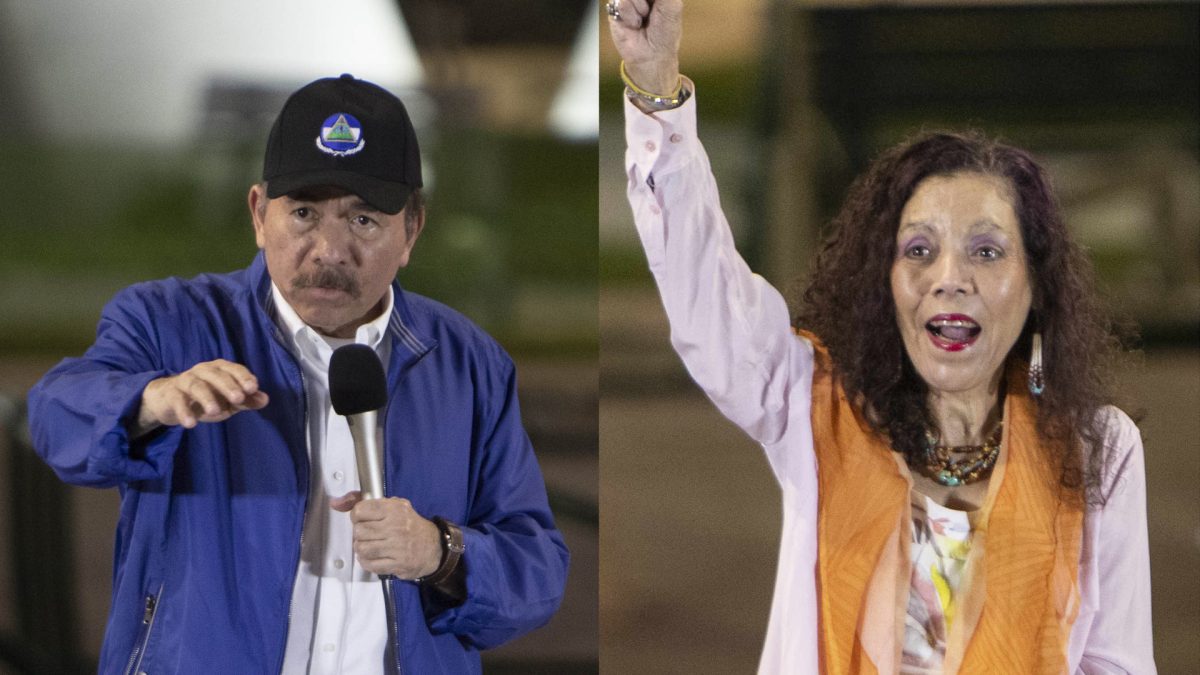
The statement reverberated around the world: “There will never be elections here again,” dictator Daniel Ortega declared during the ceremony marking the 47th anniversary of the Sandinista Revolution in Managua. With those words, he formally acknowledged a dictatorship that had already existed in practice for years. Ortega has now spent nearly two consecutive decades in power in Nicaragua.
His remarks prompted swift international condemnation. The United States said it “will not stand idly by,” while Organization of American States (OAS) Secretary General Albert R. Ramdin criticized Nicaragua’s abandonment of democracy—or even “the appearance of it.”
Here are five key developments that explain how Nicaragua reached this point.
1. Ortega’s Return to Power and the Political Pact
This coming January, Daniel Ortega will mark 20 consecutive years in office, bringing his total time in power to 29 years.
He first governed Nicaragua after the Sandinista Revolution triumphed in 1979, serving as coordinator of the Junta of National Reconstruction. He was later elected president in 1984 and remained in office until 1990, when he lost the election to Violeta Barrios de Chamorro.
Since the Sandinista Revolution, Ortega has been the sole presidential candidate of the Sandinista National Liberation Front (FSLN). He spent 16 years attempting to return to power before succeeding in the 2006 election, aided by a political pact with former President Arnoldo Alemán of the Constitutionalist Liberal Party (PLC). Together, they negotiated reforms that lowered the threshold required to win a presidential election.
Read also: Ortega and Murillo Seek to Extend Rule Until 2040 Through Nicaragua Constitutional Reforms
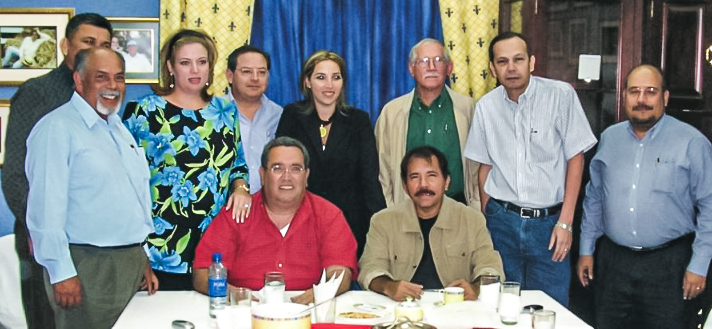
Before the 2000 electoral reforms, Nicaragua’s Electoral Law required a candidate to receive at least 45 percent of the vote to win outright in the first round. The Ortega-Alemán pact reduced that threshold, allowing victory with 40 percent of the vote—or with just 35 percent if the winner held at least a five-point lead over the runner-up.
The changes proved decisive. Ortega returned to the presidency in 2007 after winning just 38 percent of the vote.
The pact not only facilitated his return to power but also enabled Ortega and Alemán to divide control of key state institutions among political allies. Over time, Ortega gradually consolidated full control over those institutions as his grip on power strengthened.
2. The First Constitutional Reforms
When Ortega returned to office, Nicaragua’s Constitution prohibited consecutive presidential re-election. It also barred anyone who had already served two nonconsecutive presidential terms from seeking office again. Under the Constitution as it stood, Ortega would have been limited to serving a single term.
His control over state institutions enabled him to dismantle those restrictions. In October 2009, Nicaragua’s Supreme Court ruled that Article 147 of the Constitution—which prohibited presidential re-election—was inapplicable. The decision cleared the way for Ortega to run again in the 2011 election, which he won amid widespread allegations of electoral fraud and criticism over the constitutionality of his candidacy.
In 2013 and 2014, FSLN lawmakers pushed through constitutional amendments establishing indefinite presidential re-election, allowing candidates to win in the first round with a simple plurality, and granting the president expanded authority to issue executive decrees with the force of law.
The Supreme Court also played a crucial role in removing potential opposition candidates from increasingly disputed electoral contests.
You may be interested: Former U.S. Envoy Kevin Sullivan: Ortega’s Move to End Elections Surprised No One
3. The 2018 Crisis and the Crackdown
In April 2018, nationwide protests erupted against the regime of Daniel Ortega and Rosario Murillo. Initially sparked by proposed reforms to Nicaragua’s social security system, the demonstrations quickly evolved into broader demands for Ortega to resign and for free and fair elections.
The government responded with a violent crackdown. According to the Inter-American Commission on Human Rights, 355 people were killed during the protests.
The United Nations Group of Human Rights Experts on Nicaragua later concluded that the regime has systematically committed crimes against humanity. According to its findings, those violations began in April 2018 and continue today. The report documents extrajudicial executions, arbitrary detention, torture, forced exile, political persecution, and enforced disappearances.
According to the latest count by the Mechanism for the Recognition of Political Prisoners, at least 46 political prisoners remain behind bars in Nicaragua.
The country continues to live under the grip of the Ortega-Murillo dictatorship.
4. Closing Civic Space and Forced Exile
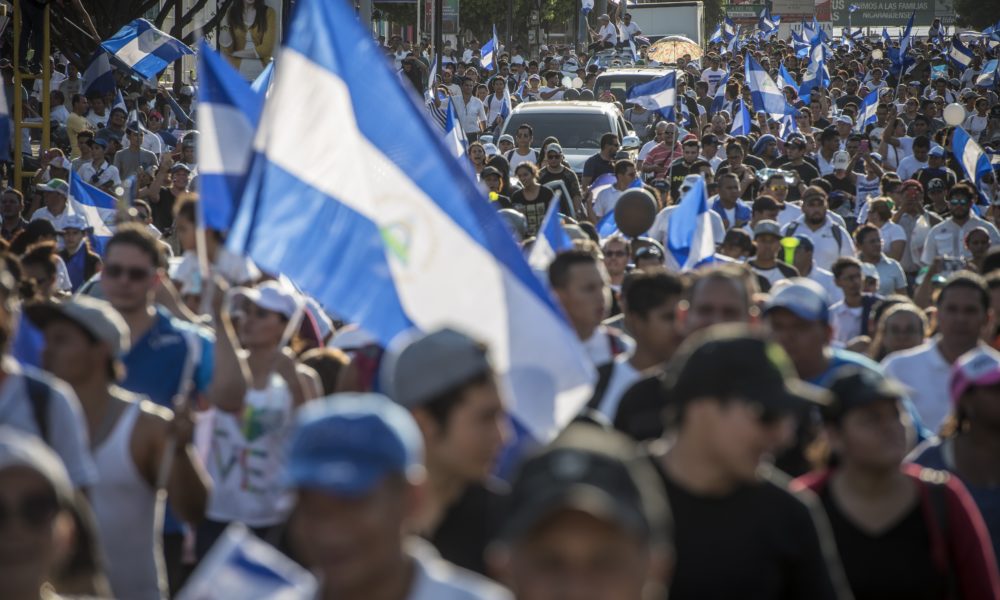
More than 800,000 Nicaraguans have fled the country since the crisis began in 2018, according to the U.N. Human Rights Council.
Ortega and Murillo have systematically crushed independent voices and virtually every form of political dissent. In 2021, the regime jailed the leading opposition figures expected to challenge Ortega in that year’s presidential election.
The government has officially banished more than 450 Nicaraguans, while many others have effectively been driven into exile without formal legal orders.
According to the Foundation for Freedom of Expression and Democracy (FLED), 61 independent media outlets have been shut down in Nicaragua, forcing more than 300 journalists into exile.
Reporters Without Borders describes Nicaragua as one of the world’s most extreme cases of press freedom destruction, ranking the country 172nd out of 180 in its World Press Freedom Index.
5. Absolute Control and the Establishment of a Family Dynasty
Under Nicaragua’s electoral calendar, presidential elections were scheduled for November 2026. However, in January 2025, the Ortega-controlled National Assembly approved a sweeping package of constitutional reforms submitted by the Ortega-Murillo regime under the title «Law for the Protection of Nicaraguans Against External Sanctions and Aggressions.» Among other changes, the legislation postponed the elections until November 2027.
The package amended more than 100 articles of the Constitution and drew strong criticism from both the opposition and the international community for formalizing an architecture of unchecked executive power.
Among its most consequential provisions, the reforms institutionalized the office of co-presidency, establishing that the executive branch would be headed jointly by a male co-president and a female co-president.
You may find this interesting: How an Iran-Linked Oil Tanker Used a False Nicaraguan Flag to Evade Sanctions
The changes not only expanded Rosario Murillo’s constitutional authority but also laid the groundwork for dynastic succession. If one co-president dies, the surviving co-president automatically remains in office.
The reforms also effectively eliminated the independence of the electoral, judicial, and legislative branches by placing them under the authority of Ortega and Murillo. Article 132 now states that:
«The Presidency of the Republic directs the Government and, as Head of State, coordinates the legislative, judicial, electoral, oversight and auditing, regional, and municipal bodies, in accordance with the supreme interests of the Nicaraguan people and the provisions of this Constitution.»
The constitutional reforms were implemented in 2025, formally elevating Murillo to the position of co-president on equal constitutional footing with Ortega. They also abolished the separation of powers and further strengthened the regime’s repressive apparatus.