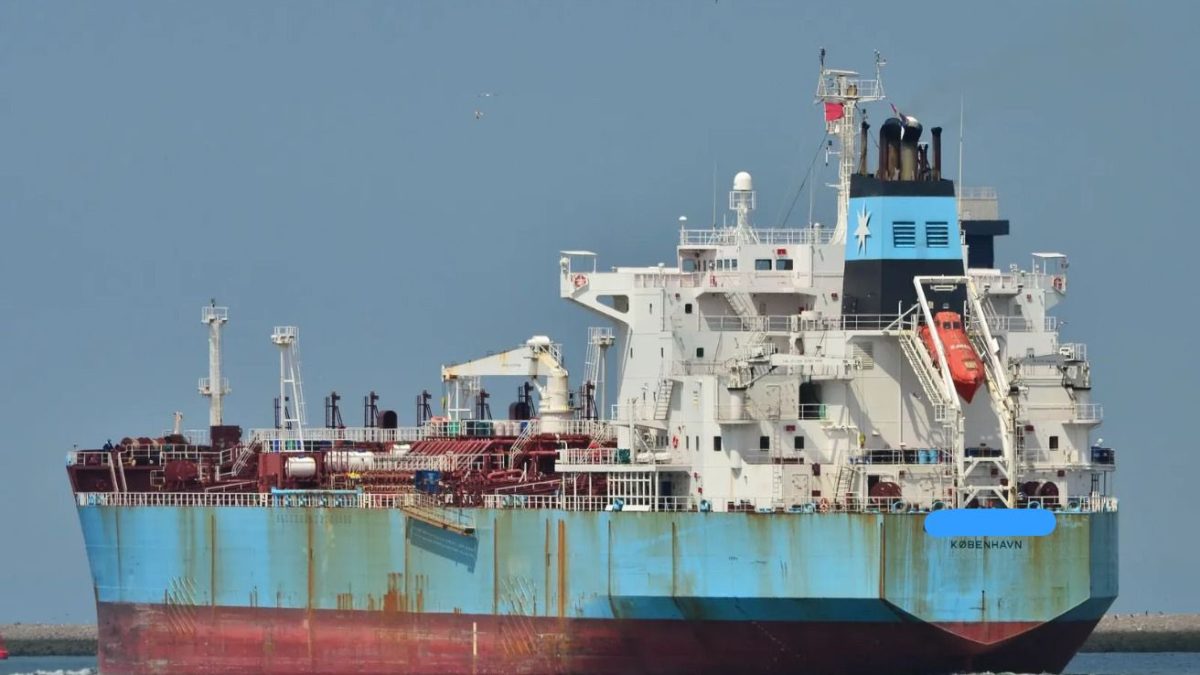
Five days after the Indian Coast Guard seized the tanker Al Jafsia in February following an illicit transfer of Iranian oil, the vessel began sailing under a false Nicaraguan flag. According to the investigative journalism collective Bellingcat, the ship had previously flown the flag of Aruba. Beginning on February 11, however, official documentation listed Nicaragua´s Corinto as its home port.
On February 19, Bellingcat published an investigation titled «Shipwrecks, Fake Documents and False Flag Operations: Tracing the Company Behind It All,» in which it detailed the case of the Al Jafsia.
The investigation also examined the business of false flags, in which sanctioned vessels obtain fraudulent registrations to evade international restrictions. It described a transnational operation involving purported ship registries in Guyana and Nicaragua allegedly linked to Captain Suniel Kumar Sharma.
According to the investigation, Sharma has been sanctioned or convicted by authorities in Dominica, Guyana, Samoa, the Federated States of Micronesia, Eswatini, as well as by the United Nations’ International Maritime Organization (IMO), for issuing fraudulent maritime documentation.
The Nicaragua connection emerged as one of the investigation’s key findings, despite Sharma having previously denied to the Financial Times that he had established new ship registries.
Read also: India Rescues Three Iran-Linked Oil Tankers; False Nicaraguan Flag Raises Questions
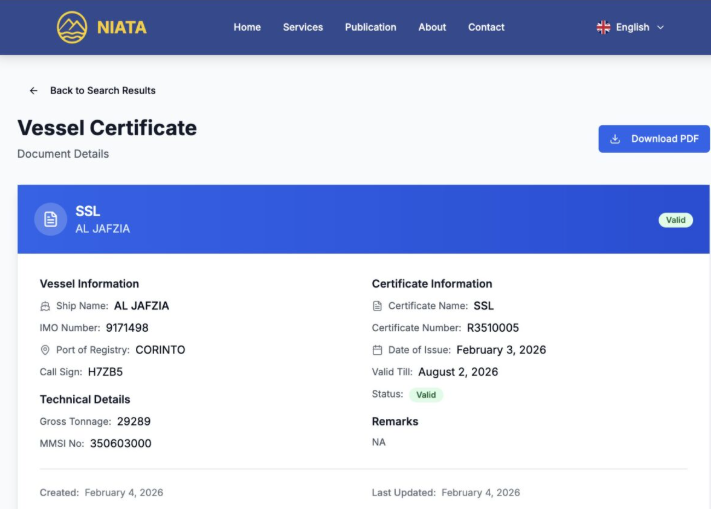
The operation centered on the domain niataregister.com, which promoted the Nicaragua International Water Transport Administration (NIATA). The Al Jafsia‘s registration certificate, for example, was issued on February 2. The vessel’s purported Nicaraguan IMO identification number was 9171498. However, Bellingcat noted that when the ship was sanctioned, it was operating under the name Chil 1.
«According to maritime tracking data, on February 6, while sailing under a false Aruban flag, Al Jafsia was detained by the Indian Coast Guard for an illicit ship-to-ship transfer of Iranian oil. On February 11, the vessel began transmitting under a Nicaraguan flag, listing Corinto—Nicaragua’s largest port—as its home port. The MMSI number can be seen on the certificate below,» wrote investigators Tomi McCluskey, Cristiano Pantón, and Logan Williams.
The Al Jafsia has returned to international headlines after the Indian Coast Guard rescued three Iran-linked tankers on July 5, including the vessel sailing under the false Nicaraguan flag. The other two were Asphalt Star and Stella Ruby.
According to The Maritime Executive, the rescue took place amid strong winds. Al Jafsia, with a deadweight tonnage (DWT) of 45,000 tons, had been abandoned and run aground. The vessel is expected to be scrapped at Alang, India’s renowned ship-breaking yard.
Chamorro Questions Government’s Silence
Economist Juan Sebastián Chamorro said on his X account that at least five oil tankers are currently sailing under the Nicaraguan flag, according to the investigation into the so-called shadow fleet. He also noted that the Miami address associated with NIATA is located in the Brickell district.
«The fact that Nicaragua’s regime has not denounced a maritime authority called NIATA for usurping the country’s flag and registering ships in the Port of Corinto could indicate some degree of acquiescence—or even complicity—in this scheme,» Chamorro said.
Bellingcat also reported that, according to the International Maritime Organization’s Global Integrated Shipping Information System (GISIS), Nicaragua has not authorized any organization to issue registrations or flags on its behalf.
«Despite repeated requests, Nicaraguan authorities did not respond to our questions about whether they had heard of NIATA or had any official relationship with the company,» Bellingcat wrote.
You may be interested: Chinese Military Presence in Nicaragua Draws Warnings Over Secrecy and Geopolitical Risks
The investigators found that the metadata for NIATA’s website pointed to a company called Oceaniek Technologies. According to the professional networking platform LinkedIn, its chief executive officer was Suniel Sharma.
Among the companies promoted through the operation was Nautilus Times, which offered vessel registrations in six jurisdictions, including Guyana and Nicaragua.
«Sharma’s operation continues and now appears to have expanded into Nicaragua, with the apparent establishment of a broader network through Oceaniek Technologies,» the February report concluded.