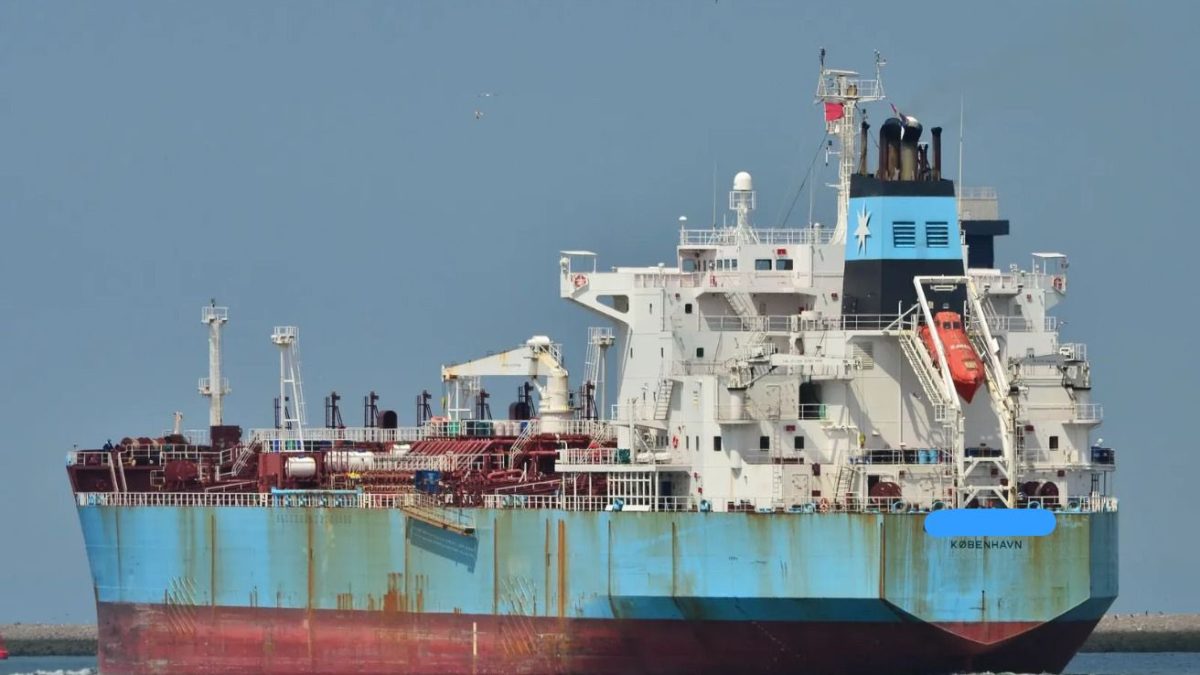
Amid strong winds, the Indian Coast Guard on July 5 rescued three oil tankers linked to Iran—Asphalt Star, Stella Ruby, and Al Jafsia—that have been at the center of a controversy since February after being accused of belonging to a fuel smuggling network, according to a digital bulletin published by The Maritime Executive, a platform specializing in the maritime and offshore industries. One of the vessels was sailing under a false Nicaraguan flag.
Al Jafsia, also known as Chiltern, has a deadweight tonnage (DWT) of 45,000 tons. The vessel had been abandoned and ran aground. However, the specialized publication describes it as the most suspicious of the three because it was purportedly registered under the Nicaraguan flag—»which is false.»
«Since 2024, records show it had falsely claimed registration in Eswatini, Aruba, and Guyana before Nicaragua,» the publication states.
Three Sanctioned Vessels
All three tankers are under U.S. sanctions. The legal controversy surrounding them began in February, when authorities accused them of participating in the alleged smuggling network. They were subsequently seized about 100 nautical miles west of Mumbai.
«India accused them of engaging in illegal ship-to-ship transfers and being part of a network involved in the theft and transportation of Iranian bitumen. The vessels had reportedly switched off their AIS transmissions to avoid detection,» the report says.
Read also: Chinese Military Presence in Nicaragua Draws Warnings Over Secrecy and Geopolitical Risks
The story was widely reported by local media in February, accompanied by photographs believed to show the vessels.
Stella Ruby has a deadweight tonnage of 6,191 tons and was flying the Iranian flag. Asphalt Star has a deadweight tonnage of 14,800 tons. Citing press reports, The Maritime Executive says the case remains under investigation and notes that shipowners and eight individuals are named in court documents filed in February.
Headed for the Ship Graveyard
With the exception of the vessel sailing under the false Nicaraguan flag, the other two tankers still had minimal crews on board. All three ships are awaiting scrapping. However, Al Jafsia appears destined to end its service at Alang, India, home to the world’s largest ship-breaking yard.
According to the report, the Indian Coast Guard vessel Samrat was dispatched to assist the three tankers. Asphalt Star and Stella Ruby were secured at a new anchorage, and their crews were reported safe. «The emergency tug Water Lily was also used to help secure the two tankers,» the publication added.
The Indian Coast Guard also deployed its pollution control vessel, ICGS Samudra Prahari, to the area. Reports suggesting that Nicaraguan President Daniel Ortega may be linked to a shadow oil tanker fleet have prompted questions from Nicaragua’s political opposition.
Ortega’s International Ties Questioned
Juan Sebastián Chamorro, coordinator of the opposition movement Citizens for Freedom in exile, wrote on social media that «Ortega is now selling the Nicaraguan flag and joining the shadow oil tanker fleet,» specifically referring to Al Jafsia, a tanker built in 1999.
You may be interested: Chinese Communist Party Backs the Ortega-Murillo Regime as Expert Warns of Intensifying Repression
Chamorro said the vessel was formerly known as Camila Maersk and ran aground off the coast of India after departing from Yemen. He described the case as «evidence of Ortega’s ties with Putin (Russia) to evade sanctions.»
The Nicaraguan government has not commented publicly on the matter. Nicaragua’s ruling regime maintains close alliances with both Russia and Iran. Days earlier, President Daniel Ortega and Vice President Rosario Murillo sent Deputy Foreign Minister Valdrack Jaentschke to attend the funeral of Iran’s Supreme Leader, Ayatollah Ali Khamenei. They have repeatedly described Nicaragua’s revolution as the «twin» of Iran’s revolution.
For months, the United States has condemned what it considers the illegitimacy of Rosario Murillo’s hold on power and denounced human rights abuses committed against Nicaraguans, while continuing to scrutinize Ortega’s alliances with Russia, Iran, and China. The developments come as the Trump administration implements its hemispheric security doctrine aimed at limiting the influence of extra-regional powers in the Americas.