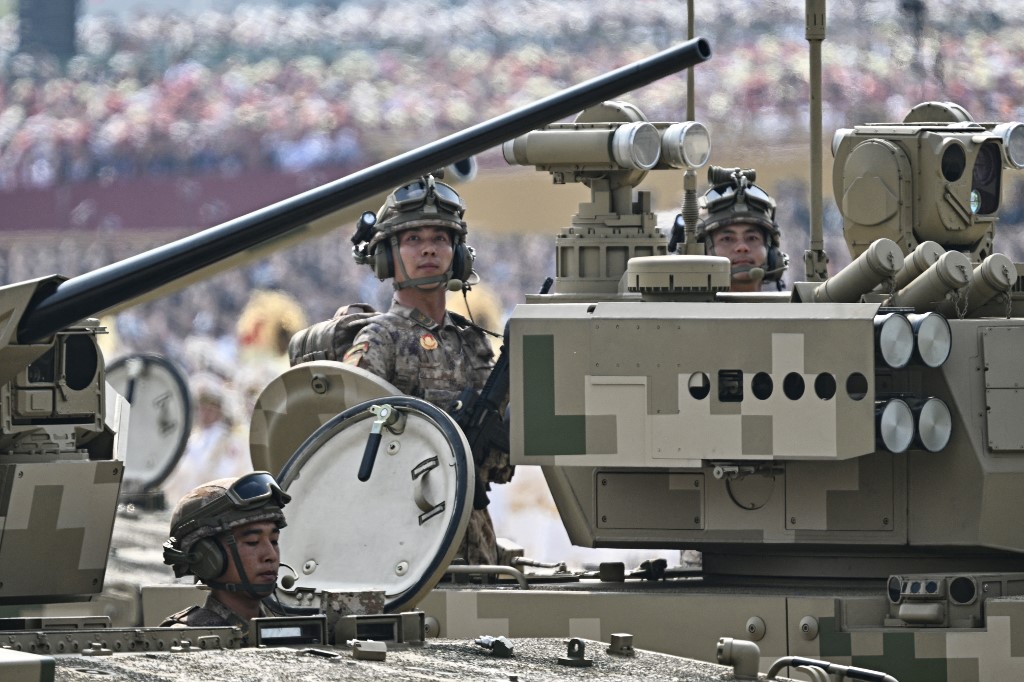
Beginning in the second half of this year, Nicaragua will receive a contingent of military personnel, vessels and aircraft from the People’s Republic of China. According to an order issued by Daniel Ortega and Rosario Murillo on May 29, the deployment is intended for military exercises, exchanges and humanitarian assistance operations.
Security analysts and former government officials have criticized the Nicaraguan government’s lack of transparency regarding the Chinese deployment, describing the decision as opaque.
The authorization is contained in Presidential Decree No. 05-2026, published in the official gazette La Gaceta. Nicaragua’s National Assembly approved the measure without objection. In addition to Chinese troops, the decree authorizes the entry of U.S., Russian (180 personnel), Cuban (50), Venezuelan (180) and Mexican (50) military personnel.
Read also: Nicaragua´s Bishop Abelardo Mata Missing; Church Says Ortega Police Took Him by Force
However, the decree does not specify how many Chinese troops will enter the country. China is mentioned only in the first article, which broadly authorizes the entry of military personnel from the listed countries.
The document also omits the number of U.S. and Central American personnel participating in the exchanges. Unlike those deployments, however, the Chinese mission has raised particular concern among security experts. The United States has conducted similar exchanges with Nicaragua twice a year for decades, whereas this would mark the first known deployment of Chinese military personnel to Nicaraguan territory since the Ortega government restored diplomatic relations with Beijing in late 2021.
The decree does provide more detail regarding the Russian contingent, stating that Russian personnel will work alongside several units of the Nicaraguan Army, including the «Commander William Joaquín Ramírez Solórzano» unit, the Air Force, the Navy, the «General Pedro Altamirano» Special Operations Command, and the «Blanca Estela Arauz Pineda» Signals Corps.
Chinese Troop Authorization: “Serious, Opaque and Dangerous”
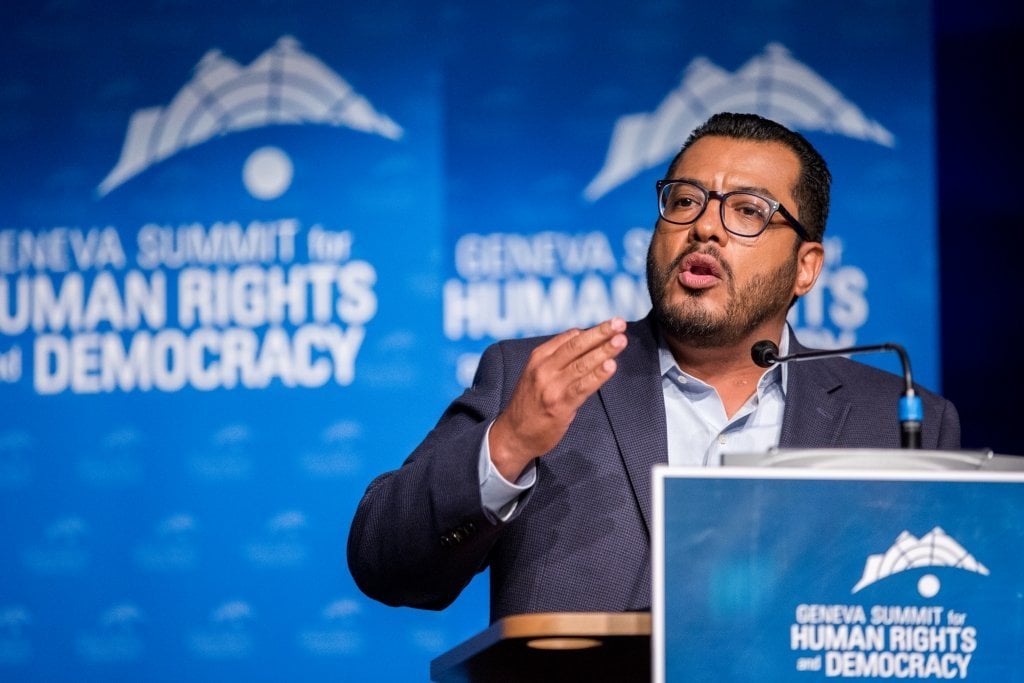
Political scientist and former Ministry of Defense Secretary General Félix Maradiaga described the authorization for Chinese troops to enter Nicaragua as «serious, opaque and dangerous.»
Maradiaga argued that failing to disclose how many troops will arrive, what types of vessels or aircraft will be involved, the nature of their mission, the deployment schedule or operational limits reflects a troubling lack of transparency. In matters of national security, he said, «this is not a minor detail—it is a threat,» and potentially a provocation directed at the United States.
«It is a calculated provocation, but also a cowardly one. Ortega knows that even with Russian or Chinese backing, the Nicaraguan Army is militarily insignificant compared with the United States, the world’s most powerful military superpower. He is not seeking a real confrontation; he is sending political signals, increasing his value as a geopolitical pawn, and demonstrating his usefulness to Russia and China,» Maradiaga said.
You may be interested: What Makes Socialism So Appealing to Millions?
A former official at Nicaragua’s Ministry of Foreign Affairs, who requested anonymity, described the secrecy surrounding the Chinese deployment as «completely anomalous.» The former diplomat suggested the Ortega-Murillo government «could be concealing» something that may be perceived as «a threat to regional security.»
The former official added that Nicaraguans should be concerned because «we may be looking at direct Chinese support through the deployment of troops to strengthen repression.» He also viewed the move as «a clear message to the Trump administration» that the dictatorship does not recognize Washington’s security doctrine and intends to pursue its own strategic interests rather than those of the United States.
The Geopolitical Risks of Chinese Military Presence
According to the former Foreign Ministry official, China’s presence carries greater strategic implications for the United States because Beijing has emerged as «a strategic competitor challenging the global dominance of the world’s leading power» and is contesting U.S. influence within what Washington considers its sphere of strategic interest under the Monroe Doctrine.
«The lack of transparency regarding the number of personnel, the scale of the deployment and the activities to be carried out increases the significance of that challenge on Nicaraguan territory and raises the risk of dragging the country into a new military confrontation similar to that of the 1980s, which remains the greatest fear among the Nicaraguan population,» the former official warned.
Although the decree describes the exchanges as humanitarian in nature, it also authorizes Nicaraguan military personnel to travel to Russia, Mexico, Venezuela and Cuba. Each country will receive 50 Nicaraguan service members between July 1 and December 31, 2026, for a total of 200 personnel.
What Is China Seeking in Nicaragua?
Security analyst Javier Meléndez said the omission of details regarding military exchanges with China «can be interpreted as a deliberate decision to preserve political and operational flexibility over the types of exchanges that may be developed with Beijing without committing publicly to specific details.»
For now, Meléndez does not believe China is seeking to demonstrate a strategy of direct military competition with the United States in Central America. While Beijing has expanded military cooperation, training and exchanges throughout the region, he said, «their scope remains relatively limited.»
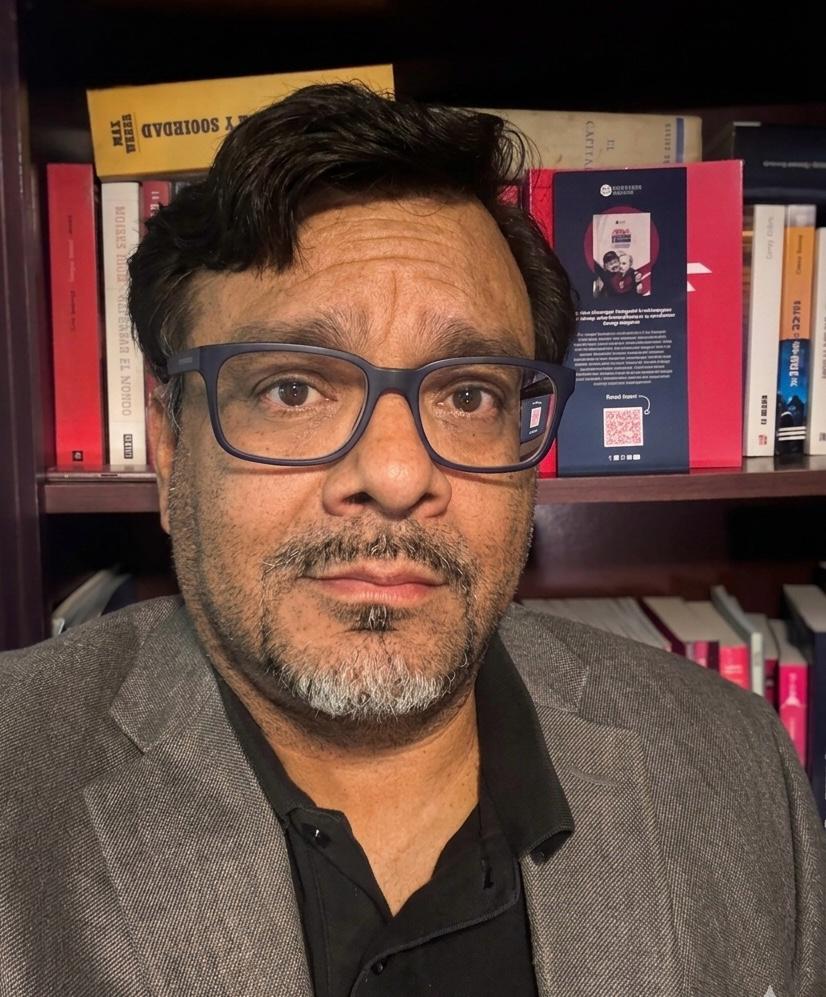
«Where attention should really be focused is on other dimensions of the relationship, including technology transfer, strategic infrastructure, telecommunications, surveillance systems, institutional cooperation, and the export of state control practices. That is where China has demonstrated both its interest and its activities,» Meléndez said.
Attention should focus on the type of cooperation developing between Managua and Beijing and how it «could strengthen the regime’s technological, surveillance or political control capabilities,» he said.
A recent investigation by Expediente Abierto concluded that China has turned Nicaragua into its principal strategic foothold in Central America to challenge U.S. influence in Latin America.
César Santos, the report’s author, told LA PRENSA that the relationship allows China to benefit strategically and economically from Nicaragua’s geographic position, while the Ortega-Murillo government gains access to practices, resources and technologies that help it «consolidate its hold on power» through «surveillance, social control and repression.»
Read also: Russia Confirms Military Advisers in Nicaragua as U.S. Raises Security Concerns
China continues to expand its presence in Latin America, while the United States seeks to preserve its geopolitical influence across what some analysts describe as «Greater North America»—a strategic zone stretching from Greenland to Ecuador that includes Nicaragua and reflects an expanded interpretation of the Monroe Doctrine, referred to by some observers as the «Donroe Doctrine» in reference to President Donald Trump’s foreign policy approach. Washington’s objective is to reinforce U.S. political, commercial and military predominance in the face of growing Chinese and Russian influence.
Meanwhile, analysts argue that, increasingly isolated internationally over allegations of crimes against humanity and widespread human rights abuses, the Ortega-Murillo government is attempting to position itself within the broader geopolitical rivalry among global powers through closer ties with China and Russia—both strategic adversaries of the United States. In doing so, they contend, the government seeks political protection against international efforts to hold it accountable.
Sociologist Elvira Cuadra recently told LA PRENSA that the Ortega-Murillo government practices what she describes as «selective self-isolation»: shutting its doors to countries and organizations demanding respect for human rights while simultaneously deepening alliances with authoritarian governments such as Russia, China and Iran.