Official reports indicate that in the first half of 2025, investment from China accounted for only 3.5 percent of total foreign investment entering the country. During that period, Chinese investors put just US$29 million into Nicaragua—an amount that contrasts sharply with the US$2.2 billion invested in Brazil. However, that small sum has been enough to consolidate their presence in commerce, industry, construction, services, and automotive workshops, as well as to secure a large portion of national territory through mining concessions.
The most recent Foreign Direct Investment (FDI) report published by the Central Bank of Nicaragua (BCN) states that in the first half of last year the country received US$818.70 million in net FDI. Of that amount, US$29 million came from China and was invested mainly in mining, services, and other activities. In 2024, if any Chinese investment occurred at all, it was so minimal that it did not even appear in the semiannual or annual FDI reports.
Something similar is happening with loans: although more than US$1.5 billion has been agreed upon to finance various projects, disbursements are being made only in small installments.
Chinese Presence in Industry
The amount of Chinese investment reported by the BCN for the first half of 2025 even differs from what official propaganda claims is arriving from that country to establish various businesses. For example, in March of last year the steel company Min Fun Steel, part of the Sunfu Group, announced a US$50 million investment in a plant built in Masaya. Since late last year, the plant has been recycling steel materials to produce smooth and corrugated rebar, angle bars, and other construction materials for the Nicaraguan and Central American markets.
Read also: Chinese Mining Company Accused of Taking Farmers’ Land in Nicaragua’s Caribbean Region
Curiously, just a few weeks ago another similar company, L&L Contemporary Exterior, announced the start of operations in Managua, launching the first phase of a roofing sheet production plant. In this case, although company representatives claimed they use state-of-the-art machinery, modern technology, and efficient processes, the investment amounts to only US$5 million.
This company plans to supply the local and Central American markets with galvanized and aluminized roofing sheets with thermal insulation, as well as PVC tiles. These companies compete with the limited local production of such materials and have placed many businesses that previously imported these products at a disadvantage.
Chinese Investment Generates Unfair Competition
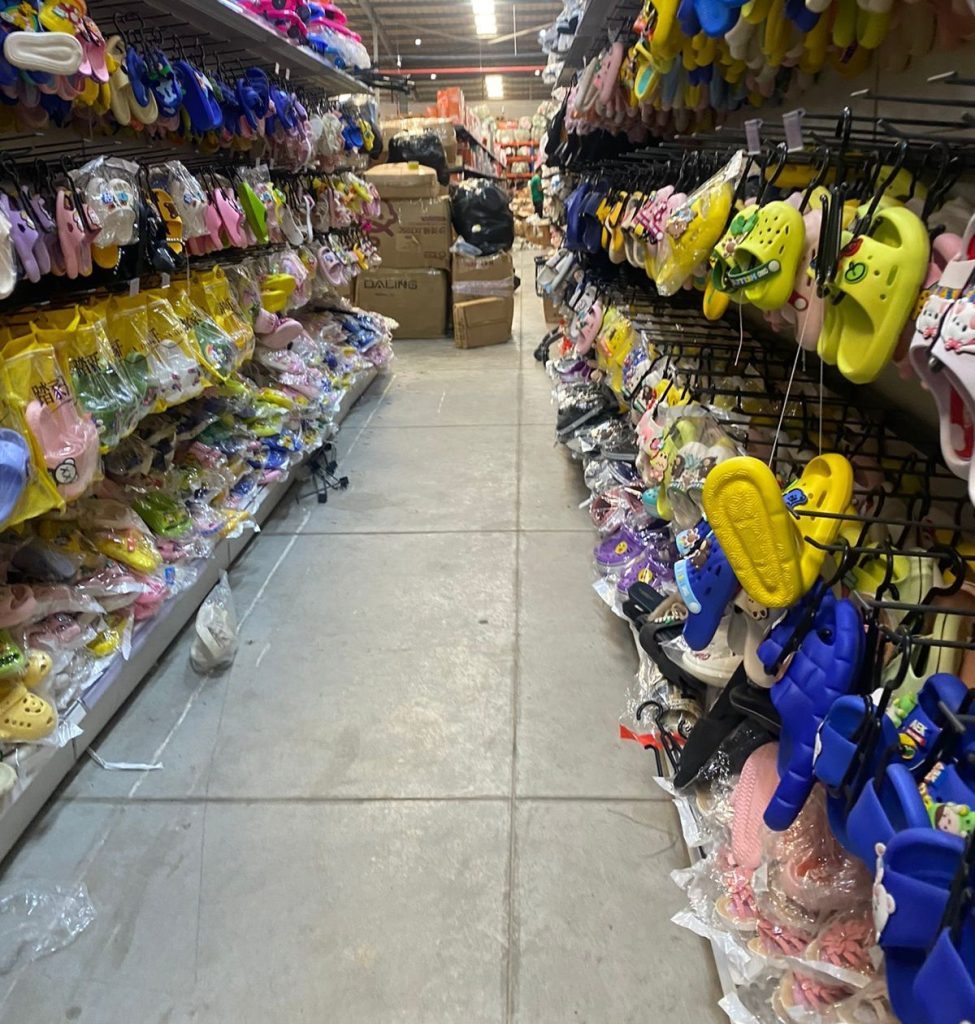
Business leaders in the sector believe that BCN investment statistics show that Chinese companies are actually entering the country with small investments, like the one announced by L&L Contemporary Exterior. This situation is repeated across dozens of general merchandise warehouses installed in many of the country’s 153 municipalities, as well as in automotive workshops, supermarkets, and construction companies that are proliferating nationwide.
They also complain that, regardless of how small these investments are, they compete unfairly with local companies in their respective sectors. Chinese firms enjoy advantages due to the Free Trade Agreement (FTA) that Nicaragua signed with China, in force since January 2024, which allows them to import not only the products they sell but also machinery, equipment, and even labor from China.
These benefits were recently expanded with the enactment of Law 1264, the Special Economic Zones (SEZ) Law of the Belt and Road Initiative. This law offers tax, customs, port, border, and administrative incentives, preferential rates for basic services, and other benefits for an initial period of ten years, renewable indefinitely. Companies operating under this law may even receive state-owned land to establish their operations.
Little Investment, but a Large Presence
Although official statistics confirm that the amounts invested by Chinese entrepreneurs are small, their presence across multiple sectors continues to grow. This expansion began just months after diplomatic relations were restored in December 2021 and was consolidated with the FTA’s entry into force on January 1, 2024.
According to Jorge González, president of the Association of Market Traders of Managua, forty Chinese megastores opened in the Oriental Market in December 2024 alone, offering products to wholesalers. These businesses later spread throughout the country, adapting to different socioeconomic segments.
Read also: Sanctioned Nicaraguan Mining Company Transfers Gold Concession to Chinese Firm
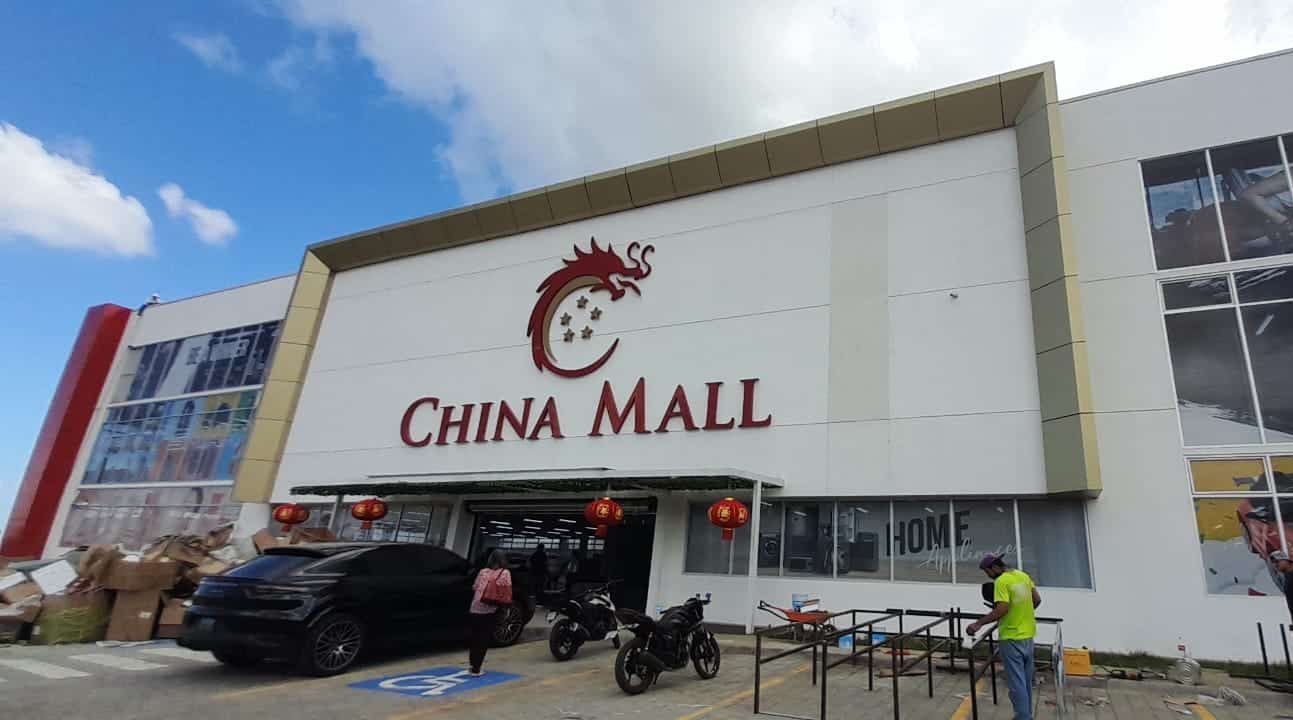
Large retail stores began operating in January 2024, when China Mall opened in Managua with an investment of US$500,000. The store offers all kinds of low-cost goods and paved the way for hundreds of similar shops in nearly every municipality. Many of them have been reported for labor abuses, including excessive working hours, failure to enroll workers in social security, lack of rest periods for meals, and nonpayment of overtime.
Chinese Companies Compete Among Themselves
So many similar stores have opened that competition among them has already forced some to close. Last year, Chinese investors also entered the food retail sector by opening several supermarkets, including Sogo and Casa China. These businesses are also expanding, though more cautiously, to other parts of the country.
By the end of last year, several businesses announced clearance sales due to closures. In 2024, Chinese investors also began opening automotive workshops. One of the first was Taller China, whose representative, Weng Chao Ming, said the investment totaled US$600,000 and would offer a full range of automotive services, including spare parts supply, mechanical repairs, wheel alignment, and automatic car washing.
Another area where Chinese companies are present is the vehicle market. One of the brands already represented in the country is Changan, which offers a wide range of SUVs, pickup trucks, and sedans.
Min Fun Steel is one of the few companies that has announced a “large investment.” In most other cases, companies speak of investments under US$1 million—or, more commonly, do not disclose amounts at all.
Also Active in Private and Public Construction
Chinese firms are also investing in logistics infrastructure for commerce, including leasing retail spaces and warehouses. The first project of this kind is a shopping center called Nuevo Mercado Oriental, located near the Ajax Delgado Police Complex in the capital. The construction, covering 80,000 square meters on a 52,000-square-meter site, is being carried out by the Chinese company Actisa. Its general manager, Xie Hangbin, has promised infrastructure that will improve the region’s commercial capacity.
You may be interested in: China Rewards Central American Allies With Major Projects While Nicaragua Gets Little
Construction companies not only compete unfairly with local firms but also exclude them from certain projects, as they receive state contracts for public works without participating in competitive bidding processes. Currently, China State Construction Engineering Corporation (CSCEC) is carrying out modernization works at Managua’s International Airport. Iconic Technology Company Limited (ChinaIctc) is financing and executing projects to improve logistics at Corinto Port, the country’s most important port.
Meanwhile, CSCEC is also building social housing under the Nuevas Victorias project. In the services sector, in the final months of last year, memorandums of understanding were signed with the Chinese company Nuctech, which could take charge of installing and operating scanning equipment and other inspection and security solutions at customs offices and some ministries.

Nicaragua Is Not a Major Destination for Chinese Investment
In the free trade zone sector, some Chinese companies—especially in textiles—are reportedly operating, although the current downturn in the sector means there is little information about new openings.
While small Chinese investments are affecting local entrepreneurs, they also reveal that Nicaragua is still not on the radar of major Chinese investors. A recent report by the specialized site Iberglobal notes that in the first half of 2025, Chinese investment in Latin America totaled US$2.8 billion—US$400 million more than in the same period of 2024. Most of that amount, US$2.2 billion, went to Brazil, where Chinese investors focused on automotive and infrastructure companies. The remainder was distributed mainly between Ecuador and Colombia.
This may also reflect concerns on the part of the Chinese government. A Country Guide for Investment and International Cooperation published by China’s Ministry of Commerce states that “Nicaragua offers an environment with abundant natural resources and legal security for foreign investment through national treatment,” that it “prioritizes sectors such as mining, renewable energy, and manufacturing,” and that despite bureaucracy, the single-window system facilitates trade.
Investment Guide Reflects Fears
However, the guide warns of various risks and dangers to investment, including political tensions, structural weaknesses in the economy and legal system, international sanctions due to human rights violations, politicization of the judiciary, a very limited domestic market, and centralized government control that can affect companies’ ability to choose partners based on market principles.
Despite these concerns, over four years of relations with Nicaragua, Chinese investors have received vast extensions of national territory through mining concessions. Between January 2022 and October 10, 2025, they were granted 43 concessions covering a total of 660,006.70 hectares—equivalent to 6,600.06 square kilometers, or 5 percent of the national territory.
Since then, additional concessions have been granted. In December, the company Nicaragua Xiajiang Mining Group S.A. received a 13,350-hectare concession. In January of this year, Y.M. Mining Company S.A. received a 46,172.50-hectare concession covering parts of the municipalities of Siuna and Waslala in the North Caribbean Coast Autonomous Region (RACCN).