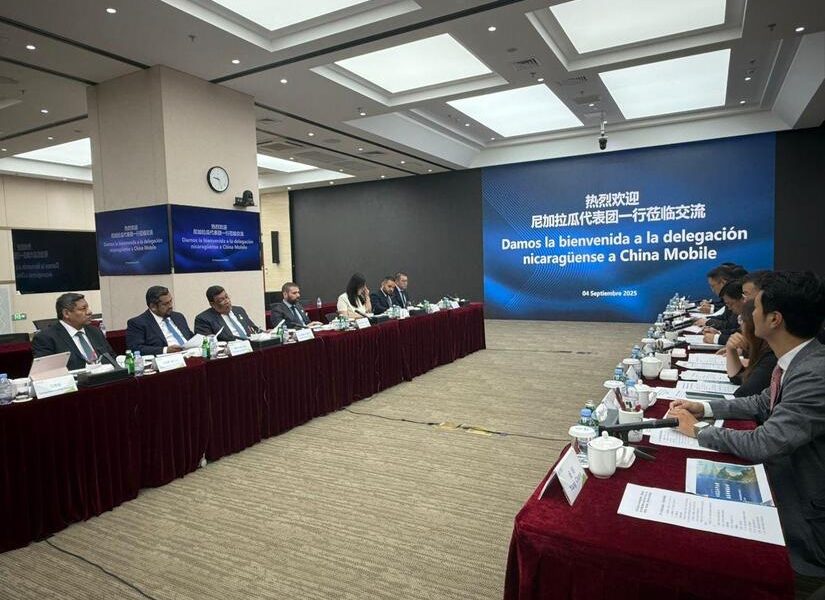
Although the implementation of the agreements signed with China remains uncertain, the possibility that the Chinese company Nuctech Company Ltd. could provide scanners to Nicaraguan customs, as announced last week, would likely create friction with the United States, as recently happened with Honduras.
In 2020, this semi-state-owned company was included on the U.S. Department of Commerce’s Entity List, and since last year it has been facing a legal dispute with the European Commission over unfair competition and security concerns.
Nuctech Company Ltd., headquartered in Beijing, was founded in 1997 by several professors from Tsinghua University, making it one of the university’s affiliates. The company specializes in manufacturing inspection and security equipment, including scanners for screening individuals and travelers, luggage, cargo, and vehicles, as well as other devices used in civil aviation, customs, railway transportation, and large public events. Its parent company is the state-owned Tsinghua Tongfang, which is controlled by the China National Nuclear Corporation.
Read also: Ortega hands over Nicaragua’s customs IT systems to a Chinese company
According to international trade media, although around one hundred countries use the scanners and other security equipment manufactured by the Chinese company Nuctech, many governments —including those of Canada and Lithuania— are concerned about the company’s ties, as it is partly state-owned, to the Communist Party and the Chinese military.
Seeking support from Nuctech
Last week, during his visit to Beijing to take part in the celebration of the 80th anniversary of “the Chinese people’s victory over Japanese aggression,” the son of the dictators, Laureano Ortega Murillo, together with the officials accompanying him, met with representatives of the company Nuctech in search of cooperation on X-ray scanner technology projects.
The information released so far does not provide details about the project. It is only known that the delegation also signed the memorandum for the Project to Modernize the IT Systems of the General Directorate of Customs Services (DGA).
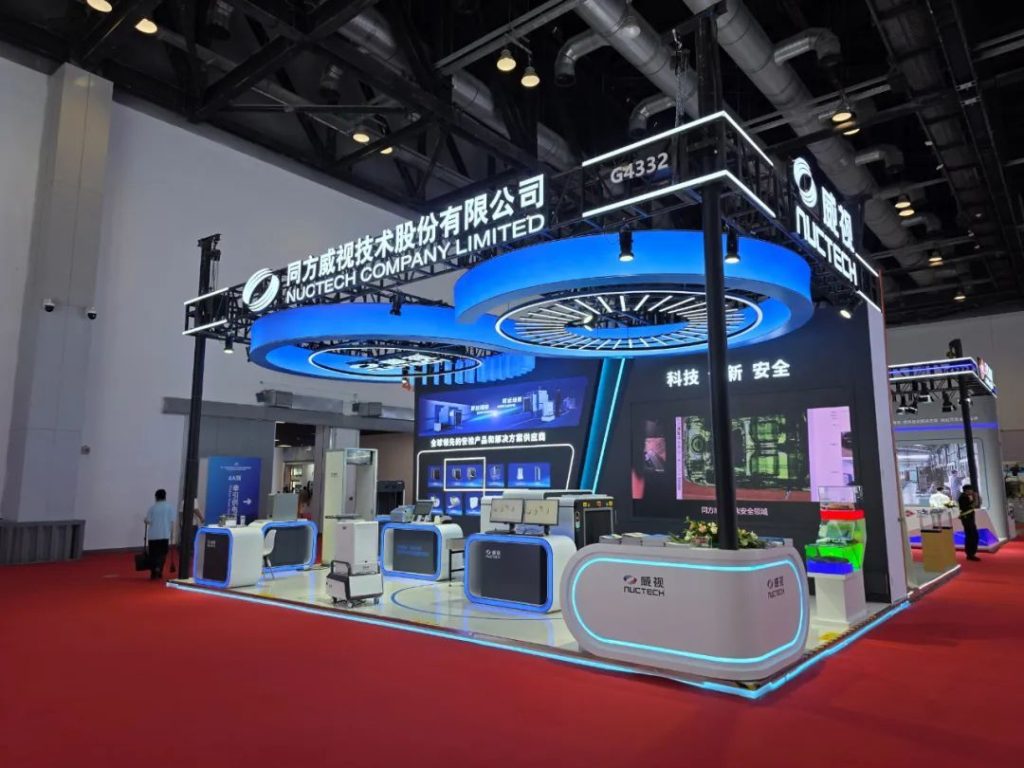
However, with the 15-year concession granted in 2013 to the Panamanian company Alvimer Internacional y Compañía Limitada for operating the customs scanning system nearing expiration, it appears that the process to select a new provider for these services has begun. Nevertheless, the choice of that company could trigger opposition from the United States, as happened last June when it blocked Nuctech from installing X-ray scanners in Puerto Cortés.
Chinese company did not enter Honduras
According to news reports, in June of this year, the United States warned Xiomara Castro’s government that if it awarded Nuctech Company Ltd. the contract to install X-ray scanners at the Puerto Cortés customs terminal, the port could risk losing its Secure Port certification, which allows it to conduct commercial operations under international security standards.
The project began in April 2024, and according to Honduran authorities, the Chinese company was chosen because it submitted the lowest bid—$11.16 million—while six other companies submitted offers ranging from $15.9 million to $39.5 million.
Read also: Where Is the Debt to China? The Dictatorship Does Not Record Loans from Beijing in National Accounts
The installation of this equipment will be financed by the Inter-American Development Bank (IDB), and authorities will soon launch a new bidding process, as the government declared the previous one void, claiming that Nuctech did not renew the validity of its offer. However, sources close to the matter confirmed that it was pressure from the United States—citing concerns over the company’s security standards—that prevented Nuctech from entering Honduras.
EU investigates Nuctech for unfair competition
It was precisely concerns over the company’s security standards that led, in 2020, to the U.S. Department of Commerce’s Bureau of Industry and Security (BIS) placing Tongfang Technology Ltd. (Nuctech) on its Entity List.
“The poor performance of Nuctech equipment undermines U.S. efforts to combat the illicit international trafficking of nuclear and other radioactive materials. Low-performing equipment means less rigorous cargo inspections, increasing the risk of proliferation,” reads part of the resolution for that designation, which is no longer in effect.
Additionally, in 2024, European Union (EU) competition regulators raided Nuctech offices in the Netherlands and Poland as part of an investigation to assess whether the subsidies the company receives allow it to submit “excessively advantageous bids” that push other EU companies out of competition, and also for potential data security threats related to the scanners.
You Might Be Interested: Ortega Gave a Chinese Company More Money Than Agreed for Punta Huete Airport
Defends itself and offers support for the investigation
The Chinese company Nuctech filed an appeal with the European Court of Justice in Luxembourg, but in March the court rejected the request to suspend the European Commission’s decision to inspect the company. Nuctech expressed regret over the EU’s highest court ruling and reiterated that the subsidies it receives are not illegal and do not distort the European market. The company also pledged to cooperate with authorities to clarify its position and to maintain its commitment to fair competition and regulatory compliance in the EU market.
Meanwhile, the investigation continues and indicates that the situation in Honduras—where Nuctech submitted a bid significantly lower than those of the six other companies participating in the tender—was not an isolated case but rather a common practice of the company.
The International Air Transport Association (IATA) describes Nuctech Company Limited as “one of the leading providers and manufacturers of security inspection systems,” with equipment based on radiation imaging technologies and linear accelerators. “Nuctech successfully offers a full range of system products and solutions for a wide variety of fields, including aviation security, customs, railway security, industrial manufacturing, medical devices, and environmental protection,” according to IATA’s profile.