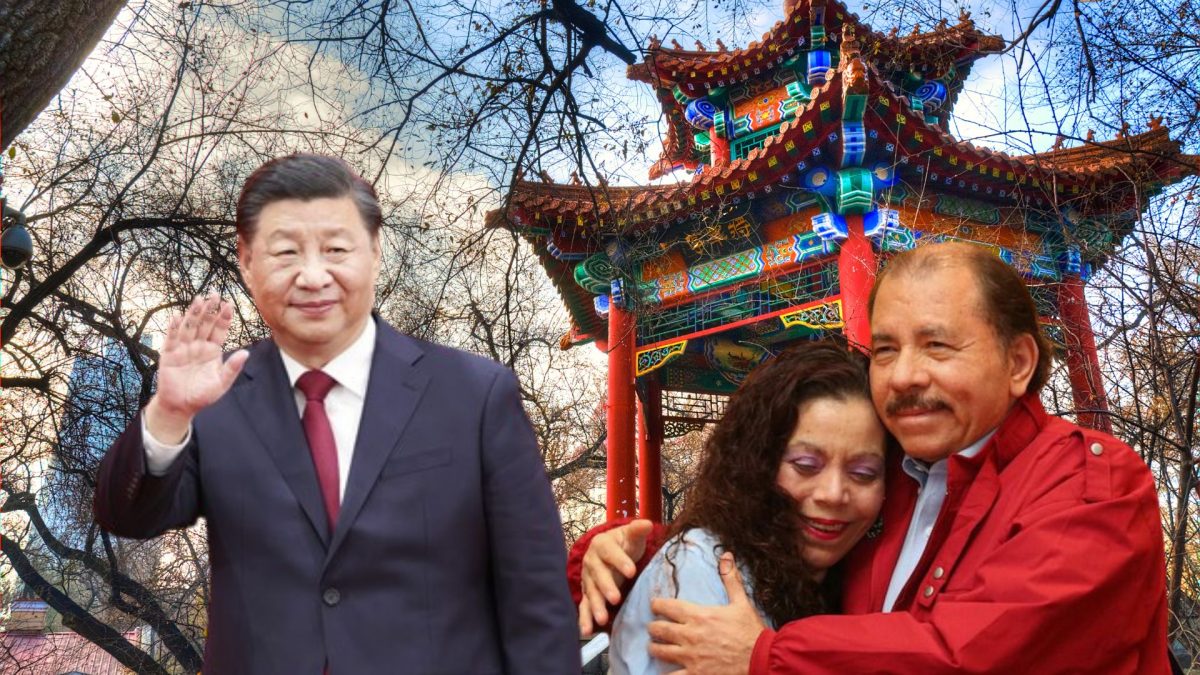
The regime of Daniel Ortega and Rosario Murillo is moving ever closer toward a one-party state. This is evidenced by its latest political maneuvers, including a recent electoral reform that eliminates opposition participation entirely. However, it also exhibits distinct «sultanistic» traits. On the other hand stands China, where a consolidated «party-state» has been institutionalized. Although the two countries differ significantly in size, geography, and population, they share notable structural parallels, according to a comparative analysis by César Santos, a researcher at “Expediente Abierto”, a Central American think tank.
Nicaragua reestablished diplomatic relations with mainland China on December 10, 2021, just one day after cutting ties with Taiwan. This rapprochement with Beijing immediately paved the way for formal diplomatic and commercial ties, while ushering in a strong influence of the Chinese regime’s model in Managua.
«We cannot draw mechanical comparisons between the two regimes, as they stem from vastly different historical political experiences, and their present institutional frameworks differ in several respects. Nevertheless, they fundamentally share the characteristic of being two closed autocracies, among the most repressive in the world«, the expert explains.
César Santos specializes in the study of illiberalism and Chinese influence across Central America. Last July, he published a report revealing how China has turned Nicaragua into its primary strategic foothold in Central America to challenge U.S. influence throughout Latin America.
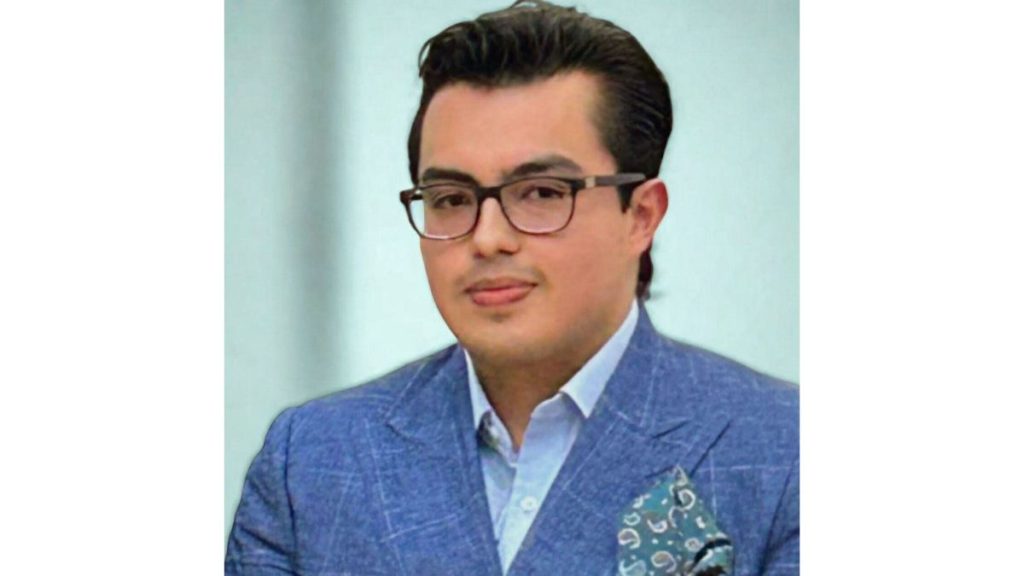
The researcher highlights -to the two previous characteristics- a shared anti-U.S. posture as another core commonality between Nicaragua and China. «Their primary shared trait is that both are closed autocracies aligning around a common rhetoric against the West, against the post–Cold War liberal consensus, and very specifically against the global leadership of the United States.»
Two Regimes Born of Revolutions
Both regimes emerged from socialist revolutions. The Chinese regime was born out of the 1949 Maoist Revolution. Following a civil war that began in 1927, Mao Zedong and the Chinese Communist Party defeated Chiang Kai-shek’s Nationalist government, taking power in 1949. Mao proclaimed the founding of the People’s Republic of China in Beijing, while Chiang Kai-shek and most of the Nationalist forces retreated to Taiwan, establishing the Republic of China.
In Nicaragua’s case, the Sandinista Popular Revolution ousted dictator Anastasio Somoza Debayle in 1979. Subsequently, the Junta of National Reconstruction governed from 1979 to 1985, because Daniel Ortega was elected president in the 1984 elections. Ortega assumed office in 1985 and served until 1990, when he lost the presidency in an election to Violeta Barrios de Chamorro. He returned to power in 2007 and has since maintained control through state-sponsored repression and electoral fraud, as documented by multiple national and international organizations.
An Anti-U.S. Stance
Although Xi Jinping is typically measured in his public statements regarding the United States, on February 20, 2023, the Ministry of Foreign Affairs of the People’s Republic of China issued a document accusing Washington of employing various tactics to maintain «global supremacy,» labeling U.S. hegemony a global risk.
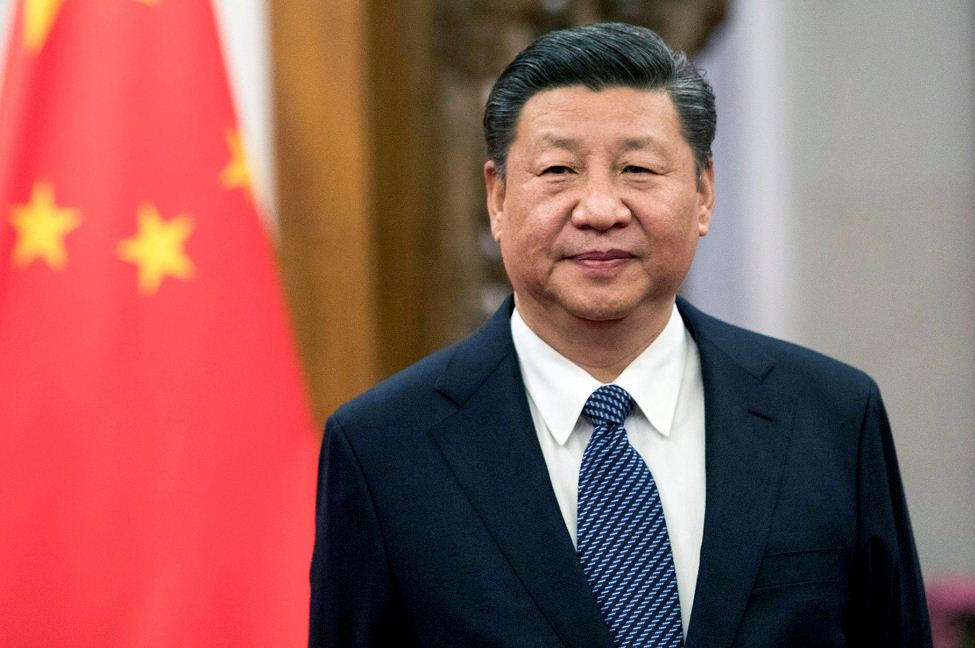
«The United States must engage in deep self-criticism. It must critically examine its actions, abandon its arrogance and prejudice, and step away from its hegemonic, domineering, and abusive practices,» concluded the document released by the Chinese Foreign Ministry.
Ortega, by contrast, has not limited himself to launching direct, aggressive personal attacks against U.S. President Donald Trump. On April 20 of this year, during an official public event, Ortega called the U.S. leader «mentally deranged» for «kidnapping» Nicolás Maduro in Venezuela and for threatening «to tear apart» Cuba through military operations.
«[Donald Trump] was even fighting for the Nobel Peace Prize, but they didn’t give it to him (…) It’s a problem, we could say, of mental instability. As we say here, he’s not in his right mind,» Ortega claimed during the official ceremony marking National Peace Day. «The president of a superpower who isn’t in his right mind is going to destroy his own people, and he is destroying world peace and stability,» Ortega continued.
Although the Nicaraguan and Chinese regimes share anti-U.S. alignment, César Santos differentiates them by noting that while the Ortega-Murillo regime is trending toward a single-party structure, «it also retains sultanistic features.» He defines this as «a governance style marked by dynastic inheritance and entrenched clientelist networks.» China, conversely, represents «a more institutionalized, Marxist-Leninist party-state.»
Repression in Nicaragua vs. Repression in China
In July 2018, Nicaragua carried out «Operation Clean-up» (Operación Limpieza), the peak of the regime’s brutal crackdown against widespread public protests. According to data from the Nicaragua Nunca Más Human Rights Collective, state police and paramilitary forces killed at least 220 people between June and August of that year. Meanwhile, halfway across the world, the Chinese government was executing its own crackdowns.
According to international news outlets such as Deutsche Welle (DW), employees at Shenzhen Jasic Technology Co., Ltd., an industrial welding manufacturer, faced harsh repression from their employer and police forces for attempting to organize an independent labor union. Dozens of workers were threatened, intimidated, beaten, subjected to workplace retaliation, detained, and abused.
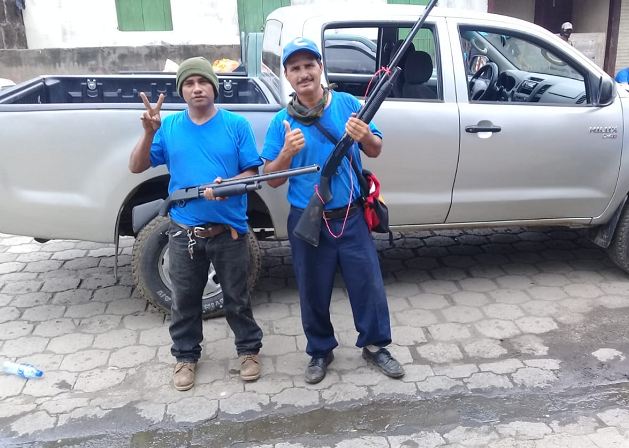
The total death toll in Nicaragua during the brutal 2018 crackdown stood at 355 people between April 18, 2018, and July 31, 2019. Hundreds were injured or imprisoned, and thousands were forced into exile due to political persecution, according to figures from the Inter-American Commission on Human Rights (IACHR).
Over the same period, China ended 2018 with an estimated 800,000 individuals arbitrarily detained. Furthermore, «more than two million Uyghurs, ethnic Kazakhs, and other Muslim minorities» were interned in re-education camps designed «to eradicate their religious and ethnic identities» under the official pretext of «combating terrorism, separatism, and extremism,» according to a report by the U.S. Department of State. The report added that «security officials in the camps abused, tortured, and killed some detainees.»
The Influence of the Chinese Model in Nicaragua
Santos emphasizes that China «has exerted a massive influence» on the Nicaraguan dictatorship. «Beijing promotes cooperation across technology, public policy, state restructuring, and propaganda, which the Ortega-Murillo regime adopts almost uncritically to consolidate its grip on power. In return, Managua makes significant concessions to China.»
Among these concessions, the researcher points to «mining concessions and designated special economic zones under the Belt and Road Initiative.» Currently, 22 Chinese enterprises hold concessions covering 84 mineral exploration and extraction concessions. This land area spans over 1.27 million hectares, amounting to «nearly 10% of Nicaragua’s national territory,» according to reports by the environmental group Fundación del Río.
The expert stresses that the primary capability Nicaragua “has tried to copy from Beijing” is the adoption of technology for repression or digital authoritarianism. He highlights artificial intelligence, facial recognition, video surveillance, and centralized data storage used specifically for «surveillance, political repression, and censorship.» These technologies are «supplied or facilitated by state-linked Chinese corporations, including Huawei, ZTE, and Dahua,» he adds.
On August 22, the regime inaugurated the «Momotombo» Monitoring, Alert, and Response Center in Managua. Valued at over $42 million and funded by China, official state media reports that the facility will incorporate surveillance cameras, drones, robotic dogs, seismic and volcanic monitoring stations, and emergency response systems.
«Ortega is actively seeking to innovate and adopt these technologies to entrench his authoritarian rule,» Santos concludes.