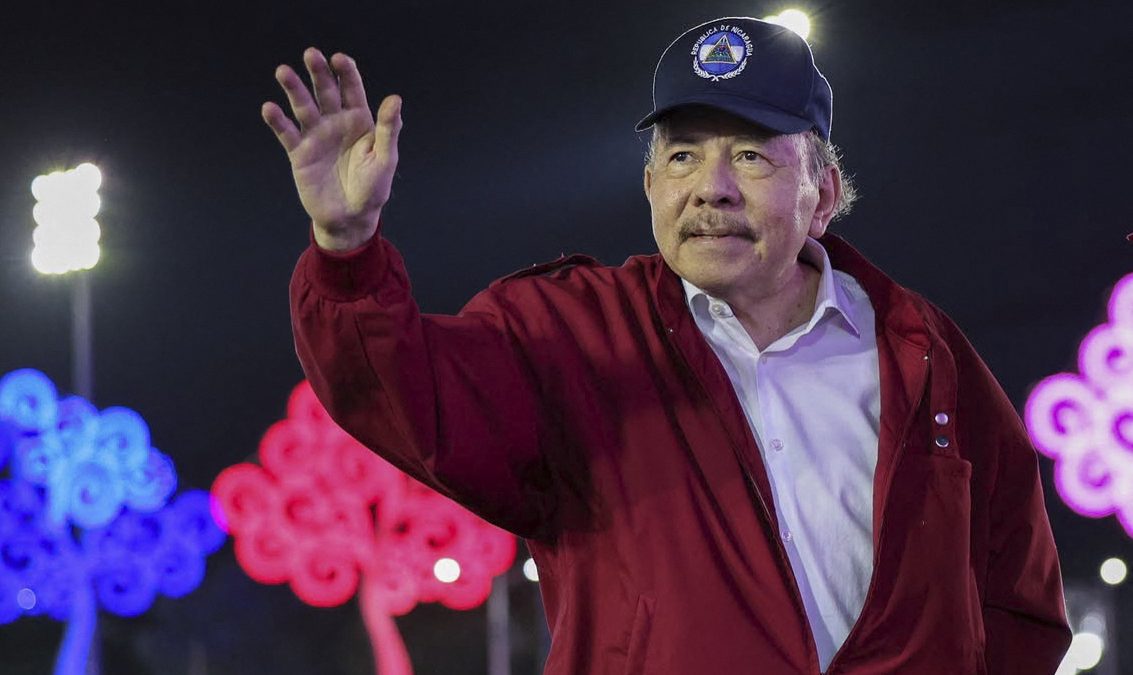
Dictator Daniel Ortega declared Sunday, during celebrations marking the 47th anniversary of the Sandinista Revolution, that Nicaragua will never again hold elections because they provide the opposition with an opportunity to return to power. Ortega made the remarks during the July 19 commemoration, when Sandinistas celebrate the overthrow of dictator Anastasio Somoza Debayle and the Sandinista movement’s rise to power.
«Here we established by law that education would be free—that no one could charge for primary school, secondary school, or university. And we’re building more schools equipped with the latest technology. But they’re still lurking out there. They would love to win elections so they could profit from the schools. They can forget about it. There will never be elections here again. There will never again be elections so they can use them to seize the government, to seize power,» Ortega said during his speech.
He added that he would work with the National Assembly and the relevant institutions to enact new legislation.
«We have to pass laws that build a wall, a barrier, against coup plotters and traitors, so that no matter how much money the Yankees give them, they will not succeed—they will not succeed, they will not succeed,» Ortega insisted.
Read also: Italy Condemns Ortega Regime, Demands Justice for Fugitive Red Brigades Terrorist Alessio Casimirri
According to Ortega, although Nicaragua is not at war, it is not at peace either.
«No. They spend their time conspiring, organizing, trying to form political parties so that, in some election they imagine will happen, those parties can win. That chapter is over. Parties created by the Yankees, by the Somocistas, will never again return to government… Never, never, never!» Ortega shouted.
The Ortega-Murillo Narrative
Ortega did not clarify whether the suspension of elections is intended solely to prevent opposition leaders—many of whom have since been imprisoned, stripped of their nationality, had their assets confiscated, or been forced into exile—from participating in future elections, or whether even tightly controlled elections involving the so-called «satellite parties,» which since 2011 have lent legitimacy to electoral fraud by taking part, will also be discontinued.
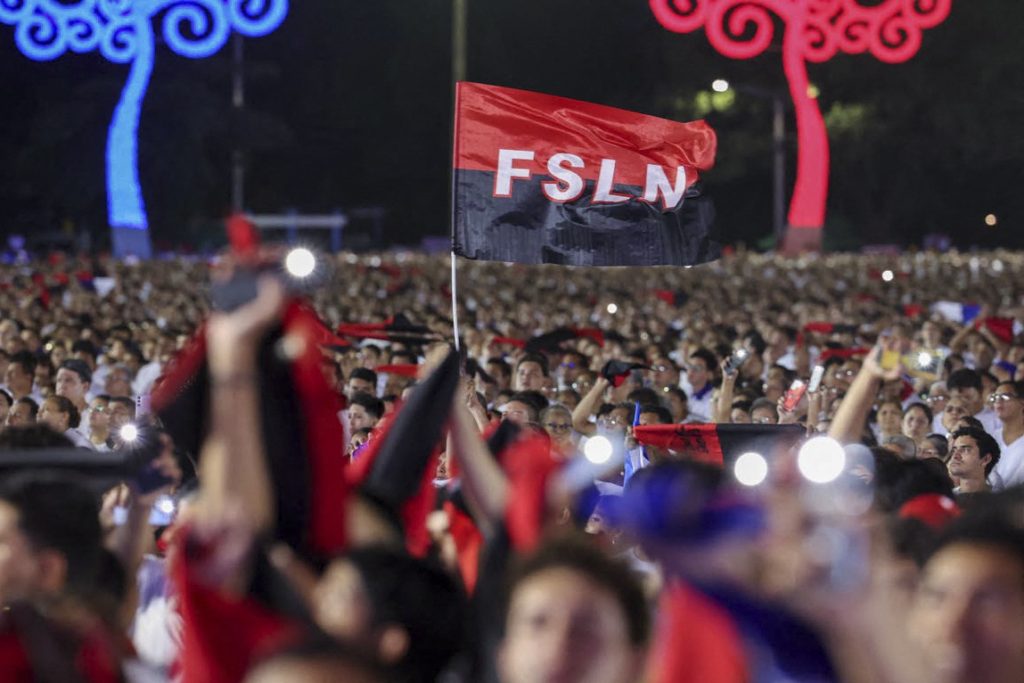
As they have done in most years since returning to power in 2007, Daniel Ortega and his wife, Rosario Murillo, filled Managua’s Plaza de la Fe with thousands of public employees who were required to attend the event and bring a guest. The celebration also featured thousands of young people entertained by performers under the age of 20—the same number of years Ortega has remained in power—who delivered the traditional tributes to Sandinismo.
These young attendees have known only one version of Nicaragua’s history. Since they were born, Ortega and Murillo have remained in power, leaving them with no point of comparison. Throughout their education, Nicaragua’s public school system has also taught them to «admire and appreciate» the benefits of the Ortega-Murillo government’s continued rule. The Sandinistas returned to power in 2007 after a 16-year absence following their defeat in the 1990 elections, having first governed from 1979.
Whether out of conviction or convenience, many of those attending the Plaza de la Fe have embraced the government’s narrative of an attempted coup, or simply choose to ignore the grave human rights violations and crimes against humanity allegedly committed by the Ortega-Murillo regime since 2018 to suppress nationwide anti-government protests.
Ortega Says Business Leaders Betrayed Him
During his speech, Ortega again claimed that the 2018 protests, which saw roadblocks erected across the country, left him with no choice but to «respond with the people’s anger.» He also repeated his accusation that Nicaragua’s business leaders betrayed him and organized what he describes as a U.S.-backed coup attempt.
«We made enormous efforts to preserve peace in this country. Remember that in 2018 we had agreements with the business sector, with the Somocistas who were businessmen. We had a broad agreement for peace, everything was moving forward, and then came the stab in the back. They organized the coup, used funds from the United States to recruit young people and adults, train them, arm them, and overthrow the legitimate Sandinista government,» Ortega said.
According to international human rights organizations, including bodies affiliated with the Organization of American States (OAS) and the United Nations, the crackdown that followed the 2018 protests left more than 350 people dead, hundreds injured, thousands imprisoned, and forced nearly one million Nicaraguans into exile.
«The People’s Anger»
«They tried. The blood of young people, adults, women, and children was spilled. In the end, there was no choice but to answer them with the full force of the people’s anger. When they had paralyzed the country with roadblocks everywhere, there was no alternative but for the police, volunteer police officers, and young people to dismantle those barricades. Not a single roadblock remained,» Ortega said, without acknowledging that hundreds of people were killed or wounded during the operations to remove the barricades.
He added only that, after the roadblocks were dismantled, those he described as coup organizers complained and portrayed themselves as victims, while blaming them for the killings and destruction that occurred during «Operation Cleanup,» the security campaign that crushed the protests.
«Now they complain. From the United States they complain that these poor innocent people are imprisoned, when they’re shameless criminals, murderers. Even when presented with the evidence of the killings, they still refuse to understand,» Ortega said.
Then and Now: A Different July 19 Celebration
The aging dictator concluded his speech by stressing the need to «defend peace» in order to «guarantee the continuation of work, infrastructure projects, hospitals, universities, housing, and all the programs we are carrying out and will continue to carry out»—a claim that contrasts with Nicaragua’s precarious labor market, where informal employment dominates.
«Even if the devil himself stands before us, we’ll make the sign of the cross, and the devil will run away,» Ortega declared.
You may be interested: How an Iran-Linked Oil Tanker Used a False Nicaraguan Flag to Evade Sanctions
The ceremony, broadcast nationwide on radio and television, featured aerial footage showing an orderly and carefully organized crowd. The almost perfect order stood in sharp contrast to the massive, spontaneous gatherings that characterized July 19 celebrations during the 1980s, when the enthusiasm of young people inspired by the revolution fueled hopes among many Nicaraguans. Forty-seven years later, Nicaragua remains among the three poorest countries in Latin America.
Rosario Murillo’s commanding presence was also on display. At one point, while her daughter Camila held a lamp to illuminate the text Murillo was reading, Murillo grabbed her daughter’s arm to signal that she was not doing it correctly. It was a brief but revealing moment, underscoring the demanding nature of serving as one of Murillo’s closest aides.