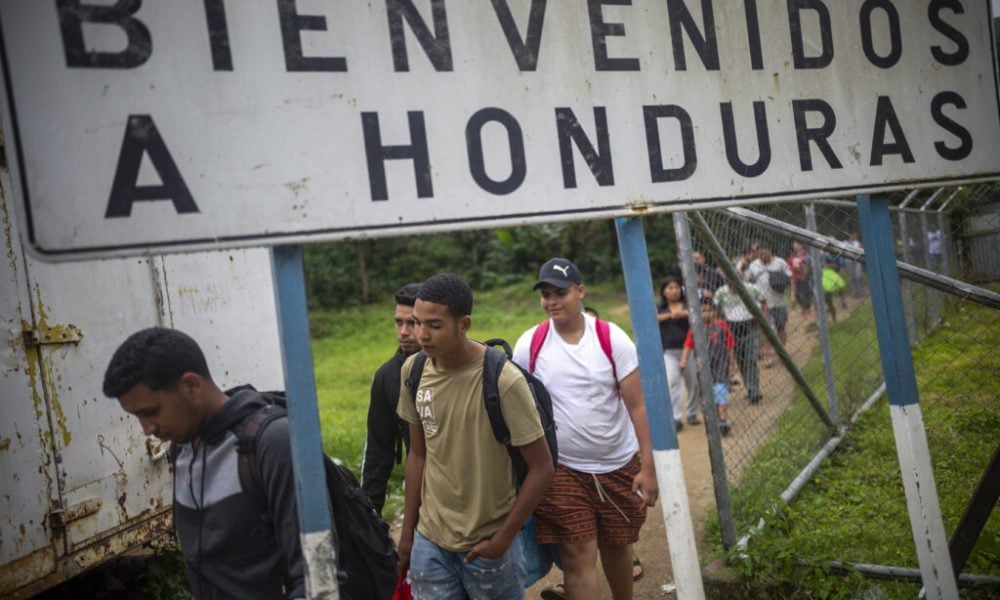
The Honduran government reported a 90% drop in the irregular entry of foreign migrants compared to last year, but warned that despite the overall decrease, a significant number of Cuban citizens continues to arrive. These migrants usually travel to Nicaragua thanks to a visa-free agreement between Havana and Managua.
According to data from the National Institute of Migration (INM), between January and November 6, 32,043 people entered irregularly, compared to 345,569 recorded in the same period in 2024.
Nicaragua, true to its policy of censoring official data, does not report figures on migrant trafficking or disguises them as “tourists.”
Honduran authorities attribute the collapse in irregular migration to the tightening of U.S. immigration policies and increased controls in Mexico.
However, Cubans make up a significant share of the statistics: they total 16,790 travelers so far this year.
Also read: Nicaragua receives a record number of people deported from the United States
Cuba and Haiti dominate the current flows
The INM notes that Haitians are the second-largest group with 8,037 entries, followed by Venezuelan migrants (1,582).
Citizens from Ecuador, China, India, Vietnam, Iran, and Nepal are also recorded, confirming that the region remains part of multiple global routes toward North America.
Although January was the month with the highest influx (8,341), the trend declined through September. In October there was a slight uptick with 4,524 entries, and in the first six days of November, 1,199 migrants entered, half of them Haitian and 44% Cuban.
Nicaragua as a “gateway
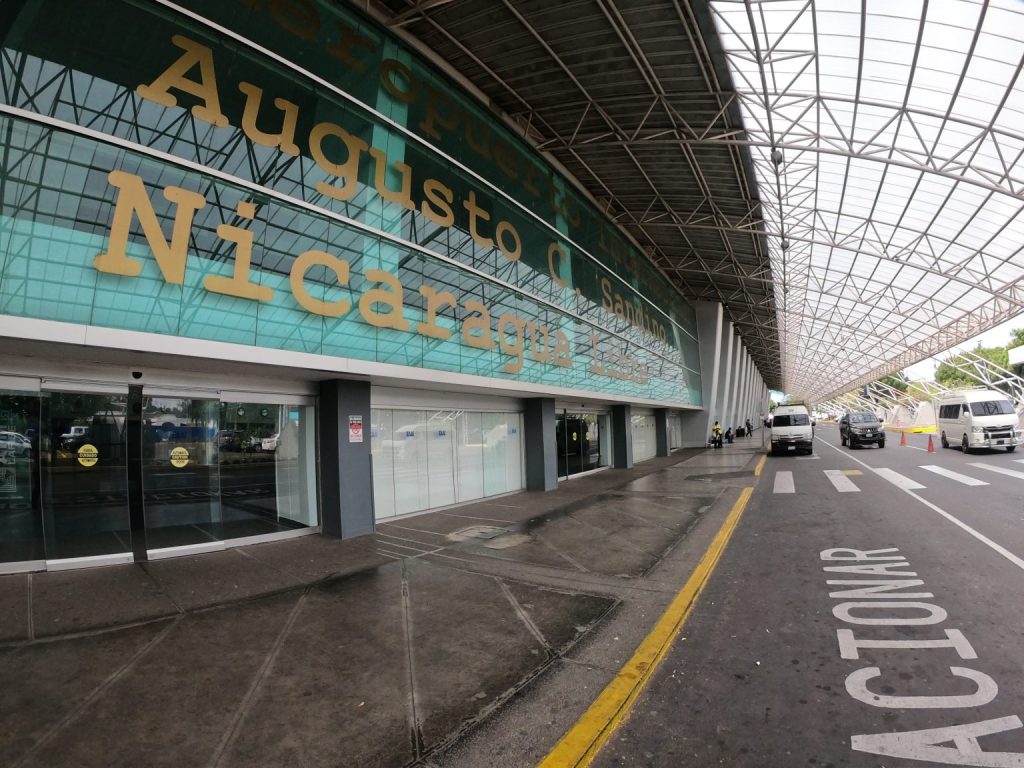
The persistent flow of Cubans worries Honduras for one key reason: Nicaragua maintains a visa-free policy for citizens of the island.
This makes Managua an accessible arrival point to continue the journey overland toward Mexico.
The context is not new. Before January 2025, Nicaragua had consolidated a dual role in irregular migration toward the United States.
On one hand, it was experiencing its own exodus: since 2018, more than 600,000 Nicaraguans left the country fleeing political repression, economic crisis, and lack of freedoms, forming the largest emigration in its recent history.
On the other hand, it became a regional bridge for migrants from third countries, who arrived from all over the world on charter flights.
Also read: Migratory extortion: the Ortega–Murillo dictatorship intensifies exile and extortion policies
IOM had reported it in August
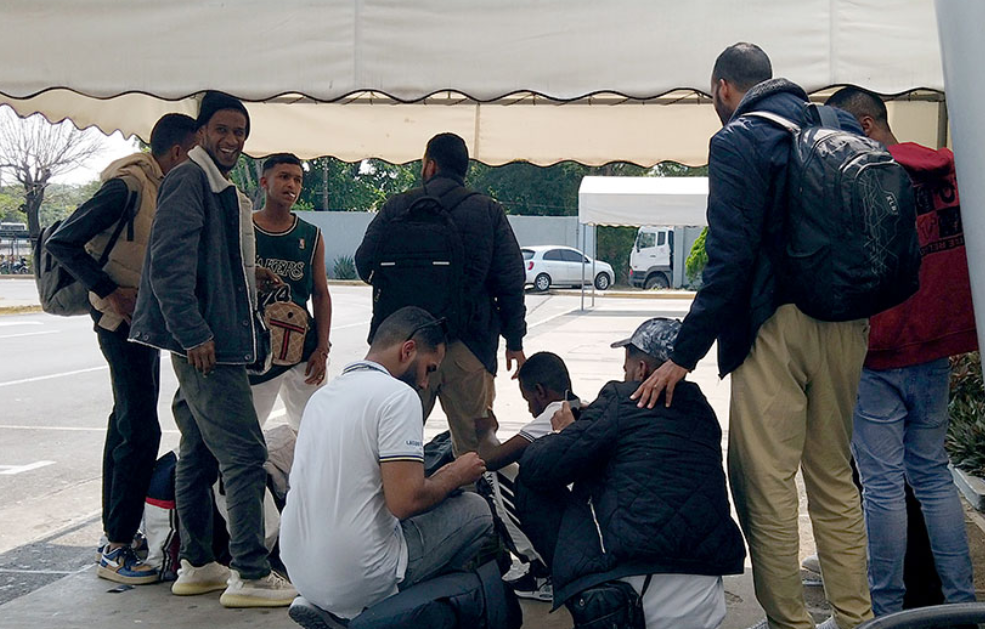
Between January and July 2025, 21,617 migrants heading to the United States entered Honduras. The IOM reported this on August 28, based on data from the Honduran National Institute of Migration, as cited by the EFE news agency.
The figure showed a clear pattern: 83% were Cuban, a majority that confirms the sustained migratory pressure from the island and the Central American route that remains active despite regional controls.
The rest of the nationalities were distributed in smaller but significant proportions. Ecuadorians represented 5%. Chinese, 3%. And an additional 9% corresponded to people from other countries.
The IOM report also recorded movement in the opposite direction. In the same period, 18,291 people began the return journey to South America. Ninety-six percent were Venezuelan and 4% Colombian.”
A migratory business that benefited the regime
Between 2021 and 2024, the government of Daniel Ortega and Rosario Murillo eliminated visa requirements for Cubans, Haitians, and citizens of various African and Asian countries, which triggered hundreds of charter flights to Managua.
Migrants paid between 2,000 and 5,000 dollars per ticket, in addition to fees and migration “fines.” Once in Nicaragua, they began the land journey toward Honduras.
Figures show that more than 400,000 Cubans used this route between 2021 and 2024, generating millions in profits for Nicaragua.
Between January and October 2023 alone, Nicaragua’s General Directorate of Migration collected nearly 66 million dollars in charges related to these flows.
In 2024, the trend continued despite visa restrictions imposed by the U.S. on airlines and operators involved.
You may also be interested in: The United States dismantled 70 charter flight routes — what is happening with tourism in Nicaragua?
Internal exodus and tensions with the U.S.
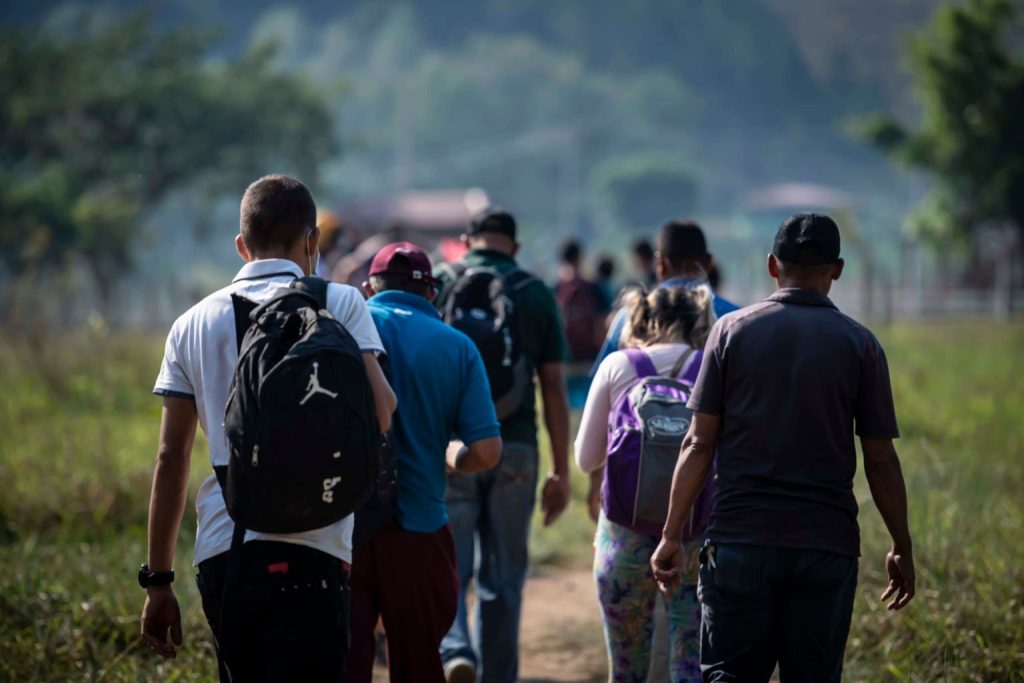
While Nicaragua facilitated the transit of foreigners, it was also expelling its own population.
The repression following the 2018 protests, the shutdown of NGOs and universities, and the economic deterioration pushed hundreds of thousands of Nicaraguans to seek asylum or humanitarian pathways in the United States and Costa Rica.
The combination of repression and human smuggling generated economic resources for the dictatorship. Remittances sent from the U.S. exceeded 4 billion dollars in 2023 and sustained the national economy.