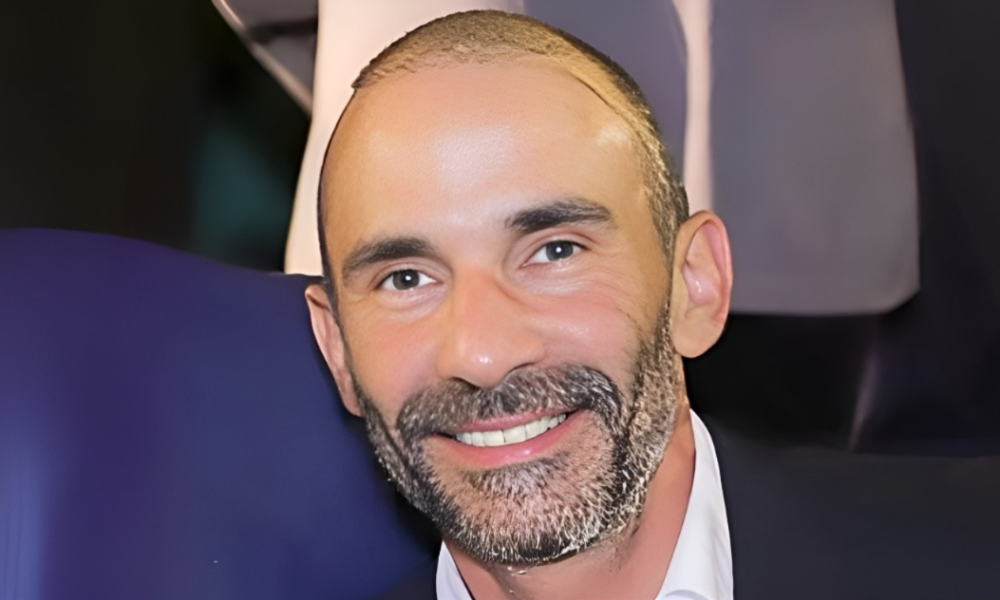
Álvaro Baltodano Monroy not only approached what would become his three partners in 2013 to enter the Momotombo geothermal plant business, but he also sought additional investors against the clock, as less than a year remained before the license granted to the Israeli group Ormat Holding—which had operated the plant since 1999—was set to expire. Although the concession was renewable, Baltodano Monroy expected he could secure it.
A source from the private sector revealed that Baltodano Monroy assured potential investors that Daniel Ortega had already decided to remove Ormat from the picture. In meetings, he referred to the dictator as “El Gallo”—without mentioning his name—to convey familiarity that he then used to inspire confidence in those he wanted to attract to his ventures.
These revelations about Baltodano’s business practices were published a day after LA PRENSA documented, through U.S. court proceedings, the details of the purchase and the individuals involved in pursuing a deal that appeared promising for their interests.
Baltodano Monroy is the son of retired General Álvaro Baltodano Cantarero, one of the dictatorship’s main economic operators. However, that relationship broke down. In May, the father was arrested, followed by his son in July, after the state accused them of money laundering, in an operation analysts and opposition members associate with Rosario Murillo’s purges against the so-called “historic Sandinismo.”
The Ortega Murillo family could take over the business
As part of a so-called “fight against corruption,” the dictatorship’s authorities canceled the concession held by Baltodano Monroy and his partners, alleging that they had failed to meet the investment commitments outlined in the 2013 agreement between Momotombo Power Company (MPC) and the Nicaraguan Electricity Company (Enel).
According to an expert consulted by LA PRENSA, who requested anonymity, after Baltodano Monroy’s departure, Ortega could place new allies to gain control of the geothermal plant.
“In Nicaragua, not a single hair can move without Ortega’s approval. The risk of increased corruption exists, because now he could transfer the concession to frontmen through another web of offshore companies, with extremely high energy purchase prices. I am referring to a company in which the Ortega Murillo family could ultimately be the beneficiaries through regime proxies,” the expert added.
Sources in the sector indicate that since Baltodano Monroy was arrested in July, Enel has taken control of operations, and in the offices—located in a house in Las Colinas—there is also staff from the Attorney General’s office, “the people who make administrative decisions.”
Baltodano Monroy and his partners paid very little
The sale price of $7.5 million for the power plant was the first thing that caught the attention of the expert consulted by LA PRENSA. Ormat’s financial statements from late 2012 show how healthy the business was.
“If you value that company based on its cash flow-generating capacity, it is worth much more. And they paid only $7.5 million for it. In the first and second years, the investment should have already been recouped. (The Baltodanos) didn’t invest anything and continued receiving money for 12 years. And on top of that, they bought it at a low price,” the source explained.
Access to Ormat’s 2012 financial statements was made possible through the Pandora Papers leak, obtained by the German newspaper Süddeutsche Zeitung and shared with the International Consortium of Investigative Journalists (ICIJ).
Read also: Dictatorship Arrests the Son of Retired General Álvaro Baltodano, Who Is Also Imprisoned
This document indicates, according to the expert, that a reasonable valuation of the company as of December 31, 2012, was between $8 and $10 million, “and with cash on hand, the price rises to between $9.5 and $11.5 million.”
However, the expert says the actual value is much higher. “It is a going concern that will generate profits from the very first year, so the sale price could be around $37 million, yet they paid $7.5 million,” he reiterated.
But they didn’t even repay the loan
Baltodano Monroy partnered with Mexicans Arturo Gamboa Rullán and his maternal uncle Pablo Monroy. The fourth partner was Guatemalan Fernando Paiz. Gamboa lent $8.6 million to buy the plant from the Israelis and start the business. That relationship ended badly because, despite the advantageous conditions under which they acquired the concession, they did not even repay the loan to Gamboa Rullán.
Read also: Baltodano Inc.: Momotombo Power, a Profitable Venture Created in the Shadow of Ortega
Following the failure to repay the loan, the Mexican magnate filed a lawsuit for damages against Baltodano Monroy in Florida in 2023. Meanwhile, his lawyers are seeking to obtain documentary evidence in New York to demonstrate the alleged mismanagement of Momotombo Power Company, a company registered in the Cayman Islands with a branch in Nicaragua, through which the concession was operated.
Lack of transparency
In Nicaragua’s energy sector, concessions last at least 15 years, with the state requiring investments and purchasing energy at a fixed price. The agreement with MPC is not available on the websites of the Nicaraguan Institute of Energy (INE) or the Ministry of Energy and Mines (MEM); the INE site only displays the 2001 agreement with Ormat, while the MEM links lead to pages showing “404 not found.” As a result, it is unknown whether the deal with Baltodano Monroy was more favorable than that of his predecessors.
Another business source familiar with the sector indicated that the purchase price allowed the new owners to potentially make the business more profitable than would be considered reasonable. “That was a result of influence, and they removed a legitimate company (Ormat) from the picture… for investors with no knowledge of the business. From that perspective, it was not a good deal for Nicaragua.”