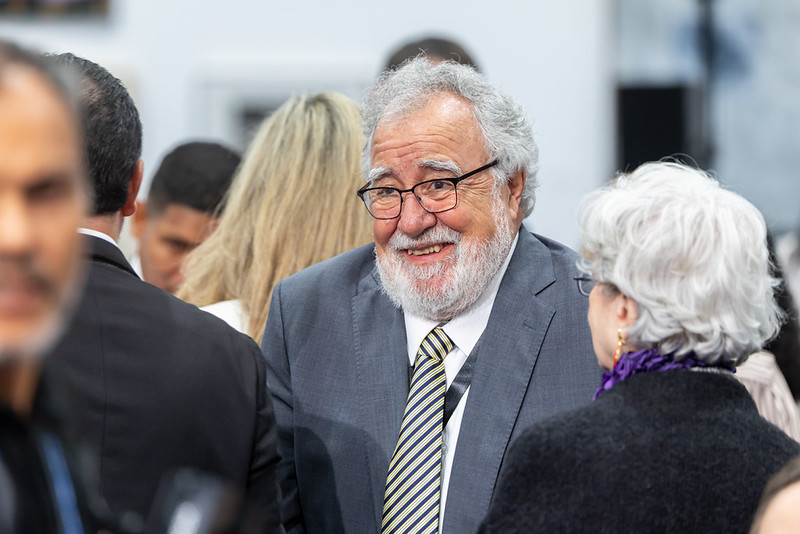
Mexico’s Permanent Representative to the Organization of American States (OAS), Alejandro Encinas, attempted to justify his delegation’s abstention during an August 19 vote to convene a meeting of foreign ministers to address the ongoing crisis in Nicaragua. Encinas claimed his government abstained because the United States intends to «subordinate the hemispheric agenda to [its] national security strategy.»
During the August 19 OAS session, 29 member states voted in favor of convening a meeting of Ministers of Foreign Affairs to address the situation in Nicaragua «as soon as possible.» Brazil voted against the motion, Mexico abstained, while Haiti and Venezuela were absent. This marks the second attempt by the Mexican government to defend its abstention, following initial comments by Mexican President Claudia Sheinbaum.
“Smear campaigns and disinformation are spreading without restraint. Now it is Mexico’s turn regarding our stance on the discussion of the OAS intervention mechanism in Nicaragua—a debate where the proponents didn’t even bother to understand the underlying substance,” Encinas wrote in an op-ed published in the Mexican newspaper El Universal and cross-posted to his X account.
After expressing «concern» over dictator Daniel Ortega’s announcement cancelling future elections in Nicaragua, Mexico’s OAS representative argued that «the August 19 Permanent Council session did not vote on whether to support or oppose the Nicaraguan regime, much less on agreeing with the cancellation of elections.»
“This is no minor issue, especially in the current regional context where attempts are being made to securitize and subordinate the hemispheric agenda to the U.S. National Security Strategy. High-ranking officials from OAS member states are issuing hostile messages that threaten the sovereignty and territorial integrity of other nations, grounded in doctrines aimed at securing hemispheric supremacy, controlling strategic infrastructure and critical minerals, and inventing new enemies—such as narcoterrorism and far-left terrorism,” Mexico’s OAS envoy asserted.
During his remarks at the OAS on August 19, Encinas stated that “Mexico expresses its deep concern over recent statements by co-president Daniel Ortega, to the effect that elections will no longer be held in Nicaragua”—the same quote included in his post on X referencing Ortega’s July 19 declaration.
However, Encinas added that “Nicaragua does not constitute a threat to hemispheric peace or security,” and therefore Mexico does not support “calling a consultation meeting of foreign ministers.” According to Encinas, Mexico declined to back the resolution because the call “lacks sufficient grounds and stems from an ambiguous overall goal.”
The Reality on the Ground in Nicaragua
Encinas appears oblivious to the reality of Nicaragua, a country where Daniel Ortega has held power for over 19 years. Ortega has systematically dismantled the state, erasing institutional independence and consolidating absolute control over both military and police forces.
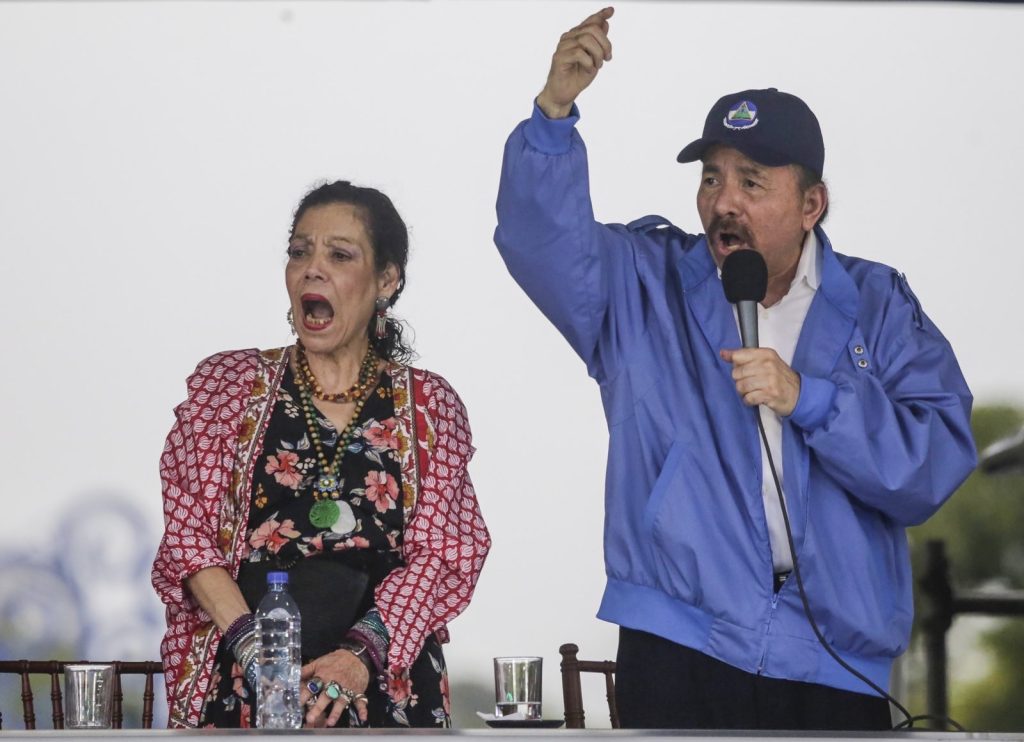
Furthermore, civil society organizations within Nicaragua and international bodies—including the OAS itself, the Inter-American Commission on Human Rights (IACHR), and the Group of Human Rights Experts on Nicaragua (GHREN)—have extensively documented how Ortega maintains his grip on power through election fraud and state violence.
Between April 18 and July 31, 2018 alone, the IACHR documented at least 355 fatalities resulting from the violent crackdown on peaceful anti-government protests. The vast majority of these victims died at the hands of police units and pro-regime paramilitary forces operating with the backing of the Nicaraguan Armed Forces, as detailed in reports published by both the IACHR and GHREN.