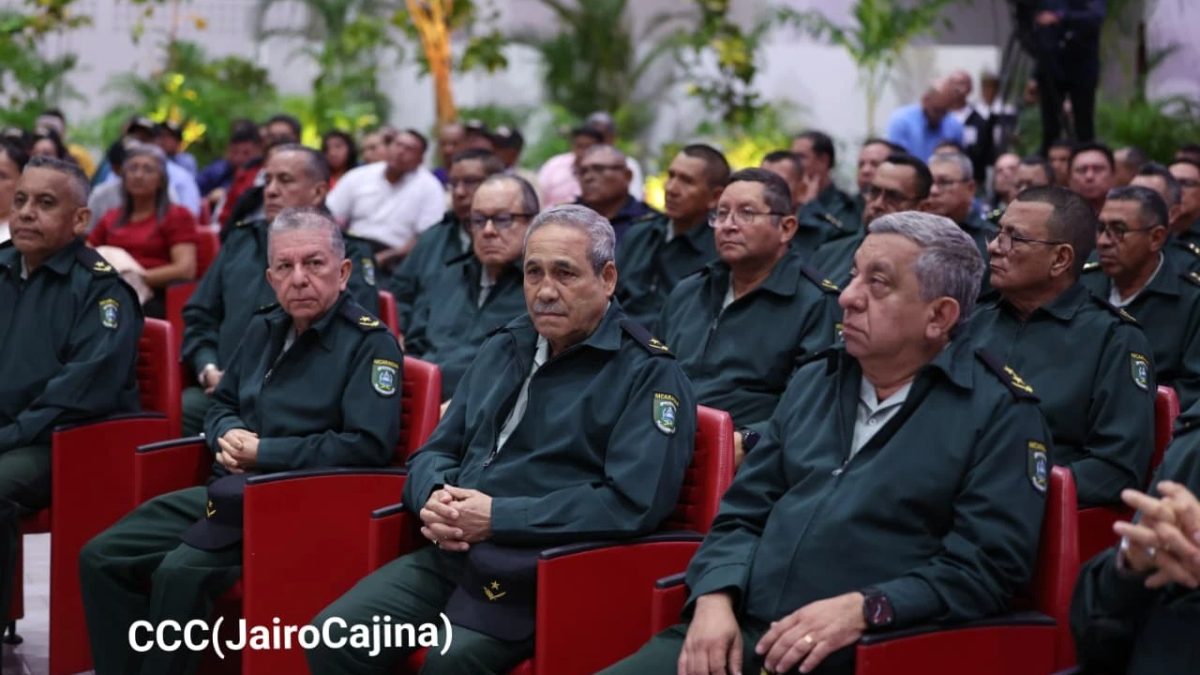
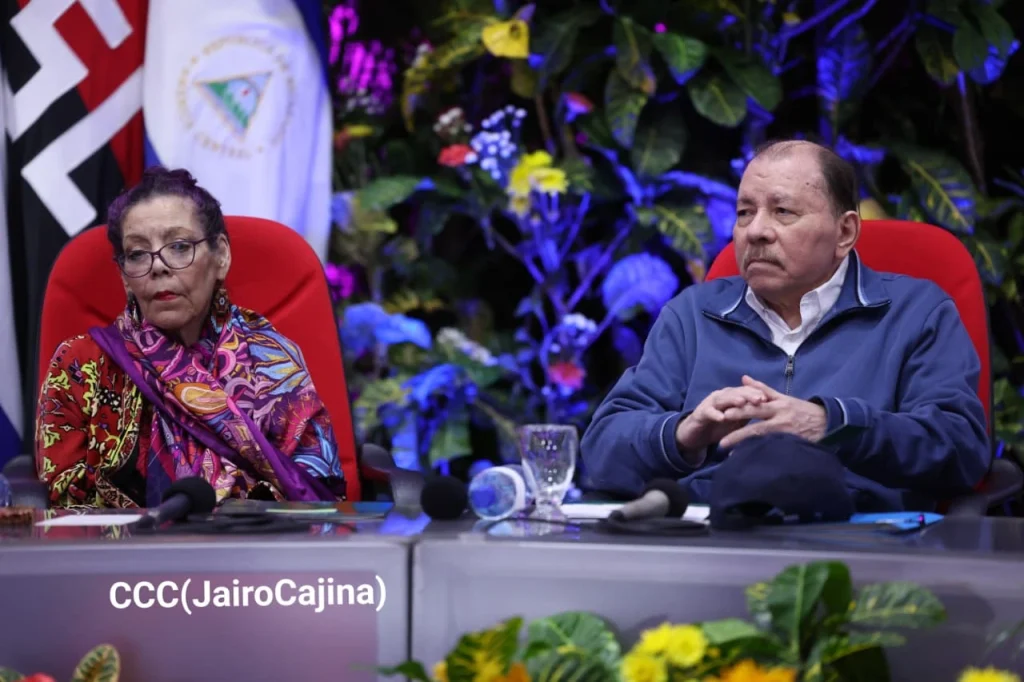
On the night of August 17, when dictator Daniel Ortega appeared rambling and disoriented while invoking Noah’s Ark during a commemoration for the Nicaraguan Naval Force, a room full of elderly men in military uniforms watched him with visible perplexity.
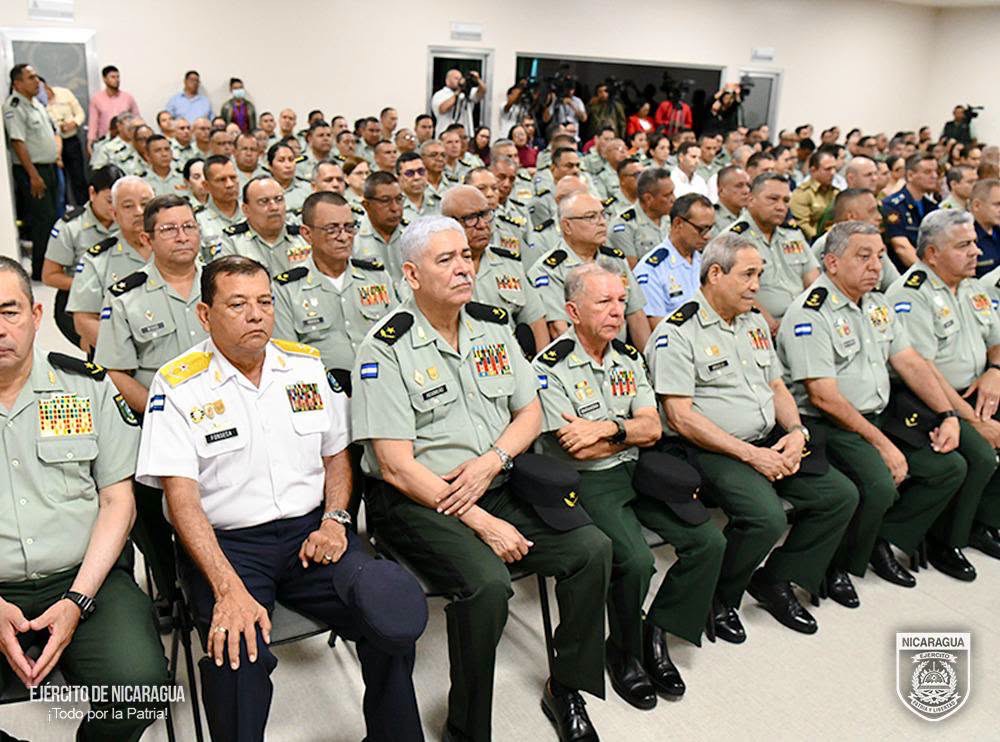
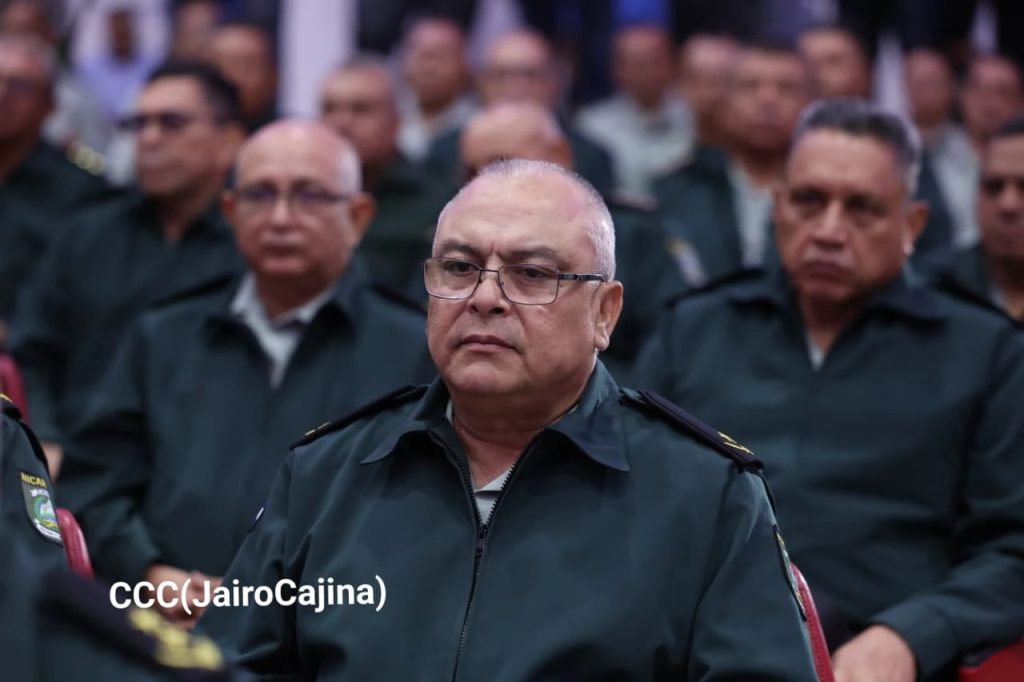
At every official ceremony held by the High Command of the Nicaraguan Armed Forces, the exact same scene plays out: rows of dress uniforms and olive drabs, epaulets and lapels loaded with stars, and, sitting front and center, row after row of graying heads.
This is no coincidence. Of the 28 generals currently making up the Nicaraguan military brass, the vast majority are over 60 years old. Several of its most prominent figures have held the exact same posts for more than a decade.
They have grown old in uniform right alongside Daniel Ortega.
Generals in Their Seventies
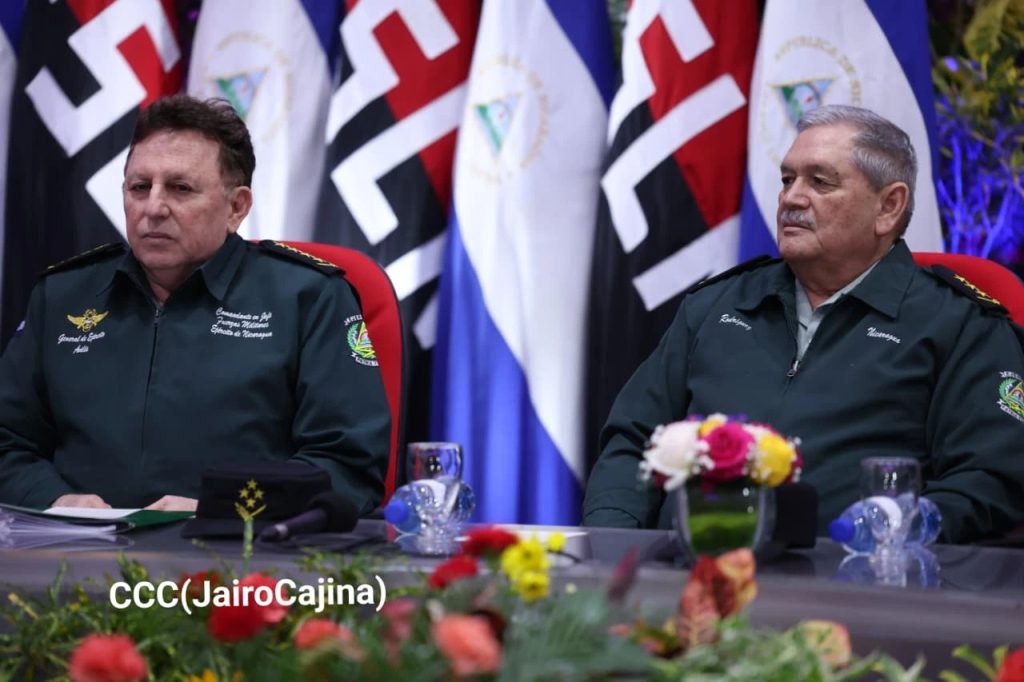
Army General Julio César Avilés Castillo is 70 years old. The Chief of the General Staff, Lieutenant General Bayardo Rodríguez, is 65. The Inspector General, Lieutenant General Marvin Elías Corrales, is 66.
This frozen image of aging military commanders is not a demographic accident, according to a Nicaraguan security expert who spoke from exile under condition of anonymity due to fear of reprisals.
A former researcher at the Institute for Strategic Studies and Public Policy (IEEPP), he explains that the aging high command is the deliberate result of nearly two decades of legal engineering driven by Ortega to co-opt the military establishment.
«Starting in 2008, he began dismantling the generational turnover mechanism that had governed the Armed Forces since 1995, replacing it with an indefinite tenure scheme tied directly to political loyalty,» he notes.
Original Design: Turnover, Not Term Extension
The analyst highlights that the Code of Military Organization, Jurisdiction, and Social Security (Law 181 of 1995) was established with an explicit mandate toward professionalization: to untangle the Armed Forces from the partisan loyalties inherited from the Sandinista Revolution and to ensure the military leadership was periodically renewed.
Under that framework, military personnel faced a hard cap of 30 years of active service before mandatory retirement. High command members—including the Commander-in-Chief—were required to step down every five years, clearing the way for a new generation of officers.
In theory, it was a structural turnover pipeline designed so that no single individual could entrench themselves at the apex of military power.
That framework began to fracture almost immediately after Ortega returned to the presidency in 2007.
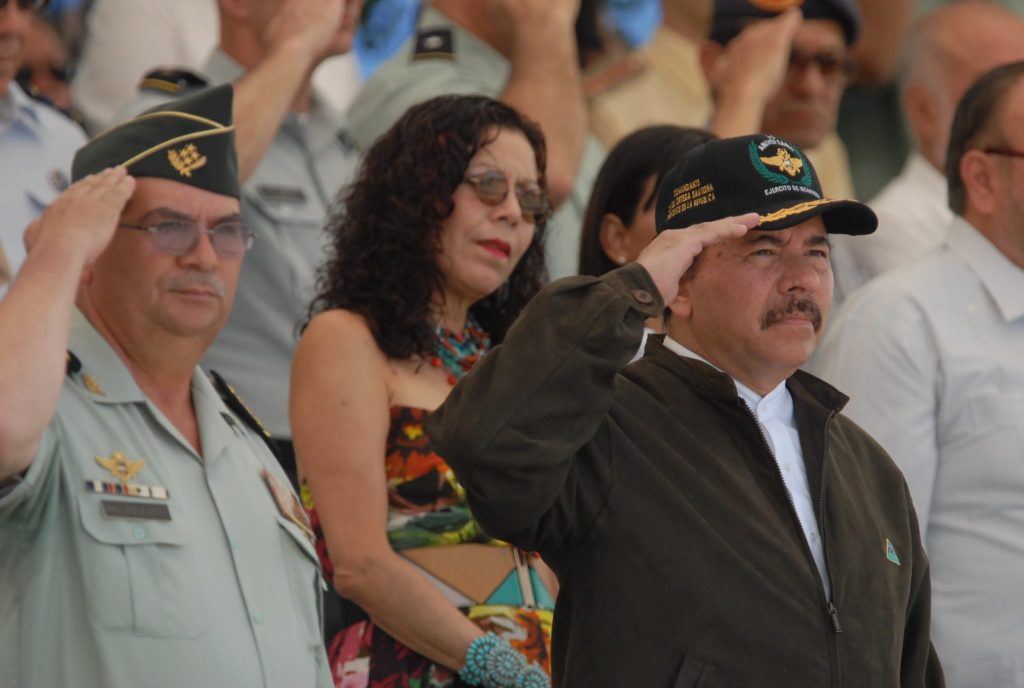
That same year, Ortega publicly reminded the military brass of their Sandinista roots. Months later, he openly challenged the non-partisan, non-political mandate assigned to the military by the Constitution.
In December 2007, speaking directly to the high command and graduating cadets at the Military Academy, Ortega laid his cards on the table: «A dog, an elephant, a lion, or a cat can be non-political… but thinking human beings cannot!»
It was the first clear signal that the institutional safeguards built in the 1990s would be dismantled piece by piece.
The First Cracks: 2009 and 2013
The legal erosion began with a 2009 revision to internal military regulations, extending active service limits from 30 to 35 years and raising the mandatory retirement age from 55 to 60.
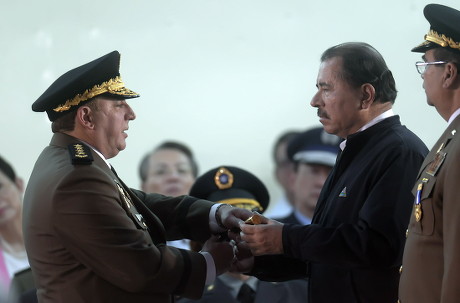
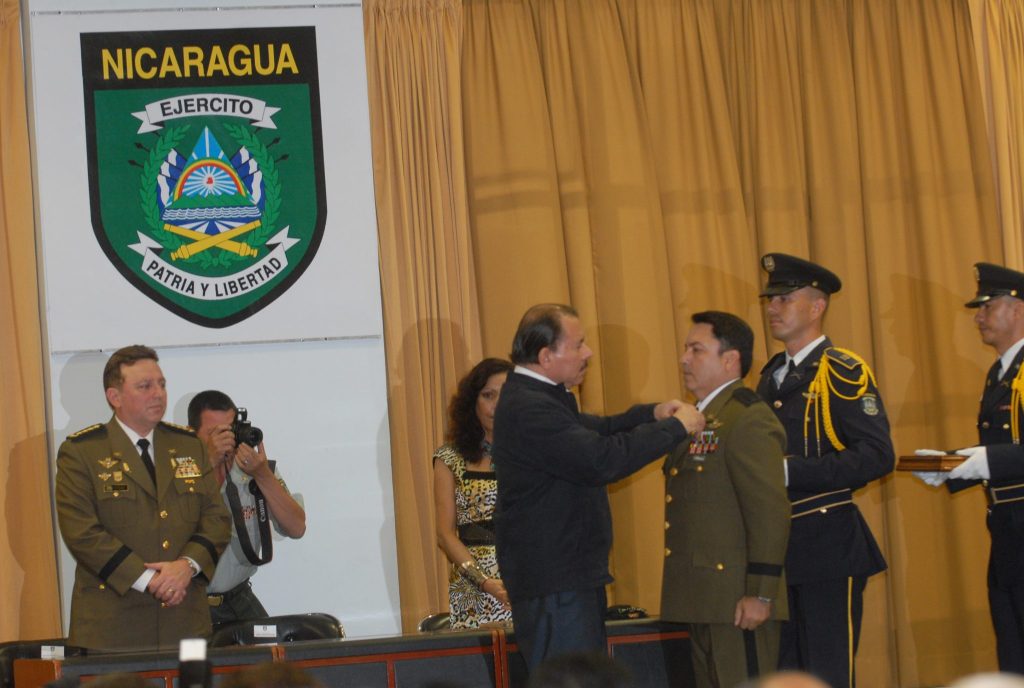
That same year, Ortega appointed Julio César Avilés as Commander-in-Chief for the 2010–2015 term, playing up his past history as a Sandinista guerrilla fighter against Anastasio Somoza rather than highlighting his professional credentials.
The decisive turning point arrived in 2013, when Ortega submitted a overhaul package for Law 181 to the National Assembly. The bill extended active duty limits to 40 years—among the longest terms in Latin America—and created legal loopholes to recall retired officers under the guise of «national interest.»
That same legislative package struck down the mandatory retirement clause that would have forced Avilés out in 2015, enabling his first re-election and smashing the institutional succession and promotion ladder.
Months later, Avilés sidelined his natural successor, Major General Óscar Balladares, whom Ortega reassigned to a figurehead position as a presidential advisor without defined duties.
This arbitrary pattern—repeated against other officers deemed inconvenient by the inner circle—consistently prioritized military founders who originated from the old FSLN guerrilla ranks.
The «Institutional Bottleneck»
Sociologist and political analyst Óscar René Vargas observes that the aging officer corps imposes a severe economic burden on the nation without delivering any practical societal benefit.
Vargas raises a fundamental question: Why does a 16,000-strong army require 28 active generals in the absence of an armed conflict?
«They consume larger salaries, seniority bonuses, higher fuel allowances, specialized geriatric care budgets, and impose immense pressure on mid-level officers seeking promotion,» Vargas notes.
He adds that because the high command remains dominated by former guerrillas from a war that ended nearly five decades ago, the institution projects a image of decay rather than modern military readiness.
«These aren’t just elderly generals; these are commanders trained during Cold War doctrine 60 years ago,» Vargas emphasizes. «What you have today is a board of senior citizens acting as administrative managers to keep the military’s private enterprises and business ventures afloat.»
The Final Blow to Generational Succession
In late November 2024, the regime-controlled National Assembly extended the terms of both the Army Commander-in-Chief and the National Police Chief from five to six years.
This paved the way for Ortega to reappoint Avilés for a fourth consecutive term through February 21, 2031, granting him an unprecedented 21 consecutive years at the head of the Armed Forces.
The legal restructuring did not stop there.
Just four months later, in March 2025, the Assembly passed another sweeping overhaul of Law 181 to «harmonize» military regulations with the revised Sandinista Constitution enacted in February of that year.
The reform amended 40 existing articles and added 16 new provisions to the Military Code.
Chief among these updates was extending active military service caps from 40 to 45 years, coupled with an «institutional interest» clause. This provision grants the executive—acting on a proposal from the Commander-in-Chief—the authority to retain general officers in active duty even after exceeding the traditional retirement cap of 65 years.
This legal mechanism is precisely what keeps the 70-year-old Avilés in place, well above the age ceiling that nominally applies to his subordinates.
The structural consequence, security analysts warn, is an insurmountable «institutional bottleneck.» Approximately 28 senior generals remain entrenched at the top of the pyramid, completely blocking advancement for younger officers who would have stepped into leadership roles under the original 1995 framework over a decade ago.
Dictatorship Entrenched in the Ranks
The legislative maneuvering continues unabated.
In July 2026, the Ortega-Murillo regime introduced another constitutional amendment before the National Assembly to extend terms from six to seven years for «all elected positions and executive presidential appointments.»
This explicitly encompasses both the Army Commander-in-Chief and senior law enforcement directors.
National Assembly President Gustavo Porras framed the decision directly to the military leadership during constitutional «consultations»: if the presidential term is extended to seven years, the exact same formula applies to the Commander-in-Chief of the Nicaraguan Armed Forces and police leadership.
If enacted in September 2026 as expected, Avilés’s mandate—previously set to expire in February 2031—will be extended to 2032, at which point he will be 76 years old.
Avilés has already pledged full institutional backing for the reform on behalf of the High Command and the Corps of Generals.
The tangible outcome of this legal engineering is visible at every state ceremony: generals in their late 60s and 70s filling the front rows—graying or bald, some using canes, nearly all wearing glasses—watching an aging Ortega lose his train of thought while rambling on about Noah’s Ark and 1920s air raids against Sandino.
Also read: Nicaragua Army Chief Backs Ortega as U.S. and OAS Pressure Mounts