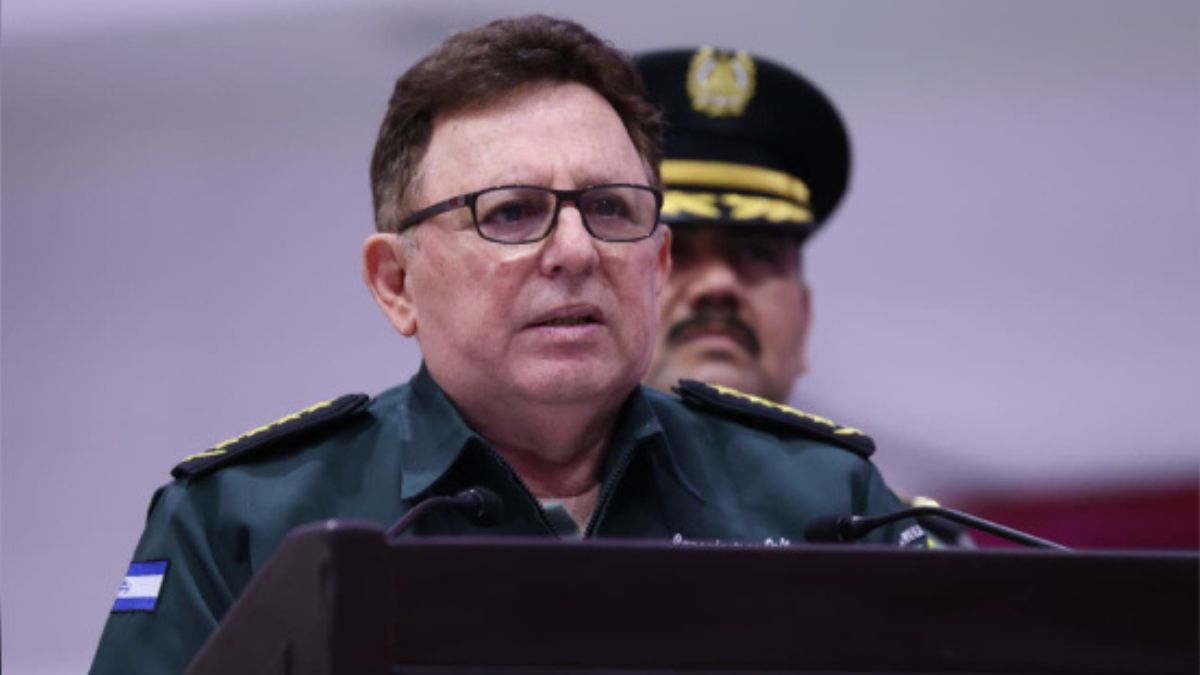
The head of Nicaragua’s Army, Gen. Julio César Avilés, aligned himself with the dictatorship of Daniel Ortega and Rosario Murillo on the night of Aug. 17, two days before the Organization of American States (OAS) is set to consider whether Nicaragua’s crisis should be elevated to a meeting of the hemisphere’s foreign ministers following Ortega’s announcement that elections would be eliminated.
Amid growing pressure from the United States, Republican Sen. Ted Cruz and Democratic Sen. Tim Kaine have proposed reviving the Nicaraguan Investment Conditionality Act (NICA Act), which would increase scrutiny of the Ortega-Murillo administration, the gold industry and the Military Social Welfare Institute (IPSM), the financial arm of the Nicaraguan Army.
“Let us always remain loyal, steadfast and united in defense of our homeland and our institution, fulfilling our missions and duties, always prepared to give everything for our homeland, to defend peace, to defend sovereignty, independence, our national self-determination and the integrity of our sacred territory,” Avilés said, echoing the government’s rhetoric that Ortega has used to deflect accountability for human rights abuses documented by international organizations.
Avilés and Col. Gens. Bayardo Rodríguez, chief of the General Staff, and Marvin Corrales, inspector general, presided over a ceremony marking the 46th anniversary of the founding of Nicaragua’s Naval Force. At the same event, Ortega lashed out at Spain, England, Germany and the United States over their historical use of naval forces against Nicaragua, saying they had been used to attack and enslave the country.
United States Seeks collective measures
Avilés’ remarks come as the United States has requested a meeting of the OAS Permanent Council, scheduled for Wednesday, Aug. 19. A resolution is expected to be put to a vote that would essentially allow Nicaragua’s situation to be considered by the hemisphere’s foreign ministers.
The draft resolution is backed by 14 countries, led by the United States. The Trump administration and the OAS secretary general have both called for collective responses following Ortega’s statements and the subsequent legislative process aimed at eliminating elections and perpetuating Ortega and Murillo in power.
Those same reforms would allow Avilés, who has held his position since 2010, to seek another term as head of the military. The reforms would extend the terms of both the military and police chiefs from six to seven years. The relationship has taken on a transactional character, reflected in the military leadership’s support for the Ortega-Murillo proposal.
Related: U.S. Senators Propose Sanctions Targeting Ortega-Murillo Gold Business and Army’s IPSM
Army Accused of Involvement in Repression
Nicaragua’s Army has faced allegations and condemnation over its participation in repression against the Nicaraguan population since the crisis began in 2018.
The U.N. Group of Human Rights Experts on Nicaragua (GHREN) said in a report published in April 2025 that several of the killings that occurred in 2018 “were committed by members of the National Police, the Nicaraguan Army and pro-government armed groups.”
The report further stated that the three groups acted on “orders from the president and vice president,” and that those instructions “were transmitted from the commander-in-chief of the Nicaraguan Army, General Julio César Avilés Castillo, to the chief of the General Staff, Bayardo Ramón Rodríguez Ruiz, and then to the commanders of each unit for implementation.”
Avilés Has Led the Army for 16 Years
Avilés’ term as military chief had already been extended in 2025, when Ortega’s allies approved constitutional reforms that designated Murillo as “co-president,” a newly created position that placed her formally on the same level as her husband. The reforms also formalized the elimination of the independence of Nicaragua’s branches of government — a totalitarian system.
The Army was the first state institution to participate in the “consultation” process over the electoral reforms, following only the diplomatic corps accredited in the country. Senior military commanders appeared before the National Assembly on July 29.
Avilés echoed the government’s position.
“We assume the commitment to always defend our right to be free and sovereign and to determine our own destiny without foreign interference,” he said.
The nomination of Natasha Franceschi as the new U.S. ambassador to Managua also represents a significant shift in the Trump administration’s relationship with Nicaragua. Franceschi has experience in high-risk environments, armed conflicts and sensitive geopolitical negotiations. According to analysts, her nomination is part of Washington’s pressure strategy.