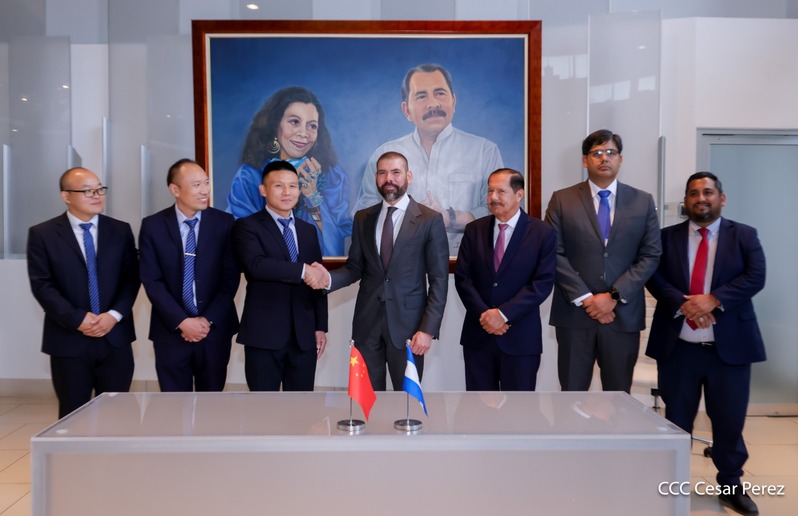
Daniel Ortega’s dictatorship is facing growing difficulties in securing external financing. In addition to losing the backing of traditional donors, its two main financial allies—which had replaced conventional lenders—are releasing this year’s pledged funds only in dribs and drabs. The most striking case is the Central American Bank for Economic Integration (CABEI), whose slowdown underscores the regime’s mounting financing troubles.
During the first half of the year, CABEI disbursed only 34.2% of the US$230 millions budgeted for 2026. As a result, Ortega’s government is still awaiting US$151.3 million from the multilateral lender in the second half of the year (here we are using the official exchange rate of 36.6243 córdobas per U.S. dollar).
This level of underexecution reflects the growing difficulty the dictatorship is experiencing with a funding source that, in recent years, had provided almost unconditional support and helped offset the sharp decline in financing from the World Bank and the Inter-American Development Bank (IDB).
Last year, for example, CABEI had committed US$407.1 million in disbursements and had already released 42.9% of that amount by midyear—a relatively healthy pace that placed it close to the expected 50% execution rate for the first six months.
Read also: Rising oil import bill keeps China from overtaking the U.S. as Nicaragua’s top import supplier
The contrast is even more pronounced when compared with previous years. In the first half of 2022, CABEI disbursed 67.7% of the US$218.2 million it had committed. In 2023, execution reached 53.7% of US$304.0 million while in 2024, the bank had released 40.2% of US$386.2 million by the midpoint of the year.
In other words, this is the first time in the past five years that the multilateral lender has shown signs of slowing the release of funds that had long enabled Ortega’s government to weather the gradual reduction in lending from the IDB and the World Bank, whose loans generally carry more favorable terms.
China Also Falls Short
China emerged as a major financial backer of Ortega’s government after traditional sources of financing dried up. However, the latest figures suggest that funding from Beijing is also falling well below expectations.
For 2026, China has committed US$343.8 million, yet during the first six months of the year it had disbursed only US$80.6 million.
Beijing’s decision to release just 23.45% of its pledged financing has significantly weakened overall execution of the external credit program included in Nicaragua’s national budget. China accounts for more than half of the US$610.2 million in foreign loans programmed for this year.
These loans come from both Chinese state-owned and private companies that have signed agreements to finance and carry out major infrastructure projects. Because they represent more than half of all external financing scheduled for 2026, China has become the dictatorship’s largest foreign financier.
According to the Budget Execution Report published by the Ministry of Finance and Public Credit (MHCP), the government had secured disbursements equal to only 29.2% of the US$610 million programmed in foreign loans during the first half of the year, weighed down by delays from both CABEI and China.
Projects Affected by the Delays
Which Chinese companies are failing to deliver the promised financing?
China CAMC Engineering Co., Ltd. (CAMCE), the largest Chinese financier involved in Nicaragua, had disbursed only US$80.6 million by June out of the total it committed for 2026. The Ortega government is now counting on receiving the remaining US$102.4 million during the second half of the year.
CAMCE has signed some of the largest loan agreements between Chinese firms and the Nicaraguan state. Last year it disbursed US$87.24 million, although approximately US$2.62 million remained undisbursed.
Among its most expensive commitments is the expansion and modernization of Punta Huete International Airport, commonly known as Panchito, a project whose updated cost estimate now stands at approximately US$517.6 million.
The delays are also affecting other projects financed by CAMCE, including the construction and outfitting of the headquarters for Nicaragua’s National Emergency Response System and the installation of three liquefied petroleum gas (LPG) storage spheres.
Meanwhile, China Communications Construction Company Limited (CCCC) has yet to disburse a single córdoba of the 1.379 billion córdobas (some US$37.7 million) allocated for the construction of the El Hato photovoltaic solar power plant in Ciudad Darío, Matagalpa, a project that official government propaganda claimed began construction in March 2025.
You may be interested: Ortega’s Electoral Reform Explained: Seven-Year Terms and a Ban on Nicaragua´s Opposition
Last year, CCCC released US$2.86 million, which, according to the 2025 Budget Settlement Report, covered the costs of engineering studies and project design. Despite that initial funding, no scheduled disbursements have been made so far this year.
Similarly, China Iconic Technology Company Limited (CHINAICTC) has not released the US$72.4 million earmarked for the master plan, engineering studies, and detailed design needed to upgrade the Julia Herrera de Pomares Logistics Center in the municipality of El Realejo, Chinandega. The facility is operated by Nicaragua’s National Port Authority.
Located roughly 10 kilometers from Puerto Corinto, the country’s principal seaport, the logistics center has the capacity to handle more than 1,000 vehicles and store 3,000 cargo containers. The Chinese financing is intended to support the design and development of logistics management software, the procurement of equipment for the facility, and staff training.
Finally, Yutong Bus Co., Ltd. has committed US$50.7 million of financing for Nicaragua to purchase buses manufactured by the company.