Sexual violence, death threats against political prisoners and their families, electric shocks, suspension, suffocation, and the ripping out of fingernails. So far, the Human Rights Collective Nicaragua Nunca Más has documented 250 testimonies of abuses committed since 2018, detailing more than 40 methods used by the regime of Daniel Ortega and Rosario Murillo to harm political prisoners.
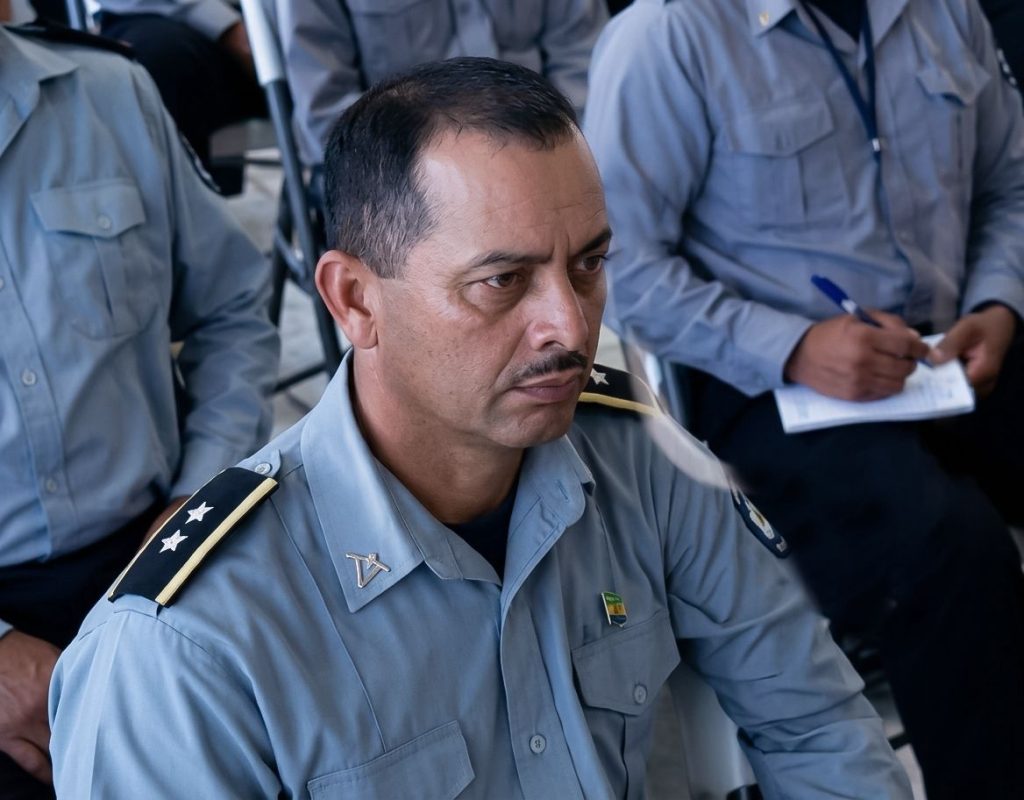
The perpetrators include police agents and prison system officials such as prison warden Roberto Guevara, sanctioned by the United States on February 18. Guevara served as director of the maximum-security section known as “La 300” inside La Modelo prison. The sanction once again placed serious human rights violations committed by the state on the national and international agenda.
The Reflection Group of Former Political Prisoners labeled Guevara a criminal on social media and recalled that he led a group of abusive guards. “Beating prisoners is your preference, to the point that you take pleasure in watching them kicked and battered,” the group wrote in a recent post.
Regime denies torture
Ortega’s government has consistently denied carrying out torture. In October 2020, the dictator even invited relatives to visit imprisoned detainees to verify that the allegations were untrue.
“We already know that there are always prisoners who invent stories that they are being tortured,” he said, referring to a specific case involving detainees who had sewn their own lips shut. According to him, they were trying to create a “negative image of the government.”
However, the human rights collective has spent years carefully documenting what it describes as the dictatorship’s brutality. The use of torture has been recorded in at least ten detention centers.
As lawyer Gonzalo Carrión, a member of the defenders’ group, explains, abuse has also taken place in clandestine facilities. The pattern, he says, appears endless.
So far the organization has published eight reports and launched an online project known as the Museum of Memory. The eighth report, published in 2023, included 158 testimonies. Since then, that number has risen to 250.
“The officer repeated that they were going to kill my daughter, that she would not leave alive, that they would rip out my nails, that the harm I had done would be repaid,” reads one testimony collected by the group.
Other stories are similarly harrowing. One woman detained for allegedly opposing the government said her interrogators threatened to rape her daughter. In some cases, threats of sexual violence were carried out.
“Since I was tied up, they put me against a table and began to rape me. One finished and then another. When I resisted they began beating me again. I lost consciousness. When I came to I had no pants. They beat me again; I could barely move. They came back again and raped me,” another testimony recounts.
A chain of command responsible for abuses
In 2025, the United Nations identified 54 officials as part of a “chain of command” involved in carrying out abuses.
When sanctioning Guevara on February 18, the U.S. State Department cited his “involvement in a serious human rights violation against a political prisoner,” according to its statement.
But the U.N. report describes a broader, systematic repression involving multiple institutions.
“The Group of Experts concluded that since April 2018, personnel from the National Police, the National Penitentiary System, and pro-government armed groups have systematically committed acts equivalent to torture—including rape and other forms of sexual violence—as well as cruel, inhuman or degrading treatment during the arrest and detention of dozens of people, real or perceived opponents,” the United Nations said.
Read also: Trump Ally Richard Grenell Calls Nicaragua’s Seizure of $80 Million U.S. Mining Plant «Outrageous»
Accounts collected by the collective describe particularly brutal acts, including the insertion of objects such as firearms into prisoners’ anal cavities and the forced maintenance of total nudity.
Despite these allegations, not a single case has been investigated. Impunity remains widespread in Nicaragua.
A crime against humanity
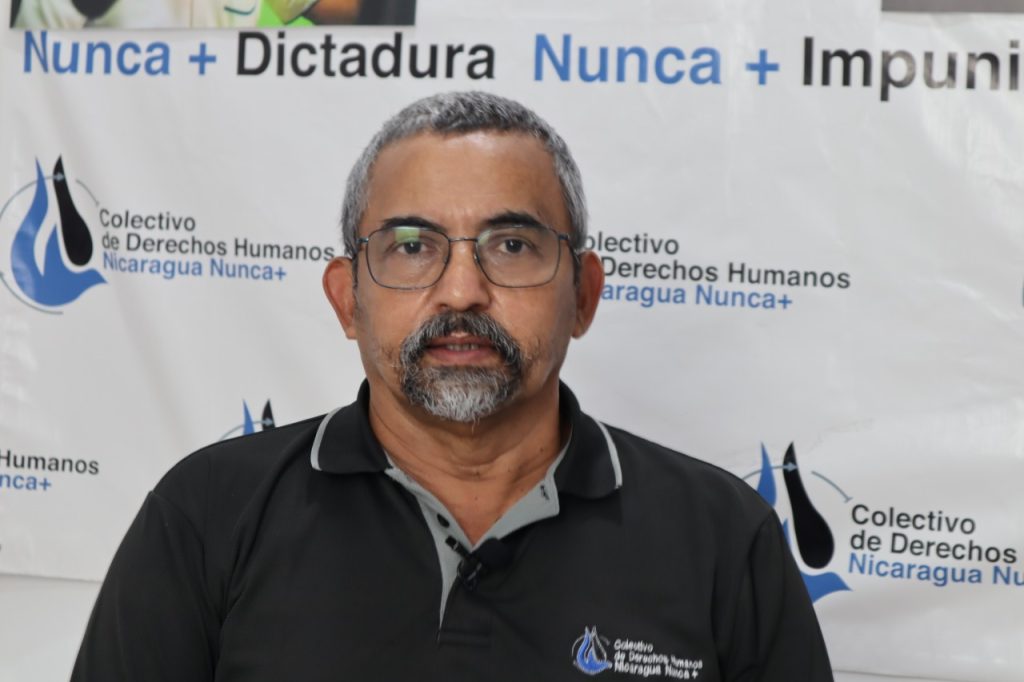
“The Collective has documented testimonies from detainees, their relatives, and from families of people who have been forcibly disappeared. These accounts describe more than 40 forms of torture,” said Carrión of the Nicaragua Nunca Más Human Rights Collective.
“Torture is considered a crime against humanity.”
Article 7 of the Rome Statute of the International Criminal Court classifies torture as a crime against humanity and obliges member states to act against it. However, Nicaragua is not a party to the statute, meaning the court does not automatically have jurisdiction over such crimes committed in the country.
Regime seeks to silence dissent
Despite this limitation, the United Nations has urged states to act to promote accountability for abuses.
Nicaragua is, for example, a party to the Convention Against Torture and Other Cruel, Inhuman or Degrading Treatment or Punishment. Article 2 states that each member state must take effective legislative, administrative, and judicial measures to prevent acts of torture in any territory under its jurisdiction.
In practice, however, critics say the Ortega government has used violence to silence dissent.
“At any time, torture is completely reprehensible,” Carrión said. “These are international crimes, crimes against humanity, and so far they remain in impunity.”
Abuses have also included instructions given to detention center directors to obstruct defense lawyers’ access to their clients and to “systematically disobey judicial orders for release or habeas corpus.”
According to the United Nations, those directives came from the director and deputy director of the National Penitentiary System, Julio Orozco and Venancio Alaniz. The report also mentions Interior Vice Minister Luis Cañas.
Methods used by perpetrators
Among the most common forms of abuse are beatings—sometimes delivered with objects such as firearms.
Authorities have also used electric shocks, mainly with tasers, causing burns. Other documented methods include tear-gas exposure, shootings, cold-water dousing, suspension, strangulation, and both dry and wet suffocation.
Reports also mention dragging prisoners, tearing out fingernails, cutting with razor blades or knives, using needles, placing dirt or ash in ears and eyes, and issuing threats against detainees and their families.
Other practices include sleep deprivation, coercion to ingest drugs, deprivation of food or water, poisoning through fumigation, temporary enforced disappearance, and denial of medical care.
The report also highlights torture by “stress position.” One example cited involves a political prisoner who “was tied to a post for two days.” Another was kept naked for 24 hours in a cell “not large or tall enough to stand up, lie down, stretch his legs, or sit comfortably.”
Despite the grim tally, Carrión says the real number of victims is likely higher. Hundreds of people have been detained by the government since 2018, and many victims are too afraid of reprisals to report what happened.
Read also: Ortega Regime Seized $80 Million U.S. Mining Facility, Handed Assets to Chinese Firm
Torture centers
Three detention centers are frequently mentioned in torture allegations. These appear both in reports by the U.N. High Commissioner for Human Rights and the Inter-American Commission on Human Rights.
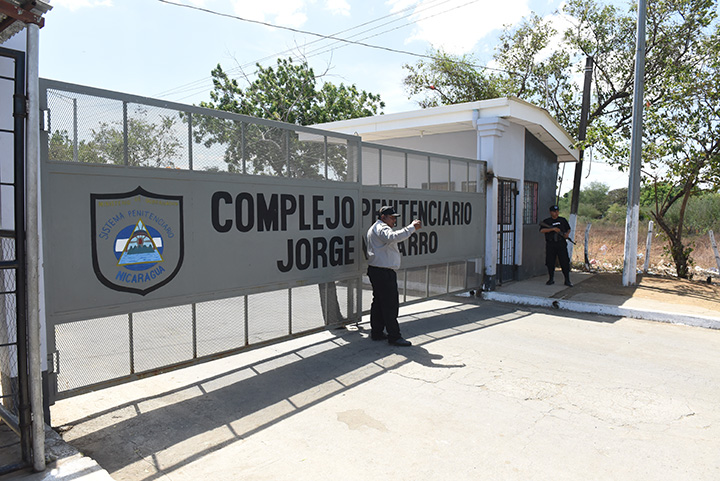
They include El Chipote in Managua, the Jorge Navarro Penitentiary System, known as “La Modelo,” and the women’s prison La Esperanza.
Other organizations, such as the International Human Rights Network Europe, cite at least ten facilities. In addition to those three, they mention Police District III in Managua, the Regional Penitentiary System of Cuisalá in Chontales, and police delegations in Masaya, León, Jinotepe, Juigalpa, and Nindirí.
Unfortunately, those are not the only locations.
“We documented that people were even taken to clandestine centers—places where detainees were disappeared and held in different units, as well as in the penitentiary system,” Carrión explained.
International pressure for justice
With little hope of justice inside Nicaragua, the international community has kept up pressure since 2018 for those responsible to be held accountable.
The United States has been among the most active in imposing sanctions. Early on, it sanctioned Vice President Rosario Murillo, who witnesses say ordered attacks against protesters during the 2018 demonstrations.
Through the collective’s Museum of Memory project, Nicaraguans and people around the world can examine what the group calls the dictatorship’s policy of torture—used to instill fear and maintain power.
The project opens with the image of a farmer, his back covered by a Nicaraguan flag, writing the word “justice” on a wall.
“Identifying and understanding the strategies of repression used by a regime against its own population is essential for transitional justice, historical memory, and democratic reconstruction,” the collective says. “Documenting this repressive trajectory serves to hold perpetrators accountable.”
The case of warden Roberto Guevara
Guevara’s name appears in the reports. Several former political prisoners accuse him of participating in beatings and tearing out fingernails with pliers—acts of cruelty that fit into what activists describe as a broader policy of abuse.
“Torture has become a system,” Carrión said. “It is intended to break the prisoner, make them suffer, and send a message to their families and to a society that has stood up in the struggle for freedom. The goal is to impose general terror.”
Despite the risks, the lawyer continues documenting these violations with his team. He urges victims to report what happened, insisting that doing so is the first step toward justice and reparations.