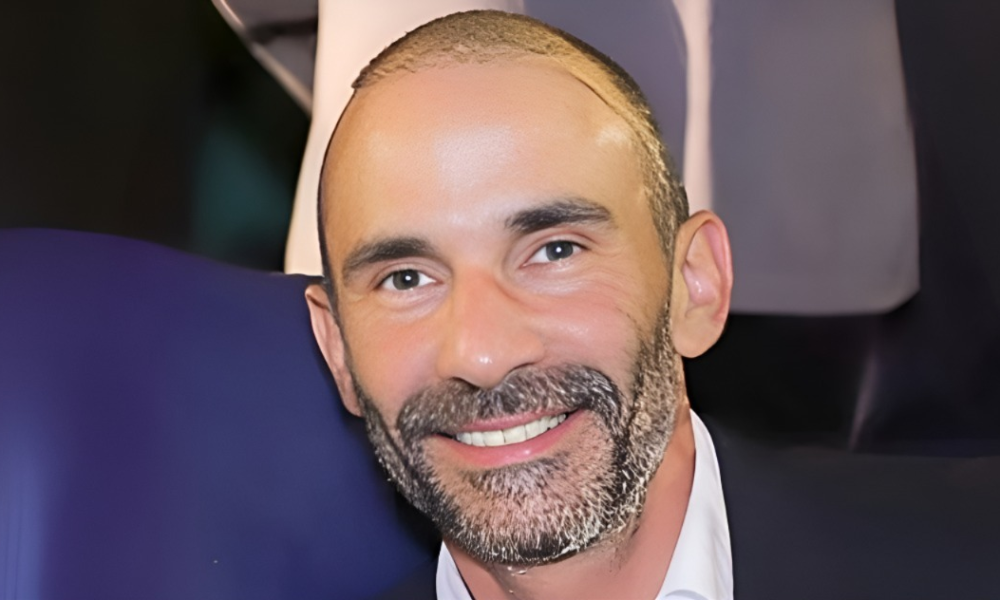
The Momotombo Power Company (MPC), registered in the Cayman Islands and headed by Álvaro Baltodano Monroy in Managua, reportedly had net income of approximately $28.26 million from energy sales to the state during its first three years of operations (2014-2016), according to estimates by LA PRENSA based on official data.
The Nicaraguan Electricity Company (Enel) signed the concession on behalf of the state with MPC to operate the Momotombo plant between 2014 and 2029. The regime abruptly terminated that agreement this year. The police arrested and later charged the businessman and his father, retired general Álvaro Baltodano Cantarero, one of Daniel Ortega’s main economic operators, with money laundering.
The Momotombo geothermal field, at the foot of the volcano, is state-owned. Before the recent fall from grace of Ortega’s former associates, the business was in the hands of the Israeli consortium Ormat Holding. The latter received the concession from Enel in 1999 until Baltodano Monroy and his partners bought the company for $7.5 million in 2014, a price below the company’s cost, according to an analyst consulted by the company.
Read also: Baltodano Inc: Momotombo Power, a profitable business created in the shadow of Ortega
Momotombo Power and Enel Agreement
The state’s finances have always been opaque under the regime. However, Enel’s financial reports (2014 to 2016) reveal some data that may help understand the agreement with Momotombo Power Company. MPC agreed to sell energy exclusively to the distributors Disnorte and Dissur, and to deliver 13.5% of its net sales revenue to Enel. This can be seen in these financial documents, which also reveal how much the state entity received from this source annually.
On condition of anonymity, two economists explained that the level of revenue earned by the company linked to the Baltodano family could be estimated from these two pieces of data by simply dividing them by: Total revenue received by ENEL per MPC contract/0.135 (this number, in decimal form, is equivalent to 13.5%).
Acusado de evadir obligaciones fiscales
En agosto pasado, la Procuraduría acusó a Baltodano Cantarero y su hijo de cometer actividades delictivas, en específico de crear un entramado societario para evadir sus obligaciones fiscales. Dijo en un comunicado que no habían cumplido con “su obligación de realizar inversiones que potenciaran la máxima operación del recurso geotérmico”.
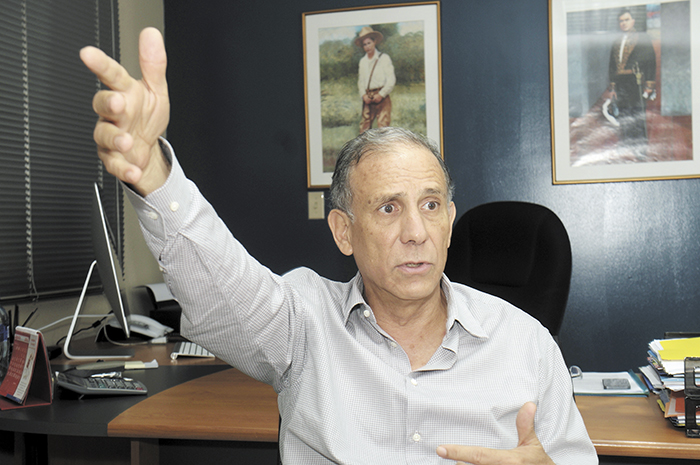
Without providing further details, the dictatorship terminated the contractual relationship with MPC. Analysts and opponents attributed the Baltodanos’ imprisonment to a political purge, led by Rosario Murillo, of former Sandinista cadres in the current leadership.
According to state information, the agreement with MPC was scheduled to end on June 14, 2029, with the option to renew. But surprisingly, the retired general was captured in May, and his son two months later. How much did they earn during the 11 years that the company associated with them was involved in the energy sector? Enel’s data provides an answer, but not the entire answer.
This is what Enel’s figures say
The Nicaraguan Electricity Company admitted that it received 27.9 million córdobas in December 2014 «for the joint venture contract signed,» referring to the one signed with MPC. The figure doubled to 55.4 million in 2015 and dropped to 22.86 million córdobas in 2016.
This means that in MPC’s first three years of operations, Enel received 106.2 million córdobas. If we assume this represents 13.5 per-cent of MPC’s net sales revenue, it means that Baltodano Monroy’s company would have received 787.1 million córdobas in its accounts, according to LA PRENSA estimates. That’s $28.2 million.
MPC, like Ormat at the time, paid a royalty to Enel because the Momotombo geothermal field is state-owned and Enel is granting it a concession. «I think it’s the only case where a private company is in charge of state-owned property,» says one of the economists consulted, referring to MPC. «Several thermal plants were bought by the private sector during privatization a while ago and remain in their hands.»
The state report also explains that part of the money, 8.5%, would be used to pay an unspecified debt Enel owed to the Caja Rural Nacional (Caruna), the Sandinista cooperative that handled the money from Venezuela and which the United States sanctioned in 2020.
The financial statements from 2017 to 2022, reviewed by LA PRENSA, no longer provide data that could help calculate MPC’s total income during this period. One of the economists mentioned said he does not believe all power generators will pay Enel.
Although there is no precise data on MPC’s earnings during the 11 years it held the concession, estimates made by LA PRENSA indicate that the amount received during the first year of operations by Baltodano Monroy’s company alone exceeds the $7.5 million that he and his partners paid to the Israeli group Ormat Holding.
Generator Sold for a Lower Price
This is consistent with an analyst who, reviewing the financial statements of the Israeli company Ormat Holding, told LA PRENSA a few days ago that the power generator was sold for a much lower price, because it should have cost at least $37 million, as it was «an ongoing business.»
Read also: Baltodano Monroy Used Ortega’s Name to Attract Investors
Just to put the real value of the company in Ormat’s hands into perspective, Enel indicated that the assets transferred to MPC amounted to at least 574.16 million córdobas in 2016—equivalent to $19.57 million.
The Search for Partners to Take Advantage of the «Business»
In 2013, thanks to Baltodano’s father’s close relationship with Daniel Ortega, the young Baltodano Monroy knew that a «business» opportunity would soon open up. The concession held by the Israeli company Ormat Holdings to operate the Momotombo plant since 1999 was set to expire in 2014. The Sandinistas’ relations with Israel have never been good, and Baltodano Monroy knew that an Israeli company had little chance of continuing with the concession under Daniel Ortega’s regime.
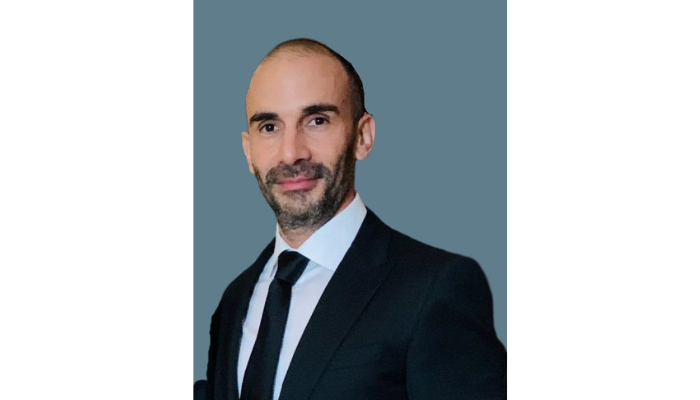
The retired general’s son and his maternal uncle, Mexican Pablo Monroy, partnered with fellow Mexican businessman Arturo Gamboa Rullán. Guatemalan Fernando Paiz briefly participated in the partnership.
According to US court documents, Gamboa loaned $8.6 million to buy the company from the Israelis, of which $7.45 million was for share payments and $1.45 million for capital expenditures.
Baltodano Monroy sued for $750,000
He was not paid. Although court documents in the United States do not specify how much of the debt was paid, it amounted to $19.6 million as of January 1, 2023, according to Gamboa’s lawyers. That same year, the magnate sued Baltodano Monroy in Florida, United States, for damages. The amount was $750,000.
The former Mexican partner also investigated Baltodano Monroy’s operations in the Virgin Islands and the Cayman Islands. This year, his lawyers also asked a court in New York to document the financial transactions that General Baltodano’s son made through a real-time transfer system known as CHIPS, operated by The Clearing House Payments Company (LLC), located in the same district as the court. They are interested in 11 names, including that of Enel’s president, Ernesto Martínez Tiffer.
In Nicaragua, the court file on the Baltodano case is also not public. These details about the financial scandal have only just come to light because a LA PRENSA investigation, published last month, revealed how this business was hatched in the shadows of power in Nicaragua.
MPC’s current partners
According to Offshore Alert, a site that specializes in publishing stories about «high-value international financial fraud,» on January 6, 2025, MPC’s partners were Gamboa and lawyer Oscar Montes Mayorga—linked to Baltodano Monroy—who is currently imprisoned in the same case.
A network of corporations participated in the energy business. MPC is in turn owned by Central America Energy Holding Corp. (CAEH). The company was also founded on October 8, 2013, in the Cayman Islands, as part of a web of companies through which Baltodano Monroy controlled the business.
LA PRENSA emailed Gamboa to learn the details of the lawsuit against his former partner. It also contacted Guatemalan Fernando Paiz to explain when he left the power generator. However, neither has responded to the request.
The agreed purchase price for MPC’s energy with the distributors is also unknown. The Ministry of Energy and Mines and the regulatory body, the Nicaraguan Energy Institute (INE), are keeping the specific contract hidden. This makes it impossible to verify whether the price was better than that offered to the former Israeli tenants. Opacity reigns. Those tenants were offered a payment of 4.58 cents per-kilowatt hour in 1999, according to a report published at the time by LA PRENSA. But this remains unknown now.