A promotional article by The New York Times titled “$550,000 Homes in Nicaragua” presents the country as an ideal destination for purchasing luxury properties at good prices. However, analysts criticize the piece for failing to warn potential buyers about the risks they may face due to the lack of legal safeguards in the country.
“When they say a house is worth half a million dollars in Nicaragua, they’re focusing on the price, but not necessarily on the enormous risk involved in buying that property,” warns economist and opposition figure in exile Juan Sebastián Chamorro.
For his part, immigration specialist Rommel López points out that the regime of Daniel Ortega and Rosario Murillo has already confiscated universities, media outlets, NGOs, private properties, and even assets belonging to the Catholic Church. “They could do the same with foreign investments if they deem it convenient. Today they allow certain operations, but there is no guarantee that they will respect them in the future,” he explains.
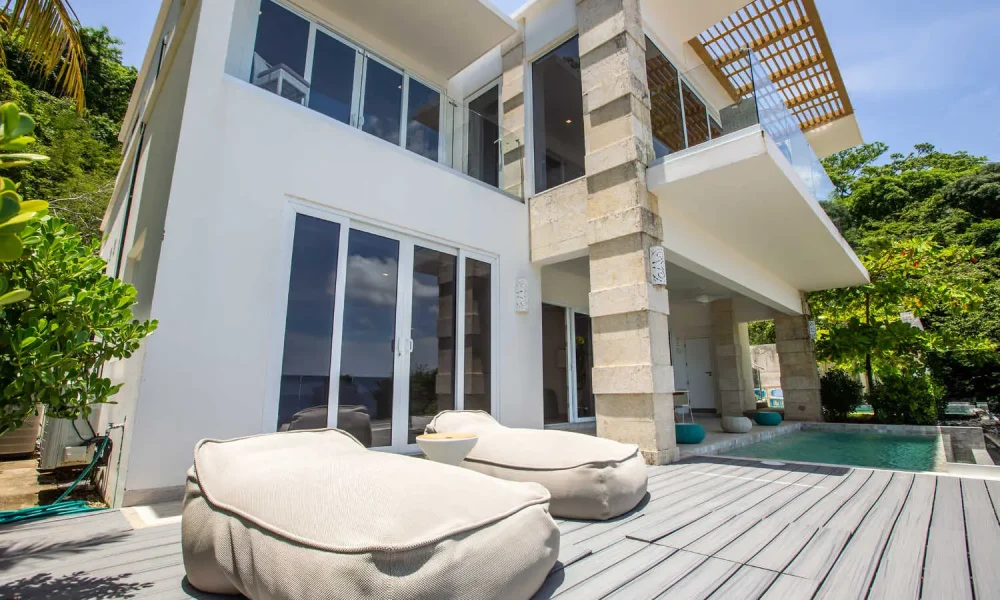
The New York Times article highlights three properties located on the beaches of San Juan del Sur, Rivas, (85 miles south of Managua) which are popular among foreign tourists. One of them is located in Playa Majagual, which, according to the American newspaper, “is one of the most beautiful beach destinations in Nicaragua. The area attracts foreign visitors, including many surfers.”
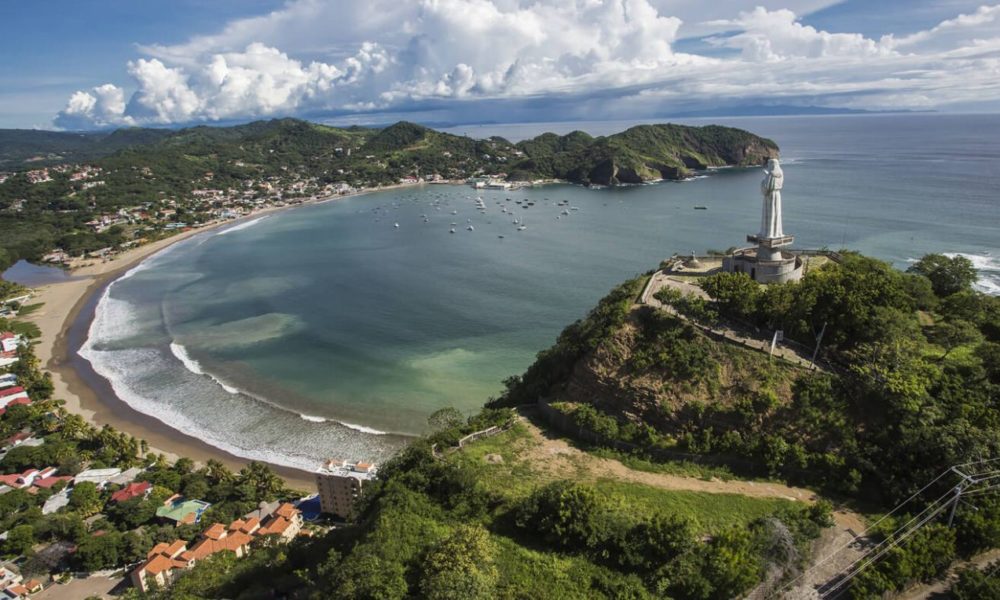
In that area, it promotes a four-bedroom property with ocean views for $525,000. It also features another home in La Joya, a site described as “part of a large private neighborhood called Pacific Marlin, located on a cliff with stunning views of the town. The neighborhood lies beneath the Christ of Mercy statue, one of the largest representations of Jesus Christ in the world, overlooking the bay of San Juan del Sur.”
Both properties are offered by a real estate company called The Agency, whose contact in Nicaragua is Joao Mucciolo, according to the New York newspaper.
Read also: Gertrudis Arias, the “enforcer of Arnoldo Alemán,” who died punished by the Sandinistas
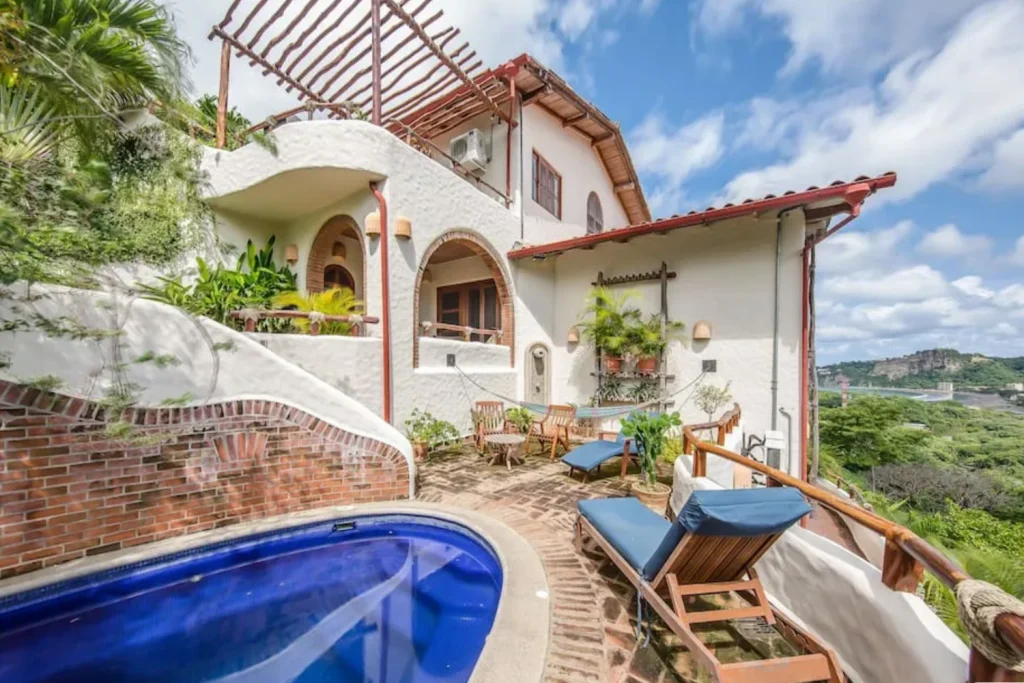
The article also features another property located in the Pelican Eyes development, which “sprawls across the hills above San Juan del Sur” and “offers views of the crescent-shaped beach and the towering Christ of Mercy statue that overlooks the bay.”
The price of that property is $549,000, and it is offered by RE/MAX Coastal Properties, an agency founded in San Juan del Sur in 2011 by Jesse Pedro Resau and Gabriela Castillo de Resau.
There are no guarantees
Despite the appealing advertising, neither The New York Times nor the real estate agencies warn their clients about the risks involved in buying property in Nicaragua, according to the experts consulted.
“Many tourists and investors do not understand that they are acquiring properties in a country under an authoritarian regime, without judicial transparency, without independent institutions, and with verifiable records of arbitrary confiscation,” criticizes Rommel López.
Juan Sebastián Chamorro, for his part, recalls that property rights are violated in Nicaragua. He has experienced it firsthand. In 2024, the Ortega and Murillo regime confiscated La Zompopera islet in Granada, which he inherited from his father, Xavier Chamorro Cardenal.
The dictatorship, besides taking away his property, transferred it to the Nicaraguan Social Security Institute (INSS). “It is a blatant and documented theft,” Chamorro stated at the time.
With the announcement made by The New York Times, Chamorro recalls that “property rights are violated and not respected through arbitrary confiscations.”
He also explains that the same atmosphere of insecurity has caused the real estate markets to suffer due to the absence of the rule of law. “This is reflected in the low property prices because the risk and the lack of clearly defined rights over those properties are penalized in the price. Buyers don’t want to take the risk of purchasing a house and then not being able to transfer it to a third party when they want to sell it, which is something that is happening,” Chamorro explains.
Additionally, the economist points out that this area of San Juan del Sur is known for property trafficking and the corruption present in this business, which has brought down several judges, lawyers, and judicial officials.
“Pelican Eyes is a good example of an unfinished project, apparently due to the developer’s financial problems, but it also involved public intervention and vested interests. There has been well-known corruption operating along the coasts of Tola, Rivas, and that area for decades,” Chamorro comments.
For his part, López points out that these types of articles, “although they may seem harmless, run the risk of being used by the regime as propaganda to project an image of normality and openness that does not exist.”
False normality
A former Nicaraguan diplomat who requested anonymity finds it striking that The New York Times publication was made after a U.S. government official said that Nicaragua is a “global tourist destination.”
“Obviously, these advertorials are paid for, but we also have to be careful not to promote things that make people think that things are fine in Nicaragua. Nicaragua has a dictatorship; it is not a paradise, as they said,” he emphasizes.
On July 8, the administration of Donald Trump canceled TPS for more than 2,000 Nicaraguans who arrived in the United States in the late ’90s and were affected by the devastation of Hurricane Mitch. The argument used by the Secretary of Homeland Security, Kristi Noem, was that Nicaragua is a “global tourist destination” and has made economic progress.
The former diplomat believes these statements “serve the interest of the Trump administration to get rid of all the migrants in the United States.” Immigration expert Rommel López agrees, saying “it seems like a clear sign that there is a political interest in reducing the number of protected immigrants, even if that means exposing thousands of people to risky situations by forcing them to return to a country where there is still repression, imprisonment, and persecution.”
Juan Sebastián Chamorro also believes that Noem’s statements “lack thorough investigation of Nicaragua, both economically, socially, and politically, and present a very uninformed view of what is really happening.”
Chamorro found it unprofessional that Noem cited a little-known English-language publication called El Magnate, which referenced Nicaragua in an article without an author and seemed like an advertorial. “It doesn’t seem appropriate that a federal government agency would rely on such an obscure publication,” Chamorro comments.
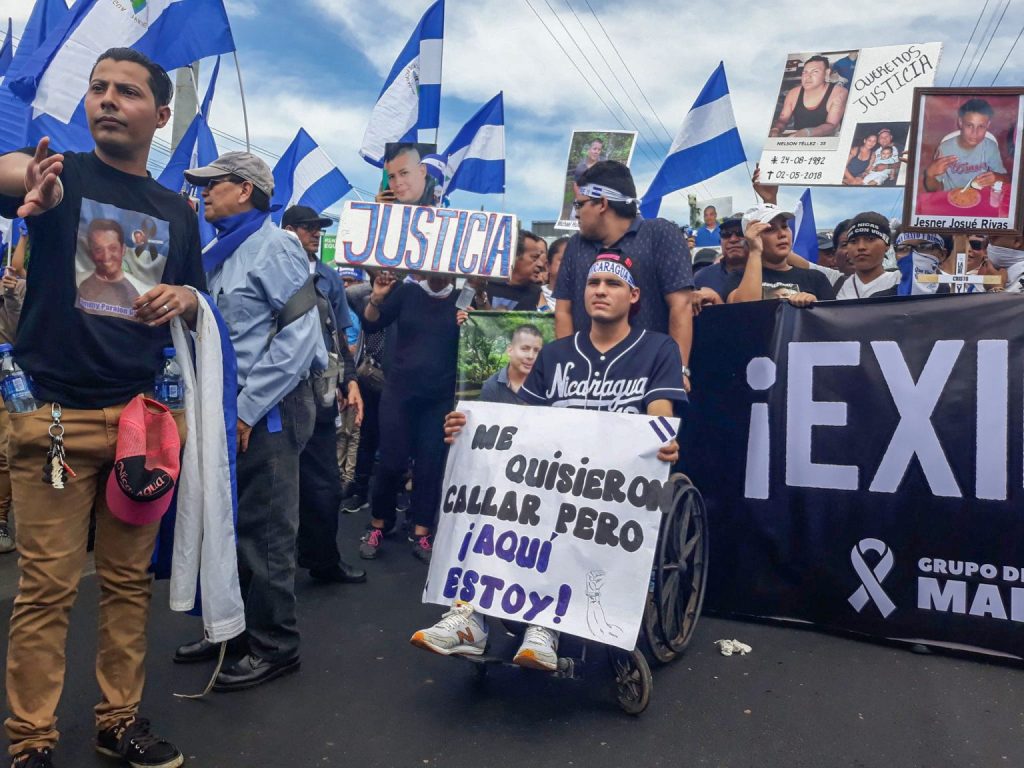
The economist comments that he and other opposition members have sent communications to the State Department warning of the need to be better informed about the reality of what is happening in Nicaragua, “and not to make an overly optimistic diagnosis.”
He also points out that it is true the country has experienced growth since the events of Hurricane Mitch, but that does not mean Nicaragua is a safe destination because the current dictatorship poses “a huge risk to Nicaraguan citizens and to foreigners as well.”
Contradiction of the Trump administration
According to Rommel López, “what we are seeing is an alarming contradiction” from the U.S. government. On one hand, it acknowledges that Nicaragua is a dictatorship and warns its citizens not to visit the country; on the other hand, it says it is a safe place to return to.
“The State Department warns U.S. citizens to reconsider traveling to Nicaragua. No vacation is worth the price of freedom!” said the Special Presidential Envoy for Hostage Affairs on X (formerly Twitter) on June 17.
Read also: Senior Trump officials defend raids against migrants in the U.S.
“If Nicaragua is a tourist paradise, why are there thousands of exiles? Why do people continue to leave every week? And why can’t so many opposition members, journalists, and human rights defenders return without fear of reprisals? What we need is consistency in foreign and immigration policy. You cannot call a regime a dictatorship and at the same time declare it a safe place to return,” López points out.