He snatched the newspaper from the hands of the young street vendor, rolled it into a tube, and began striking the bewildered police officer who had been buying the newspaper. “No one is going to read lies from LA PRENSA or any other outlet here,” he shouted furiously, hurling insults and delivering blows with the newspaper.
At the time, Senior Commissioner Luis Cañas was not the head of the delegation, but he had been sent from Managua that June to investigate the massacre of four police officers inside the very premises of Bluefields on May 4 of that year, 2004.
The LA PRENSA team, sent as special correspondents to the area to cover the investigation of the massacre, documented Cañas’s violence and reported it in one of their chronicles from that time. In response, Cañas ordered a total information blackout for journalists and threatened to imprison anyone who disobeyed his directive.
A start in the underworld
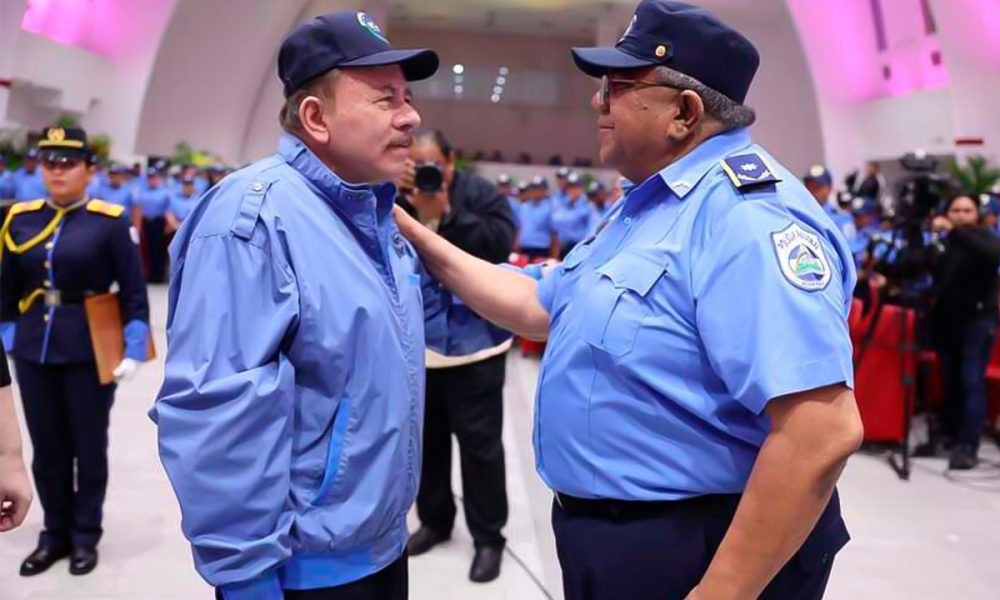
Luis Roberto Cañas Novoa is not a publicly visible figure within the Daniel Ortega and Rosario Murillo regime, but his behind-the-scenes influence makes him one of the most feared figures within the state apparatus.
His story, pieced together from accounts of those who know him and have followed his role in the police force, is that of a ruthless operative who, over 25 years, built a power network that has allowed him to navigate from police intelligence to organized crime and political repression, ultimately cementing himself as a key enforcer of the Ortega-Murillo family’s dictatorship.
Born into a poor family in El Sauce, León, Cañas joined the ranks of the Sandinista National Liberation Front (FSLN) in 1979 as a combatant in the insurrection that overthrew the Somoza family dictatorship.
In 1980, he was recruited into the Sandinista Police, where he specialized in criminal investigation and undercover operations.
«His first missions were as a Drug and ‘Lacras’ Officer—that was the term used for the role of patrolling the red-light districts to locate and dismantle drug dens. Literally, it meant eliminating all the scum who sold marijuana, adulterated liquor, bought stolen goods, and ordered assaults or robberies in the neighborhoods,» recalls «Osorio,» a veteran and retired Sandinista police officer.
Later, Osorio recalls, Cañas was assigned to the Penitentiary System, where there was also a problem with internal drug trafficking. He was ordered to uncover and dismantle the network responsible for smuggling marijuana into La Modelo prison.
«There, he wore the khaki and ‘chocolita’ uniform of the prison guards. Since he already knew all the scum from Managua that he had previously taken down, it was easy for him to dismantle the network of collaborators. He carried out an efficient cleanup in his own way—killing several, bribing others, recruiting spies among the guards, and dividing the inmates so they would betray each other,» recalls «Osorio.»
In the DGSE and TPU
«He was always ruthless. From the beginning, he spoke in shouts, quick to resort to kicks and punches. He was a strong and fierce Indian, disciplined in following orders and completely unscrupulous when it came to extracting information. Whether by persuasion or force, he always got what he wanted,» says «Osorio.»
«His advice for obtaining information was simple: ‘A Nicaraguan needs a pat on the back to start talking and a beating to make him shut up,’» recalls the former police officer.
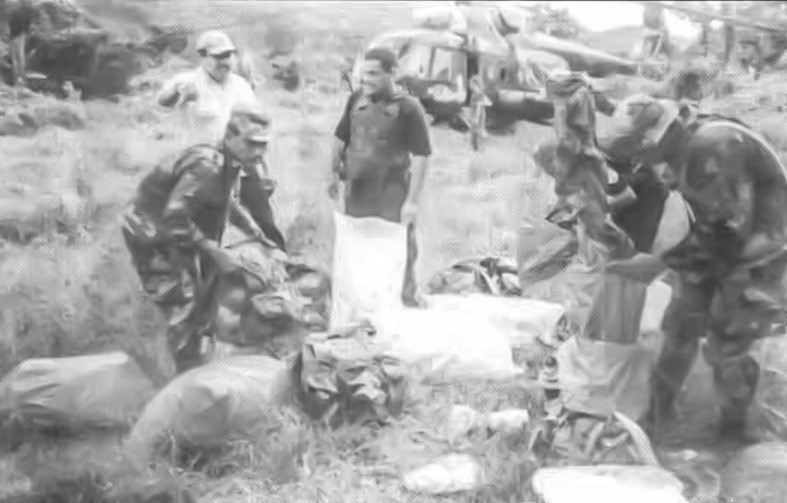
His role in the underworld and the «cleansing plan» within the Penitentiary System caught the attention of his superiors, and soon Cañas was recruited into the General Directorate of State Security (DGSE), under the leadership of Tomás Borge and Lenín Cerna.
He was integrated into the Directorate of Internal Intelligence, trained in the Pablo Úbeda Special Troops (known as TPU) of the Ministry of the Interior, and assigned to police investigations related to economic crimes, dismantling criminal gangs, drug and arms trafficking, and homicides.
He remained in these roles until the end of the Sandinista dictatorship in 1990. His real rise began in 1992 when Commander Leonel Espinoza, then deputy director of the police, placed him in the anti-drug intelligence unit, transferring him to Matagalpa as the deputy departmental chief.
The dark years
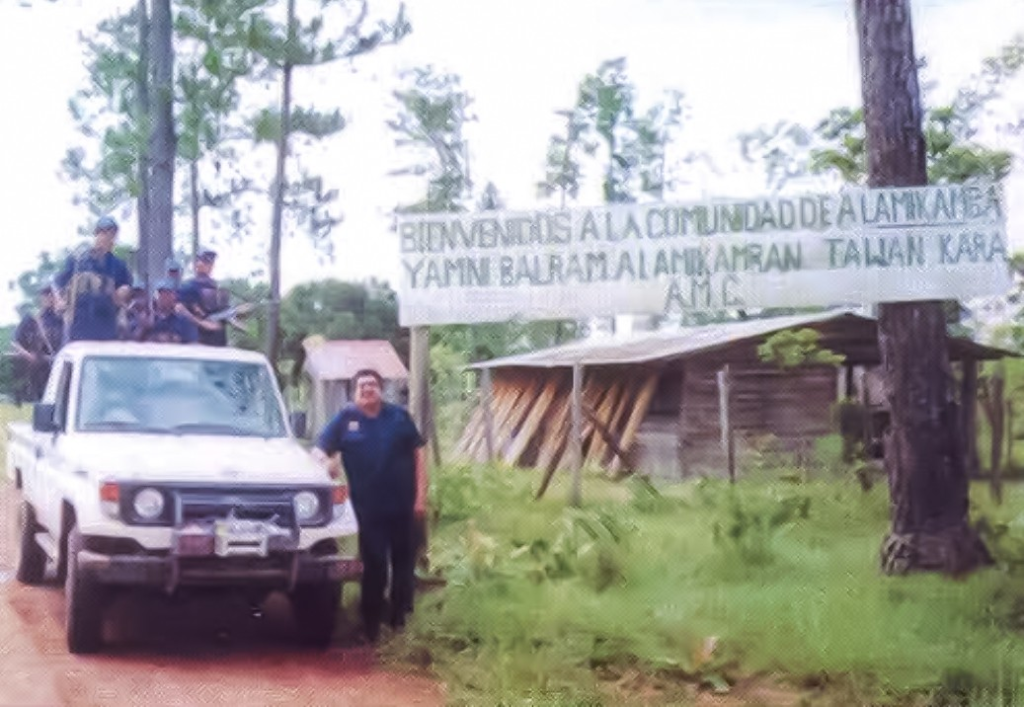
The 1990s marked a turning point in Luis Cañas’ career, according to investigators who have studied his trajectory.
He first earned the trust of powerful figures within the FSLN due to a fortuitous event: Police Subcommander Mauricio Aguilar, who had been assigned to investigate the murder of teenager Jean Paul Genie by the security detail of General Humberto Ortega, died «accidentally» from a gunshot fired by his driver and assistant, Harold Meza.
Aguilar was not only handling the Genie case but was also leading an investigation requested by the FBI from Violeta Barrios de Chamorro’s government. This probe focused on drug trafficking operations carried out in the 1980s on behalf of Colombian drug lord Pablo Escobar, allegedly executed by a Sandinista commander.
“Luis Cañas moved quickly amid the confusion surrounding Subcommander Aguilar’s ‘accident,’ retrieved the narcotrafficking case file, and handed it over to Lenín Cerna, who then concealed it,” says a former public official from that time.
This act strengthened Cañas’ trust and standing within the FSLN leadership. He not only rose through the ranks but also built a reputation as an efficient operative in anti-corruption efforts, drug enforcement operations, and dismantling organized crime networks.
When Luis Cañas was a DEA man
“Luis Cañas investigated the hijacking of a La Costeña plane and the murder of co-pilot Andrés Abelino Narváez, in an operation that involved transporting Miguel Rodríguez Orejuela, the leader of the Cali Cartel, from Ometepe to Colombia. With that case, he earned the trust of the DEA,” says the informant.
“And that’s why Cañas became an important figure in the police, because he was part of the network of officers with access to privileged information from the United States. He was one of the key players for the DEA and FBI within the police,” reveals the former public official.
«Remember that this earned him a training course in security and defense strategy from the William J. Perry Center for Hemispheric Defense Studies, part of the National Defense University, based in Washington.
However, according to the source, alongside his achievements in police investigations and the fight against organized crime, the first reports against Cañas for corruption, extortion, and links to drug trafficking began circulating within the institution.»
«According to another former police officer from that time, between 1996 and 1997, Luis Cañas was linked to a protection scheme for drug dealers in Managua, a lucrative business that he allegedly managed with other officers in the Drug Investigations Unit.
In 1998, his transfer to Matagalpa, along with Commissioner Evenor Gutiérrez, allowed him to expand his influence. He was accused of having built a corruption network, offering protection to drug traffickers and private businessmen in exchange for thousands of dollars.»
«The reports leaked by the DEA to other police and military chiefs cited, for example, Cañas’ association with the Centeno Roque brothers, businessmen linked to multimillion-dollar frauds involving rice exports. Cañas and Gutiérrez, according to internal testimonies, allegedly provided police protection and intelligence information for these illicit operations.
However, investigations into their illegal activities were blocked. According to the former public official, in 2000, police chiefs received directives from the FSLN to refrain from investigating Cañas’ activities.
In 2000, Cañas was transferred to Managua and promoted to second-in-command of intelligence at the National Police.»
Head of the GIR
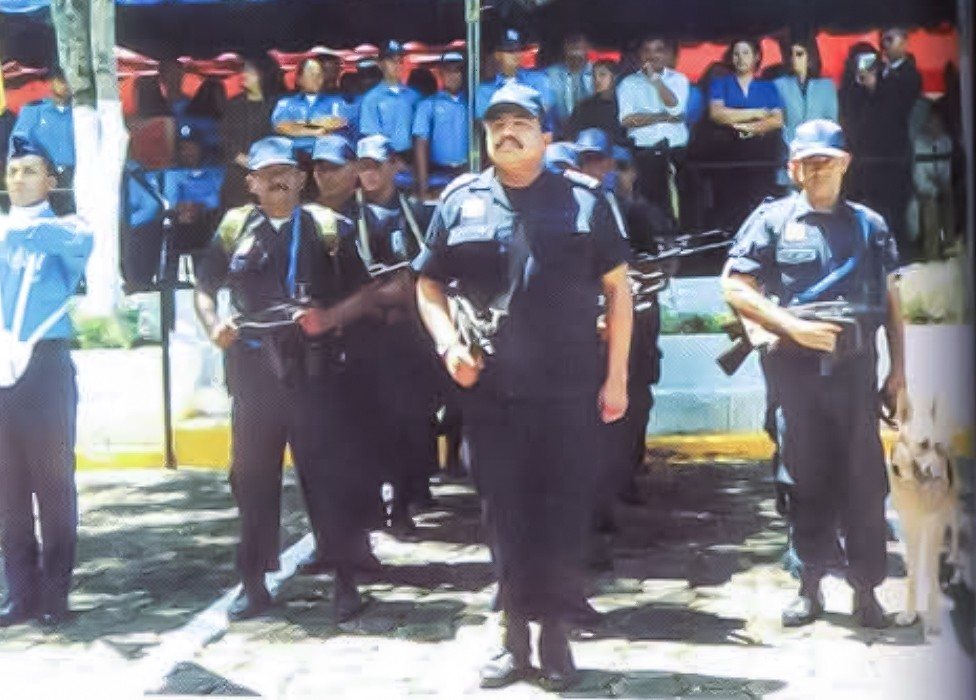
Due to his experience in infiltration, cold-bloodedness, and few scruples in obtaining information, along with his previous training from the elite forces of Pablo Úbeda, he was assigned as the head of a new special police force intended to eliminate insurgent groups that had been strengthening in the area of the Mining Triangle.
Thus, in 2000, Luis Cañas was appointed as the head of the Rural Intervention Groups (GIR), a force of 150 police officers trained to operate deep in the Nicaraguan countryside.»
«The main mission was to dismantle the armed gangs that had emerged after the disarmament of the Contras in 1990, primarily the Andrés Castro United Front (FUAC), a criminal organization made up of approximately 130 former demobilized soldiers and ex-Contras, who kidnapped, robbed, raped, and left the heads of their victims on the stakes of farm fences.»
«That’s when the first reports of human rights violations against Cañas began. ‘The Blues,’ as the GIR were called, were authorized to dismantle not only the gangs but also their networks of collaborators in the countryside.
‘Luis Cañas was the head of 150 truly tough police officers. How do you think they obtained information about the movements of the gangs? Through executions, torture, and violence,’ says the informant.
The GIR, with the support of the Army and Cañas’ iron fist, proved to be lethally effective.»
Operation trojan horse
They created an operational method called Plan Sello, which included the formation of a force of 10 police officers who, for months, moved through the Mining Triangle, committing crimes and offenses under the false flag of ‘armed insurgents.’
«The strategy was to allow them to commit crimes like the other gangs, to create noise and attract the attention of the other groups and seek an alliance. And that’s exactly what happened,» says the informant.
The operation was called ‘Operation Trojan Horse.’ The GIR agents, disguised as ‘insurgents,’ managed to arrange a meeting with the leadership of the FUAC, led by José Luis Marenco Pérez (alias ‘Laureano Rivera’).»
«Also present were Carlos Noel Lagos, alias ‘Amaru Falcón’; Domingo Quintero, ‘Tinieblas’; Juan Osmar Kraudy, ‘Juan de la Montaña’; and Pilar Lira, ‘Tyson.’
The infiltrators stayed three days at the camp. The first two days, they rested, stole a cow, and cooked for everyone. On the third day, the leaders’ meeting took place on Mount El Horno, in the Waspukito region, 39 kilometers northwest of Siuna; Cañas gave the order via radio to execute the leaders.»
«The ‘high command’ of the FUAC was supposed to be annihilated that day, but something went wrong, and three of them escaped due to a delay from the rest of the GIR, who spent several weeks chasing the remnants until they executed them all.
‘Guess who gave the order to decapitate Marenco and Amaru Falcón? Cañas wanted their heads as trophies. The bodies were buried on the El Macao farm, owned by one of the farmers who collaborated with the FUAC and whom they also executed and buried alongside the others,’ says the source.»
Rise and fall of Luis Cañas
According to intelligence sources, Luis Cañas’ operation elevated him to be considered ‘a strong man’ within the police intelligence apparatus and respected by the military.
His access to DEA information, successful drug busts, and his cold-bloodedness in carrying out high-risk bloody operations allowed him to climb within the police force, to the point where he was allowed to carry out ‘actions that were at odds with procedures’ because, in the end, they delivered results.»
«‘With the GIR and the execution of the FUAC, Luis Cañas proved that he was capable of any atrocity to achieve results. He’s the type of man who would shoot a nun or a priest if his superiors ordered him to. He was born for this. He could have been a torturer for the Gestapo, a guard for the EEBI, or a hitman for the Medellín Cartel,’ they say about him.
‘He’s a man with dark humor; coarse, irritable, intimidating. He trusts no one, and few trust him. He has always generated distrust, and it’s not surprising that Ortega also has him measured in case he gets out of control,’ says the source.
However, after the success of his operations and his rise to fame, his fall came after 25 years of police activity.»
«The allegations of abuse, suspicions of corruption, complaints about mistreatment of his troops, and alerts from informants and collaborators accusing him of hiding weapons, drugs, and money from operations, were piling up at the headquarters.
In 2007, First Commissioner Aminta Granera, in an attempt to clean up the police force from corrupt elements, ordered his permanent expulsion. The trigger was Luis Cañas’ involvement in a plot against Granera to favor the promotion of Ana Julia Guido, the current Attorney General and ally of Ortega, to the position of chief.»
«He was even accused of conspiring with Salvadoran drug traffickers to eliminate Granera and facilitate his return to power within the institution. Don Enrique Bolaños received all this information from the Americans and ordered his expulsion. Granera put him into retirement,» says the informant.
His Sinister Return
After being removed from the Police, Cañas continued operating in the shadows for a few years for the FSLN. He worked in parallel intelligence, building a network of informants and recruiting demobilized former Sandinista fighters.
His work in political espionage brought him closer to Néstor Moncada Lau, Ortega’s chief security operator, who instructed the head of police intelligence, Adolfo Marenco, to integrate Cañas into the police espionage system.»
«In 2015, with the endorsement of Moncada Lau, Marenco, and Ortega, Cañas was appointed Deputy Minister of the Interior, a key position in the control of the regime’s repression structures.
With the departure of Ana Isabel Morales in 2016, Cañas assumed de facto control of the Ministry of the Interior, consolidating his power over the National Penitentiary System, the Civil Intelligence Directorate, Migration and Foreign Affairs, and the security forces.»
«After the outbreak of the protests in April 2018, retired military officers accused Cañas of being one of the architects behind organizing the paramilitaries for ‘Operation Cleanup,’ the armed offensive that violently suppressed the protests across the country and left a bloodbath of more than 355 killings.
‘Operation Cleanup’
Under Ortega’s orders, Cañas, along with Edén Pastora, General Julio Cesar Avilés, head of the Army; the sanctioned General Oscar Mojica; retired General Ramón Calderón Vindell; as well as Adolfo Marenco and Francisco Díaz, head of the Police, organized the paramilitary forces that went out to kill the protesters, reveals the source, according to retired military officer Roberto Samcam in an interview.
«He was key in the organization of shock squads, arming former military personnel and ex-police officers to carry out the repression plan,» retired military officer Roberto Samcam denounced to LA PRENSA in 2019.
In May 2018, according to reports from opposition organizations of the time, Cañas ordered the suppression of a prison riot by any means necessary in the Penitentiary System. There, a guard shot and killed the political prisoner Eddy Montes, 57 years old.»
«Cañas justified the crime by saying that Montes struggled with the guard in an attempt to seize the AK rifle. He never revealed the identity of the perpetrator and has kept the case file of the murder hidden to this day.
Once the protests were suppressed, Cañas’ rise was unstoppable. Ortega and Murillo granted him, by law, the authority to pursue and dismantle NGOs and civil organizations.»
«Since 2018, his office has designed the files that justified the cancellation of more than 5,700 civil and religious organizations.
At the same time, since 2020, he has been accused of being the director of a system of bribes, fines, and charges for irregular migrants to use airports and border checkpoints as a springboard for illegal migration to the United States.»
«Ortega even publicly praised him for this role in January 2024: ‘Here we have a comrade whom we don’t let sleep, Comrade Luis Cañas, we don’t let him sleep; he has to be on top of land traffic, air traffic, and people entering through blind spots; well, he really has a full-time job, that’s where he is.'»
Visible target
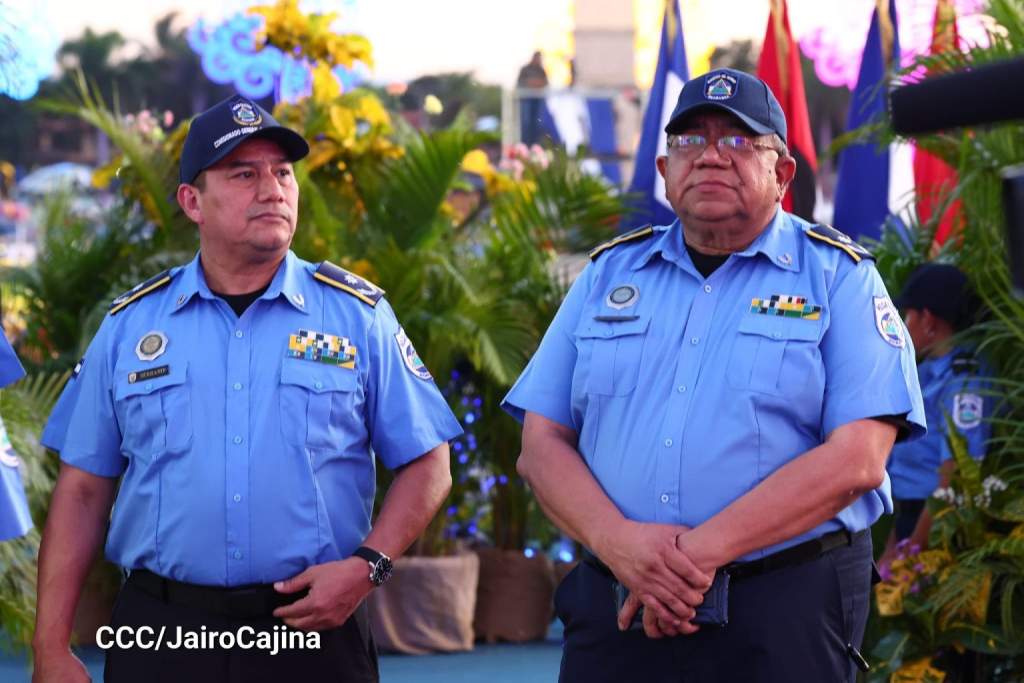
In December 2023, Ortega promoted him to General Commissioner of the Police and integrated him into more intelligence and espionage commissions.
Currently, Luis Cañas is one of the most powerful operators of the regime. From his position, he controls who can enter and leave the country, oversees internal espionage within state institutions, and directs surveillance on opponents, businesspeople, and religious leaders.»
«Former ambassador Arturo McFields accuses him of being the one responsible for banning the entry of opponents and critics of the Daniel Ortega dictatorship into Nicaragua. ‘Luis Cañas, the man who confiscates passports and calls airlines to deny Nicaraguans entry to their homeland,’ McFields denounced on his X (formerly Twitter) account.
Despite his history of corruption and repression, he remains an unknown name on the lists of sanctions by the international community. However, his role in the Ortega-Murillo repression machine has placed him at the center of the power structures that sustain the regime.»
«In February, the UN-created Group of Human Rights Experts on Nicaragua identified Cañas as part of a vast surveillance and intelligence network that monitors officials, opponents, and citizens considered critical of the regime.
The report, presented in Geneva, details that the structure is made up of members from the Army, Police, Ministry of the Interior, Telcor (telecommunications regulator), and armed groups that commit crimes against humanity under the orders of Ortega and Murillo.»
«The network uses municipal computing centers to collect information and coordinate arbitrary arrests, expulsions, and judicial persecution of dissenters.
The experts directly point to the Deputy Minister of the Interior, Luis Cañas, as the one responsible for deciding who is exiled and who is prevented from leaving the country. ‘He is the jailer of Nicaragua,’ say all of his victims.»