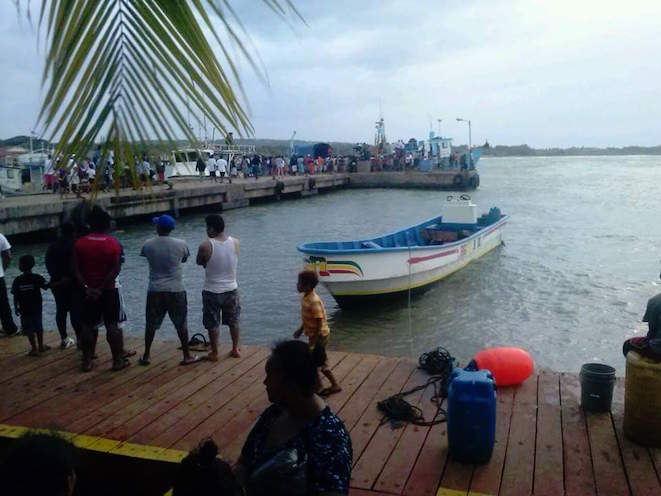
The shipwreck of a vessel carrying 17 people from the Middle East and Asia off the Southern Caribbean coast of Nicaragua reveals that the country remains a route for illegal migration for those seeking to reach the United States, despite strong warnings and measures implemented against migrants following Donald Trump’s return to the presidency.
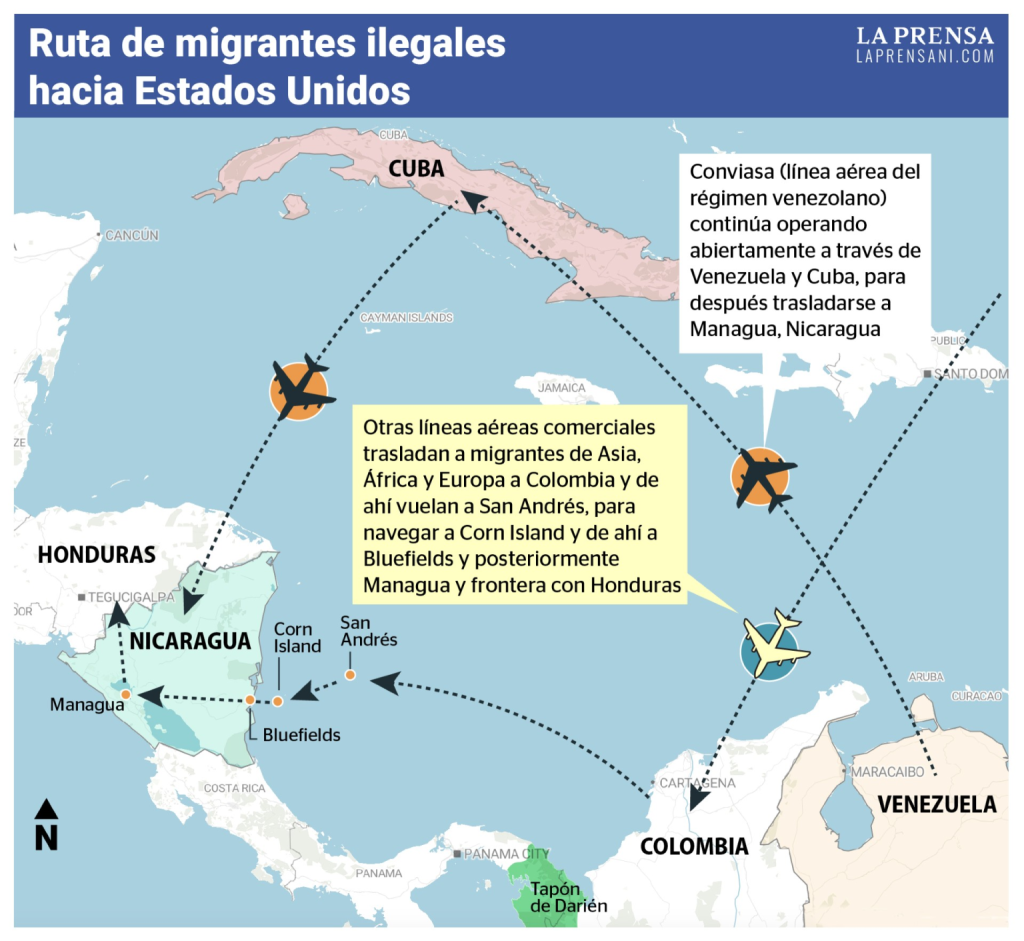
The Nicaraguan vessel had on board people from Egypt, India, Iran, and Vietnam, who departed on Tuesday, February 4, from the Colombian island of San Andrés, located about 100 kilometers off the Nicaraguan coast. The vessel sank 150 meters into Nicaraguan territory. This maritime route is commonly used by migrants to avoid crossing the dangerous Darién Gap jungle in Panama.
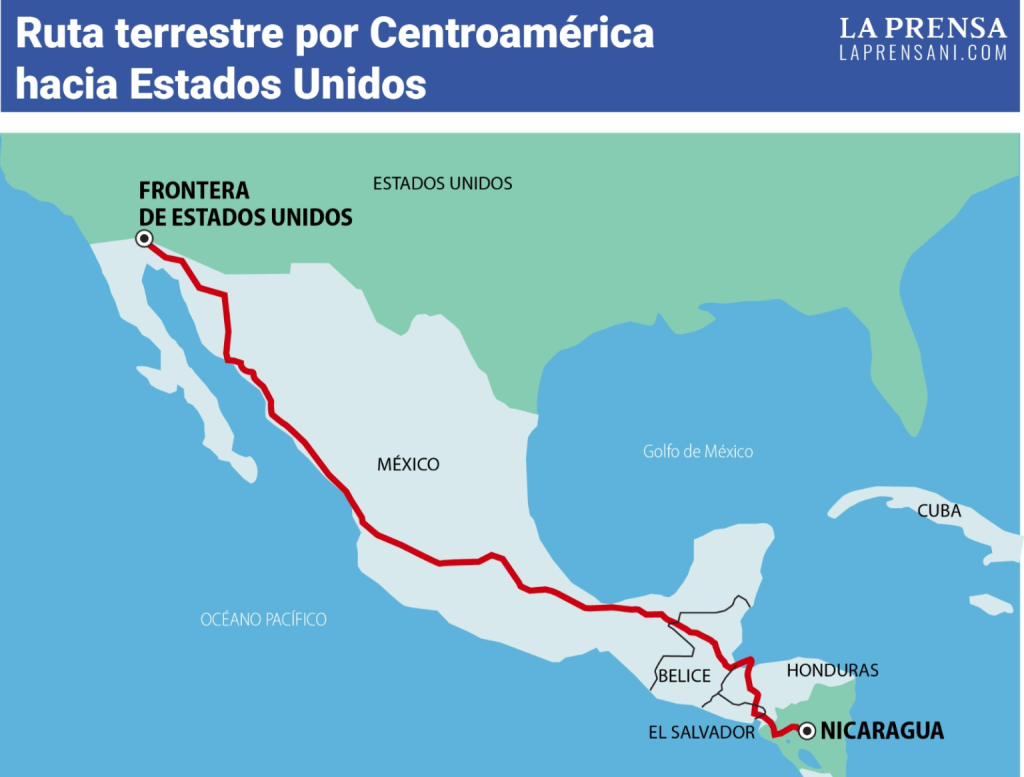
Irregular migrants using this route disembark in Nicaragua and continue their journey overland through Honduras, Guatemala, and Mexico until they reach their destination at the U.S. southern border.
Illegal immigration data from Honduras
Although the dictatorship does not provide data on this bridge or springboard that Ortega has facilitated to intensify the U.S. migration crisis, information from Honduras’ National Institute of Migration —the country migrants are forced to enter after leaving Nicaragua— indicates that in January 2025, the number of migrants continued. Over 5,000 migrants entered Honduras, significantly fewer than in previous years. In 2023, the peak year of charter flights arriving in Managua from Africa, the Middle East, and Asia, 18,882 irregular migrants entered Honduras from Nicaragua in January alone.
As a result of the sanctions imposed by the United States on agencies operating charter flights to Managua, migrants are reverting to traditional maritime routes—a “lesser evil” that still carries risks, as demonstrated by the shipwreck of the vessel carrying 17 people, five of whom died and four remain missing.
A well-established logistics network
A regional migration expert, who requested anonymity, stated that behind this migratory movement “there is an entire logistics network in place to facilitate the operation of this route, with fees and charges established by the Nicaraguan state.”
“The alternative Caribbean route through San Andrés is well-organized and has been operating for months under the protection of the Nicaraguan government. It has gained momentum due to the restrictions on charter and regular flights caused by U.S. pressure,” the source noted.
“Only Conviasa (the Venezuelan state-run airline) continues to operate openly through Venezuela and Cuba. However, regular airlines transport migrants from Asia, Africa, and Europe to Colombia, from where they fly to San Andrés, then sail to Corn Island, continue to Bluefields, and subsequently travel to Managua and the border with Honduras,” the source added.
“Hybrid war” continues
The source pointed out that the facilitation of irregular migration is part of the “hybrid war” waged by countries adversarial to the United States in the Latin American region, using migration as a weapon against the U.S.
The expert stated that this route has not been disrupted because it has not attracted much attention from the United States.
“For the Americans, it is more difficult to stop it without the decisive support of the Colombian government, which has not been forthcoming so far,” the source asserted.
Illegal immigration route through the Caribbean
On Wednesday, February 5, Rosario Murillo, vice president and spokesperson for Daniel Ortega’s dictatorship, reported on the shipwreck in the Southern Caribbean, emphasizing that these individuals had departed from Colombia’s San Andrés Island.
Exiled Nicaraguan opposition leader and former congressman Eliseo Núñez Morales stated that the key to facilitating migration now lies in Colombia, as it is already known that this is Nicaragua’s business, but to carry it out, collaborators are needed.
“The issue is how they are getting to Colombia because they are actually doing so through San Andrés, and it’s necessary to examine the involvement of Colombian authorities in facilitating this arrival to San Andrés,” Núñez said.
Núñez assessed that the sanctions imposed on travel agencies that facilitated flights to Managua from India, Asia, the Middle East, and Africa have led to a decrease in irregular migrant traffic. However, he noted that this will not stop the phenomenon, asserting that Ortega’s dictatorship will continue to allow migrants to pass through Nicaraguan territory. He agreed with the expert that Ortega views migrants as a tool to use against U.S. pressure.
“Ortega sees migration to the United States as a geopolitical weapon he can use against the U.S. Sending people to the U.S. southern border puts him in a position of leverage because he can then negotiate, and I’m certain he has already sent a proposal to stop sending these irregular migrants in exchange for the removal of sanctions,” Núñez remarked.