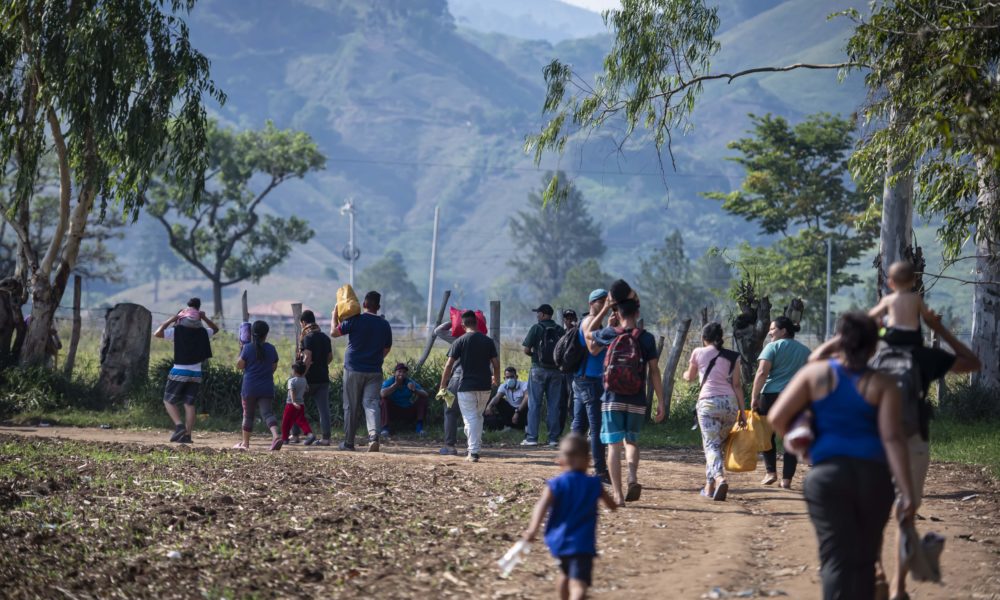
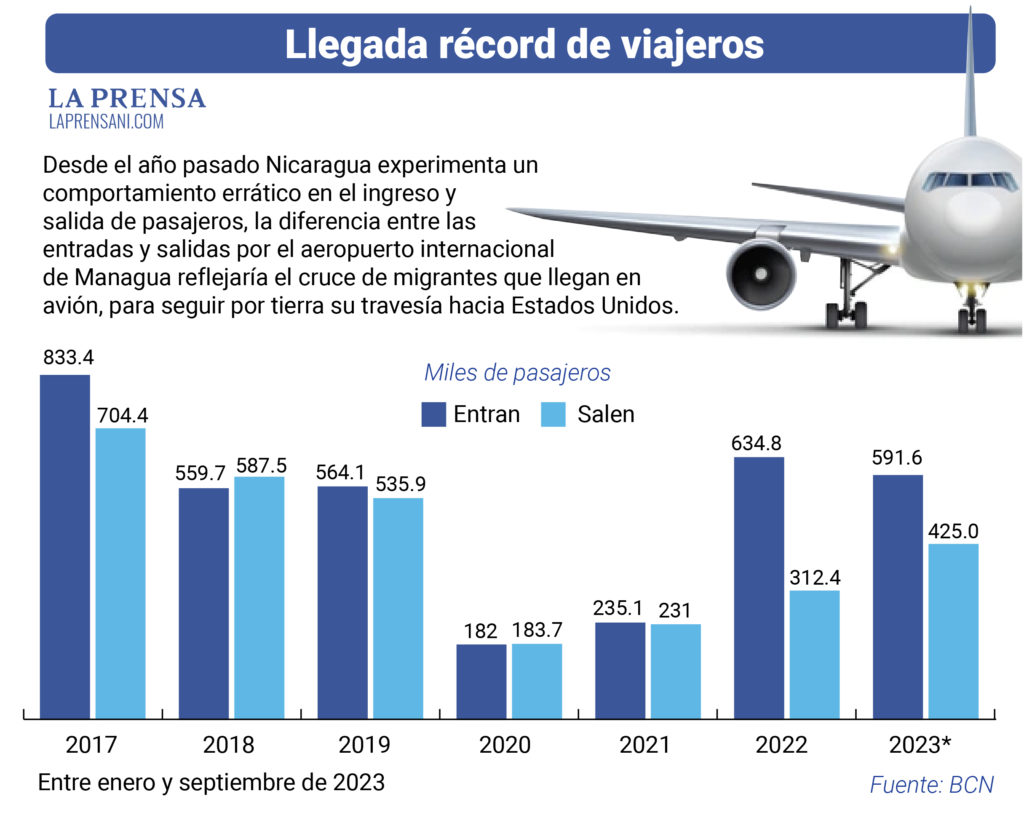
In his obsession to confront the United States, Daniel Ortega turned Nicaragua into an aerial bridge that exacerbated the unprecedented migratory crisis facing the United States in its southern border. The international airport in Managua, which typically handles the arrival of about 15 flights per day, set historical records by receiving up to 50 flights, mostly charters transporting Cuban and Haitian migrants, later extending services to Africans and Asians. In September alone, out of the 115,500 passengers who arrived by plane, 66,500 did not depart through that route and presumably continued their journey by land towards the United States.
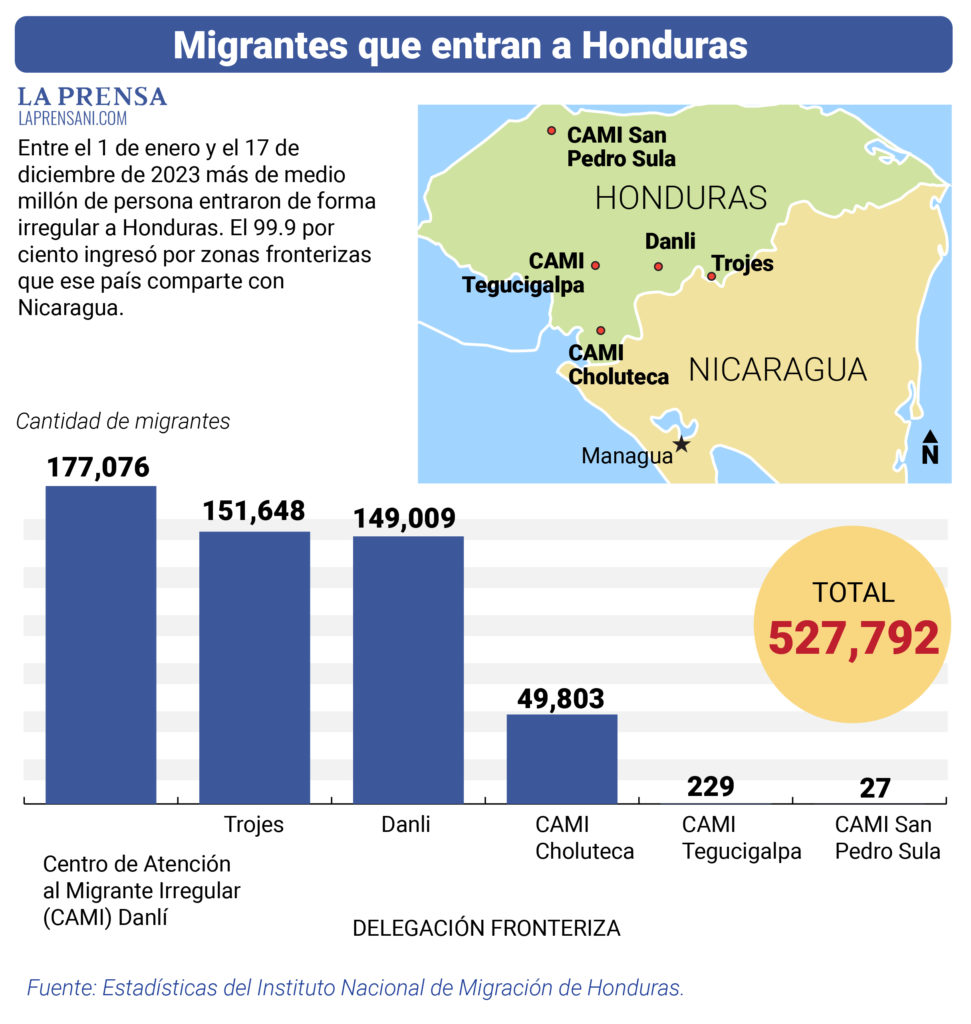
According to statistics from the Central Bank of Nicaragua (BCN), between January and September, over 160,000 passengers arrived in Nicaragua by plane and did not return to their countries via air travel. They would have joined the hundreds of people who daily traverse Nicaragua by land, later entering Honduras to continue their journey in pursuit of the so-called American Dream. Nicaragua does not publish these figures, but Honduras states that between January and the first half of December, over half a million irregular migrants entered its territory from Nicaragua.
«What exists is an organized traffic of people at an industrial level, with branches in almost all regions of the globe. We’re talking about three continents with open routes. This reflects a highly structured organization, capable of pooling scattered resources and, through centralized direction, ensuring that this migration flows through Managua, reaching historical levels as it has occurred,» says a political analyst who, for fear of reprisals, requests not to mention their name.
The logistics reflect support from the regime
While internationally the media labels Nicaragua as the world capital of human trafficking to the United States, the analyst asserts that it’s impossible for this industry to have developed without the support of Daniel Ortega’s regime. This is because there are too many individuals and companies involved to ensure the logistics that have enabled the mobilization of over half a million people. The level of organization reflects strong governmental support.
«Many airlines offer these charter flights, there’s an enormous influx of people arriving in Managua through them, and the logistics that receive them upon arrival and transport them to Honduras are substantial. It’s an entire network of traffickers involved, and this level of organization reflects not only tolerance but also a determined governmental participation. That’s why security analysts see it as a political decision to confront the United States by promoting irregular migration,» the analyst says.
With the 66,500 people who entered Nicaragua in September via plane and, according to the statistics of the Central Bank of Nicaragua (BCN), did not depart through that route, the total amounts to 166,600 individuals who, between January and September 2023, used the international airport of Managua to bypass the jungle known as the Darien Gap and shorten the overland route to the U.S. border.
Honduras reports the entry of 527,792 migrants
These 166,600 individuals who used the Managua airport as a springboard would have joined the several hundreds who daily cross Nicaragua by land after paying a fine of $150 to reach Honduras and continue their journey. Although Nicaragua doesn’t report the statistics of entry or exit for these migrants, the neighboring country does. They even characterize them as irregular migrants, providing humanitarian aid and a safe conduct for them to continue their journey towards Guatemala.
According to reports from Honduras’ National Institute of Migration (INM), between January 1st and December 17th, 2023, 527,792 irregular migrants entered their country. Out of this total, 527,536 entered from Nicaraguan territory. Individuals from Venezuela, Haiti, and Cuba amounted to 387,286; those from Colombia and Ecuador totaled 57,355, and the remaining 82,895 were citizens from China, Guinea, Senegal, Mauritania, and Uzbekistan.
Honduras’ INM statistics reveal that between January 1st and December 17th, 2023, Nicaragua facilitated the irregular transit of at least 527,792 out of the 1.69 million Caribbean, South American, Asian, and African individuals whom the Customs and Border Protection (CBP) processed between January and November for entering the United States without a visa.
According to the analyst, these figures confirm that Ortega has turned human trafficking into an industry and believes that the country has political allies, employing this as part of its strategy to confront the United States.
Ortega and his allies engaged in hybrid warfare with the U.S.
«What we’re witnessing is a criminal organization that has full state support to provide facilities and promote this human trafficking. The regime does this as part of what’s termed hybrid warfare. Nicaragua, along with its allies Cuba, Venezuela, Russia, China, Iran, and North Korea, uses people’s need to migrate as a weapon in this hybrid warfare. They take advantage of peaceful conditions to affect the social life of the United States while simultaneously confronting American society over the issue of migration,» explains the analyst.
Furthermore, this hybrid warfare increases Americans’ distrust in their authorities and forces the Joe Biden administration to divert attention from other issues. «It weakens the United States, which is why the North Atlantic Treaty Organization (NATO) classified the use of irregular migration as one of the weapons of hybrid warfare that threatens the security of its member countries,» asserts the analyst.
The strategy, which turned into a lucrative business, began to be promoted in November 2021 with the suspension of visas for Cubans and peaked in 2023. «It’s estimated that traveling to the U.S. border can cost around $10,000 per person. How much of this money stays with those who receive, assist, and transport them to Honduras? We don’t know, but let’s multiply these $10,000 by the half-million people who passed through that year. Perhaps 20% of that amount stayed in Nicaragua. We’re talking about several million dollars,» points out the analyst.
The Central Bank of Nicaragua (BCN) reports an increase in income
Reports from the Central Bank of Nicaragua (BCN) confirmed that the average daily spending of foreign visitors reached its highest level in the last five years during the third quarter of 2023, standing at $48, driven by the spending of travelers arriving by plane. During this period, they spent an average of $74.4 per day, surpassing the $64.8 recorded in the second quarter of the year.
Additionally, the report on the execution of the General Budget of the Republic from January to September 2023 reported increases in revenue from the $150 each immigrant that arrives by plane pay to the immigration officer, plus the use of the airport terminal, tourist card fees, immigration clearance, and other fees for migration and foreign services.
In total, these charges generated 1,273.46 million córdobas (approximately $34.86 million) between January and September, exceeding the 1,164.89 million (around $31.89 million) collected throughout 2022. It’s unclear if any of these amounts include the $150 fine charged to irregular migrants entering by land from Costa Rica.»
These figures began to skyrocket in 2021 when the visa requirement for Cubans was suspended. Currently, they triple the numbers from the years before the outbreak of the socio-political crisis that has affected the country since 2018, when tourism was booming.
Migrant trafficking surpasses obstacles
The influx of over 160,000 Haitians and Cubans from Nicaragua reported by Honduras coincides with the boom in charter flights arriving in Managua from various Caribbean islands. Throughout 2023, these flights reached record numbers of up to forty per day and only decreased when the United States announced on November 22nd that it would restrict visas for individuals involved in them. Although significantly reduced, a few still arrive. On December 27th, the international airport in Managua reported a flight from Camagüey, Cuba, operated by the Venezuelan airline Aruba Airlines.»
The influx of over 160,000 Haitians and Cubans coming from Nicaragua, as reported by Honduras, aligns with the surge in charter flights arriving in Managua from various Caribbean islands. Throughout 2023, these flights reached record numbers of up to forty per day, only decreasing when the United States announced on November 22nd its visa restrictions for individuals involved in these flights. Although significantly reduced, a few flights still arrive. On December 27th, the international airport in Managua reported a flight from Camagüey, Cuba, operated by Aruba Airlines.
While the United States’ sanction slowed the arrival of Haitians and Cubans through charter flights, migrant trafficking continued through other routes. The entry of South Americans, Africans, and Asians from Nicaragua reported by Honduras aligns with the crisis that the airline Avianca faced in November due to an unusual surge in demand for tickets from citizens of those regions traveling to Managua and Guatemala. This forced the Colombian airline to suspend the sale of these tickets.
However, this new obstacle didn’t halt the business. Upon losing the ability to transport migrants through Avianca, another mechanism emerged, also marking a historical record. The international airport in Managua, which doesn’t have any regular routes connecting it to Europe, began to receive direct flights from Germany and France.
The strategy will have consequences
Nicaragua came into the world’s view when, before Christmas, during a technical stop to refuel in France, the authorities of that country detained one of these flights on suspicions of migrant trafficking. After several days of investigation, the aircraft from the United Arab Emirates returned to India with 276 passengers out of the 303 it carried, as 25 sought asylum in France and two were placed under investigation on suspicions of human trafficking.
According to the analyst, the detention of this flight in France exposed the exploitation of facilities provided by Nicaragua for trafficking Asians, especially from India and Bangladesh. Although the report on irregular migration from Honduras only mentions 11,402 Chinese arrivals from Asia, the analyst states that Indian media claims this wasn’t the first flight on this route, as two others took place in September.
The analyst believes that this hybrid warfare orchestrated by Daniel Ortega with support from his political allies against the United States in an election year, where irregular migration is one of the most contentious issues between Democrats and Republicans, will have consequences.
«We don’t know what the consequences will be, as they’ll depend on the pressure felt by the Democratic Party in power. However, undoubtedly, the Republican Party is using and will continue to use this as a fundamental critique of the Democrats handling of the migration issue. Therefore, it’s highly likely that the Joe Biden administration will be forced to react to Nicaragua and to Daniel Ortega,» warns the analyst.