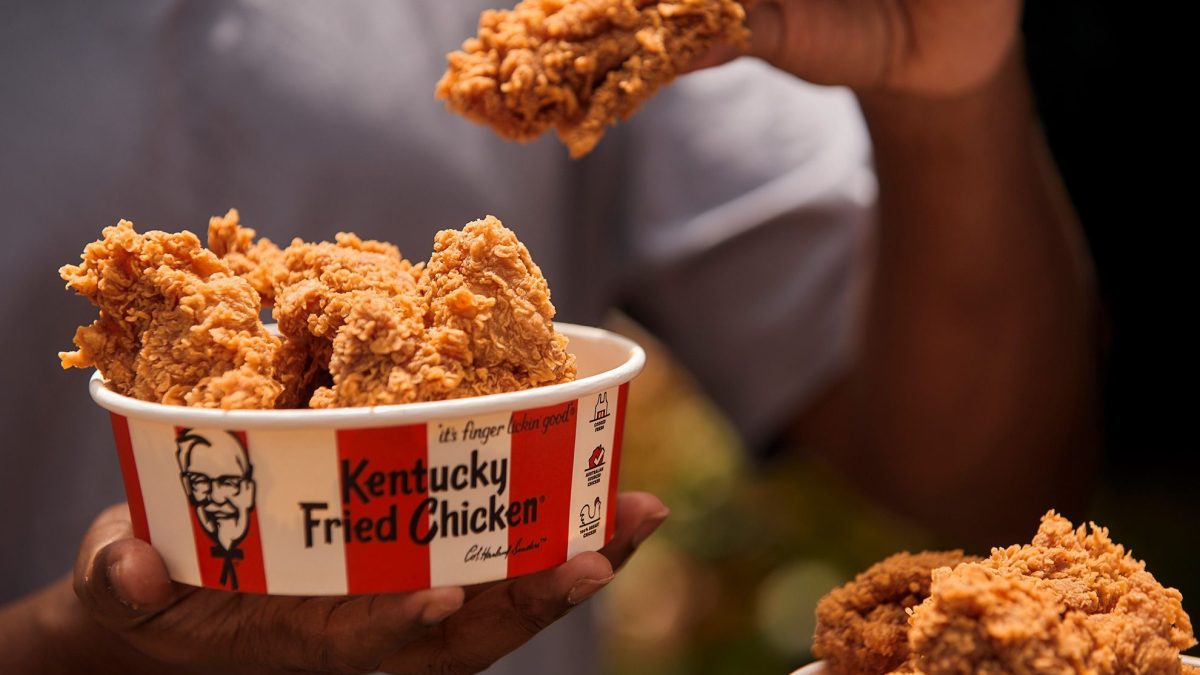
Although the origin of the investment capital behind KFC’s expansion into Nicaragua remains unknown, analysts suggest it could involve local business figures and even actors linked to the regime of Daniel Ortega and Rosario Murillo.
The high levels of consumer spending fueled by remittances may have driven the decision by the U.S. fast-food chain Kentucky Fried Chicken (KFC) to invest in Nicaragua, according to economists who stress that the brand’s arrival does not necessarily mean the country’s economy is thriving or attractive to investors.
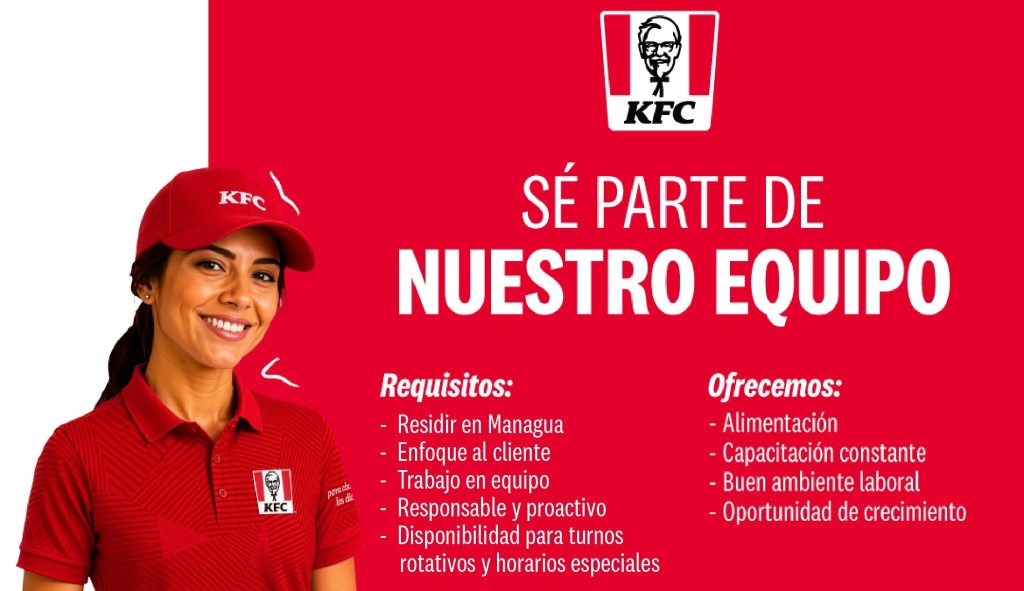
In recent days, it became known that the restaurant chain has begun recruiting staff for the first three branches it plans to open in Managua, located in the shopping centers Multicentro Las Américas, Metrocentro, and Galerías Santo Domingo.
KFC applied to register its trademark in Nicaragua on November 5, 2025, through legal representative Idalia María Sequeira Moreno, according to a publication in La Gaceta dated January 29, 2026.
Read also: Former U.S. Mission Chief Predicts Increased International Pressure on Nicaragua’s Dictatorship
So far, the source of the investment capital remains unclear. What is known is that the company handling recruitment is Grupo Nayi, an operator of several multi-brand franchises, mainly in the fashion, footwear, and accessories sectors. The company is headed by Mohammad Shehab and was founded in 2005, with offices located in Villa Fontana, near Club Terraza in Managua.
Remittances and Their Role in Nicaragua’s Economy
Economist Enrique Sáenz argues that growing consumer spending among Nicaraguans in sectors such as retail, food, agriculture, clothing, and professional services — largely fueled by remittances — likely motivated the arrival of the foreign company, which already operates in nearly every Central American country except Belize.
“Remittances explain the purchasing power of lower-income families, as well as the consumption levels of middle-income households. That is why businesses focused on consumer spending, especially because of their novelty, can become profitable investments,” Sáenz explains.
Another economist, who requested anonymity, agrees with Sáenz regarding the major impact that remittance flows from Nicaraguans abroad have on the country’s economy.
“It is a fact that the high levels of consumption observed in certain sectors of the population, supported by large remittance inflows, make these types of business decisions possible regardless of the country’s political reality,” the economist says.
Following the brutal crackdown unleashed in 2018 by the regime of Daniel Ortega and Rosario Murillo — which forced thousands of Nicaraguans to flee the country — remittance flows, mainly from the United States, Costa Rica, and Spain, began to rise steadily. They reached $5.243 billion in 2024, the last year in which Nicaragua’s Central Bank (BCN) published complete figures before suspending updates in April 2025. At that point, remittances accounted for 29.4% of the country’s gross domestic product (GDP).
TOMADA DE FACEBOOK
Why Invest in a Country Where Property Rights Are Violated?
KFC appears to have overlooked warnings from the United States regarding the risks of investing in Nicaragua.
You may be interested: Russia Boosts Military Presence in Latin America with Nicaragua Agreement
“Investors should exercise extreme caution and conduct thorough due diligence,” the U.S. State Department warned last year, emphasizing that investors “should not expect fair application of the rule of law or a predictable business environment” in Nicaragua. The warning comes as the regime has confiscated property from hundreds of Nicaraguans and shut down more than 5,600 nongovernmental organizations since 2018.
For Enrique Sáenz, KFC’s investment may seem contradictory, but ultimately, “business is business.” He notes that the franchise model under which chains like KFC operate “does not require massive investments.”
“KFC operates under a franchise system. The individual or company that acquires the franchise pays for the brand, recipes, corporate support, fees, and royalties. That same party also assumes the risks of operating in the country,” adds the anonymous economist.
Where Is the Investment Money Coming From?
Both economists agree that the capital behind the KFC franchise likely comes from Nicaraguan investors — and possibly even from the dictatorship itself.
“It cannot be ruled out that these are national or regional investors. We could even speculate that they are front men or business figures linked to the mafia in power,” says Enrique Sáenz.
He adds that KFC’s arrival carries an “undeniable symbolic impact” both domestically and internationally, and that “the dictatorship will surely use it as propaganda to project economic prosperity and well-being,” even as poverty and hunger persist across the country.
The other economist also does not dismiss the possibility of regime involvement, arguing that authorities are eager to “project an image that everything is normal in the country.”
The expert points to the constant promotion of concerts and international sporting events sponsored and financed by the dictatorship. “They are part of this image-laundering campaign meant to conceal repression and the regime’s crimes,” he concludes.
Read also: Nicaragua’s Regime Courts North Korea and African Nations for Military and UN Support