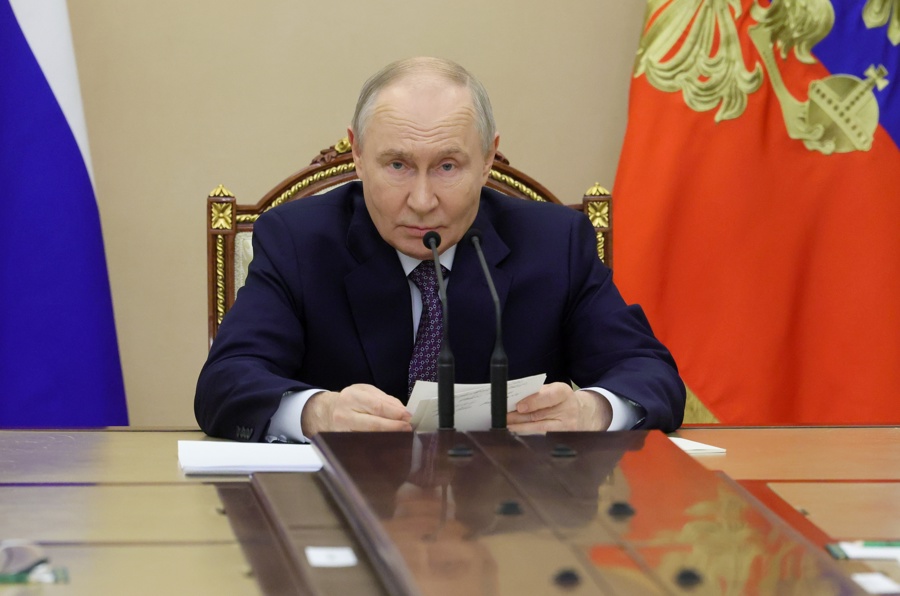
Russia’s Federation Council (Senate) ratified on Wednesday an agreement to strengthen military cooperation with the dictatorship of Daniel Ortega and Rosario Murillo, signed in Moscow last September.
The agreement “will establish the necessary legal framework to determine the objectives, directions, and forms of bilateral military cooperation, and will safeguard the interests of Russian citizens carrying out missions under this agreement within Nicaragua’s jurisdiction,” according to the explanatory note of the corresponding Russian law.
The Alleged Fight against “International Terrorism”
The Russia–Nicaragua agreement also provides for cooperation in several key areas, including the exchange of information on matters of mutual interest in the military sphere.
It also includes “the coordination of efforts to jointly counter challenges and threats to global and regional security and stability,” as well as “the exchange of experience and information in combating extremist ideologies and international terrorism.”
Additionally, it covers cooperation in anti-piracy efforts and joint troop training.
The agreement was signed on September 22, 2025, by Russian Defense Minister Andrei Belousov during a meeting with Nicaragua’s Army chief, General Julio César Avilés.
Academic Félix Maradiaga described the move as an “act of treason,” expressing concern and rejection. He argued that it is not a routine cooperation agreement but rather the “conversion of Nicaragua into a satellite of Vladimir Putin,” turning the country into an operational platform serving Russian interests.
He added that the agreement’s scope is particularly alarming, as it includes areas such as “electronic warfare cooperation” and “radiological, chemical, and biological protection.”
“What is serious is its deliberate breadth. It is an agreement drafted as a blank check in favor of Moscow,” Maradiaga said, noting that it has a five-year duration, renewable.
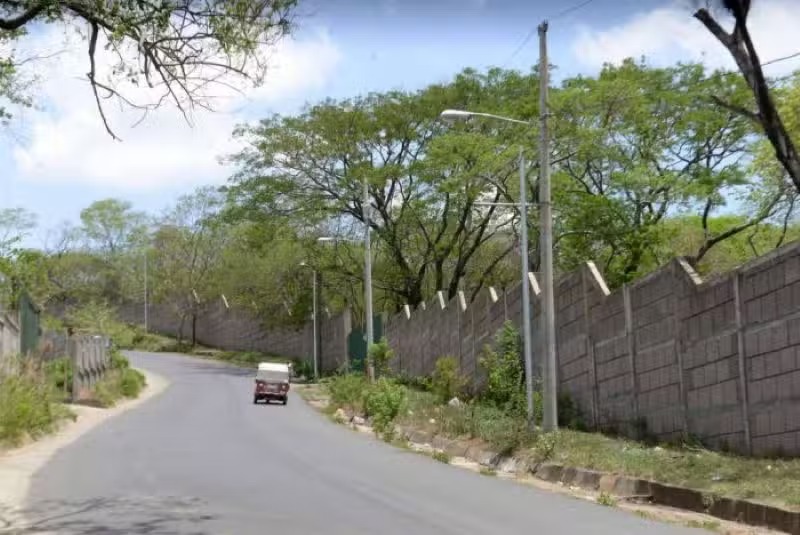
Mokorón Hill in Managua has gone from being a green lung and military base to becoming a sophisticated Russian espionage center to which Nicaraguan officials have no access. LA PRENSA/ARCHIVE
Another Analyst Warns of More Repression in the Future
Another expert consulted anonymously warned that the agreement lacks transparency and could reinforce the Nicaraguan regime’s repressive capabilities.
“What Russia has always sought with bilateral military agreements is to guarantee regime stability,” the specialist said.
In September 2023, Ortega acknowledged that Russians were assisting in repression-related tasks. He stated that a Russian training center for police officers was intended “to confront coup plotters (opponents).”
The facility, located in Las Colinas in Managua, has been sanctioned by the United States. Nevertheless, 2,353 police officers from 13 countries have graduated from it since its creation in 2017.
Russian support for Ortega has also been evident through a satellite station in Nejapa, which connects Managua with 24 Russian satellites and operates with technology similar to GPS, the Glonass network. Independent sources have pointed to it as a potential espionage center.
Nicaraguan leader Daniel Ortega, in power since 2007, governs alongside his wife Rosario Murillo and is Russia’s main regional ally of Vladimir Putin.
A security expert told La Prensa that Russia’s decision stems from Putin’s concern that, due to pressure from Donald Trump on Cuba and Nicaragua, Moscow could lose its influence in the Western Hemisphere—especially after already losing Venezuela.
Relations between the two governments have been managed personally. Nicaragua’s main liaison with Russia is Laureano Ortega Murillo, the son of the ruling couple, who also handles ties with China.
The Russian Senate’s decision comes as the Trump administration implements a renewed version of the Monroe Doctrine—“America for the Americans”—aimed at keeping external powers such as Russia and China out of the region.
According to Maradiaga, “with this agreement, combined with the Russian intelligence base already operating on Nicaraguan soil, Nicaragua effectively becomes a Russian military base.”
He called on soldiers, officers, and non-commissioned officers to uphold their duty to defend national interests and not participate in the geopolitical ambitions of Ortega or any foreign power.
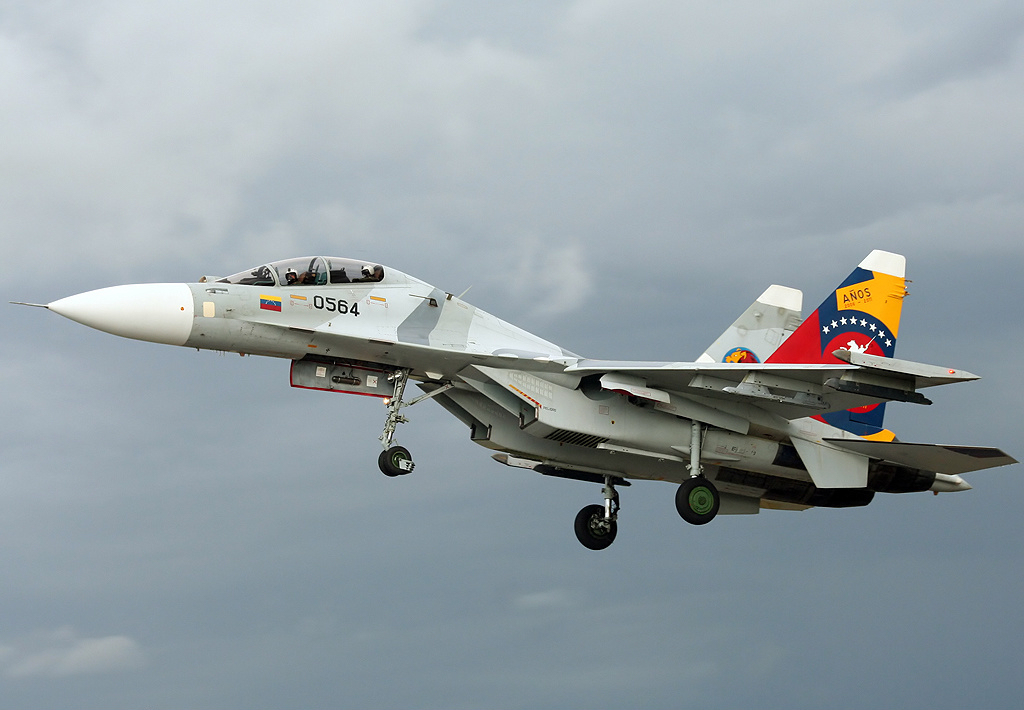
Venezuela purchased at least 24 Sukhoi SU-30MK2 fighter jets from Russia. Venezuela was the largest buyer of Russian weaponry in the region. WIKIMEDIA COMMONS/CHATGPT
Marco Rubio Warns of Russia’s Military Proximity
At the end of January 2026, U.S. Secretary of State Marco Rubio identified Nicaragua as one of the countries serving as a base of Russian operations in the Western Hemisphere during a Senate Foreign Relations Committee hearing.
When Rubio made those statements, 25 days had passed since the military operation in which U.S. Delta Force troops captured Venezuelan dictator Nicolás Maduro and his wife, Cilia Flores, in Caracas. Both are currently being prosecuted on drug trafficking charges in New York.
But U.S. pressure in the hemisphere is also likely aimed at Cuba—another ally of Ortega—whose leadership is engaged in talks with Washington, even as a deepening crisis continues to affect the population, largely as a result of decades of poor governance by the island’s authorities.
Nicaragua Has a Long History of Supporting Russian Expansionism
Nicaragua, along with North Korea and Syria, is among the only countries to have recognized the legality of Russia’s annexation of Donetsk, Luhansk, Zaporizhzhia, and Kherson in Ukrainian territory.
In 2008, Nicaragua recognized the independence of the Georgian separatist regions of Abkhazia and South Ossetia, both backed by Russia. However, ties between the Kremlin and Managua have been defined above all by military cooperation.
Last March, the Trump administration reshaped the geographic understanding of U.S. security and promoted the concept of “Greater North America,” stretching from Greenland to Ecuador. After months of silence in his anti-U.S. rhetoric, Ortega recently lashed out at President Donald Trump, saying he was “not in his right mind,” while demanding the lifting of sanctions. The U.S. Treasury Department sanctioned his sons, Maurice and Daniel Edmundo, targeting the family’s business interests in the gold sector.
Félix Maradiaga says that this agreement with Russia disrupts the reasonable balance of forces in Central America and violates the 1995 Framework Treaty on Democratic Security in Central America, which explicitly prohibits Central American states from entering into agreements with extra-regional powers outside the principles and mechanisms of democratic security.
“Ortega is not only violating Nicaragua’s sovereignty—he is directly endangering the security of Honduras, El Salvador, Guatemala, Costa Rica, Panama, and Belize,” the academic added. He argued that Nicaragua does not belong to Ortega, Murillo, or the Kremlin, and called on the international community—especially the OAS—to respond with firm statements. He also urged member states of the Central American Integration System to begin proceedings to expel the dictatorship.
Puede interesarte
COMO BENEFICIO DEL PLAN PREMIUM PODÉS COMENTAR EN TODOS NUESTROS ARTÍCULOS.
El contenido de LA PRENSA es el resultado de mucho esfuerzo. Te invitamos a compartirlo y
así contribuís a mantener vivo el periodismo independiente en Nicaragua.