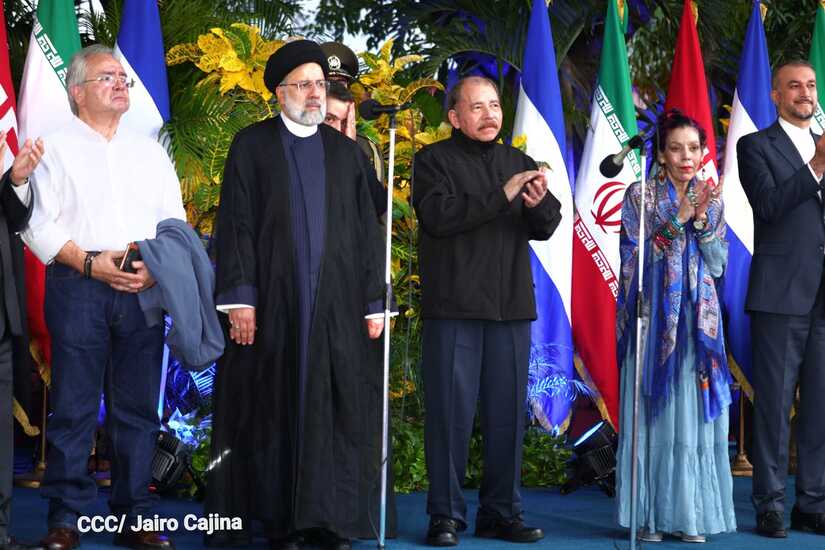
Despite the vast geographical distance and cultural differences, the regimes in Managua and Tehran have consolidated a shared playbook of repressive tactics to secure their grip on power—a convergence underscored by the fact that Daniel Ortega himself said in June 2023 that the revolutions of both countries were “twins.”
The key has been the institutionalization of fear. According to a report by the UN Group of Human Rights Experts that investigated Nicaragua, a systemic pattern has been identified that includes the use of lethal force against civilians, totally criminalizing social protest, and an architecture of impunity designed to shield perpetrators.
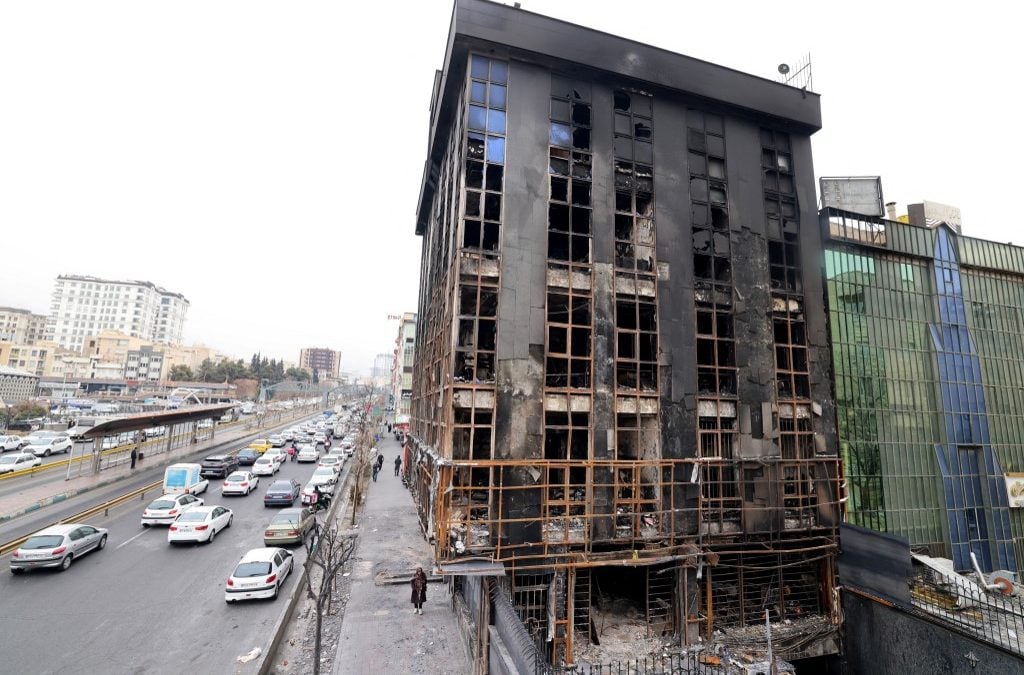
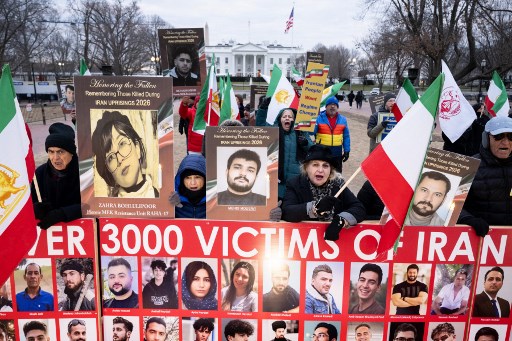
There is an authoritarian convergence with Iran, where the country has been rocked by intense protests challenging the 47-year history of the so-called Islamic Republic. Initially driven by economic grievances, the demonstrations have expanded in scope, while the state’s response has been a brutal crackdown that has left thousands dead.
In neither case is this a chaotic or improvised reaction by the state. Rather, it is a planned strategy aimed at eliminating criticism and silencing any voice perceived as a threat to state hegemony. Even as Iran was engulfed in protests and heavy repression in 2022, the Ortega regime dispatched its then–foreign minister, Denis Moncada, on an official visit to Tehran.
“Repressive regimes tend to use similar methods to suppress the population. I have no doubt that these regimes study and share their experiences. For example, we have seen that in Venezuela many of the repressive measures already applied by Ortega were copied,” said Héctor Mairena, secretary for international relations of the opposition party Unión Democrática Renovadora (Unamos), in remarks to LA PRENSA.
The difference now appears to be that U.S. President Donald Trump has announced his support for Iranian protesters, and Ortega is maneuvering to avoid confronting him—particularly after the January 3 capture of his ideological ally Nicolás Maduro by U.S. Army special forces.
Abuses documented by the UN
Abuses committed by Nicaragua and Iran have been documented by United Nations mechanisms and organizations such as Amnesty International. These findings show a trajectory that moves from phases of acute violence to the institutionalization of terror. In Iran, from the Green Movement in 2009 to the most recent mobilizations in 2025, the regime has responded to social demands with live ammunition and mass arrests.
In Nicaragua, the UN Group of Experts identified four main phases since April 2018: the state shifted from open massacres in the streets to a phase of total control by the executive branch over state institutions and the population.
The international community agrees that these violations are not isolated incidents but, in many cases, constitute crimes against humanity, including murder, torture, and political persecution. While Iran has for years documented executions and direct gunfire against protesters—especially at present—in Nicaragua such killings occurred in 2018, followed by the establishment of a system of “civil death,” including the stripping of nationality and confiscation of property from those who dare to dissent.
Lethal force as the state’s first response
The starkest similarity between Nicaragua and Iran is the readiness of their security forces to use military-grade weapons against unarmed demonstrators. In Iran, protests over fuel prices in 2019 and the “Woman, Life, Freedom” movement in 2022 were crushed with live fire and subsequent executions, resulting in hundreds of deaths.
In Nicaragua, during the initial phase of 2018, the National Police used excessive and lethal force, deploying snipers and AK-47 assault rifles to “neutralize” citizens manning street barricades.
This pattern of intentional lethality is compounded in Nicaragua by the involvement of parastate structures or pro-government armed groups operating under state direction. In both Iran and Nicaragua, absolute institutional impunity prevails.
In the case of Daniel Ortega and Rosario Murillo’s regime, the so-called Volunteer Police (paramilitaries) were formally established—made up of former combatants and public employees loyal to the Sandinista Front—to carry out violent operations such as “Operation Clean-Up.” The UN Group of Experts has confirmed that these forces operate in coordination with the National Police and the Army to ensure the effectiveness of attacks against the civilian population.
Even under international scrutiny, both regimes have continued to rely on lethal force, with reports of minors killed during Iran’s 2025 protests. In Nicaragua, territorial control is so pervasive that the mere expression of opposition can trigger a disproportionate deployment of forces to carry out violent home arrests.
The refusal of both states to investigate these crimes or sanction those responsible confirms that killing and physical violence are deliberate state policies aimed at preserving the status quo.
Torture and the justice system
The use of the justice system to give a veneer of legality to persecution is another common denominator between Managua and Tehran. In Iran, arbitrary arrests are followed by convictions without basic guarantees and sham trials designed to punish activists. Nicaragua has refined this model through the fabrication of criminal cases and the absolute control of the judiciary by figures such as former Supreme Court justice Marvin Aguilar, who took direct orders from the presidency to convict opponents on charges of “treason.”
Inside detention centers, systematic torture is used to break the will of political prisoners. In Iran, international bodies have documented cruel interrogation methods and physical abuse. In Nicaragua, facilities such as the new El Chipote prison and maximum-security cells like “Cell 300” (“El Infiernillo”)—the former under the Police, the latter within the penitentiary system—are sites of physical, psychological, and sexual torture, where detainees are held incommunicado and denied basic medical care.
The UN Group of Experts notes that prison system directors, such as Julio Guillermo Orozco, carry out orders to impose discriminatory and dehumanizing treatment on prisoners of conscience in Nicaragua. This policy includes sleep deprivation, prolonged isolation, and bans on family visits as punishment for the victim’s political identity. In both Nicaragua and Iran, the judicial and prison apparatus has ceased to function as a justice system and has instead become an operational extension of the state intelligence machinery.
Mass surveillance and exile
Control of information is vital to the survival of these authoritarian regimes. Both rely on censorship and the blocking of independent media. Iran implemented a nationwide internet shutdown during the 2019 uprising to conceal the scale of the killings and continues to maintain extensive digital surveillance.
Nicaragua has followed a similar path by blocking independent media domains and using the Telecommunications and Postal Institute (Telcor), headed by Nahima Díaz—daughter of Police Chief Francisco Díaz—to intercept communications and operate troll farms that harass critics on social media.
Nicaragua has taken repression a step further through the expulsion of nationals and the arbitrary stripping of citizenship. This form of transnational repression seeks to erase the legal existence of the opposition. The denationalization of groups of 222, 94, and 135 people between 2023 and 2024 has no basis in international law and leaves victims stateless. The measure is reinforced by entry bans on hundreds of citizens, effectively preventing the return of those capable of mobilizing society.
Finally, the confiscation of property and pensions is used to ensure the “economic death” of opponents of the Ortega-Murillo regime. The Attorney General’s Office, led by Wendy Morales, has overseen the seizure of homes and assets belonging to human rights organizations and private universities. While Iran maintains control through physical execution, Nicaragua has perfected a model in which confiscation and exile function as tools of political cleansing, entrenching an executive authority without limits.
“I have no doubt that, sooner or later, international justice and its various mechanisms will make criminals pay for their crimes. Once democratic transitions take place in these countries, national justice systems will adopt the model they deem appropriate to deliver justice,” opposition leader Héctor Mairena said.