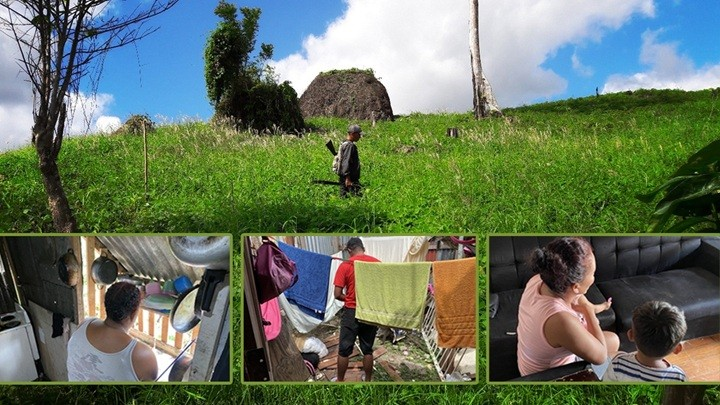
Cati, a 25-year-old Miskito woman exiled in Costa Rica, received a WhatsApp call last October. On the other end of the line was a friend of hers, also Miskito and the mother of two children.
—“Friend, they kicked me out. I’m on the street,” she said through sobs.
Cati hesitated before responding. She doesn’t remember whether it was seconds or minutes, but she didn’t reply right away—she knew immediately that she wasn’t in a position to help.
—“I’m in the same situation,” she replied in broken Spanish. She meant that she, too, was facing serious financial hardship.
Cati was forced to leave her community in Nicaragua’s Northern Caribbean after settlers—mestizos from the Pacific who, with the backing of the Ortega-Murillo regime, invade and seize Indigenous lands—took her family’s land by force. Those who resist, she warns, are killed.
She fled to Costa Rica, where she has been living for nearly a year. Her crime: being part of a Miskito group that organized to defend their territory and expel the invaders. Since then, she has not been able to find work.
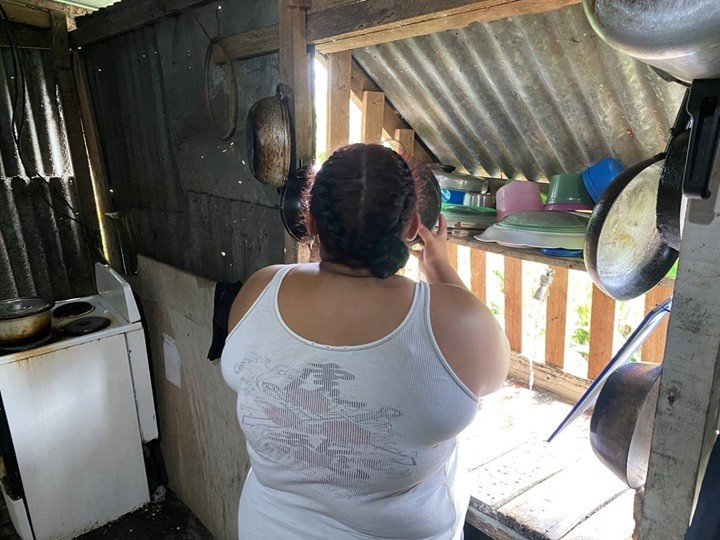
“Living in another country is hard. We’re not used to certain types of work, like construction. The language is a struggle. I grew up in my community, with our customs: harvesting cassava and plantains, fishing in the river, and living off that. Here, I haven’t been able to find a job. People humiliate us, criticize us—but what can we do? We have to save our lives,” Cati says.
LA PRENSA / COURTESY
When her friend asked for help, Cati turned to other Miskitos in exile, who, through a collective effort, offered support. But that created another problem: the landlord of the Miskito who took them in raised the rent for having sheltered three more people—the woman and her two children—and demanded that the little girl not cry.
It was a profound cultural clash. In their community, solving a housing need was as simple as going into the forest, cutting wood, and building. Here, everything comes at a price.
“Here, if you don’t work, you don’t even have enough for bus fare. You go out looking for a job and they say, ‘We’ll call you,’ or ‘Bring your documents.’ But getting papers is hard, and life is expensive,” Cati laments.
“Here I suffer, and my family suffers back home too”
In December 2024, Yakal, a 42-year-old Miskito man, received several calls from his five children, who still live in Nicaragua’s Northern Caribbean region. The younger ones especially were asking for a little money for the end-of-year holidays.
He couldn’t send them anything.
Back in his community, Yakal provided for his wife, children, and elderly mother—a widow who depends on him—by working the land, fishing, and raising animals.
But everything changed when the settlers arrived. Alongside other young Miskitos, he organized to confront them. Though they were unarmed, they managed to capture some of the invaders and turn them over to authorities in Puerto Cabezas. The government itself, however, released them and sent them back.
Soon after, those settlers returned—this time armed and seeking revenge.
Yakal and his community reported the attacks to the police, but received no response. He had no choice but to flee.
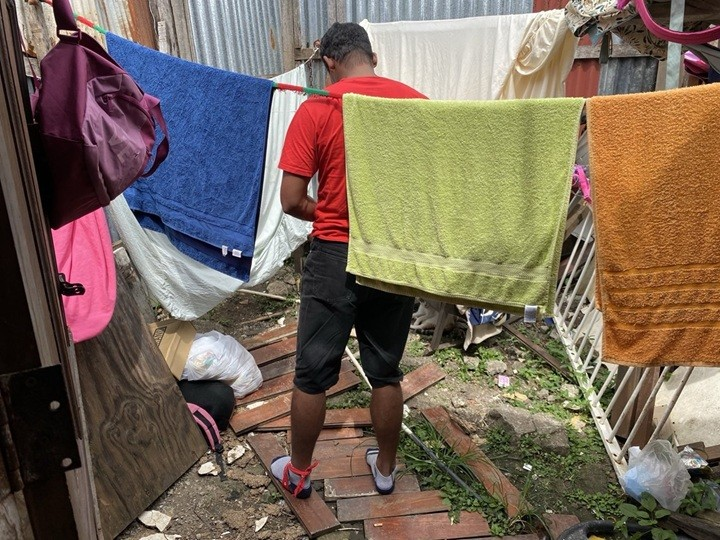
“I came here to save my life, but my family suffers over there, and I suffer here too. If I go back and confront the settlers, I’ll most likely be killed,” he says, with the help of an interpreter.
LA PRENSA / COURTESY
According to Indigenous leaders, between 2013 and September 2024, more than 78 Indigenous people were killed by settlers. Between 2020 and 2023 alone, there were 42 recorded murders and at least three massacres. The actual numbers could be higher, as bodies are frequently found in the forests or floating in the rivers.
In Costa Rica, Yakal accepted a construction job despite having no experience with cement or structural work. In November, he fell from a two-meter scaffold and injured his left foot. Since then, he has been unable to work.
“I went to the hospital, they sent me home, but the company no longer responds to me. I’ve called them, trying to find out what’s going on. I have this injury and Christmas was coming. I also rent a room; I have needs. So far, no one has helped me. Here, no one respects the Miskitos,” he says with resignation.
His Miskito neighbors in Pavas, San José, have helped him with medicine and traditional treatments. “If it weren’t for that, I’d still be in bed,” a friend comments.
“Here, the hardest part is that you go to a job, you work, and they pay you less than the others,” Yakal states.
“I was happy in my community”
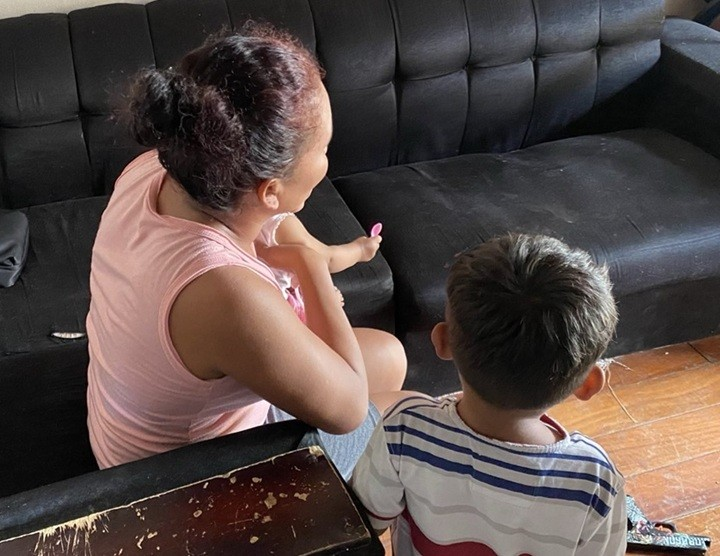
In a wooden house beside a stream of black water lives Lapta, a 29-year-old Miskito woman, together with her husband Johnny and their two young children. It is the refuge they have found since Johnny fled due to death threats. He arrived in Costa Rica nearly two years ago; Lapta and the children followed six months ago.
She hadn’t planned to go into exile, but the harassment became unbearable: settlers would come demanding to know Johnny’s whereabouts.
In their community, they had a large plot of land, animals, and crops of rice, beans, and cassava. Their family economy was based on agricultural production and hunting. Each year, they stored up to 80 quintals of food for their own consumption, selling the surplus in Puerto Cabezas to buy what they needed.
But they had to flee.
Lapta crossed trails to the San Juan River and then the border. A taxi driver robbed her of everything—her money and the backpack with her children’s clothes. Johnny, who was working, couldn’t arrive in time to pick her up. Other Miskitos came to her aid. The youngest daughter cried nonstop for three days.
Johnny has been fired from several jobs due to hearing loss in one ear, which has caused issues with his employers. He earns 80,000 colones every two weeks—about 160 dollars—which is just enough to pay the rent. The rest of the fortnight barely covers feeding the family.
LA PRENSA / COURTESY
“I was happy in my community. We had our own little house—humble, made of wood, with a thatched roof and dirt floor… but it was ours. We didn’t pay anything. Here, life is hard. We have two children, and my husband doesn’t have a steady job,” Lapta explains.
One of the things that saddens her the most is having to buy cassava in Costa Rica: “A kilo costs this much, two little bills,” she says, making gestures with her hands. “Back home, we eat a lot of cassava, grown by ourselves, with fish soup, turtle meat, and native chicken. That’s our custom. But here, no. Here, everything is money.”
Sometimes, when talking with Johnny, they come to the same conclusion: they want to return. But for now, they cannot.
Persecuted by the regime and settlers
The exile of the Miskitos has multiple causes: land invasions, crimes committed by settlers, and political persecution by the Ortega-Murillo regime, which had already been favoring mestizo invaders since before 2018.
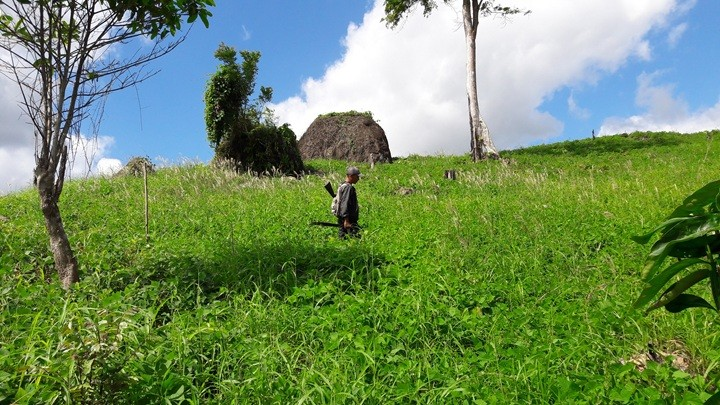
According to Indigenous leaders, invasions intensified starting in 2014. Yakal recalls that before, communities were governed by their own elders, but the regime began imprisoning or persecuting the true Indigenous authorities, replacing them with government allies, whether Indigenous or mestizo. This allowed settlers to establish themselves under state protection.
LA PRENSA / COURTESY
“The Sandinistas do not respect the Miskitos. They don’t give them their rights. If they did, all of this would already be resolved. But settlers keep being allowed in. Now they even vote in regional elections within our communities. That means the governments are granting them authority,” Yakal denounces.
Currently, Miskito leaders Brooklyn Rivera, Nancy Elizabeth Henríquez, and Steadman Fagot are imprisoned. The latter was captured after publicly denouncing that the Army allows settlers to carry war weapons to murder Indigenous people.
A September 2024 report by the United Nations Group of Experts on Human Rights in Nicaragua documents systematic violations against Indigenous and Afro-descendant peoples, including persecution, killings, displacement, and sexual violence. The Nicaraguan state, through omission or complicity, is responsible.
The exact number of Miskitos seeking refuge in Costa Rica is unknown, as the Migration and Foreigners Office does not break down data by ethnicity. However, internal studies by Miskito organizations indicate their presence in several areas of the Greater Metropolitan Area (GAM), such as La Carpio, Desamparados, and Pavas in San José; Pital de San Carlos, Los Chiles, and Naranjo in Alajuela; as well as multiple locations in Guanacaste and Limón.
This text is part of the series Telling the Exile, produced in collaboration with DW Akademie, the Institute of Press and Freedom of Expression (Iplex), and the Latin American Network of Journalism in Exile (Relpex); it is part of the Space For Freedom project within the framework of the Hannah Arendt initiative funded by the Ministry of Foreign Affairs.