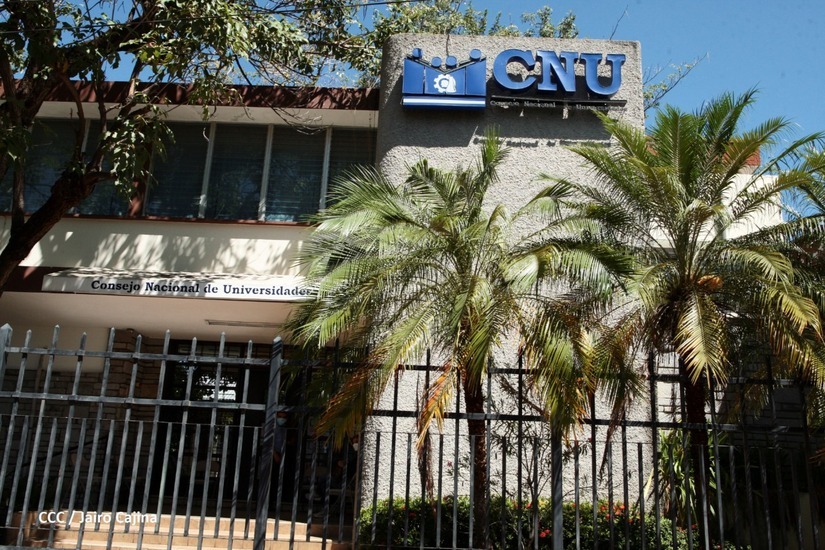
The National Assembly of Nicaragua, under the control of the dictatorship of Daniel Ortega, reformed on Thursday, November 30th, the Autonomy Law of Higher Education Institutions (Law 89) and the General Education Law (Law 582). These reforms grant control to the National Council of Universities (CNU) over decisions made in higher education entities, including the election of academic authorities, administrative decisions, and contract subscriptions. All 91 deputies voted in favor of the initiative.
Law 89 applies to state universities, community and intercultural universities, private universities, centers of higher technical education, as well as centers and research institutes established by law and empowered to grant academic degrees.
The autonomy of the universities is officially nullified
The amendment strips universities of the authority to make changes ‘on their own’ and establish requirements as outlined in Article 8 of Law 89, which was reformed.
University authorities can no longer appoint or remove their teaching, academic, or administrative staff. They also cannot select their students, approve study and research plans and programs, or manage internal budgets or financial transactions.
The reform stipulates that all these actions will be conducted ‘in accordance with this Law,’ granting control to the CNU through the reform.
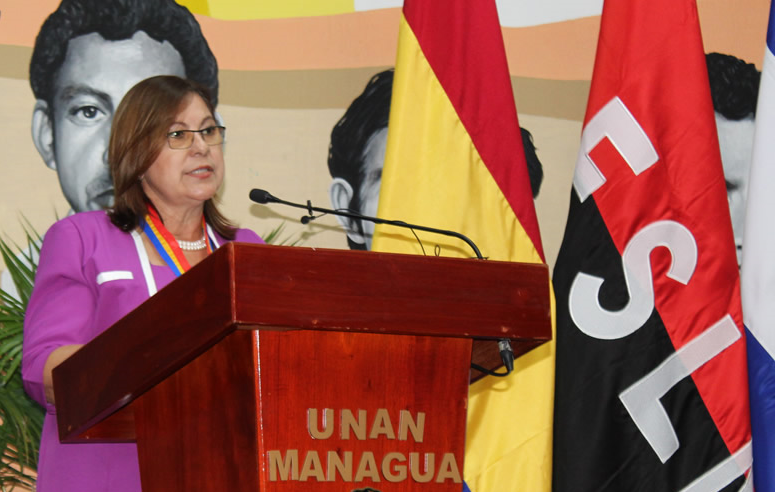
The CNU, presided over by Ramona Rodríguez, a loyalist to the Ortega dictatorship, now holds the sole power to elect academic and administrative authorities, among other activities.
The reform removes from Article 17 the provision stating that the Rector ‘will be elected for a period of four years, with the possibility of reelection,’ implying an indefinite tenure in that position.
Only the CNU has the authority to make appointments.
The reform to Article 13 establishes that all governing bodies of universities will be appointed by the CNU.
State, community, and intercultural universities will have governing bodies such as the Board of Directors, comprised of the Rector, Vice-Rector, and General Secretary, all appointed by the CNU. They will also have a University Council, which will be an advisory body composed of the authorities of the Board of Directors, directors by faculty, a student representative for each faculty, and two representatives from each of the professional associations and administrative workers.
New instances
Central-level directorates responsible for academic and administrative work are established, appointed by the CNU; area-specific directorates responsible for managing and directing programs grouped in each field; and specific directorates tasked with managing and administering the curriculum for each program.
The figure of the dean is replaced by the ‘director by knowledge area,’ who will serve as the highest academic and executive authority within the respective ‘knowledge area,’ previously referred to as a faculty. The former dean will no longer have the authority to propose the appointment, cancellation, or modification of appointments for teaching staff, nor to the rector.
Private universities will be allowed to be commercial companies
Additionally, Article 13 states that ‘private universities will organize and govern themselves according to their statutes and regulations and may adopt the legal nature of commercial companies.’
Regarding the budget allocation to universities, the reform establishes that it will be the responsibility of the rector to propose the general budget project to the Board of Directors, to then be sent to the CNU for modification and approval.
The Ministry of Finance and Public Credit will approve the policy and distribution of funds allocated to the CNU and each university in compliance with the 6 per cent of the National Budget established by law. The distribution of funds will consider per capita budget per student, study modalities, fund delivery mechanisms, and accountability, among others.
In recent years, the Ortega dictatorship has canceled and confiscated at least 28 private universities. After seizing and looting most of the facilities, they have renamed them and put them under their control. The most emblematic case was the confiscation of the Central American University (UCA), an internationally renowned institution founded in 1960 by the Jesuits.»