The regime of Daniel Ortega and Rosario Murillo is holding 51 men and nine women as political prisoners. At least 23 of them are victims of enforced disappearance, according to the latest report by the Mechanism for the Recognition of Political Prisoners, with data through July 31, 2026.
Of the 60 political prisoners, 15 are older adults whose lives are at risk. Since 2018, the Mechanism has recognized 1,506 people as political prisoners in Nicaragua.
The July count represents an increase of 14 people from the report issued in May. However, the Mechanism cautioned that the increase does not mean that all of those newly added to the list were recently detained.
Six of the newly registered prisoners are relatives of Brooklyn Rivera. They were detained in Managua on May 31, 2026, when they attempted to claim the Indigenous leader’s body for burial.
Related: Russia’s Growing Influence in Nicaragua Extends Far Beyond Humanitarian
Elvia Yunieth Flores and Alain Piedra Among Cases Added Belatedly to List of Disappeared
The other eight additions stem from cases that were reported belatedly. Seven of those people were detained in 2025, including Elvia Yunieth Flores Castillo, who has been missing since March 2025.
According to an allegation made by her brother, Santos Sebastián Flores Castillo, in 2005, Daniel Ortega sexually abused her when she was 15 years old, and she allegedly had a daughter with him.
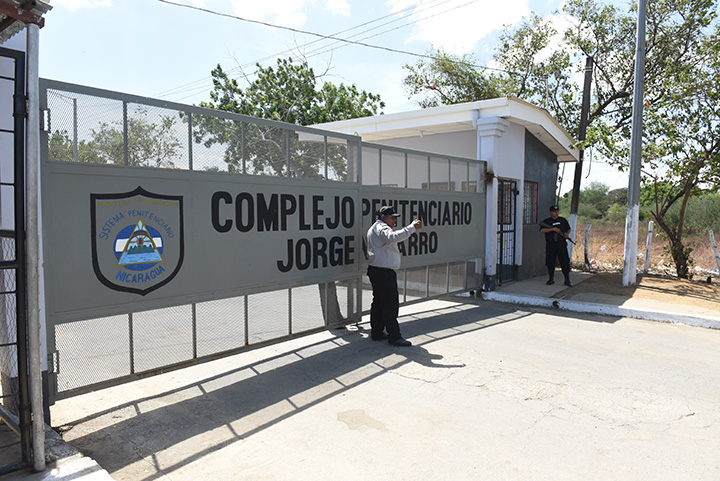
Santos Sebastián died on Nov. 8, 2021, at age 52 in the Jorge Navarro Penitentiary System, known as La Modelo, in Tipitapa, Managua.
Another of those missing is Alain Piedra Hernández, a 53-year-old Cuban American coffee businessman who lived in Sébaco, Matagalpa, and had been doing business in Nicaragua since 2011.
The reason for his disappearance since March 2025 remains unclear. Among coffee growers in Matagalpa, it has been alleged that Piedra Hernández was accused of drug trafficking after business dealings went wrong with people linked to the Sandinista Front and the regime.
Fear and False Hope Delay Reports
The Mechanism attributes delays in reporting detentions to families’ fears of retaliation, threats made during arrests, and hopes that detainees would be released within a short period of time.
Indigenous People, Farmers and Government Opponents Make Up the Majority
Members or leaders of Indigenous communities make up the largest group on the list, accounting for 30 per cent of the cases.
Farmers account for 17 per cent, followed by protesters and government opponents at 15 per cent.
The situation is particularly serious on Nicaragua’s Caribbean Coast, home to 18 of the 60 people recognized as political prisoners. Eight of those who remain disappeared are also from that region.
According to the report, the detainees include communal authorities, Indigenous leaders and at least seven forest rangers associated with the Bosawás Biosphere Reserve.
The Mechanism says the arrests of Indigenous leaders appear to be related to disputes over land and natural resources.
Also of interest: Ortega’s Electoral Reform Explained: Seven-Year Terms and a Ban on Nicaragua´s Opposition
Health Conditions Worsen in Detention
The report also documents the deteriorating health of several people deprived of their liberty.
Reported conditions include diabetes, hypertension and mental health disorders, as well as medical problems that emerged or worsened after detention, including fever, kidney pain, liver conditions and urinary tract infections.
In at least two cases, families had to provide antibiotics and painkillers because specialized medical care was unavailable.
The Mechanism also documented allegations of mistreatment. In one case described in the report, a detainee was allegedly removed from a cell, bound by the hands and feet, and beaten by guards before being transferred to solitary confinement. According to the report, the detainee subsequently experienced suicidal thoughts.
Complaints were also recorded regarding the provision of food and water. In two cases, detainees allegedly consumed water or food containing lime or baking soda, which coincided with kidney pain and stomach problems.
23 Victims of Enforced Disappearance
One of the report’s main findings is that 23 of the 60 political prisoners remain victims of enforced disappearance. Of those, 18 have publicly disclosed identities, while the identities of five are being withheld.
The group includes two minors and entire families detained in what the Mechanism describes as operations of collective retaliation.
One of the longest-running cases is that of Douglas Gamaliel Pérez Centeno, who has been disappeared for 896 days.
The report also recalls the case of Brooklyn Rivera, who remained out of public view for more than 970 days before being presented in critical condition and dying days later while in state custody.
The Mechanism considers his death the most serious precedent demonstrating the risks associated with the enforced disappearance of people detained for political reasons.
Alarm Over Older Political Prisoners
All 15 older adults included in the registry suffer from chronic illnesses. Eight remain disappeared, preventing their families from determining whether they are receiving medical treatment.
Among them is Henry Hildefonso Ruiz Hernández, 82, the oldest person on the list.
The report notes that regulations implementing Law No. 473 provide for alternatives to imprisonment for people over age 70 and for those suffering from chronic or terminal illnesses.
Report Documents Confiscations and Seizure of Property
The Mechanism also documents what it describes as a pattern of confiscation and seizure of property belonging to people targeted for political reasons.
According to the report, these actions have allegedly been carried out through various means, ranging from the theft of property during raids to pressure and coercion intended to force owners to surrender their property deeds.
The document identifies the Attorney General’s Office as one of the institutions used in these processes.
In the case of Mayangna communities, complaints cited in the report allege that the detention of Indigenous leaders is intended to facilitate state control over mining areas and territories containing fertile land.