WARSAW, Poland — As Europe approaches the 81st anniversary of Victory Day, marking the end of World War II in Europe and the defeat of Nazi Germany by Allied forces, the Holocaust and the antisemitism that fueled it remain deeply uncomfortable subjects in places such as Warsaw and Krakow.
Between 1941 and 1945, some six million European Jews were murdered by Nazi Germany. Three million of them — 90 percent of Poland’s Jewish population — perished in concentration and extermination camps such as Auschwitz-Birkenau, located outside Krakow. Today, Poland’s Jewish population is estimated at between 8,000 and 12,000 people; across Europe, roughly 1.3 million Jews remain.
For both Jews born in Poland and their Polish compatriots, what happened there 81 years ago remains difficult to confront — even when doing so is necessary to prevent history from repeating itself.
The Holocaust left an indelible mark on survivors
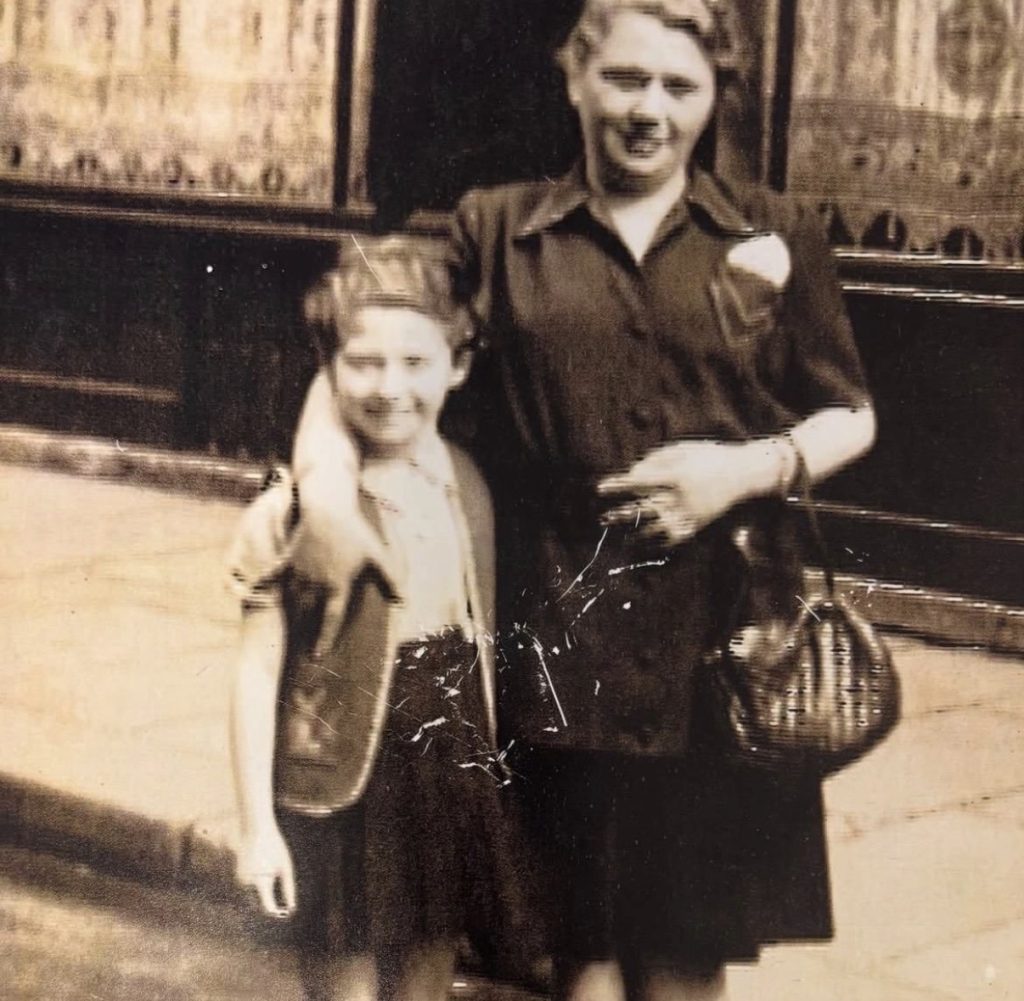
“Every time I go to Warsaw, I walk on tiptoe so I won’t step on the skeletons that are surely buried beneath the ground,” says Irene Shashar, 89, a Holocaust survivor who escaped the Warsaw Ghetto with her mother when she was nearly five years old.
After her father was murdered inside the ghetto, where they had been forced to live beginning in 1939, Shashar’s mother managed to smuggle them out through the sewer system. Hidden away, they survived until the end of the war.
When Shashar now visits her native Warsaw, memories of the Holocaust still shape her relationship with Poland — and until a few years ago, even with her children. Married and with a distinguished academic career in Israel, she recalls how her children would sometimes find her crying for no apparent reason.
“There are truths a mother tries to hide in order to protect her children,” says Shashar, who eventually shared her painful childhood memories with her family. “I lived with this inside me for a very long time, without knowing how to speak about it.”
“I had to split myself in two in order to process such enormous trauma”
Perhaps the clearest evidence of that trauma lies in her name. Irene was not always Shashar’s first name. Her original name was Ruth — a biblical name deeply rooted in Jewish tradition.
“I had to split myself in two in order to process such enormous trauma,” Shashar repeats.
Trauma passed down through generations
Laszewicki Ruben, a descendant of Polish Holocaust victims and survivors, traveled to Poland earlier this year to reconnect with his roots — an experience he plans to chronicle in an upcoming book. His paternal grandparents were the sole survivors of their families: his grandmother survived Auschwitz, while his grandfather survived 13 concentration camps across Poland, France, and Germany.
“On my mother’s side, I never knew cousins or uncles,” he says. “Basically because our entire extended family was murdered.”
Neither his mother nor his uncle received much information about what their parents endured during the Holocaust.
“The horrors my grandparents witnessed… they never sat down over coffee and explained to my mother what they went through,” he says.
According to Ruben, his grandmother — whom he describes as a tormented person — would sometimes reveal dark memories when angry. His grandfather, shy and reserved, relived his trauma in nightmares.
“I remember my grandfather’s nightmares,” Ruben says. “He would wake up in the middle of the night dreaming that a German was pointing a gun at him.”
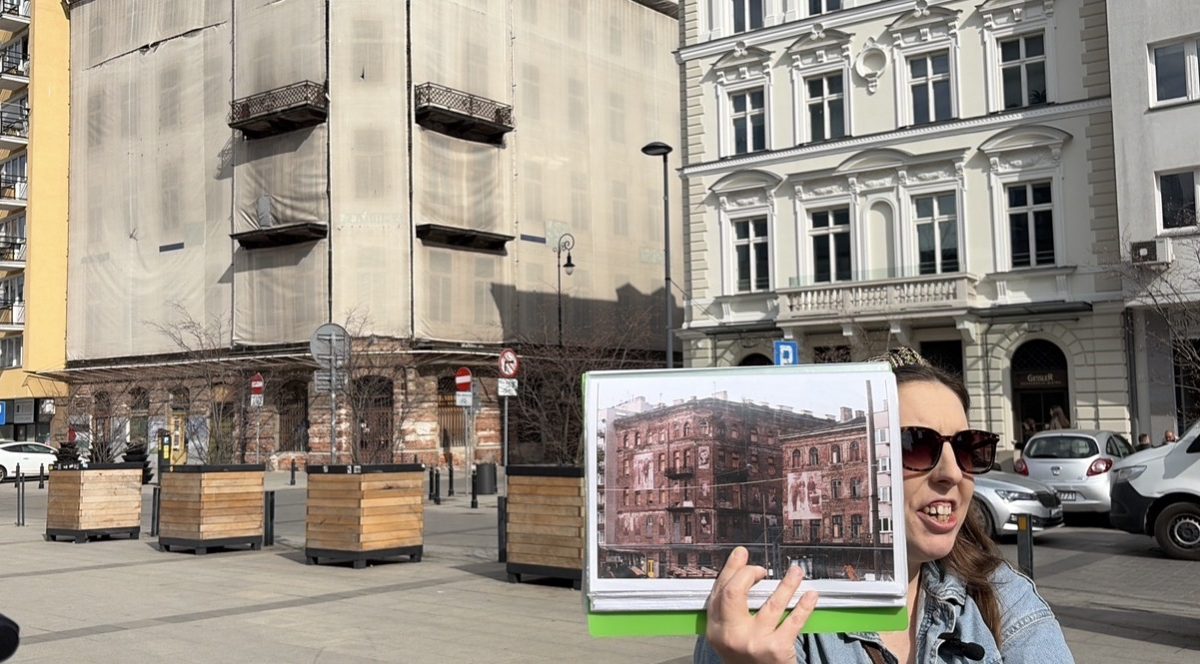
The descendants of Holocaust victims, like the streets of Warsaw themselves, remain marked by the legacy of Nazi occupation.
Also read: Two Years After the Hamas Attack, an Israeli Soldier Remembers Her Fallen Comrades
Auschwitz guides keep memory alive
One person committed to sharing the atrocities of the Holocaust in hopes they are never repeated is Agata Miodowska, a Polish tour guide of Jewish heritage at Auschwitz-Birkenau. Several of her grandmother’s siblings were murdered there during the Holocaust.
One of the few guides who speaks Polish, English, and Spanish, Miodowska says she can only conduct tours in English or Spanish. Speaking about the Holocaust in her native language is still too painful.
“When I wanted to visit Auschwitz with my mother, in Polish of course, I simply couldn’t do it. It was too difficult,” says Miodowska, who sometimes leads visitors through the camp up to three times a day, explaining the inhumane conditions, forced labor, and gas chamber exterminations suffered by her ancestors.
«I Won Against Hitler»
To counteract this trend, Shashar captured what she experienced in her autobiography, I Won Against Hitler.
That book—which celebrates his triumph over forces that sought to erase him from the map—is being distributed at a time when, according to a study conducted in Poland by CBOS, a state survey company, approximately one in five Poles considers it positive that World War II ended with a smaller Jewish population in the country. Apart from this revelation, the survey also showed the persistence of anti-Semitism and limited knowledge about the history of the Holocaust among part of the population.
Also read: After the Pandemic and the War, Tourism Returns to Israel
“Poland is a country that has a very controversial relationship, to put it mildly, with its past,” says Spanish-Israeli journalist Ofer Laszewicki Ruben. “The memory of the Holocaust is neither widespread nor kind in Poland.”
For the historian Yoel Schvartz, the key to avoiding this lies in efforts like Shashar’s book to educate people and preserve the historical memory of what happened. «Anti-Semitism has not been lost, it has only transformed,» he notes. «Studying that period not only involves knowing the facts of the past but also understanding how hatred and dehumanization can develop in a society.»
Antisemitism remains alive
Even so, large sectors of the global population continue to deny the Holocaust and spread conspiracy theories against Jews, who today face thousands of antisemitic incidents in the United States and other countries.
According to the Anti-Defamation League (ADL), a U.S.-based organization that combats antisemitism, hate, and discrimination, incidents of violence and hate speech on social media and U.S. university campuses have surged dangerously since Hamas’ October 7, 2023 attack — the deadliest terrorist assault against Israel since the Holocaust.
“Jews around the world are living through truly dark times,” Ruben says.