Amid the tightening of federal immigration policies and cuts to support programs, 18 organizations that work with immigrants and displaced persons in Pittsburgh, Pennsylvania, have decided to join forces and speak with a single voice to address the growing needs in the community.
Casa San José, Hello Neighbor, Latino Community Center (LCC), Pittsburgh Refugee & Immigrant Assistance Center (PRIAC), Immigrant Services and Connections (ISAC), and Jewish Family & Children’s Service – Legal Services for Immigrants and Internationals (LSII), among others, are the organizations that actively support immigrants in the city of Pittsburgh.
In Pittsburgh, there are immigrants from Nicaragua, El Salvador, Honduras, Guatemala, Venezuela, Colombia, Ecuador, Cuba, Puerto Rico, Syria, Afghanistan, Ukraine, Democratic Republic of the Congo, Myanmar, Sudan, Turkey, Iran, Iraq, Egypt, among other countries.
“We are 18 organizations that have come together to speak with a single voice about the needs we have,” said Mónica Ruiz, executive director of Casa San José, explaining the scope of this local coordination.
The organizations began meeting weekly last January, after noting that, despite the reduction of federal funds, the demand for legal, educational, and humanitarian services not only remains, but continues to increase.
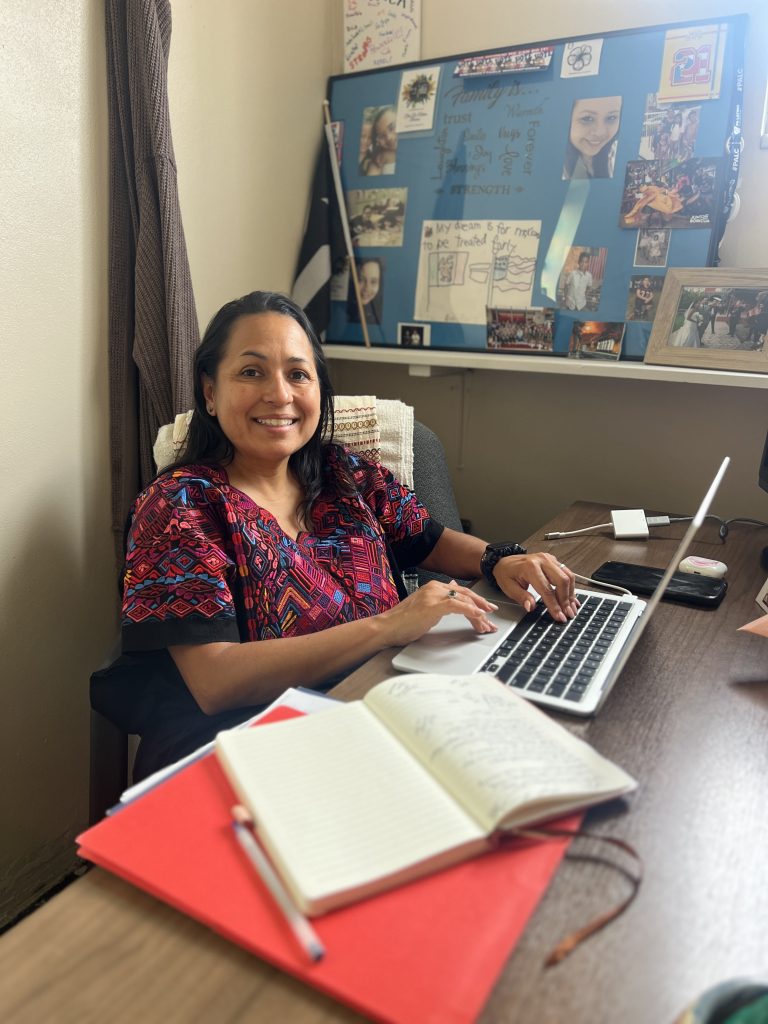
“The Federal Government has already cut a lot of money from these programs, but the work still exists, the need is there, and we are still here to provide help,” emphasized Ruiz.
It may interest you: Two pro-immigrant organizations resist and support the Latino community in Pittsburgh
One of the main focuses of the joint work is access to immigration legal advice, especially for people who cannot afford private attorneys. Many families arrive with incomplete information or with the belief that only one immigration pathway can help them, when in reality there are other legal alternatives.
«There are lawyers who say, ‘we want to help you, but we charge you five thousand dollars.’ Nobody has five thousand dollars just like that,» explained Ruiz. For this reason, organizations have created funds to cover legal fees or immigration application filing fees, allowing more people to explore options to regularize their status.
The vital coordination between organizations
Coordination among the groups is carried out through an executive committee made up of five people, with the support of Jewish Family and Community Services, an entity that assists the collective’s organizational and strategic process.
“We meet every week to talk about the needs of the organizations and look for joint solutions,” Ruiz explained, emphasizing that this space also allows them to share information, identify emergencies, and coordinate rapid responses.
From this network, they warn that the official discourse has tried to associate immigration with criminality, even though the data show a different reality. “There are many crimes that happen every day in the United States, and only a very small percentage are committed by immigrants. What is being done is highlighting isolated cases to change people’s perception,” said Ruiz, who added that this aims to justify restrictive policies that affect entire communities.
In addition to operational coordination, the organizations agree that unity also has political and symbolic weight. In the face of a context of misinformation and discourses that aim to divide, collective work makes it possible to respond with data, real experiences, and constant presence in the community. For the organizations, speaking with a single voice not only strengthens their advocacy capacity but also sends a clear message to immigrants: they are not alone, and there are local networks ready to support them in times of uncertainty.
Read also: “ALMA,” the app that provides real-time alerts when ICE detains a migrant in the U.S.
Hello Neighbor at the United Nations
For its part, Hello Neighbor, one of the organizations that supports immigrants in the United States and particularly in the city of Pittsburgh, was present in Geneva during the second week of December, at the Global Refugee Forum Progress Review.
In this international space, Hello Neighbor joined government leaders, civil society, and the private sector to assess what is working, what is not, and what greater commitment is needed to support refugees around the world. The organization was represented by its founder and CEO, Sloane Davidson, who had the honor of serving as a delegate of the United States Refugee Council, along with a group of leaders working to ensure that this nation continues to be a welcoming place for refugees.
According to Hello Neighbor, their work is deeply aligned with UNHCR’s fourth pillar, focused on “strengthening community-based solutions and supporting the integration of refugees into new communities.
“This is the heart of our mission, from arrival to belonging,” the organization emphasized, while also highlighting that “welcome does not end with resettlement; it is built through relationships, local systems, and long-term investment in people and places.”
From Geneva, Davidson announced the expansion of Hello Neighbor’s immigration legal services in the Pittsburgh area. “We are proud to bring the lessons of Pittsburgh’s welcoming community to a global stage, and to bring global learning back home as we continue this work together. We are proud to announce the expansion of our immigration legal services, available to immigrants and refugees throughout the Pittsburgh area, regardless of their income,” he stated.
Finally, Hello Neighbor expressed gratitude for the support of donors and funders who make their work possible and who, according to the organization, help change the lives of immigrants and refugees from different parts of the world.