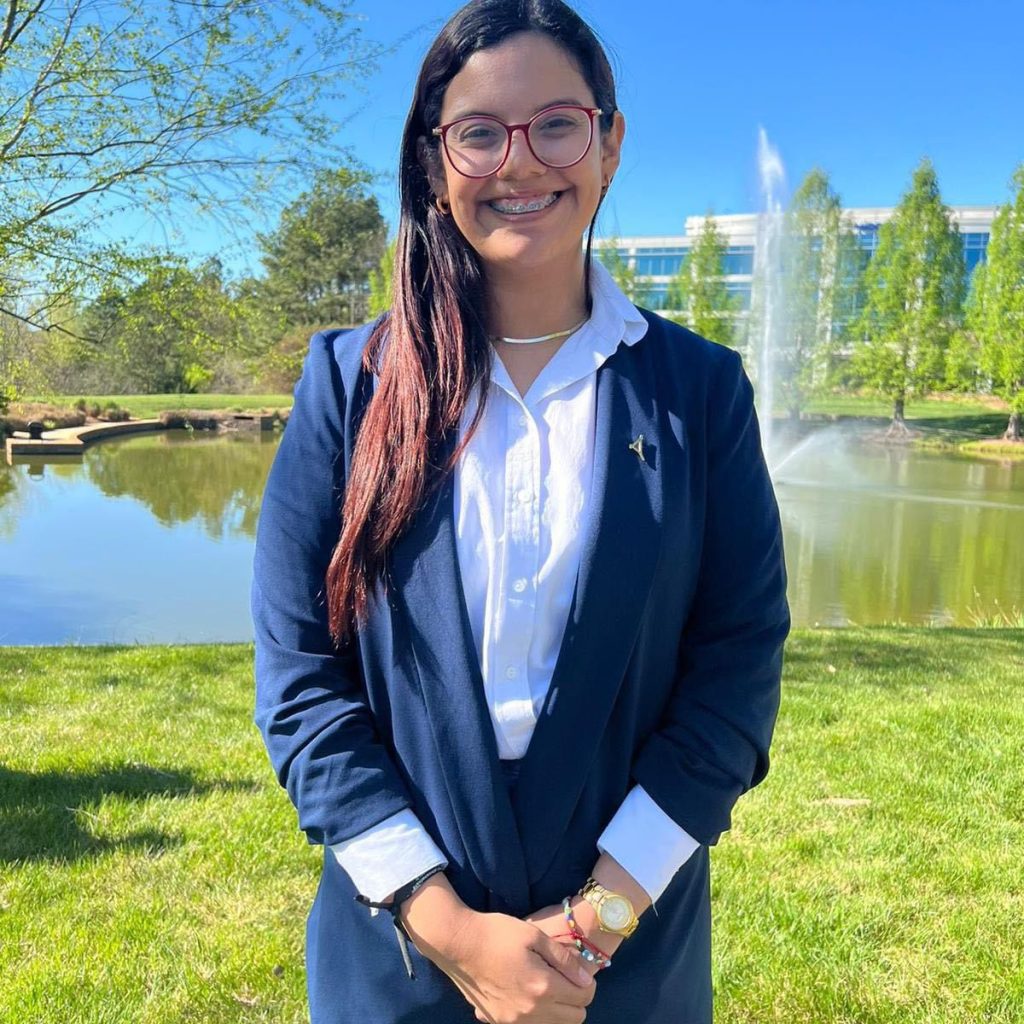
In May 2023, Yunova Acosta Vargas, a Nicaraguan student leader and current executive director of the Latin American Network of Youth for Democracy, bought a bus ticket from Costa Rica to Nicaragua. Days later, she was surprised to receive a message from the transportation company telling her she could not enter her own country.
“It really caught me by surprise because, in fact, in February (2023) a list had been released of people whose nationality had been taken away. There was a document with names and it was public. But as a result of all this, of the issue of international solidarity, the regime evidently began to do it silently. I am not the only case dealing with de facto statelessness, and it has not been made public either because of how this situation is handled, because I understand that many people were not allowed to enter,” Acosta explains.
Acosta’s case is not unique in Nicaragua. Hundreds of Nicaraguans have been prevented from entering their own country and have also been denied the renewal of identity documents such as birth certificates, national ID cards, or passports, leaving those affected in migratory limbo.
The activist entered Nicaragua’s online portal for entry and exit requests to appeal her case before the Ministry of the Interior (MINT), but more than two years have passed since then and her case is still “under review.” Despite having been assigned, there has been neither approval nor denial.
The seriousness of the situation goes beyond the entry ban. Acosta said that when she tried to obtain an updated birth certificate through relatives in Nicaragua, the response was alarming: “They said I didn’t appear in the system.”
This disappearance from civil records occurs without any legal basis or official document to support it, making it difficult to file complaints or carry out procedures abroad.
De facto statelessness and formal statelessness
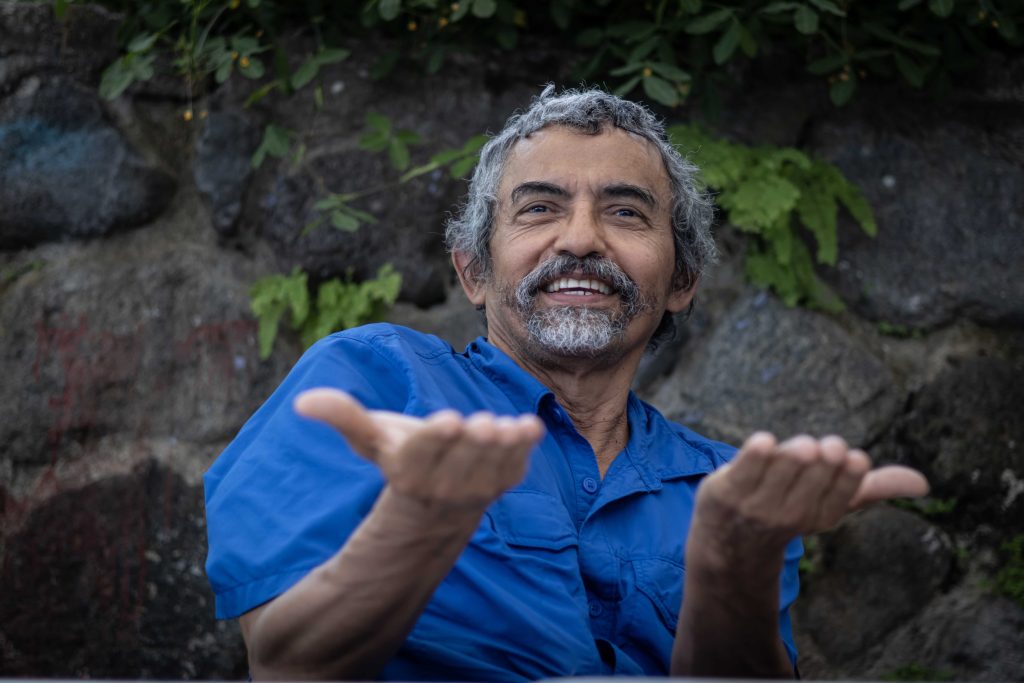
Gonzalo Carrión, a human rights defender and one of the 94 citizens officially stripped of their nationality, explains that de facto statelessness is a category of exclusion that, although not fully recognized in international instruments, affects hundreds of people.
Carrión, director of the Nicaragua Nunca Más Human Rights Collective, says this condition represents a legal limbo that is much more difficult to challenge than statelessness formally declared by the State.
Unlike Carrión and other groups of citizens (such as the 222 exiled in 2023 to the United States or the 135 sent in 2024 to Guatemala), who appear on official lists and in public regime statements, de facto stateless people suffer exclusion without any documentary trace.
“I have explained that I appear on a list as a public act of the State, but that is not synonymous with legality. On the contrary, it is a demonstration of monumental, nefarious, and indefensible abuse of power,” he adds.
By contrast, the de facto stateless face patterns of abuse of power where no formal resolution exists. He gives the example of “all the people who have been prevented from returning to the country and all those whose passports are no longer renewed, who are prevented from processing a Nicaraguan national ID card—what is also known as civil death.”
De facto stateless people face greater difficulty because “being de facto, there is difficulty in proving and substantiating it due to the lack of recognition.”
Civil death
Among the impacts on victims of de facto statelessness is financial blockage, Carrión explains, since the inability to renew a national ID card prevents updating banking information.
Another consequence is that without valid documents, people cannot process birth certificates, marriage certificates, or property titles.
“Those who try to help a stateless person carry out procedures run the risk of suffering brutal reprisals and being pushed into the same de facto condition,” Carrión adds.
De facto statelessness also extends to the family nucleus. By being “erased” from the Civil Registry, parents stripped of their nationality leave their children in a situation of defenselessness.
Read also: U.S. Embassy highlights Ortega-Murillo regime´s abuses as Nicaragua awaits USTR verdict
Journalists, another affected group
In addition to human rights defenders, another major group affected by de facto statelessness is that of journalists, against whom the regime of Daniel Ortega and Rosario Murillo uses this form of retaliation.
Gerall Chávez, president of the Association of Independent Journalists and Communicators of Nicaragua (PCIN), denounces that the state uses de facto statelessness as a weapon to intimidate and silence oversight work carried out from exile.
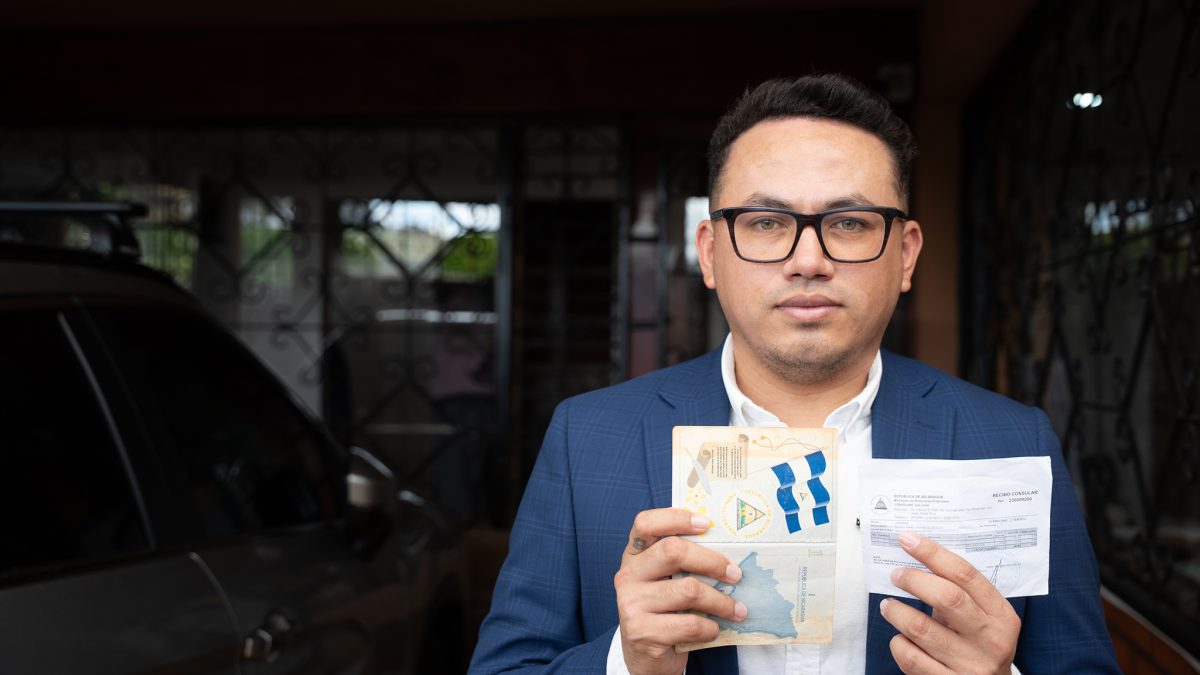
The dictatorship denied Chávez the renewal of his passport and his birth certificate. “It is a violation of the right to identity,” Chávez says. “I do not have a legal document that says I am a citizen of Nicaragua, even though I was born there.”
In August 2023, the journalist began the process of renewing his passport at the Nicaraguan consulate in San José, Costa Rica. He paid the 50 dollars, and although the process was supposed to take 40 business days, after months of inquiries the response was always that the document “had not arrived.”
Eventually, authorities told him that if he wanted the document he would have to travel to Nicaragua to complete the process there, where they would supposedly explain the reasons for the delay. For the director of the outlet Nicaragua Actual, this is evidence that any attempt to return to his country would result in greater restrictions or reprisals.
Underreporting of those affected
In September of this year, in its latest report, the United Nations Group of Human Rights Experts on Nicaragua (GHREN) noted that between February 2023 and September 2024, 452 people were stripped of their nationality. Others were not notified and were denied the renewal of passports and other documents, “which turns them into ‘de facto’ stateless persons, deprived of their legal identity, their livelihoods, and their rights, and prevented from rebuilding their lives abroad.”
“However, the fact that these victims have little evidence or completely lack formal documentation of the deprivation of their nationality seriously undermines their ability to claim and obtain international protection,” the report states.
The GHREN also notes that there is underreporting of those affected, since many, out of fear, cannot confirm the loss of Nicaraguan nationality.
The report also documents denials of entry into the country and the refusal to issue or renew passports.
“The victims, whose number continues to grow, remain for years in an administrative limbo, without access to an effective remedy. Although they have not been formally deprived of their nationality, Nicaraguans in exile who are denied passport renewal and do not possess another nationality are in a situation of de facto statelessness, as they cannot rely on the assistance of their own state,” the GHREN reports.
“Furthermore, the consular refusal to issue or renew passports seriously undermines the victims’ ability to travel, in violation of their right to freedom of movement,” the experts add.
While stateless persons included on official lists have received offers of nationality from other countries, de facto stateless people struggle to prove their situation to the international community.
(With the support of the Canada Fund for Local Initiatives of the Embassy of Canada to Costa Rica, Nicaragua, and Honduras.)