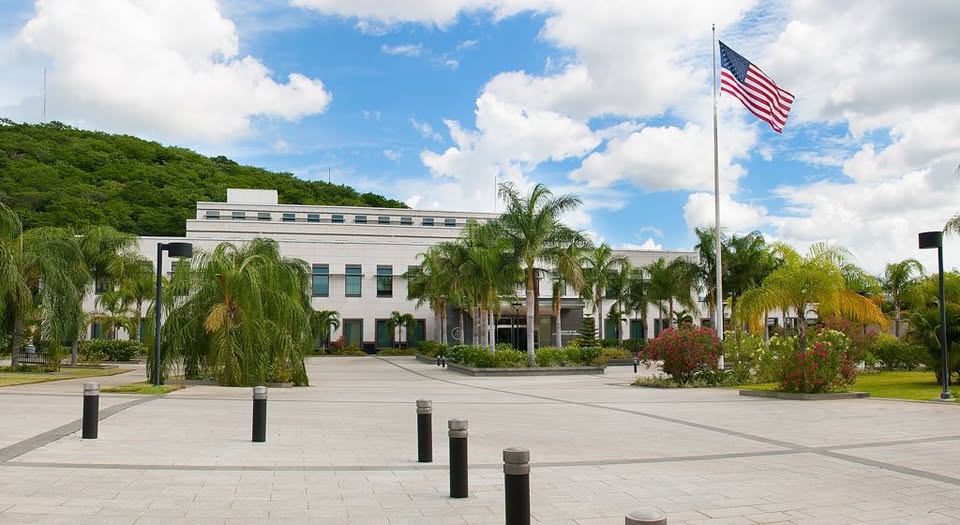
As Nicaragua awaits the final decision from the Office of the United States Trade Representative (USTR) in the coming days, the U.S. Embassy in Managua has launched a social media campaign spotlighting abuses committed by the Ortega Murillo regime. The campaign underscores findings from the USTR’s investigation, which could result in Nicaraguan products being excluded from the U.S. market.
“The United States Government’s investigation into Nicaragua has revealed troubling patterns that affect the Nicaraguan population, especially in critical areas such as human rights, labor rights, and the rule of law,” the Embassy’s presentation states, inviting audiences to hear testimonies and review evidence uncovered during the probe.
Measures proposed by the USTR
The USTR opened its investigation in December 2024 under Section 301 of the Trade Act of 1974. It concluded that the regime’s abuses are “unreasonable and obstruct or restrict U.S. trade.”
Proposed Measures
To address these violations, the USTR has outlined four possible measures:
- Partial suspension of DR-Cafta trade benefits.
- Tariffs of up to 100 percent on all Nicaraguan exports, applied immediately or phased in over 12 months.
- Immediate tariffs of up to 100 percent on selected sectors.
- Full suspension of DR-Cafta benefits, either immediately or gradually over 12 months.
Read also: U.S. imposes sanctions on Nicaraguans who facilitate irregular migration
Evidence of abuses
The Embassy’s campaign highlights evidence gathered during the investigation.
Labor rights violations: Forced labor, wage reductions, and exploitation that create “artificially low costs” and undermine fair competition, harming both Nicaraguan workers and U.S. businesses.
Child labor: Nearly 47 percent of Nicaraguan children aged 10 to 14—about 342,000 minors—are engaged in hazardous work, including gold mining, quarrying, and gravel production.
Human rights abuses: Repression of religious freedoms and civic space, including the closure and confiscation of religious institutions such as the Jesuit-run Central American University (UCA).
The campaign also denounces restrictions on reentry faced by hundreds of Nicaraguans, describing cases where citizens were barred from returning home after travel abroad.
Read also: Ortega-Murillo Linked Company Could Earn $100 Million a Year from Nicaragua’s Gold Plant
Awaiting the Verdict
The USTR has not confirmed when it will announce its final decision, though expectations are that it will be issued before year’s end.
Business leaders and political figures stress that responsibility for the looming economic consequences lies squarely with the Ortega Murillo regime, which has ignored repeated warnings while continuing to violate human rights, labor rights, and the rule of law.