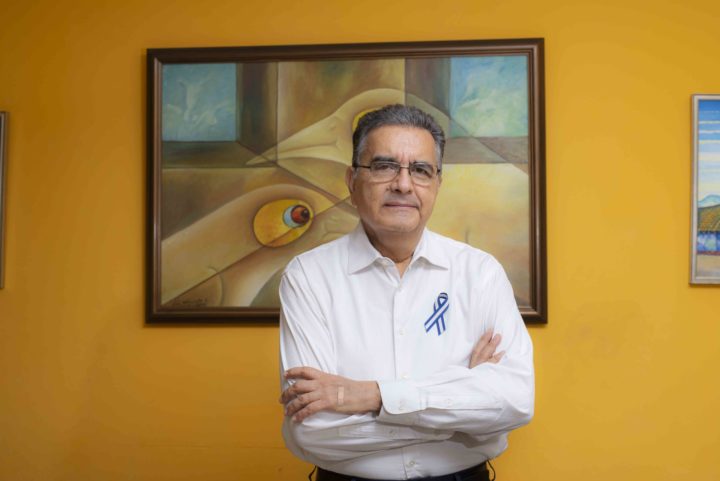
Former academic and exiled opposition member, Ernesto Medina, stated that the Daniel Ortega regime has reaffirmed its goal of subjecting universities to its control with the new reforms to the laws governing higher education in the country. These laws had already undergone an initial amendment in March 2022. According to Medina, this new reform would also be aimed at cost reduction, potentially lowering the level of academics and university staff.
Medina highlighted that since the 2022 reforms, the Ortega regime has officially designated the National Council of Universities (CNU) as an «intervening» body in higher education institutions, which «does not align with the principle of university autonomy.»
The former academic, who was rector of two of the most important universities in Nicaragua, stated that Ortega aims to turn universities «into bodies to provide the government with a mass of non-thinking individuals who will only obey orders and will become the shock force of the ruling party when there is a need to mobilize masses to defend the government.»
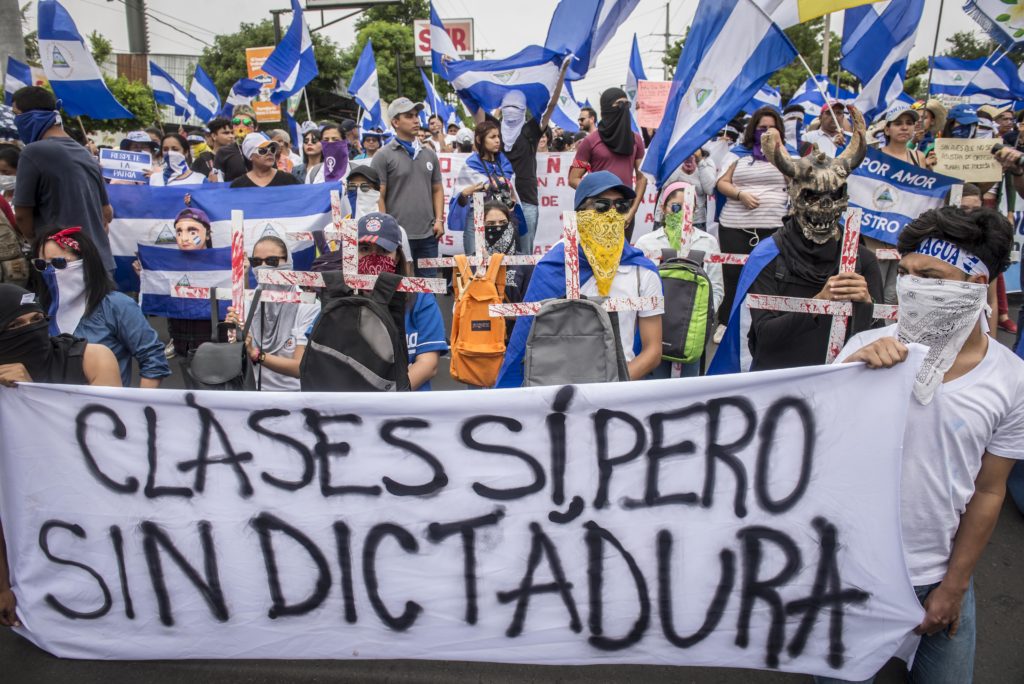
Medina is not surprised that the dictatorship continues to try to control everything around it, especially the universities that were the origin of the civil protests in April 2018, which posed a crisis for the government.
Warns of budget cuts to universities
The former academic evaluated that the new amendment to the General Law of Education (Law 582) and the Law of Autonomy of Higher Education Institutions (Law 89) created new ambiguous entities with «criteria so general and abstract that it’s very difficult to say whether it will contribute to improving the situation or financing of the universities.»
«With the populist, clientelist mentality behind all the actions of this government regarding universities, it’s highly likely to result in a drastic reduction in the budget of the country’s main universities, with the consequences this will have on the future quality of these institutions, especially if the government keeps its word that that higher education will be free; but that remains to be seen,» he said.
Regarding budget allocation to universities, the reform establishes that it will be up to the rector to propose the general budget project to the Board of Directors, to then be sent to the CNU «for modification and approval». The Ministry of Finance will approve the policy and distribution of funds allocated to the CNU and each university, complying with the 6 percent of the National Budget established by law.
The reform replaced the figure of the dean with a «director for the area of knowledge,» who will be the highest academic and executive authority of the respective «area of knowledge,» formerly known as a faculty. The previous dean will no longer be able to propose the appointment, cancellation, or modification of appointments of teaching staff to the rector.
The CNU will appoint the «central-level directions,» which will be bodies to verify compliance with work guidelines.
Medina, former rector of the American University (UAM) and the National University – León, expressed many doubts about how the relationship between areas of knowledge and specific fields of study, the newly created entities will function.
Ortega’s regime aims to cut expenses
Behind all these changes, Medina believes there is an objective to «give the impression that they (the regime) are making a total transformation of Nicaragua’s universities, turning them into the universities of the future.» The other reason is economic, as they are «streamlining the university, reducing the level of positions to pay lower salaries.»
«Surely, they have the idea that an area of knowledge has less significance, and therefore, if there are directors for these areas, they will be paid much less than what they paid a dean, which I find a petty mechanism, far removed from the reality and nature of a university,» said Medina, who was threatened and persecuted by the Ortega regime for his criticisms of the system.
He recalled that before these reforms, «there were rumors that faculties were going to be eliminated,» and at that time, it was said that «personnel expenses, the salaries of these middle-tier positions, the deans, the faculty secretaries, etc., took a good part of the budget.»
2022 Reform
The 2022 amendment to Laws 582 and 89 established that the National Council of Universities (CNU) approves all academic projects, programs, and study plans—a role previously held by each university as part of their autonomy practices.
This previous amendment also granted the CNU the authority to intervene in higher education institutions (HEIs) when they fail to comply with the regulations of the CNU or the National Council for Evaluation and Accreditation (CNEA). Interventions may occur upon request from a public administration body due to non-compliance with legal obligations or complaints related to the abuse of powers conferred by the law and its constitutive instrument.
A year after the approval of that reform, it has been confirmed that these new provisions have been used discretely by the Ortega dictatorship through the CNU. They have canceled and confiscated nearly 30 private universities due to their students’ involvement in the civil protests of 2018. The most emblematic case was the confiscation and closure of the Universidad Centroamericana (UCA), an institution with international prestige founded in 1960 by the religious order Society of Jesus.
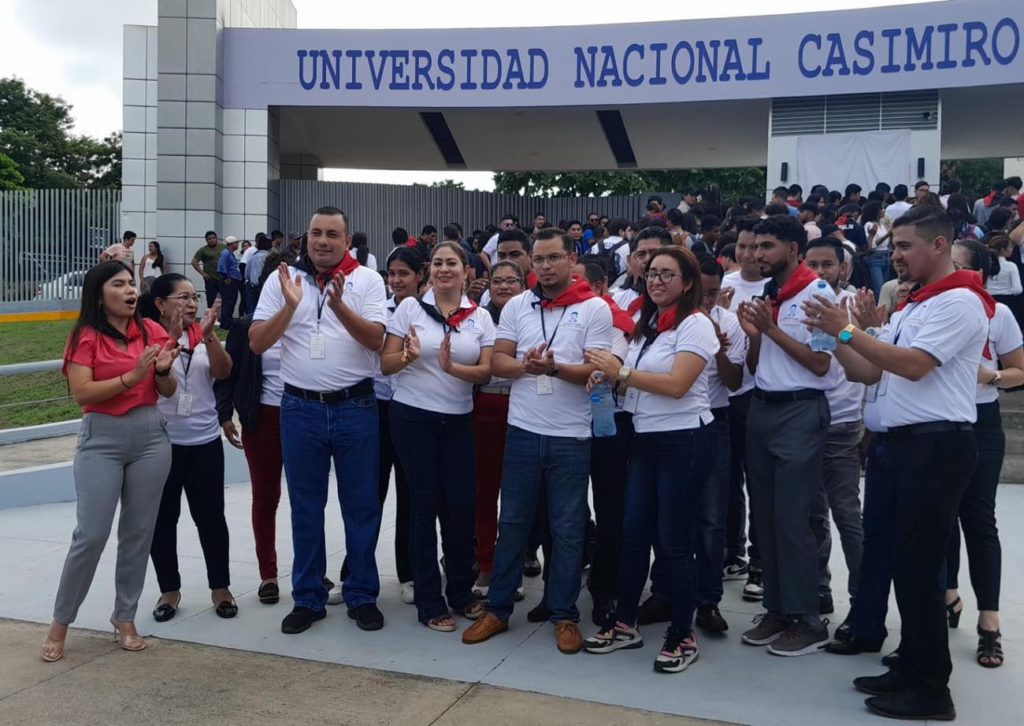
Since the 2022 reform, the Ortega regime established a new composition for the CNU, including traditional state universities, and the universities that were stripped of their legal status and intervened by the CNU, which changed their names. Consequently, these confiscated universities became institutions under the control of the Ortega regime through the CNU—an entity aligned with the interests of the ruling party; the Sandinista National Liberation Front (FSLN) led by dictator Ortega.
The recent reform on November 30th to the same laws, unanimously approved by the Ortega-controlled National Assembly, stripped universities of the ability to make changes «themselves» and establish their own student requirements. University authorities can no longer appoint or remove teaching, academic, or administrative staff, select students, draft internal budgets, or manage financial matters. All these functions are now to be performed «in accordance with this Law,» granting control to the CNU.
Uniform with other authoritarian regimes
Medina finds it intriguing that the dictatorship hasn’t transformed the CNU into a «ministry of higher education» akin to control bodies in Cuba and other authoritarian regimes. However, with these recent reforms, he believes it’s evident that the CNU is granted complete authority to become the supreme body governing Nicaraguan universities.

Maria Asunción Moreno, an attorney and also former academic at UCA, referred to the initial reforms as a «Cubanization of education in Nicaragua» and asserted that it represents the «elimination of university autonomy.»
«It’s a reform aiming to legalize control over public universities by eradicating university autonomy and academic freedom. This way, the universities are subjected to total domination by the regime. It’s a setback for the higher education subsystem to the conditions of the 1980s, with aggravating circumstances for the educational system. It essentially erases the university as a center for thought, critique, and contribution to society,» Moreno stated to LA PRENSA following the initial reform.