Nicaragua is among 13 Latin American countries where incidents linked to Russian influence operations have been documented, according to the report Russian Influence Operations in Latin America, produced by the Brazilian fact-checking agency Lupa.
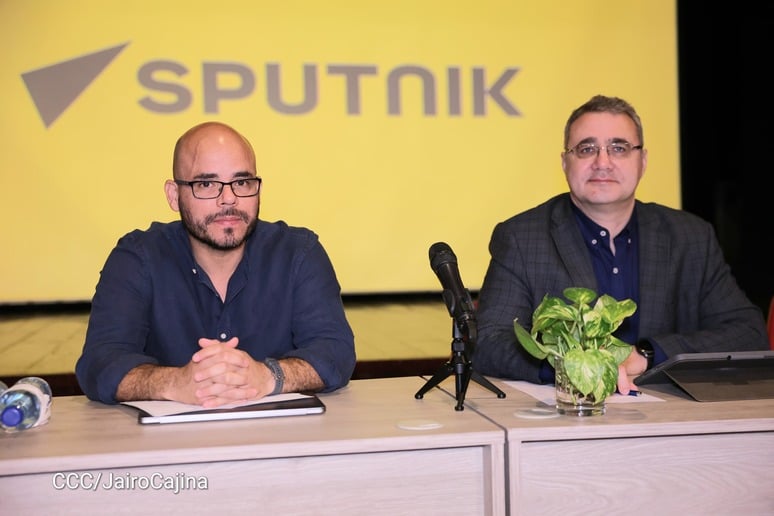
Conducted in collaboration with LatamChequea and the European Union’s Foreign Policy Instruments, the study argues that Moscow has adapted its propaganda strategy to the Latin American context, seeking to capitalize on anti-American and anti-European sentiment. It also examines the role of Russian state media outlets in the region, including RT en Español and Sputnik Mundo, as well as the activities of diplomats, influencers, political organizations, and digital networks aligned with the Kremlin.
According to the report, “Russia has built a sophisticated influence ecosystem in at least 13 countries across the region, combining ideological propaganda, disinformation, diplomacy, covert digital campaigns, political and economic agreements, state media channels, nationalist networks, and even documented cases of espionage.”
To reach these conclusions, researchers documented dozens of incidents in Argentina, Bolivia, Brazil, Chile, Colombia, Cuba, Ecuador, Mexico, Nicaragua, Paraguay, Peru, Uruguay, and Venezuela.
The report was authored by researchers Beatriz Farrugia and Maiquel Rosauro, according to Lupa.
“Discussions about disinformation often focus on each country’s internal dynamics, but the current landscape demonstrates the existence of transnational influence operations that act in an organized and professional manner while adapting to local contexts,” Farrugia said. “The report shows how Russia has gradually built a coherent strategy to expand its narratives and political presence in Latin America.”

Russia’s Strategy in Latin America
The investigation’s findings indicate that Russia’s strategy extends beyond simply reproducing official Kremlin narratives. It also seeks to tailor messaging to Latin America’s political realities, exploit anti-American and anti-imperialist sentiment, challenge European influence, and take advantage of local institutional crises, political polarization, and declining trust in traditional media.
The report further notes that Russian media outlets have increasingly filled spaces vacated by traditional news organizations in highly polarized digital environments, employing more aggressive distribution methods, emotionally charged language, and coordinated amplification strategies.
It also points out that Moscow-linked media have invested heavily in short-form video, livestreaming, and social media content, which is subsequently amplified by influencers and ideologically aligned digital ecosystems.
Disinformation Campaigns
Last April, a report presented in the United States by the Digital News Association (DNA) warned that more than 1,000 content creators and influencers across Latin America may have received training from Russia to disseminate disinformation campaigns and amplify narratives aligned with Moscow’s geopolitical interests.
According to that report, Nicaragua plays a role in this regional strategy by coordinating pro-government media outlets, public institutions, universities, and party structures, while also promoting conferences, training programs, and exchanges with international actors—particularly from Russia and China—in areas such as digital storytelling, audiovisual production, and artificial intelligence.
The investigation argues that these efforts are part of a broader strategy to shape the information environment in Latin America. In Nicaragua’s case, they are said to take place within the framework of close cooperation with Moscow and the strengthening of communications structures designed to support the regime’s official narrative through the production and dissemination of content across digital platforms and aligned media outlets.
You may be interested: How Nicaragua’s Deepening Ties to Russia and China Could Backfire Under Trump’s Donroe Doctrine