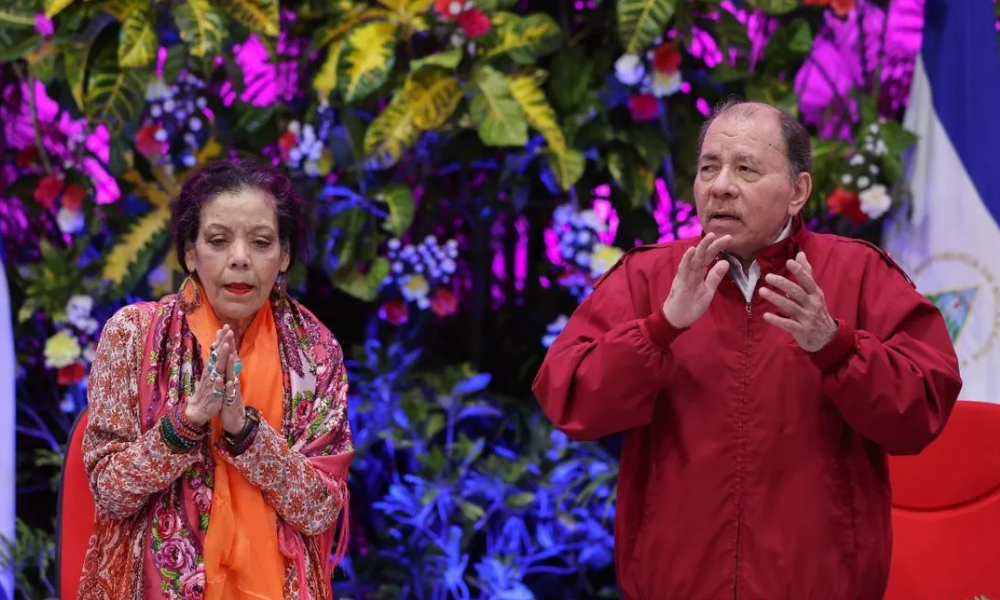
Under the regime of Daniel Ortega and Rosario Murillo, Nicaragua ranks among the five most autocratic countries in the world and among those with the greatest democratic backsliding, according to a recent report by the international research project V-Dem Democracy Report 2026 (Varieties of Democracy) from the University of Gothenburg in Sweden.
The study measures the quality of democracy and places the country at 175th out of 179 nations, assigning it a score of 0.02—the same as Afghanistan. It ranks just below the dictatorships of Myanmar (177), North Korea (178), and Eritrea (179).

The Ortega–Murillo dictatorship marked 19 years in power in January of this year, with increased concentration of authority in the hands of the ruling couple, no independence among branches of government, and a strengthened repressive system following constitutional reforms enacted a year ago that granted them absolute power.
Moreover, the research indicates that Nicaragua, Afghanistan, and Myanmar have seen their scores decline “substantially and at a statistically significant level over the past 10 years,” the V-Dem report notes.
Ortega undermined electoral quality
According to the report, Daniel Ortega—who has been in power since 2007—and the Sandinista National Liberation Front (FSLN) “undermined the quality of elections, abolished presidential term limits, and repressed or silenced the opposition, the media, and civil society organizations.”
It adds that the dictator “consolidated his power” through the 2025 constitutional reforms. That same year, the country already “ranked among the least democratic states in the world, despite holding multiparty elections,” the document states.
Read also: Nicaragua Holy Week Begins Under Government Repression, Church Processions Restricted
For opposition figure Juan Sebastián Chamorro—exiled coordinator of the Citizens for Freedom (CxL) party, which was stripped of its legal status by the Ortega government in August 2021—Nicaragua’s position among the five most autocratic countries in the world is a “tragedy brought about by the dictatorship.”
Chamorro, a former political prisoner, was expelled from the country in 2023 along with other prisoners of conscience. He had been arrested in 2021, when the country was heading toward elections in which Ortega and Murillo eliminated electoral competition. All potential opponents, including Chamorro, were jailed; civil society and the media were persecuted; and business leaders and much of the country’s leadership were also imprisoned.
“Nicaragua is one of the countries that has suffered the greatest democratic deterioration in the world after having regained democracy. In 2005, the democracy index stood at 0.4; by 2025 it had fallen to 0.01. We are at the bottom,” Chamorro wrote on his X account.
The data illustrate the regression. In 2005, Nicaragua was governed by Enrique Bolaños, the last of three leaders who were part of the country’s democratic transition beginning in 1990, when Ortega was voted out of power after former president Violeta Barrios de Chamorro won the election. For 16 years—from Barrios to Bolaños—the FSLN developed an opposition style marked by political violence and coercion. However, beginning in 2007, when Ortega returned to power, the strategy shifted toward building a dynasty.
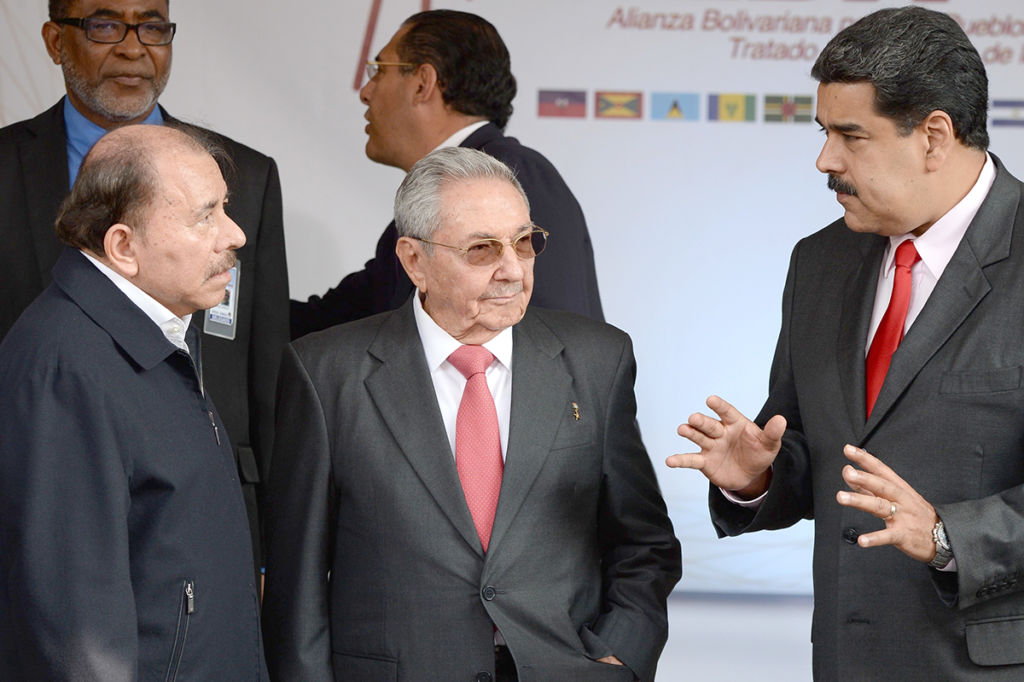
The dictator Daniel Ortega (left) alongside his fellow autocrats: Cuba´s Raúl Castro (center) and Venezuela´s Nicolás Maduro. LA PRENSA/AFP/ARCHIVO
Autocratic radicalization has accelerated
Sociologist Elvira Cuadra, director of the Center for Transdisciplinary Studies of Central America (Cetcam), says the V-Dem report reflects the reality of Nicaragua’s “accelerated autocratic radicalization” in recent years.
Cuadra emphasizes that under the leadership of Ortega and Murillo, and within the framework of a dynastic succession, “the most relevant democratic indicators have weakened even further than they already had since 2018.”
You may be interested: Ortega-Murillo Purge Targets Key Financial Operator Francisco López, Former FSLN Treasurer
She refers to the year of the massacre, when thousands of citizens took to the streets to protest and were met with brutal repression by the state, triggering one of the most severe human rights crises in the region. At least 355 people were killed between April 2018 and July 31, 2019.
Regime in a “precarious” situation
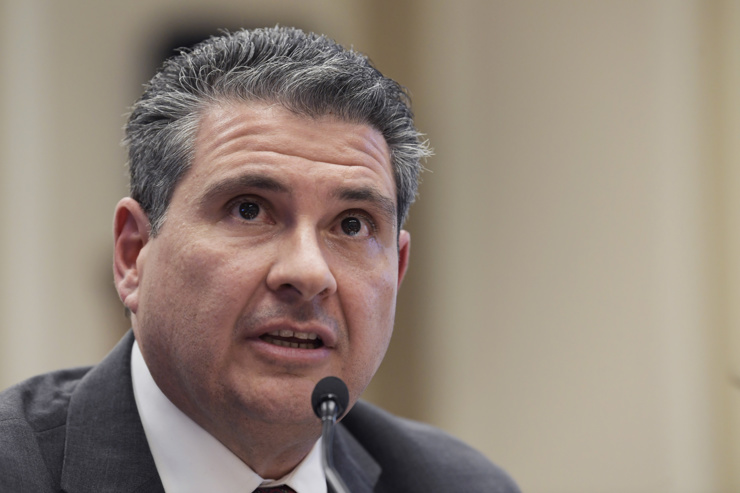
Despite having a strengthened repressive apparatus following constitutional reforms, and despite efforts by the ruling pair to project strength, Cuadra argues that the regime’s current situation “is precarious and marked by significant weakness due to several internal and external factors converging at this moment.”
Among the external factors, she cites increased pressure from the United States, particularly following the capture of Nicolás Maduro in Venezuela, as well as talks between the Trump administration and Cuba. This is compounded by a rightward political shift in Latin America, Washington’s renewed effort to assert hemispheric dominance, and the lack of strong backing from the regime’s only allies: Russia, China, and Iran.
Internal factors include growing public discontent—including among the regime’s own supporters, who are intimidated by purges, imprisonments, enforced disappearances, and cruel treatment aimed at reshaping the power structure by replacing officials with others loyal to Murillo. All of this adds further pressure on the dictatorship, the sociologist notes.
Read also: Richard Grenell, Trump Ally, Warns of Sanctions on Nicaragua’s Mining Industry Over Confiscation of U.S. Company
Given these developments, “the Ortega–Murillo leadership knows it must find some form of accommodation with the United States to avoid the same fate as its allies and to ensure the regime’s continuity,” Cuadra says. However, she does not foresee a resolution to the crisis or the departure of the ruling pair “in line with the expectations of the majority of the population.”
According to the Cetcam director, one possibility is that Ortega and Murillo “may be forced to relax their stance and make concessions if they truly want to ensure the regime’s continuity,” though “a key factor will undoubtedly be pressure from the United States.”