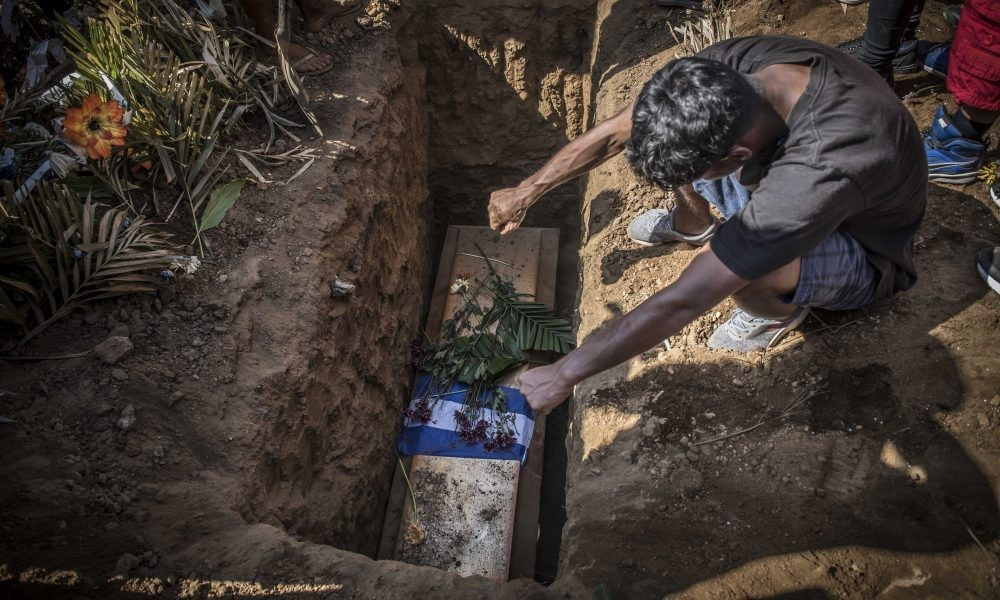
Since the outbreak of social protests in April 2018, the Ortega-Murillo regime has systematically denied committing crimes against humanity. The official narrative has been simple: “They tried to stage a coup against us, and the (Sandinista) people defended themselves.”
Thus, the 199 deaths barely acknowledged have been portrayed as “Sandinistas killed by right-wing terrorists.” The crimes extensively documented by the media are dismissed as “fake news,” and reports by human rights organizations detailing the abuses are labeled as “acts of foreign interference” aimed at defaming and destabilizing the people.
However, through official events, international interviews, and televised speeches, the dictator himself, his wife, and their closest officials have left clear traces of their direct involvement in operations of repression, exile, surveillance, and confiscation.
Human Rights experts point out the confessions
For years, the Ortega-Murillo regime has tried to frame the repression as just and heroic actions. Yet their own statements form an archive of self-incrimination—leaving behind a trail that contradicts their initial denials, according to human rights experts.
«These confessions must be systematized by international organizations investigating the crimes committed in Nicaragua since April 2018,» said Gonzalo Carrión, a lawyer with the Nicaragua Nunca Más Collective.
«These statements confirm what is already documented. Ortega is confessing to what is already known, and that has evidentiary value,» he said.
Jurist and expert in humanitarian law Uriel Pineda agrees that the regime’s speeches are not merely ideological expressions, but direct admissions that help identify a hierarchical structure, a chain of command, and a state policy behind the crimes committed.
“Crimes against humanity require two elements: first, a context of widespread and systematic attacks against the civilian population; second, the commission of specific acts such as murder, torture, forced displacement, or persecution. In that sense, statements admitting the existence of paramilitary groups, the execution of ‘Operation Clean-Up,’ or the practice of exile confirm that systematic context,” Pineda explained.
The expert emphasizes that these types of confessions are not incidental: they verify the existence of a planned methodology, approved at the highest level of the Nicaraguan state, for carrying out these crimes.
Daniel Ortega: Cynicism and Blunders
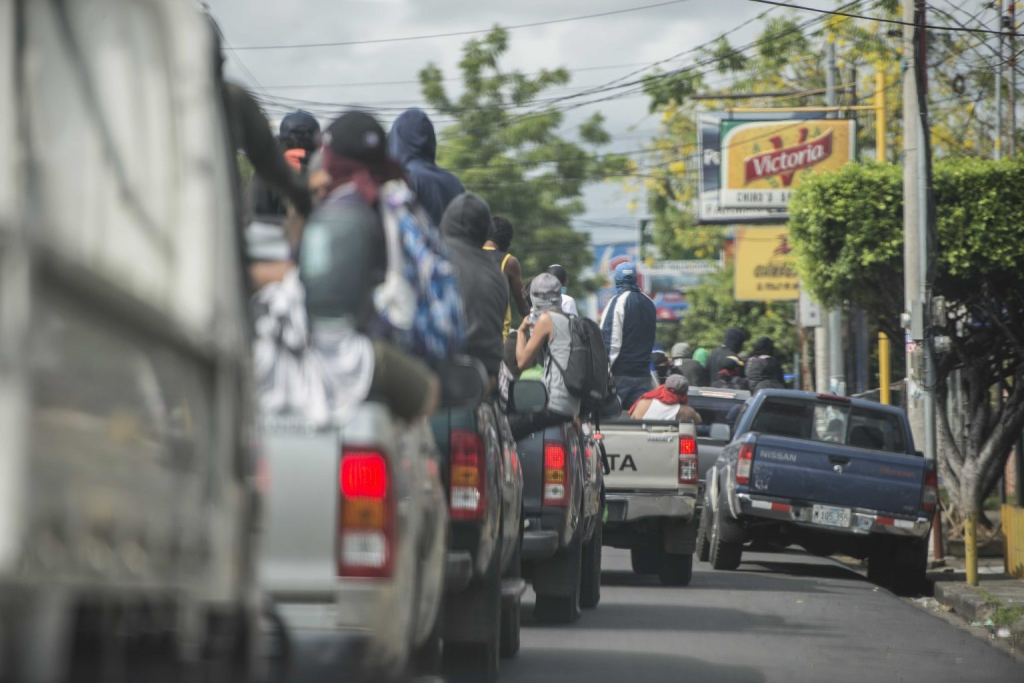
In interviews with international outlets such as Euronews, Fox News, and CNN en Español, Ortega repeatedly denied the existence of masked and armed paramilitary groups, the official death toll, and any responsibility of his regime in the 2018 violence.
However, in a July 30, 2018 interview with Euronews, confronted with the overwhelming amount of visual evidence, Ortega begrudgingly acknowledged the presence of a “voluntary police force” that operated masked “because they are part of the people.” This statement aligned with numerous testimonies describing armed paramilitary groups coordinated by the police to brutally suppress the protests.
Then, in November 2024, Ortega praised the figure of the “voluntary police” as “heroes of peace,” justified their incorporation as an armed force in the new Constitution, and invented the title of “co-president” for Rosario Murillo.
In February of last year, Ortega admitted to another of his repressive policies: it was Rosario Murillo, his partner, who conceived the idea of exiling the 222 political prisoners to the United States on February 9, 2023.
According to his account, delivered during a public ceremony in honor of party hero Augusto C. Sandino—before the police and military commanders under his command—it was Murillo who came up with the idea to suggest to the U.S. Embassy in Managua that they “take the traitors to the homeland by plane.”
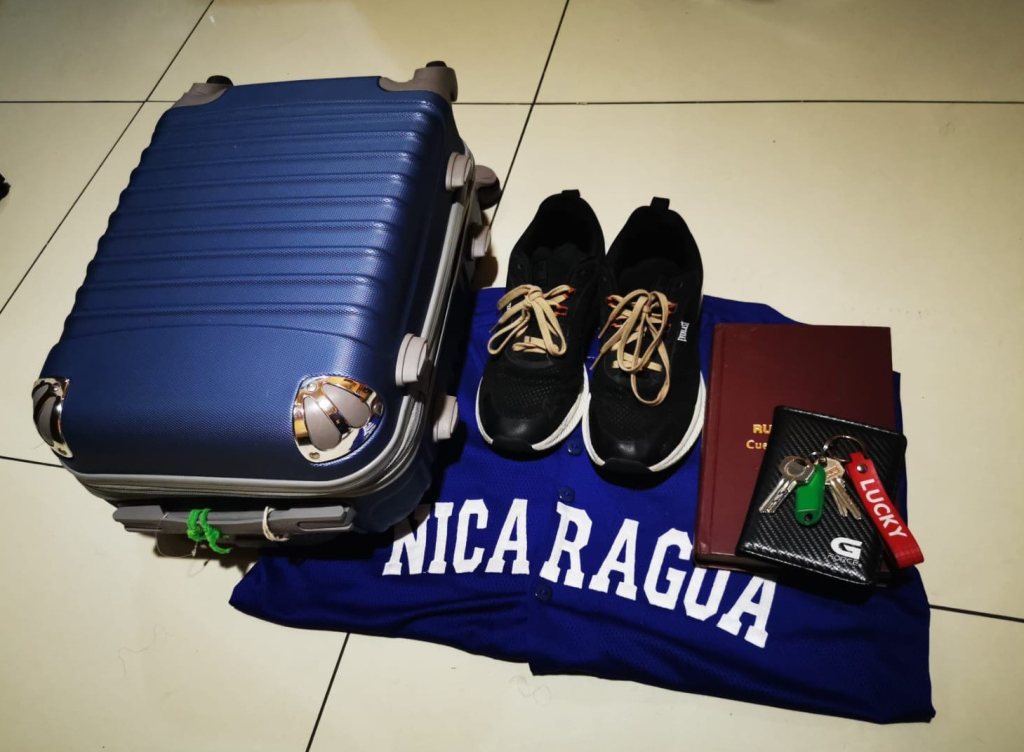
The exile of Nicaraguans has been classified as a crime against humanity by the United Nations Human Rights Experts Group.
Another confession. On the 129th anniversary of Augusto C. Sandino’s birth, Ortega admitted to the confiscation of opposition members’ property, justifying it as a measure against money laundering.
“A large number of properties involved in money laundering have been seized—properties used for fraud, taken from well-intentioned people who wanted to sell their assets,” Ortega said in May 2024.
“These properties were declared by the State as property of the people for the benefit of the poor,” he said, despite many of them having legal deeds and being registered under the names of denaturalized citizens.
Ortega has admitted ordering the repression
Ortega’s latest confession came with a touch of cynicism and coldness. On May 25, 2025, after weeks of unexplained absence and amid rumors about his health, he appeared somewhat gaunt and slower than usual, but still cold and faltering.
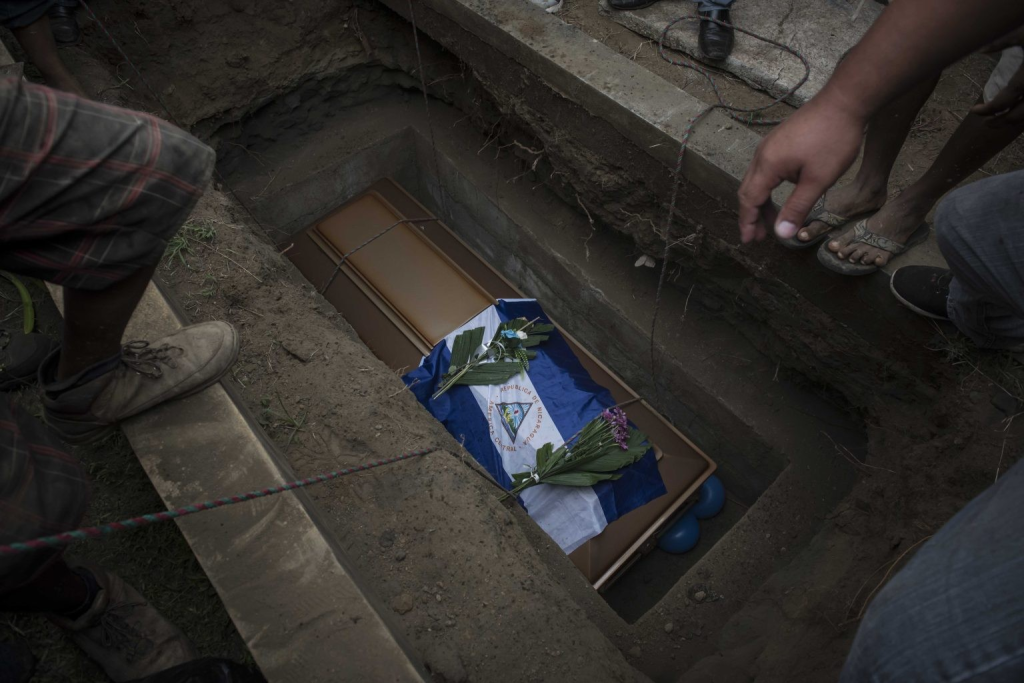
That night, he publicly admitted having ordered the brutal repression against protesters in 2018, which left at least 355 people dead at the hands of police and paramilitaries.
In his statement, Ortega described, as if it were a heroic feat, how the repression against the roadblocks was organized and carried out while they were attending the National Dialogue with the Catholic Church and civil and business organizations. He admitted that the operation was swift and violent:
“We were organizing the clearing of the roadblocks, and the clearing didn’t last long. It was a lightning strike. There wasn’t any resistance that would last for weeks. No! It was a matter of hours. As soon as the police and the historic combatants arrived, no one was left—they all ran away,” he said, laughing.
The Confessions of Murillo
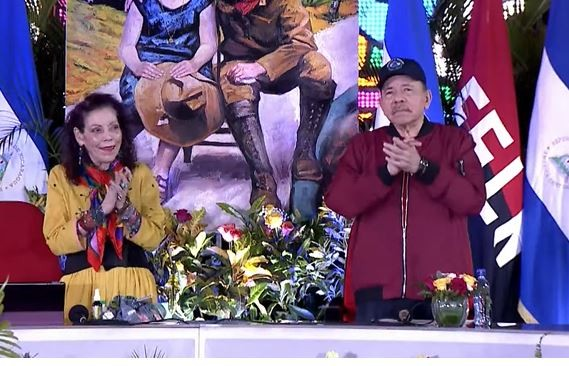
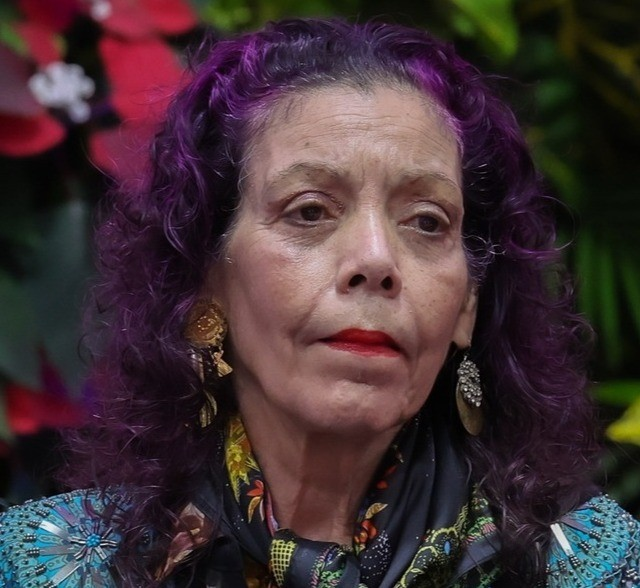
Murillo, contrary to Ortega’s approach, has preferred to cloak the repressive language with religious euphemisms and moralistic rhetoric. At the end of March 2025, she celebrated her policy of exile and forced displacement, praising that the opposition members were “wandering the world” because “that is what they deserve.”
“And there they go, wandering, wandering the world, because that is what they deserve (…) They have no homeland, no character, no affection, they do not know love, and they will not return,” Murillo added—she who Ortega credits with the idea of exile.
Her speech, laden with contempt and dehumanization, confirmed the deliberate nature of the expulsions and entry bans to Nicaragua.
On June 3, Murillo once again expressed and celebrated her policies of exile. “Evil, thank God, we have been banishing from our lives. A few who gave themselves the right to steal, to exploit, to oppress, and above all, to fill us with painful conflicts, to disrupt harmony, and to believe that evil can prevail over good—but they couldn’t because we banished them, nor will they be able to because they no longer have a homeland,” she said.
LA PRENSA/ARCHIVE.
Laureano Has Also Confessed
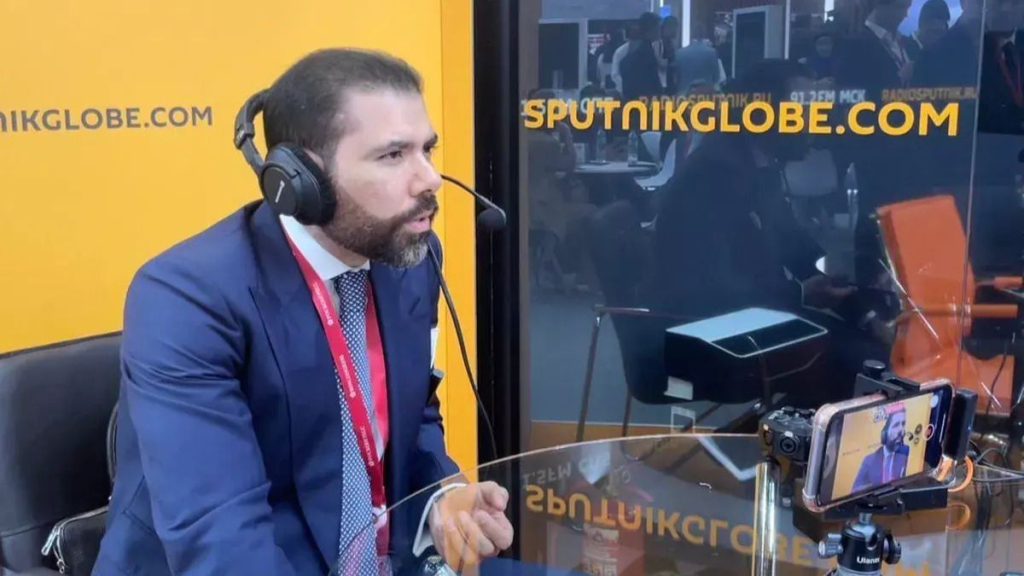
During a speech representing the dictatorship at the 13th Meeting of Representatives in Moscow on May 28, the son of the dictatorial couple, Laureano Ortega, stated: “We have undertaken the task of strengthening security and defense in our country by neutralizing and eliminating the main perpetrators and key actors of hatred—mercenaries and traitors who act under imperial boots and payment, with the intent of handing our country over to U.S. domination.”
He also highlighted the role of the Ministry of the Interior, the Army, and the Police, in coordination with the Sandinista Front party and with technological assistance from China and Russia, to monitor and repress any attempts at dissent.
LA PRENSA/Official media.
Paco Díaz and Ortega’s “Order”
The head of the National Police and Ortega’s co-father-in-law, Francisco Díaz, ultimately confirmed the chain of command behind the repression since 2018 in an interview with RT in February 2025.
“We followed the order given to us by our President of the Republic, our supreme leader; our government, as is well known, was always in favor of dialogue. We went to the dialogue, however, these terrorists and coup plotters never wanted dialogue, and the order from our supreme leader was— we were given the order to guarantee peace, to restore peace in the country, security, and tranquility,” he said.
Earlier, in October 2024, Francisco Díaz had already acknowledged Ortega’s direct order to dismantle the roadblocks and protests: “The commander ordered us to clear the roadblocks of terror, and we obeyed—and we succeeded.”
In addition to Díaz, Attorney General Ana Julia Guido admitted in 2022 that the Prosecutor’s Office “acts in accordance with orders from the Presidency and in coordination with the judiciary and the Police to bring those responsible for terrorism to justice.”
Similarly, former magistrate Rafael Solís, now exiled in Costa Rica, acknowledged that there was an order from Ortega and Murillo to judges, prosecutors, police officers, and public officials to arrest, charge, convict, and imprison people detained during the protests.
Crime as Public Policy
By publicly admitting that the actions of paramilitary groups were allowed, that the mass repression known as “Operation Clean-Up” was ordered, and that forced exile was imposed as political punishment, Ortega himself is acknowledging the existence of a pattern and an institutionalized repressive policy, explains Uriel Pineda.
“These statements are fundamental in the processes of seeking truth and justice. They provide evidence of the contextual element of crimes against humanity and could be used in international bodies such as the International Criminal Court or under universal jurisdiction mechanisms,” the expert emphasizes.
Both human rights defender Gonzalo Carrión and Uriel Pineda emphasize that this is not just archival material for historical memory, but key evidence for international legal proceedings.
The documentation of these statements—where the dictator himself or his spokespeople acknowledge the use of the state apparatus and irregular forces to repress and displace civilians—could help support future formal accusations.
“These records have both legal and political impact. They strengthen the process of constructing historical truth in Nicaragua and demonstrate that the crimes were not isolated incidents, but part of a state policy,” Pineda concludes.