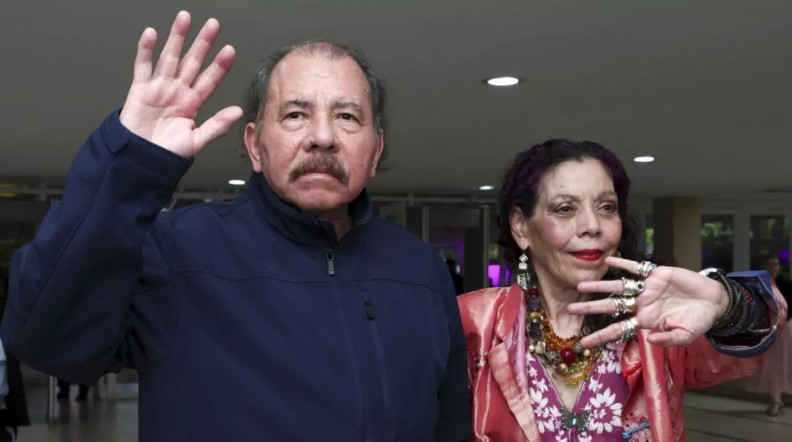
The dictatorship of Daniel Ortega and Rosario Murillo has introduced a new strategy of repression, migratory control, and profiteering: demanding large sums of money from Nicaraguans who, upon returning from business or family trips, are arbitrarily denied reentry into the country despite having no political background or involvement in opposition activities.
According to investigations by LA PRENSA, the regime is denying entry to citizens with a certain level of economic means, unless they pay fees that vary depending on the individual’s income level.
The office of Deputy Interior Minister Luis Cañas has been identified as responsible for carrying out this practice. This is the same office in charge of illegally expelling Nicaraguans who remain in the country but are identified as opposition figures.
And they also have to ask for forgiveness
Two independent sources confirmed the existence of this practice. One of them, speaking under the strictest anonymity, said they paid tens of thousands of dollars to be allowed back into Nicaragua. The second source reported that two of their acquaintances—also businesspeople with no political ties—each paid even higher amounts to be granted reentry.
“In addition, they have to send a letter along with the money. The letter is to ask forgiveness from la compañera,” one of the sources stated.
Why must they ask for forgiveness? “They have to ask forgiveness for whatever they may have done—it could be going to a protest, making a comment in a WhatsApp group, or even saying something verbally,” the source explained.
The profile of those affected is clear: individuals with businesses or significant income who were abroad for family or professional reasons.
When attempting to return, the dictatorship’s authorities denied them entry under administrative pretexts. These individuals have considerable interests within the country, and when they inquire about the reason for their denial, they are met with a demand for money. However, the sources remain vague on specific details, fearing they could be identified by the regime’s repressive apparatus.
Citizens with lower economic means also affected
In addition, LA PRENSA has learned that this practice is beginning to extend to ordinary citizens as well. Although the amounts demanded in these cases are lower, the extortionate nature of the scheme remains unchanged. The fees required also vary—two thousand, three thousand, even five thousand dollars.
“If you’re leaving out around 200 people each month and charging them two or three thousand dollars each, that’s at least half a million dollars a month. And no one dares speak up because if you do, you’ll be jailed, have your property confiscated, or be exiled with no chance of return. It’s terrifying,” one of the sources stated.
This new form of state extortion not only violates the mobility rights of Nicaraguan citizens but once again confirms the use of state institutions as tools of repression and profit by the Ortega-Murillo regime.
Practice dates back to 2021, initially targeted only those with political ties
The Group of Human Rights Experts on Nicaragua (GHREN), in a report presented to the United Nations Human Rights Council, has denounced that since 2021, the dictatorship of Daniel Ortega and Rosario Murillo has implemented a systematic pattern of denying reentry into the country to individuals considered opposition members, dissidents, or “threats to the regime.”
Between 2021 and March 2023, at least 259 Nicaraguans (128 men and 131 women) were prevented from reentering their country. However, the report warns that the actual number may be significantly higher, as many victims remain silent out of fear. This practice intensified following the expulsion of 222 political prisoners in February 2023.
Modus operandi involves passenger lists and intelligence cross-checks
The operation involves the use of passenger lists submitted by airlines and bus companies to the Directorate of Immigration and Foreign Affairs. These lists are cross-referenced with intelligence databases to identify individuals the regime considers a threat. Affected persons are informed of the travel ban either days before their trip or, in some cases, directly at the airport—often without any clear explanation. In some instances, they are deported immediately upon arrival in Nicaragua.
Luis Cañas: The executioner in charge
The process is coordinated by the Ministry of the Interior, the Sandinista Front, the National Police, and Telcor, all under the direct orders of Rosario Murillo. Deputy Interior Minister Luis Cañas Novoa has been identified as the official responsible for executing these directives, based on intelligence reports compiled by Sandinista security services.
Until recently, the primary targets of this policy were relatives of political prisoners or stateless Nicaraguans, journalists, members of the clergy, academics, and human rights defenders. According to experts, these individuals face a condition of “de facto statelessness” as they are barred from returning to their own country. Now, the measure has been expanded to include economically capable individuals who, despite having no opposition or political activity, must pay to be allowed reentry.