As of now, this Holy Thursday will pass without a Chrism Mass in the dioceses of Jinotega, Matagalpa, Siuna, and Estelí. This was confirmed by sources close to the Catholic Church, consulted by La Prensa.
An unprecedented event that deeply affects the spiritual life of thousands of faithful and highlights the growing fragility caused by the religious persecution under the regime of Daniel Ortega and Rosario Murillo.
“I understand that these dioceses will not be celebrating the Chrism Mass. In the case of the Diocese of Jinotega, they held a Mass today with the entire presbytery, but it was not a Chrism Mass because the bishop was not present. There was also no blessing of the Chrism or the holy oils,” explained researcher Martha Molina.
These dioceses have not issued any statements regarding a possible celebration of the Eucharist. Last year, the Archbishop of Managua, Monsignor Leopoldo Brenes, traveled to the Diocese of Matagalpa to celebrate it.
A Very Important Celebration
The Chrism Mass—one of the most significant celebrations in the Catholic liturgical calendar—traditionally brings together the entire diocesan clergy at the Cathedral to renew their priestly promises and consecrate the holy oils: the Chrism, the oil of catechumens, and the oil of the sick.
Presided over by the bishop, this Mass carries deep meaning in terms of communion, unity, and pastoral service. Its omission is not merely a liturgical absence; it is a wound within the ecclesial community.
But in northern Nicaragua, the dioceses that cover a vast mountainous and deeply Catholic region—Matagalpa, Estelí, and Jinotega—are currently without acting bishops. This also includes the remote Diocese of Siuna, located in Nicaragua’s North Caribbean Coast.
In the case of Estelí, no new bishop has been appointed since Bishop Abelardo Mata retired.
As for Matagalpa, Jinotega, and Siuna, their shepherds have been arrested, exiled, or forced into silence amid one of the most severe campaigns of repression against the Catholic Church in Latin America in recent decades.
Without Mass and Without Confirmations
The most well-known figure is Monsignor Rolando Álvarez, Bishop of Matagalpa, unjustly convicted in 2023 on politically motivated charges after speaking out against the regime’s abuses.
His imprisonment and subsequent deportation to Rome—after initially refusing to leave the country—was a symbolic blow that reverberated throughout the Catholic world.
A similar fate befell Bishop Isidoro Mora of Siuna and Bishop Carlos Herrera of Jinotega, both of whom were exiled. These dioceses are now under the care of temporary administrators who lack the authority to fully carry out episcopal functions, such as the consecration of the Chrism.
This prolonged vacancy not only prevents the celebration of the Chrism Mass but also halts confirmations and other essential episcopal functions.
In this regard, journalist Israel González—who has specialized in closely tracking the day-to-day reality of the Church in Nicaragua—notes that it is possible the few remaining priests in Matagalpa may take part in the Chrism Mass in Managua. It is worth noting that the Archdiocese of Managua is currently without an auxiliary bishop, after Monsignor Silvio Báez was forced into exile in 2019, following revelations of a plot by the Sandinista dictatorship to assassinate him.
“I imagine that, given the small number of clergy remaining in the Diocese of Matagalpa, what will likely happen is that they will participate in the Chrism Mass at the Metropolitan Cathedral of Managua, and that we will see a larger number of priests this Thursday when they renew their priestly promises,” he adds.
A Heavy Blow to the Faithful
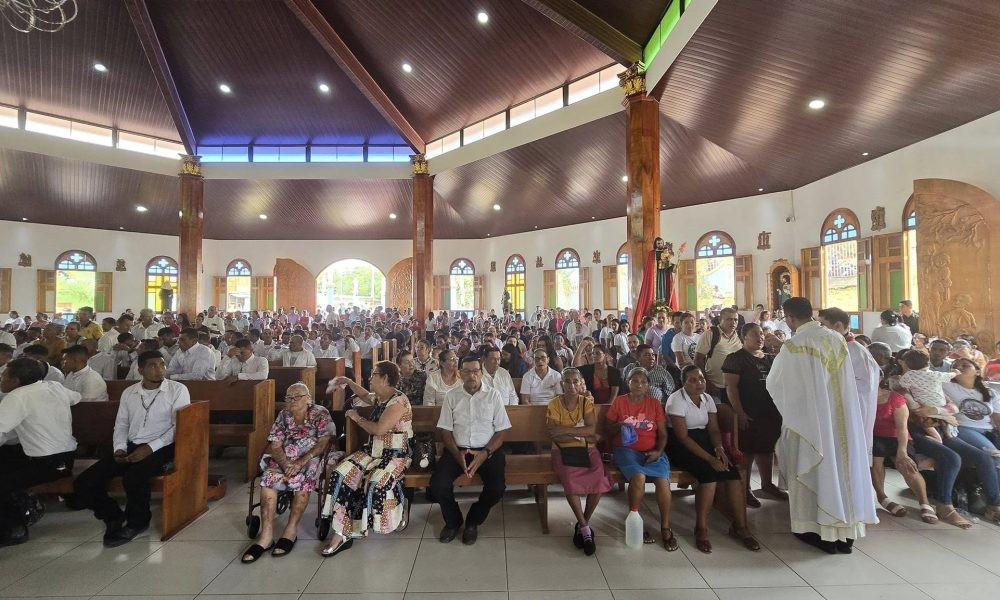
For the faithful, this situation is deeply painful, as this celebration allowed them to accompany their spiritual leaders and prepare for the most important days of Holy Week. Nevertheless, despite the pressure exerted by Daniel Ortega’s dictatorship—primarily through the National Police—churches in Nicaragua continue to welcome thousands of believers every day.
The persecution of the Catholic Church in Nicaragua has included the shutdown of Catholic media outlets, the expulsion of religious congregations such as the Missionaries of Charity founded by Mother Teresa, the freezing of bank accounts, and constant surveillance of church premises. The priests who remain in the country live under threat and face severe restrictions on preaching and movement.
“This Holy Thursday, instead of being a day of joy and renewal, becomes a bitter reminder of the shepherd’s absence, the fragility of faith under repression, and the urgent need for international solidarity with a persecuted Church,” said a priest consulted by La Prensa, who is currently in exile and requested anonymity for security reasons.