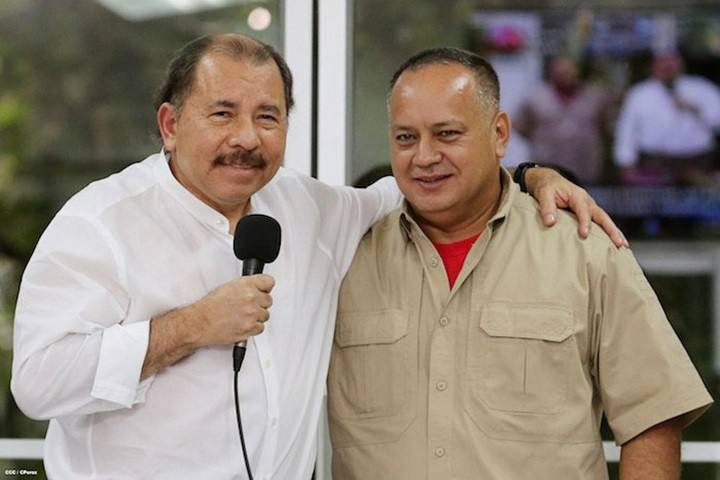
When LA PRENSA published on January 16 the reasons why the United States had raised the reward for dictator Nicolás Maduro’s capture to $25 million, Daniel Ortega’s regime was also implicated.
Nicaragua’s role in the Venezuelan drug trafficking network was exposed in the official indictment against Maduro and his officials, identified as kingpins of the Cartel de los Soles, according to the charges filed by the U.S. Department of Justice before the U.S. District Court for the Southern District of New York in 2020.
On page 11 of the 28-page document, it states that in 2009, Maduro Moros, Diosdado Cabello Rondón, and Hugo Carvajal Barrios took part in a meeting with a FARC representative in Caracas.
During the meeting, attendees also discussed the political situation in Honduras, which was undergoing a coup against Manuel Zelaya. Cabello Rondón expressed concern that the instability in the country could disrupt the drug trafficking business, warning that the situation could «screw up the business.»
During that meeting, they discussed the transfer of a four-ton shipment of cocaine that the guerrilla group was willing to hand over to the Cartel of the Suns but required a different entry point due to the crisis in Honduras.
Cabello Rondón then ordered that the drugs be delivered to a specific location in Venezuela, where a plane would transport them to Nicaragua before being sent to Mexico and, ultimately, to the United States, according to the investigation against Maduro.
It was also agreed that Maduro would travel to Honduras under the pretext of mediating the crisis as Venezuela’s foreign minister, but with the real intention of intervening in favor of the Cartel of the Suns and ensuring that the political crisis did not interfere with the organization’s drug trafficking operations.
Narcos come and go
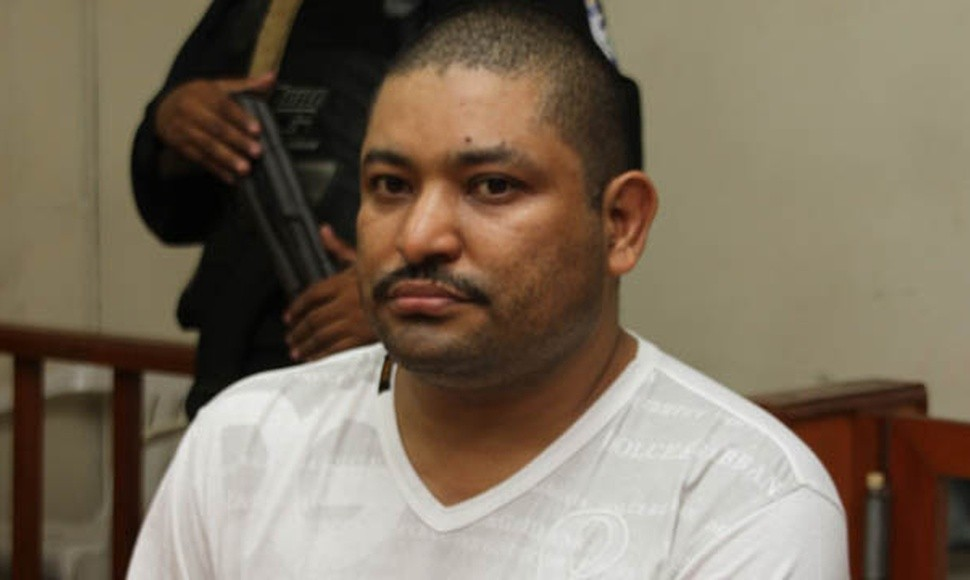
Bismarck Antonio Jirón Lira, a Nicaraguan drug trafficker linked to Colombia’s North Valley Cartel, was sentenced in 2007 to 13 years in prison for international drug trafficking. However, Managua’s appellate judges reduced his sentence to five years and even suspended his sentence, granting him probation.
In 2012, he was arrested again in Managua with $900,000 in cash. This time, he was sentenced to 30 years in prison, but, inexplicably, he was released just three years later, in 2015.
In 2018, he was arrested again, this time for murder, after the gang he led, known as Los Moncada, killed a man in northern Nicaragua who had allegedly stolen $600,000 from Jirón Lira.
However, a Managua judge, Abelardo Alvir, dismissed the case for lack of evidence and ordered Jirón Lira’s release.
In Nicaragua, there are multiple cases similar to Jirón Lira’s—drug traffickers caught with large sums of money, some sentenced to long prison terms, but later released by the country’s judicial system in a short time.
The explanation for these absurd occurrences may lie in cables from the U.S. Embassy in Managua, revealed in 2010, which indicate that “Daniel Ortega and the Sandinistas receive money from international drug traffickers, usually in exchange for ordering Sandinista judges to release traffickers arrested by police and the military.”
“Nicaragua, a narco-state”
This is not the first time that the Ortega-Murillo regime has been linked to drug trafficking activities.
In September 2023, a team of researchers from Cambridge University Press, the editorial division of the prestigious British university, debunked the Sandinista propaganda that promotes Nicaragua as “the safest country in Central America.”
On the contrary, it classified the country as a narco-state, where the ruling party, the Sandinista National Liberation Front (FSLN), acted as the “boss” and the security institutions, including the military and police, functioned as hitmen for the cartel.
The research is titled “Debunking the Myth of Nicaraguan Exceptionalism: Crime, Drugs, and the Political Economy of Violence in a Narco-State.”
The authors are Julienne Weegel, Assistant Professor of Latin American Studies at the University of Amsterdam; Dennis Rodgers, from the Center for Conflict, Development, and Peacebuilding (CCDP), Graduate Institute of International and Development Studies, Geneva; and José Luis Rocha, Associate Researcher at the Universidad Centroamericana José Simeón Cañas, San Salvador.
The document argues that the low impact of drug-related violence, unlike in other parts of Central America, is the result of complicity between the state and criminal organizations.
Unlike other countries where cartels wage wars over control of trafficking routes, “in Nicaragua, the business flows without obstacles thanks to a non-aggression pact,” the researchers stated.
According to the study, this agreement has allowed the authorities to maintain an image of security while regulating the flow of drugs in exchange for economic and political benefits.
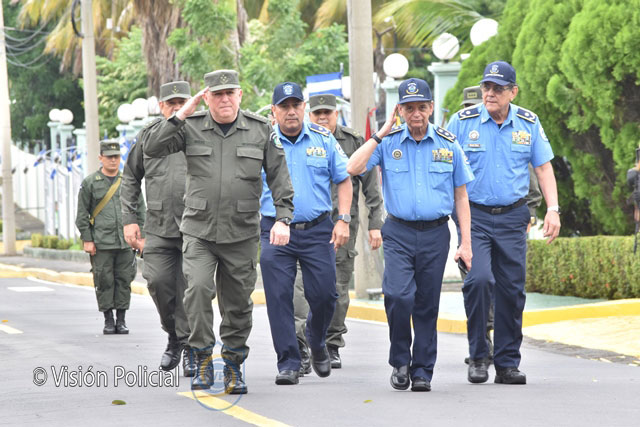
The scholars challenged the official narrative that presents the National Police as an effective force in the fight against organized crime.
In their view, the absence of verifiable reports on drug seizures and cartel or gang busts is due to a model “in which the government directly negotiates with drug traffickers to avoid violent confrontations.”
“The myth of Nicaraguan exceptionalism has served to cover up the consolidation of a highly organized narco-state,” the study concludes.
The research also points out that the capture of the state by the Sandinista elite has allowed drug trafficking to become an activity controlled from within the government.
In this regard, the researchers recall that Wikileaks documents leaked in 2010 had already warned that the FSLN was receiving funding from traffickers in exchange for releasing detained members.
Additionally, the analysis highlights that the Supreme Electoral Council facilitated identity cards for drug traffickers, thereby consolidating their protection within the country.
“Drug trafficking in Nicaragua has become less violent not because the state is more efficient, but because the links between the government and criminal organizations are tighter than in other places,” the research points out.
According to the authors, this pact of stability allows drug trafficking to continue without the bloody disputes that affect other countries in the region.
The study concludes that the dictatorship has not eradicated drug trafficking, but rather has institutionalized it: “Nicaragua, a narco-state.”
Pablo Escobar, the first precedent
The first time Daniel Ortega became involved in drug trafficking issues was in 1984, when he was a member of the Governing Junta during the first Sandinista regime and also the presidential candidate of the Sandinista National Liberation Front (FSLN) for the elections held in November of that year.
The U.S. government under Ronald Reagan, which at the time was financing the Contras fighting the Sandinistas, revealed photographs in July 1984 showing Colombian drug lord Pablo Escobar unloading sacks of cocaine from a small plane at Los Brasiles Airport in Managua.
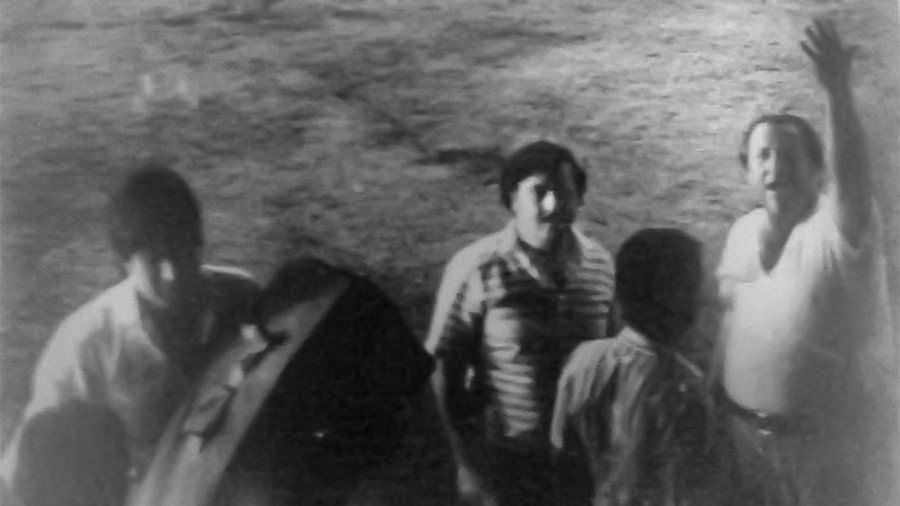
At the time the photographs were taken, it was later revealed that Escobar and other Colombian drug lords were taking refuge in Managua, under the protection of the Sandinistas, in exchange for large amounts of money, as they were being pursued by Colombian justice for the murder of Rodrigo Lara Bonilla, the country’s Minister of Justice.
After the photographs were revealed, Escobar and the other Colombian drug lords returned to Colombia. While Escobar himself never spoke about his stay in Nicaragua, his wife, son, brothers, some of his former associates, and even his mistress have discussed those days in several books and interviews.
Relations with the Colombian guerrilla
To sustain themselves financially, the Revolutionary Armed Forces of Colombia (FARC), the oldest guerrilla group in the world, relied on cocaine trafficking.
According to InSight Crime, the Colombian guerrilla admitted that at one point, they earned up to $450 per kilo of drugs that were produced and moved within the territory they controlled in Colombia.
Daniel Ortega prides himself on being a friend to various guerrilla groups in Colombia, but especially to the FARC.
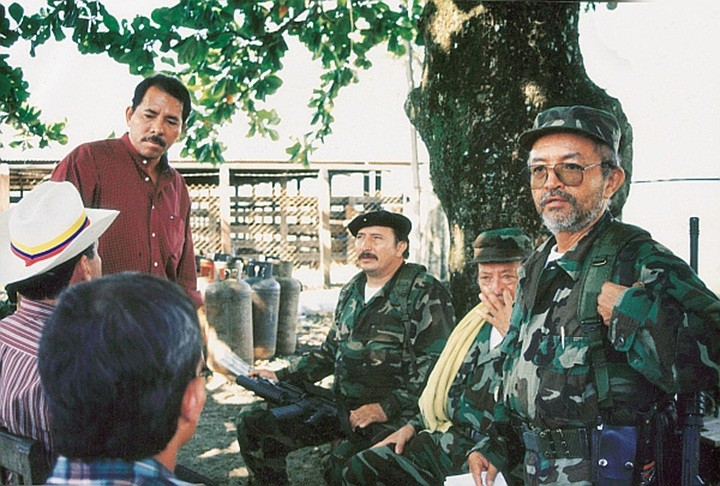
In 1999, as seen in a photograph, Ortega visited a FARC camp in Colombia and awarded the “Augusto C. Sandino Order” to the FARC’s top leader, Manuel Marulanda (deceased), who was known as “Tirofijo” and whom Ortega referred to as his “dear brother.”
In 2009, Ortega, already back in power, granted asylum to Colombian nationals Martha Pérez Gutiérrez and Doris Bohórquez Torres, as well as Mexican Lucía Morett, who were linked to the FARC guerrillas. They had survived an attack by the Colombian armed forces on March 1, 2008.
A year later, Ortega also granted political asylum to Rubén Darío Granda, the brother of Rodrigo Granda, the FARC guerrilla known as “the Chancellor.” At the time, Colombian authorities accused Rubén Darío Granda of being responsible for conducting million-dollar financial transactions using FARC funds.
Seizures of money, but not drugs or arrests of traffickers
Since Ortega returned to power in 2007, the fate of assets seized from drug trafficking began to change.
Before that, all goods seized from drug trafficking—whether money, vehicles, or properties—were distributed according to the criteria established in Law 285, the Law on Narcotics, Psychotropic Substances, and Other Controlled Substances.
However, the regime altered this process, and to this day, the distribution of these assets remains unknown.
Law 285 was repealed, and in its place, the regime passed Law 735, which has a lengthy title: “Law on the Prevention, Investigation, and Prosecution of Organized Crime and the Administration of Seized, Confiscated, and Abandoned Assets.”
This law is aimed at combating organized crime and establishes some broad and discretionary criteria for how seized or confiscated assets should be distributed.
However, no one knows if the authorities of the dictatorship actually follow these stated criteria.
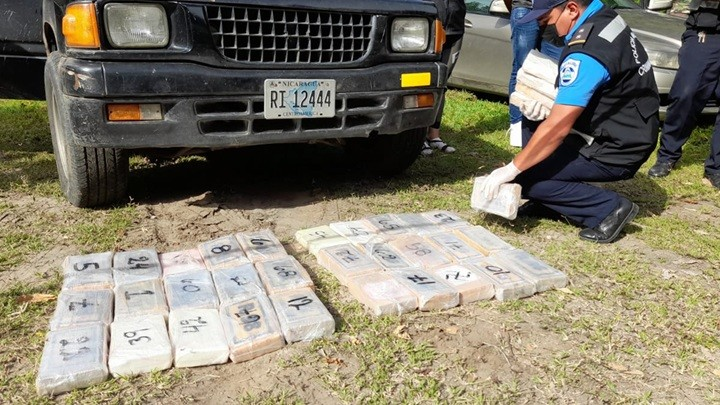
In recent years, it has become customary for the Police of the dictatorship under Daniel Ortega and Rosario Murillo to seize money from drug traffickers but fail to capture them, under the argument that the traffickers “fled and left the money abandoned.”
According to an investigation by DW, in just the first half of 2020, for example, the Nicaraguan Police seized $10.5 million from drug trafficking during 16 operations, but only about 320 kilos of cocaine were confiscated.
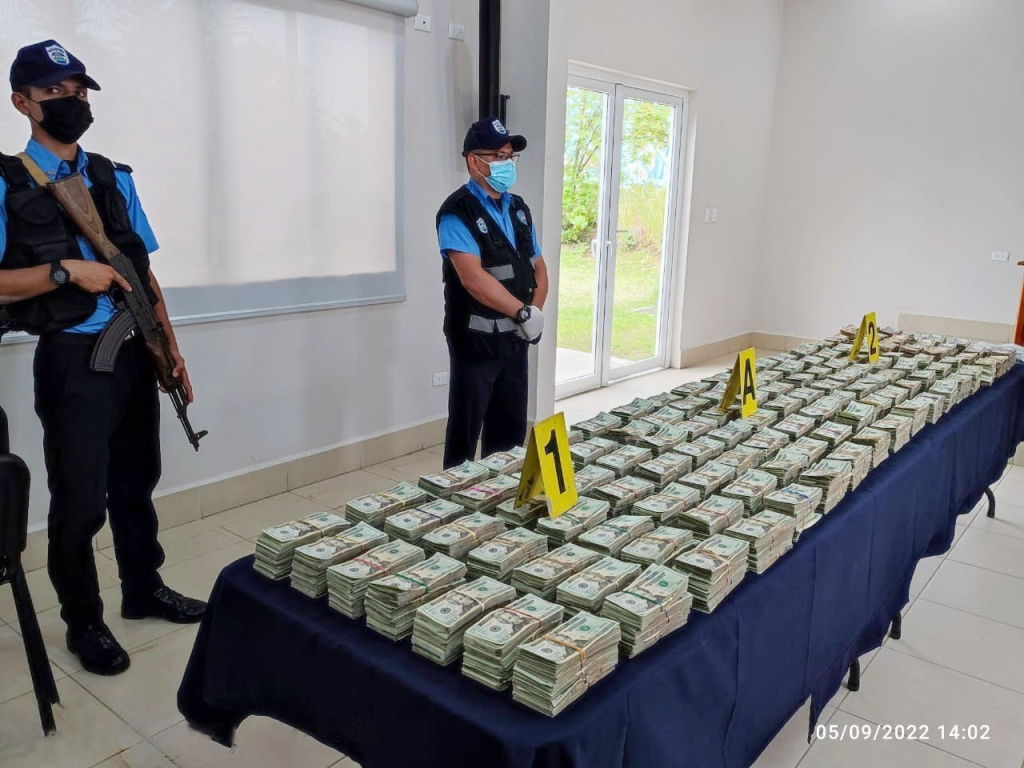
The problem is more evident when considering that, between 2007 and 2009, the regime’s police seized 36,000 kilos of cocaine, while, ten years later, between 2017 and 2019, the amount dropped to 16,000 kilos, according to police statistics.
The consequences are noticeable as Honduran authorities, Nicaragua’s northern neighbors, have reported more drug seizures in recent years, which inevitably passed through Nicaragua.
For example, in January 2024, the Federal Customs Service of Russia reported the seizure of over one ton of cocaine coming from Nicaragua, which had been loaded at the Corinto port.
A month earlier, in December 2023, Panamanian authorities reported a drug shipment hidden in a container from Nicaragua, destined for European countries.
Refuge for drug traffickers
In February 2022, the former President of Honduras, Juan Orlando Hernández, was arrested after the United States requested his extradition, accusing him of drug trafficking.
According to various media reports, Hernández, who had become very close to Ortega, was planning to flee to Nicaragua to be protected by the Nicaraguan dictator, but he did not leave in time.
Ortega has also been accused of sheltering terrorists and other criminals, including drug traffickers, within Nicaraguan territory in exchange for money.
For example, in September 2023, Ortega hosted Óscar Chinchilla, the former Attorney General of Honduras, who was being investigated by the Honduran Legislative Assembly to determine why he decided not to pursue high-profile cases related to corruption and drug trafficking, as reported by the Honduran investigative magazine Contra Corriente.