Through his onslaught against the Catholic Church, Daniel Ortega seems to be seeking an agreement with the Vatican that would allow him to appoint the bishops within the Nicaraguan Episcopal Conference (CEN). In this way, he could place priests sympathetic to his dictatorship at the helm of the Church and gain control of the CEN.
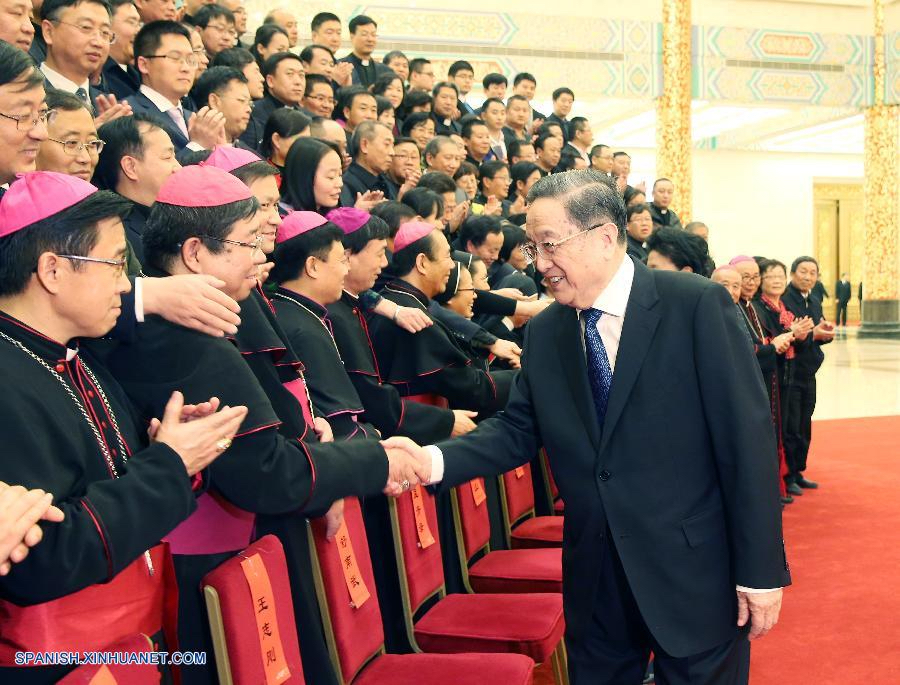
This is precisely what the Chinese regime achieved through a provisional agreement managed discreetly by the Chinese authorities and the Vatican. It is known as the Chinese model for the Church. In practice, since the agreement came into effect on September 22, 2018, it has allowed both the Xi Jinping regime and the Catholic Church to appoint twelve bishops. Some of these new bishops are close to the Chinese dictatorship.
On the other hand, Daniel Ortega’s dictatorship in Nicaragua has maintained close relations with China since they were formalized in December 2022. In the same year, in May, the Chinese regime arrested the cardinal and emeritus archbishop of Hong Kong, Joseph Zen. Ortega followed suit a month later by ordering the imprisonment of the bishop of Matagalpa, bishop Rolando Álvarez.
By the end of 2023, the Ortega regime announced that it had reached the level of a «strategic partnership» with China. Around the same time, there was a crackdown on Catholic priests in Nicaragua, resulting in the detention of bishop Isidoro Mora of Siuna and 16 other religious figures. Meanwhile, in China, Xi Jinping’s regime arrested bishop Peter Shao of Wenzhou.
The regional media outlet Centroamérica 360 labels China as «the great master of global religious persecution.» In an article published on Sunday, January 7th, it suggests that the Chinese regime could be advising Ortega’s government to secure a similar agreement to the one between the Vatican and the Asian giant.
The provisional agreement between China and the Vatican resulted from a long and arduous dialogue that spanned several years, preceded by decades of failed attempts at discussions and persecution of priests, bishops, and members of the Chinese Catholic Church—similar to what Daniel Ortega is doing in Nicaragua.
«It’s not the end of a process, it’s the beginning,» said Vatican spokesman Greg Burke in 2018 when the agreement became known. Although the details of the agreement are not public and its exact nature remains undisclosed, in practice and in the few interviews given by Vatican officials, some aspects of it have been hinted at.
Media outlets and international experts have speculated on the content of this agreement. Some believe that the Chinese government and the Holy See will select a bishop from a list of candidates presented by both parties. It’s unclear whether the Pope has the power to veto those designated by the Xi Jinping regime.
Meanwhile, the Cardinal Secretary of State of the Vatican, Pietro Parolin, stated in an interview with Vatican News in October 2022 that «the established procedure… leaves the final and decisive word to the Pope.»
A Vatican note, also dated October 2022, specifies that the agreement at this moment «is in force and binding,» but its content is not made public because it has a «provisional and somewhat experimental» nature. It remains subject to «reviews and refinements.»
The Chinese Church before the agreement
Before the provisional agreement, bishops appointed by the Vatican were persecuted and imprisoned in China, while authorities, through the Chinese Patriotic Catholic Association (CPCA) established in 1957, appointed new prelates without the Pope’s authorization.
In 1958, the CPCA appointed twenty bishops without the Holy See’s authorization, whereas those appointed by the Vatican had to carry out their ministry clandestinely until they were detained by the regime.
«These difficulties led the Holy See to grant legitimate Chinese bishops, in 1981, the privilege of consecrating others, if necessary, without consulting Rome, which ultimately contributed to increasing the confusion: the faithful found it even more challenging to know for certain who were the pastors in communion with the Pope,» explains Rafael Serrano, a doctor in Biblical Studies, in an article titled «The challenging path of the Church in China.»
Pope John Paul II managed to make some progress in talks with the Chinese regime, but in 2000, China reacted angrily to the canonization of 120 Asian Catholics who had been executed in the so-called Boxer Rebellion, considered by China as traitors serving foreign powers.
In 2006, seeking reconciliation, Pope Benedict XVI announced that the majority of bishops in China were legitimate, including those appointed by the regime. From there, a period of relative calm began between the Vatican and the Chinese regime. However, between 2010 and 2011, the CPCA again illegally appointed bishops, leading to a Vatican protest and the breakdown of the rapprochement.
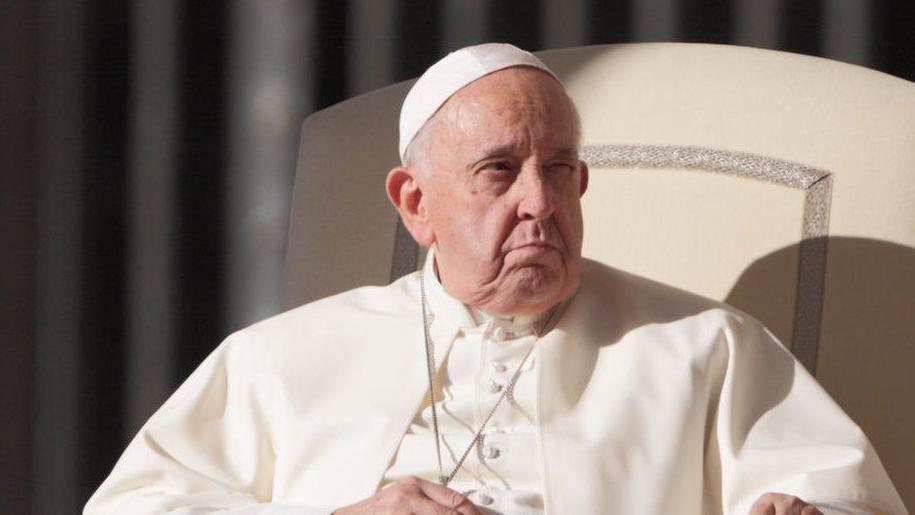
With Pope Francis’s arrival at the Vatican, there was a new attempt at rapprochement, which materialized with the signing of the provisional agreement in 2018. This signing had two immediate effects, as explained by Serrano in his article: The Pope admitted into full communion eight bishops consecrated by the Chinese regime, and he was also able to establish a new diocese, something that hadn’t been possible since 1946.
Advancements and shortcomings
The provisional agreement lasts for two years and has already been renewed twice. In 2024, it could be renewed for a third time.
As it is a secret agreement, the progress made to date remains unknown. However, after each renewal, the Vatican publishes a report detailing the results achieved.
In the latest report presented, Cardinal Secretary of State Pietro Parolin stated that the main achievement was that «all bishops of the Catholic Church in China are in full communion with the Pope, and there have been no further illegitimate episcopal ordinations.
In an interview with Reuters in July 2022, Pope Francis stated that the dialogue with the Chinese government is «progressing well but slowly.» Faced with a closed situation, one must seek the possible path, not the ideal; diplomacy is the art of the possible and making what is possible become a reality.
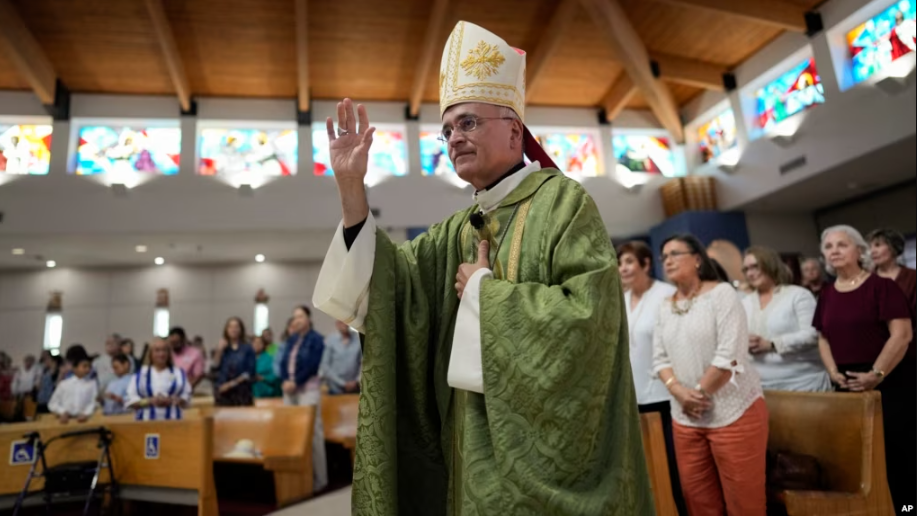
Thus far, six bishops have been jointly appointed by the Vatican and China, and recognition has been achieved for another six by both parties. However, there are still 36 vacant bishop positions. Cardinal Parolin also mentioned in October 2022 that many dioceses remain vacant, and others have bishops who are very elderly and should retire.
On the other hand, seven bishops remain detained. Three of them were arrested after the signing of the provisional agreement, and four are considered missing, with no information known about them for years. The oldest among them, 93-year-old Bishop Shi Hongzhen of Tianjin, is under house arrest.
According to Serrano, «the Vatican maintains this policy of dialogue with China because it sees no better alternative.» He details that if the Holy See rejects the agreement, it would expose Chinese Catholics to even greater difficulties and reprisals than those they are already experiencing. «Ultimately, the clearest achievement is that there are no longer illegitimate or clandestine bishops in China,» he concludes.