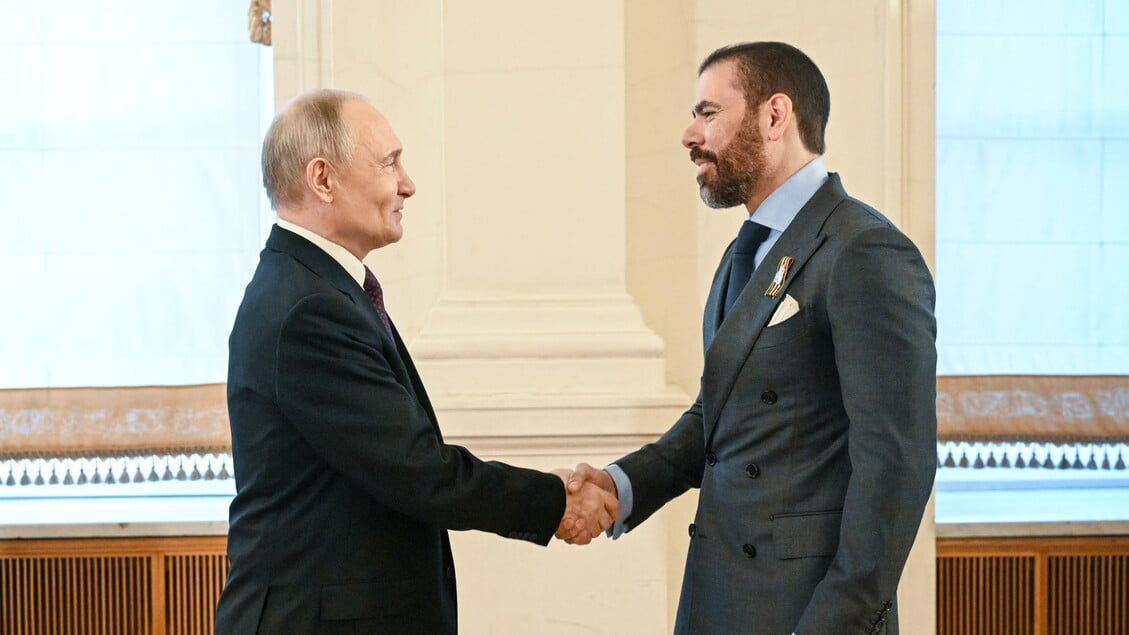
The dictatorship of Daniel Ortega and Rosario Murillo has granted “full powers” to their son, Laureano Ortega, to sign a memorandum of understanding with Russia aimed at “guaranteeing biological security.” Analysts consulted for this report say the move represents another challenge to the United States, which has intensified pressure on the regime in recent months.
On April 29, Russia’s Senate ratified an agreement designed to strengthen military cooperation with Nicaragua. Signed in September 2025, the accord will allow the exchange of information in that field, as well as the sharing of experiences and intelligence “in the fight against extremist ideologies and international terrorism.”
Washington apprehensive
The Russian legislature’s decision unsettled Washington, which reaffirmed its position of pushing out powers it considers hostile to the hemisphere, applying a renewed version of the Monroe Doctrine: “America for the Americans.”
Read also: Nicaragua’s Military Deal With Russia Risks Sovereignty and Deeper Isolation
In a statement sent to media outlets the day after the Russian agreement was ratified, a State Department spokesperson said the United States would continue “protecting its interests — political, security, economic and otherwise — against interference by China, Russia, Iran, and brutal authoritarian regimes seeking to threaten the stability of our hemisphere.”
Ortega’s decision to appoint his son to sign the memorandum with Russia reflects the highly personalized manner in which he manages relations with that country. Laureano Ortega Murillo has for years operated as a liaison with Russia, China, and Iran.
According to the dictionary of the Royal Spanish Academy, the term “biosecurity” refers to a set of measures “for the prevention of risks to health and the environment caused by biological agents.
«Full powers» granted to Laureano Ortega
The “full powers” authorizing Laureano Ortega to “act on behalf” of the regime in Russia were granted on April 30, 2026, through Presidential Agreement No. 59-2026, although the decree was not published until Tuesday, May 5, in La Gaceta, the official government gazette.
Through this agreement, the regime seeks to “close the circle of internal loyalties,” said former opposition lawmaker Eliseo Núñez. According to Núñez, concentrating strategic decisions in Laureano Ortega increases complicity within the ruling family and reduces the risk of betrayals or fractures within the political and diplomatic apparatus.
“It is a move designed to shield the regime externally and internally at the same time,” he said.
Núñez argues that Ortega has decided to align himself fully with Russia and place all his bets on traditional allies because “he has concluded that he no longer has any real possibility of rebuilding a functional relationship with the United States.”
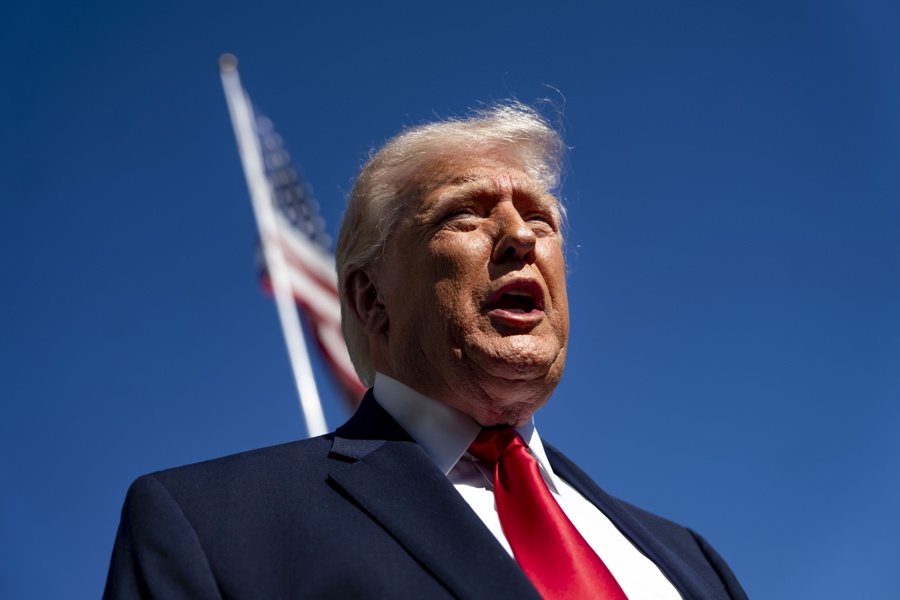
Ortega’s Challenge: Closer Ties to Russia and Insults Against Trump
The dictatorship’s latest moves are being viewed as “defiant” toward the United States by Juan Sebastián Chamorro, coordinator of the opposition group Citizens for Liberty (CxL). Chamorro, a former political prisoner who was later exiled, said Ortega has abandoned the “cautious” strategy he maintained from the January capture of Nicolás Maduro until April 20, when the dictator insulted U.S. President Donald Trump, saying he was “not in his right mind.”
You may be interested: Russia Boosts Military Presence in Latin America with Nicaragua Agreement
“He is moving toward a strategy of ‘here I am,’” Chamorro explained. “Ortega is definitely taking a more confrontational stance. That is clearly visible, and now we will see the U.S. response, which has not yet reacted to the remarks against Trump, but surely will.”
Eliseo Núñez said Ortega is calculating that the United States “will not become militarily involved against him” and believes “Washington may sanction, pressure, or denounce him, but will go no further.” For that reason, Núñez said, Ortega sees room “to deepen sensitive agreements with Moscow, including in areas such as biological security or military cooperation.”
The United States has imposed sanctions on Rosario Murillo, most of her children, government officials, institutions such as the National Police, and state-owned companies linked to the energy and mining sectors. Washington has also denounced the regime’s repression against Nicaraguans, demanded the release of political prisoners, and questioned the legitimacy of the dictatorship’s hold on power.
Diplomatic Movements Within Ortega’s Regime
Recent diplomatic changes within the dictatorship suggest that “things are moving,” according to Juan Sebastián Chamorro, who described as an “interesting signal” the removal of Guisell Socorro Morales Echaverry as chargé d’affaires in Washington, as well as the regime’s decision — for the third time this year — to replace the head of Nicaragua’s embassy in Venezuela.
But developments are not occurring only on the regime’s side. The Donald Trump administration has also shown signs that it continues to closely monitor the Ortega-Murillo family and its relations with Russia.
The U.S. chargé d’affaires in Nicaragua, Elías Baumann, participated in a meeting at U.S. Southern Command attended by Secretary of State Marco Rubio, Pentagon leaders, and diplomatic chiefs from U.S. embassies across the region.
Read also: Nicaragua’s Regime Courts North Korea and African Nations for Military and UN Support
According to a post published by Baumann on X on May 5, the conference focused on advancing the objectives of the United States’ National Security Strategy in the hemisphere, as well as “countering narco-terrorism and preventing adversaries from establishing influence” in the region.
The U.S. diplomat said he was “fascinated” to hear Rubio outline the Trump administration’s priorities in the hemisphere, adding that “we still have much work to do in Nicaragua.”