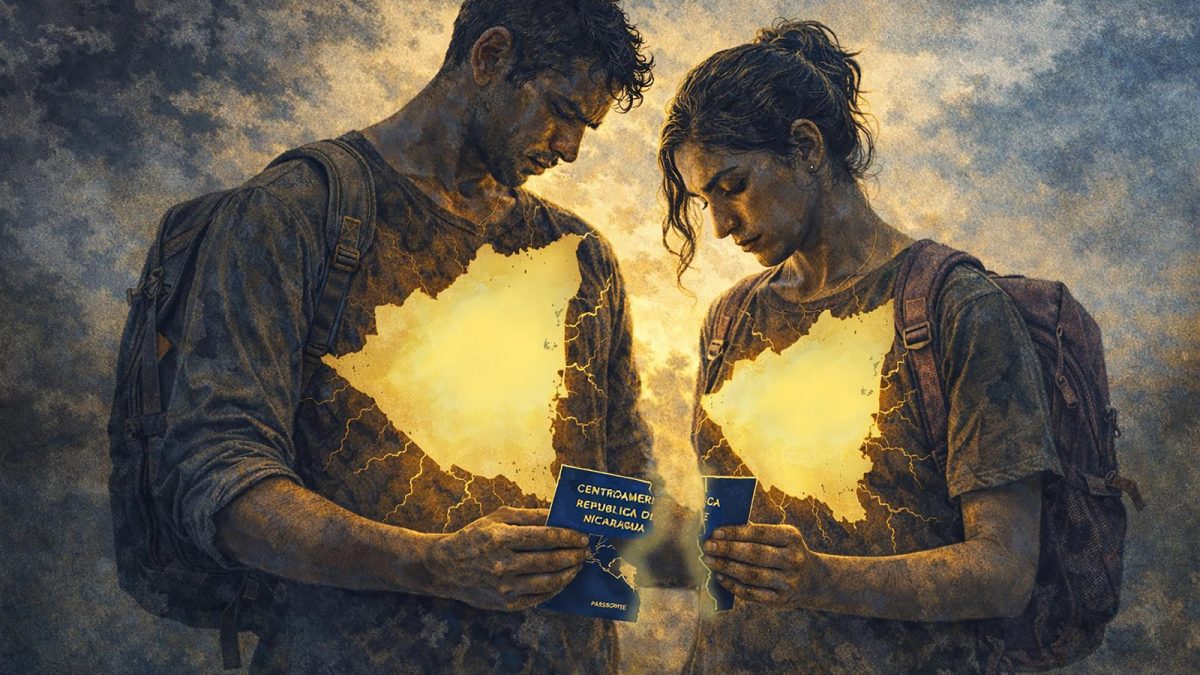
New U.S. immigration policies have kept “Carmen,” a Nicaraguan living in the United States since June 2024, on the edge. She entered the country with a refugee letter that replaced her passport. Recent changes in U.S. policy have complicated her access to a residency card—something that would have restored a sense of security she lost four years ago, when she was left without valid Nicaraguan, formally issued identity documents.
She is stateless as a consequence of a repressive policy implemented by the Ortega–Murillo regime against Nicaraguan citizens—one that strips them of their legal rights, their identity, and leaves them in a state of total vulnerability. “It sounds simple when you say it, but only those who live it know the pain it causes,” she says.
LA PRENSA has chosen these victims of the Nicaraguan state as its Persons of the Year 2025. For “Carmen,” it all began in 2021, when she learned that the authorities in her country had revoked her right to hold a passport. That year was marked by intense state repression, and she was forced to leave to protect her own safety, as hundreds of others did.
The first consequence of the state’s action was that she lost the right to choose her destination country. She now recalls that Christmas as a bitter one, compounded by a problem that continues to affect her daily life.
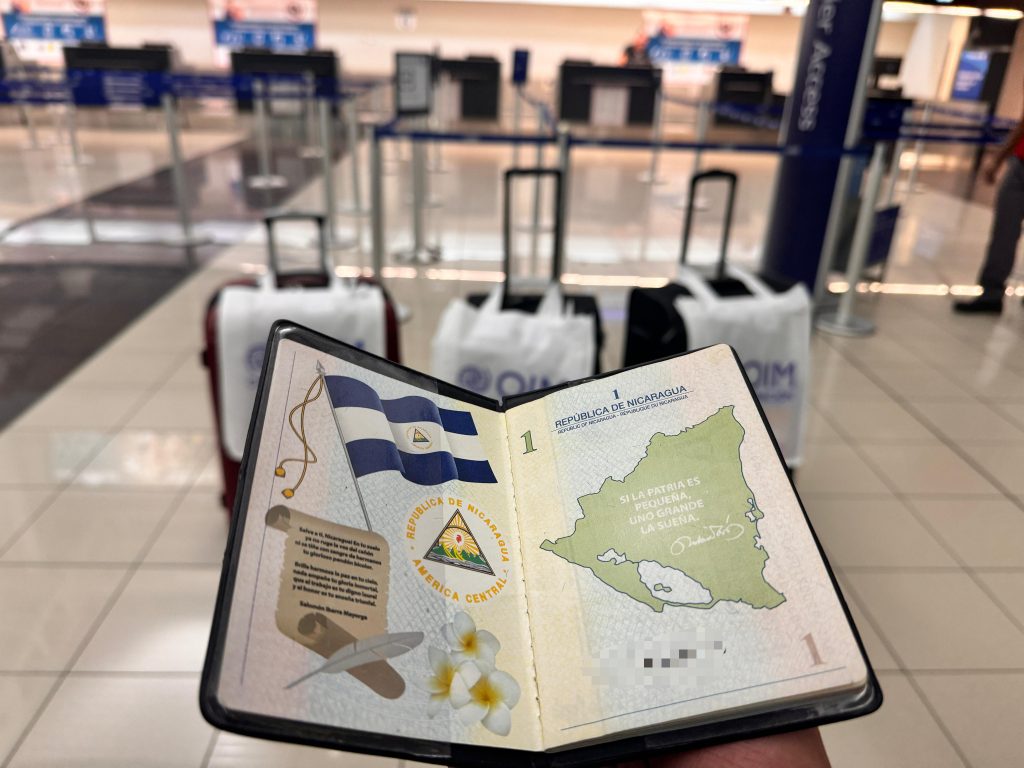
“The absence of those [Nicaraguan] documents prevents me from doing things as ordinary as buying a car or taking a domestic flight within the United States. Traveling outside the country is impossible—a reality that took me years to come to terms with,” she says.
Two types of statelessness
According to the United Nations, two types of statelessness have emerged under the Ortega–Murillo regime. One group consists of the 451 people who were directly stripped of their nationality. In 2023, they were branded “traitors to the homeland,” a group that includes 222 former political prisoners and 94 prominent public figures. Added to them are 135 former prisoners of conscience, punished a year later.
“The cumulative effect of these measures is to deprive victims of their legal identity, their property and income, their freedom of movement, and ultimately their recognition as persons before the law,” states a September report titled “Nicaragua: Persecution Beyond Borders.”
You may be interested: Editorial: The Nicaraguan Stateless Person as the 2025 Person of the Year
Beyond daily life, access to asylum and other protection mechanisms is also severely limited by the lack of documentation to substantiate victims’ status, experts warn.
“René,” another exile who has sought asylum in the United States, knows this reality all too well. “Trying to explain to government office workers here that you can’t present a birth certificate or a valid passport is extremely difficult. It simply doesn’t compute for them. They look at you with bewilderment, and in most cases they just don’t respond to your request,” he says.
«I was reborn in Spain»
“Carlos” offers another story. He arrived in Spain in late 2023 using a temporary travel permit, because his passport had less than six months of validity left. He would not be able to renew it. He, too, left Nicaragua for political reasons.
After living in Costa Rica for two years, he arrived with his family through a humanitarian program. He never imagined that the lack of Nicaraguan documents would become such an immediate obstacle while his Spanish residency card was being processed. He only had a Spanish asylum resolution, but he could not open a bank account, register his address, or handle everyday matters because people demanded a valid photo ID.
“When they finally gave me my residency card, I felt like I was reborn in Spain—a country that has been generous with Nicaraguans after the repression by Ortega and Murillo. My wife, thank God, still had valid documents, and thanks to that we didn’t fall into a black hole and were able to move forward. But on a personal level, this situation feels like a kind of legal death,” he says.
Journalist “Rodrigo S.” has also been living in Spain since November 5 of this year. Like “Carlos,” he and his family were accepted through the same humanitarian program, which allowed them to leave Costa Rica and restart their lives. He learned of his de facto statelessness on July 13, two years ago.
In the early hours of February 12, 2023, he fled Nicaragua on foot through mountain paths near the Las Manos border crossing. Police surveillance and recent visits from local CPC members—who threatened him with consequences if he did not accept an FSLN party card because of his work as a journalist—accelerated his decision to leave.
From Honduras he traveled to El Salvador, and from there flew to the United States to receive psychological treatment and seek support to extract his family, who remained in Nicaragua. He soon learned that applying for asylum there would take many years, so in May of that year he returned to Costa Rica to reunite with his family.
Bad news conveyed by airlines
First, American Airlines canceled his ticket on the El Salvador–Costa Rica route, citing a “passport issue” he did not understand. He then tried to fly with TACA via Panama to San José, but Costa Rica required him to present a return ticket to Managua, as stipulated by migration laws for Nicaraguans entering with a U.S. visa.
Neither TACA nor American would sell him the ticket, citing “boarding problems.” He managed instead to purchase an online ticket from TicaBus from San José to Managua for July 15—the only date with availability. That is how he entered Costa Rica. He was left wondering why neither airline would sell him a ticket to Managua, even though he never intended to use it. He had no plans to return.
He arrived in San José on June 21, 2023, and soon began the process of reuniting his family. He had forgotten about the TicaBus ticket until the company called him two days beforehand, on July 13, to inform him that Nicaraguan Migration would not allow him to board unless he first initiated a “pre-registration” process.
After investigating, the journalist discovered that no such process exists for Nicaraguans. He asked the transport company to email him an explanation. The response stated that he could not travel “due to an impediment.” That was when he applied for asylum in Costa Rica, later in the United States, and finally in Spain.
Cancellation of the U.S. refugee program forces a change of plans
Costa Rica scheduled his asylum appointment for 2026. The United States admitted him as a refugee in 2024, and he was set to travel in February of this year after a year of interviews, medical exams, and paperwork. But with Donald Trump’s return to the U.S. presidency, the program was canceled just days before his departure. Once again, he was left in limbo: not approved by Costa Rica, approved by the United States, but unable to travel.
Exhausted by the endless detours, he and his family decided to set aside the paperwork and focus on their reality in Costa Rica. In April, they received a call from UNHCR asking whether they were interested in resettling in a third country.
They arrived in Spain on November 6—de facto stateless from Nicaragua, with passports about to expire, without refugee status in Costa Rica, and simultaneously approved and barred by the United States. In less than two months, they have begun rebuilding their lives from scratch. This time, unlike in previous processes, they have identity cards. That really makes a difference.