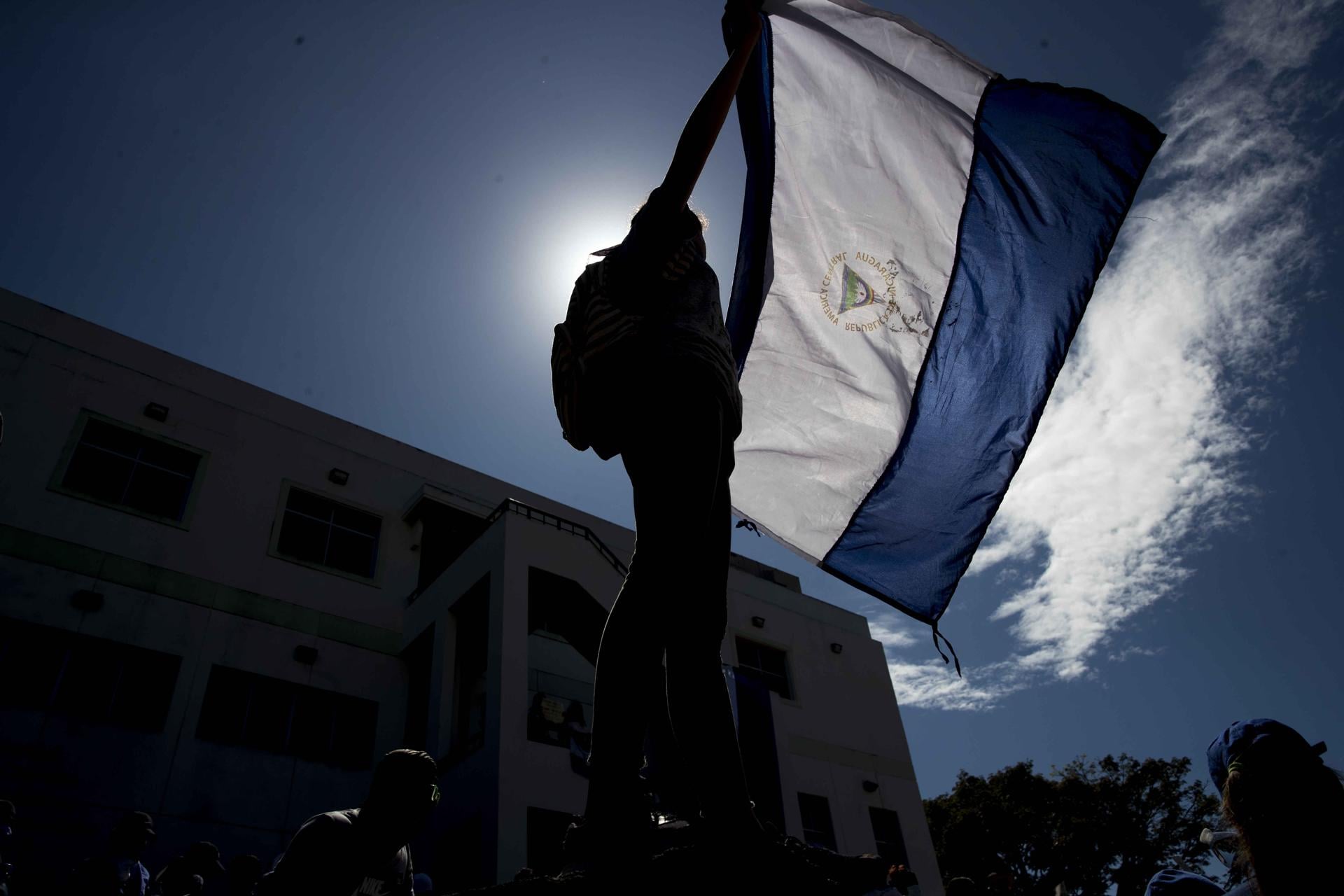
LA PRENSA has named the Nicaraguan Stateless Person as its 2025 Person of the Year, representing all compatriots whom the dictatorship—either through its totalitarian “legality” (rooted in the perversion of law) or through de facto actions—has banished or forced into exile; those who have been stripped of their nationality or prevented from returning to Nicaragua; those whose legal records have been erased or whose access to them has been canceled, thus turning them into de facto stateless persons.
Technically, according to international law as established in the Convention Relating to the Status of Stateless Persons, adopted by the United Nations (UN) in 1954, Nicaraguans who have been forced into this condition by the dictatorship are not exactly stateless. According to the text of that Convention, a stateless person is “any person who is not considered as a national by any State under the operation of its law.”
However, the international community does not consider Nicaraguans whom the dictatorship has stripped of their nationality in one way or another to be stateless, but rather refugees. Indeed, the Government of the Kingdom of Spain has offered and granted Spanish nationality to many of them.
Likewise, condemning people to statelessness—whether “legally” or de facto—is not formally classified as a crime against humanity. But in fact, and in the strict sense of justice, it is one, because in this case statelessness is the consequence of persecution, deportation, and banishment—government actions that are indeed classified as crimes against humanity. This is how they have been described and denounced by national and international human rights organizations, including those of the UN.
The Nicaraguan stateless person is a multidimensional individual. Not only do they suffer the harshness and consequences of repression and the difficulty and precariousness of survival in exile and banishment. They are also a hero of human resistance and an example of the capacity to adapt to unfamiliar (sometimes even hostile) environments, and of the will to succeed in the highly competitive educational, academic, cultural, economic, and social spheres of other countries.
Some people of great intellectual ability and political training have told us that the Nicaraguan character of 2025 could have been co-dictator Rosario Murillo, that sinister political figure who this year reached the peak of her totalitarian power. She did so by imposing a totalitarian Constitution, fully subordinating the institutions and agencies of the State to it, and sweeping away obstacles to her succession in the family’s hold on state power—even within the ranks of her own party. Or rather, gang, because it cannot truthfully be said that the FSLN is really a political party.
In principle, those people are right. In reality, for an independent and professional news outlet, the Person of the Year does not have to be only someone who, during that period, carried out notable actions for the benefit of people, society, and the nation.
A wicked individual who, during that time, committed the worst actions against people, their own country, and even humanity can also be Person of the Year. That is why the famous magazine Time chose Adolf Hitler as Person of the Year in 1938. And to those who misunderstood and criticized the decision, the magazine clarified that a professional news outlet does not single out only those who stand out for benevolent deeds, but also “the person who had the greatest impact on the events of the year”—even if that impact was for evil.
But in Nicaraguan political culture, it would not be understood to name as Person of the Year someone who has done the greatest harm to Nicaragua, to its people, and to LA PRENSA itself—a newspaper that is now published only online and abroad because its journalists are in exile due to repression, and because its facilities and other properties were confiscated by order of that same person who is like the embodiment of evil.
Moreover, the Nicaraguan stateless person who stoically endures this undeserved condition best represents the strength, resilience, and hope of all dignified Nicaraguans who long for the bright day when freedom returns to Nicaragua. And when Nicaragua’s stateless persons—who have never ceased to be Nicaraguan by natural right, by conscience, and by heart—can recover their formal legal status and their full rights as citizens in a finally free and democratic motherland.