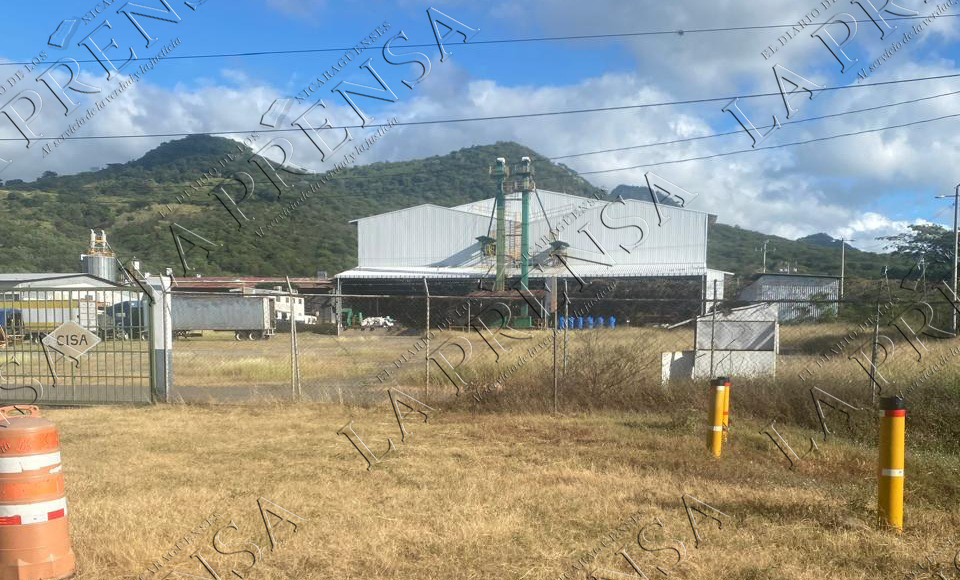
Amid a shortage of pickers and productivity problems, the 2025–2026 coffee harvest has entered its peak phase. Meanwhile, hopes have faded that the Ortega–Murillo dictatorship or any of the banks to which it owed money would reactivate the company Cisa Exportadora. At the company’s processing plant confiscated in December 2023, weeds continue to overgrow the patios where coffee from the farms should be drying, and in some areas the vegetation is encroaching on vehicles left in the parking lots.
In December 2023, after Mercon Coffee Group filed for Chapter 11 bankruptcy protection in the United States, the Ortega–Murillo regime confiscated the group’s two subsidiaries in Nicaragua: Cisa Exportadora and the microfinance institution Mercapital. The intervention was carried out under the pretext of collecting an alleged USD 30 million tax debt.
You may read: U.S. imposes new tariffs on Nicaragua starting January 2026, but avoids changing DR-Cafta terms
Although the company initially denied the existence of that debt, it later tried unsuccessfully to reach a payment agreement. Two years later, the assets of Cisa Exportadora—which collected, processed, and exported around half of coffee harvest—are abandoned, including its processing plant, considered by producers to be the largest and most modern in the country. And last April, Mercapital, which provided funds to producers to tend their plantations and then received the coffee they produced as repayment, lost its operating license.
The impact of Cisa Exportadora’s exit
The confiscation of both companies affected the 2023–2024 harvest, whose exports reached 2.71 million quintals—the lowest level in recent years. This was slightly offset by the good price of the bean. With an average price of USD 193.30 per quintal, these exports generated about USD 525 million.
However, in the 2024–2025 coffee cycle, which began on October 1 of last year and ended on September 30 of this year, everything indicates that the sector returned to normal. Statistics from the Central Bank of Nicaragua (BCN) show that 3.18 million quintals of coffee were exported, a volume similar to the years prior to the confiscation of Cisa Exportadora.
In addition to the increase in volume, the average international sale price rose to USD 274.60 per quintal. This led to coffee export revenues of USD 862.08 million. Although the sector overcame Cisa’s absence, there were expectations that it would resume its role, especially in the “habilitation” mechanism, which involved providing financing and technical assistance in exchange for the harvest.
Read also: Ortega-Murillo Linked Company Could Earn $100 Million a Year from Nicaragua’s Gold Plant
After Cisa’s exit, the sector “readjusted”
According to various representatives of the coffee sector, export stability was achieved after a year of “readjustments,” during which some companies—including the largest ones, Exportadora Atlantic and Olam Nicaragua—along with other smaller exporters that own dry mills, increased their processing capacity. In addition, new players entered the market and installed small processing facilities.
They also recall that prices were not as attractive as in the cycle that has just ended; therefore, some producers even held back part of their harvest and sold it in the following cycle.
Despite the processing and export mechanism reaching a “relative normality,” the sector hoped that for the 2025–2026 cycle, which began on October 1, Cisa Exportadora—albeit under new owners—would once again offer its services. However, the collection centers no longer exist, nor does the microfinance institution Mercapital, and the processing plant that processed and exported more than one million quintals of coffee each harvest is abandoned.
Accelerated coffee ripening in Matagalpa and Jinotega
Meanwhile, recent rains have accelerated the ripening of the beans in much of the highland areas of Matagalpa and Jinotega. Some producers say that because the beans ripened all at once, they will harvest them in a single pass—meaning there will be no need for a second round, or what they call repela.
The fear is that, with the holiday season approaching, pickers will return home to celebrate Christmas and New Year’s and will not come back to the plantations. Producers say that in some more remote areas the shortage of pickers is even more evident.
This has forced producers to turn to social media in search of workers. Job postings abound, most offering to pay 120 córdobas per lata (can) of coffee picked, along with many benefits, including lodging, recreation, transportation, and full meals three times a day.
Dry mills located between Sébaco and Matagalpa have also turned to social media to look for workers. They are seeking patio workers and loaders for coffee drying tasks, offering transportation, competitive wages, a loyalty bonus, and other benefits.

Labor Ministry does not set a wage table
It should be recalled that practically since Daniel Ortega’s return to power, the Ministry of Labor (Mitrab) has not reestablished wage tables for the harvest. This forces producers to compete among themselves for the scarce available labor. The good news, according to producers, is that the price of coffee is currently doing well—around USD 300 per quintal—which allows them to pay well, since payment per lata (big collecting can) picked is now the double what they paid in recent previous harvests.
Regarding the shortage of pickers, they note that this is a problem they have faced for several years and that it worsened with the mass migration of Nicaraguans. In addition, the closure of positions in some free-trade-zone companies and others in commerce and industry has somewhat offset the difficulty of finding pickers.
In addition to the labor shortage, yields in the current harvest are lower than expected. “There are low yields from cherry to parchment and from parchment to green coffee. That will impact the final harvest. Several years ago this happened—there appeared to be a large volume of coffee picked, and in the end there was a shortfall in estimates of up to 40 percent,” explains a producer from the highlands of Jinotega, who adds that he does not know what is causing this drop in yields.
Read also: Rosario Murillo Tightens Her Grip: Ortega’s Wife Rules Nicaragua from Economy to Repression
The official production target
He adds that in this cycle the harvest will not extend until February as in other years, since the beans ripened all at once; he even says that in some lowland areas harvesting has already finished. This benefits the sector because pickers move to areas where there is still work.
This phenomenon of low yields, according to specialists, mainly affects small and medium-sized producers, since although large producers also record yield losses, their production declines are not as significant. The lack of producer organizations worsens this problem because small and medium-sized producers have no one to guide them in finding solutions.
Amid these difficulties, agricultural authorities have limited themselves to saying that the harvest is progressing at a good pace, but they avoid referring to production and export targets for this harvest, even though they initially claimed it would exceed three million quintals.