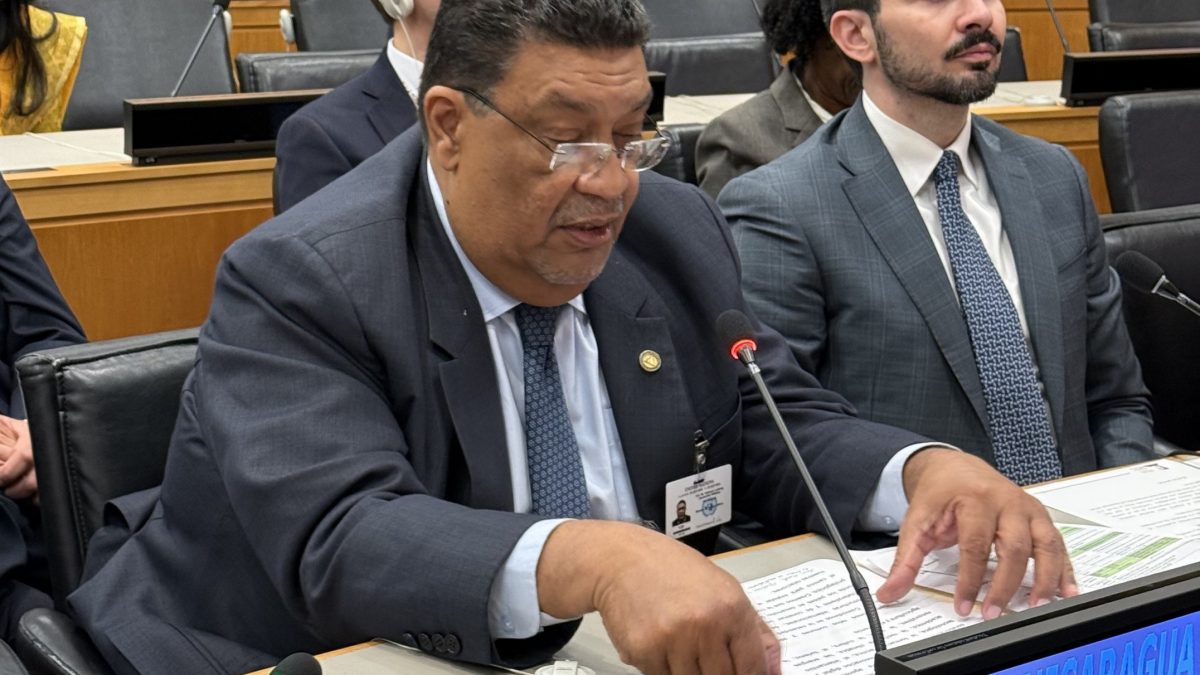
The U.S. government holds a dossier with enough information to sanction Nicaraguan Co-Foreign Minister Valdrack Jaentschke but has yet to act on it, according to a source with ties to the U.S. government who was interviewed for this report.
According to the source, the information has been in the hands of the U.S. Treasury Department’s Office of Foreign Assets Control (OFAC) and the U.S. State Department since the Biden administration, which ended in January 2025 without designating Jaentschke.
The Trump administration also has access to the dossier, which documents human rights violations attributed to Jaentschke, but has chosen not to use it, the source added.
In the source’s assessment, what is holding up a designation is the position Jaentschke now holds in Nicaragua.
“Because Valdrack Jaentschke is a co-foreign minister of Nicaragua, it is possible that the U.S. State Department has decided not to act in order to preserve that channel of communication with the regime,” the source said.
What the dossier says
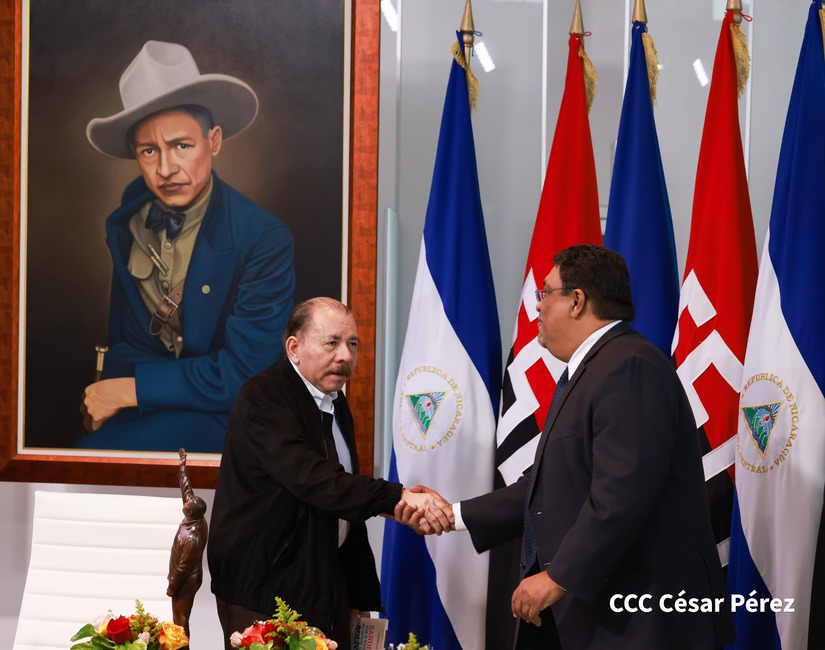
The source said that, given the information gathered, a political decision by the Trump administration would be enough to sanction Jaentschke, both for his status as a regime official and for the human rights violations that the dossier alleges he endorsed and carried out.
The first ground does not even require additional evidence. Executive Order 13851 authorizes sanctions against anyone who has served as an official of the Nicaraguan government since 2007, and on that basis, the U.S. Treasury Department designated it against Nicaragua’s labor minister in February.
The dossier cites him for three types of conduct. The first is the persecution of nongovernmental organizations. The second is the coordination of intelligence operations against opponents inside and outside Nicaragua. The third is his diplomatic work defending the regime’s version of events in international forums and undercutting sanctions.
Flagged by the U.N., but not by Washington
Orlando J. Pérez, a political scientist and professor at the University of North Texas at Dallas, said the key is to compare Jaentschke’s case with the steps the Trump administration has taken against other regime officials.
This past February, the U.S. Treasury Department sanctioned five Nicaraguan officials, including Maj. Gen. Leonel José Gutiérrez López, head of the army’s Directorate of Military Intelligence and Counterintelligence, who has been linked to structures of repression and surveillance of opponents.
That same year, the U.N. Group of Human Rights Experts on Nicaragua (GHREN) identified Jaentschke as part of the high-level group, along with Gutiérrez López, that plays “an important role in directing the transnational repression strategy” and in “coordinating intelligence activities.”
According to GHREN, Jaentschke used his diplomatic posts in Central America “to recruit collaborators, monitor the diaspora, and map opposition networks,” as Confidencial reported.
Even so, Jaentschke is still not among the officials sanctioned by Washington.
His post is no shield
Pérez noted that “the post, in and of itself, offers no protection.” In 2019, the Treasury Department sanctioned then-Venezuelan Foreign Minister Jorge Arreaza, who held an equivalent position.
In his view, the difference is that the Trump administration, for now, does not want to shut down its channel of communication with Nicaragua. “What is being preserved is the Foreign Ministry as a line of communication with Managua,” he said.
Pérez argued that a sanction would not rule out dialogue either, pointing to the example of Delcy Rodríguez. The U.S. Treasury Department sanctioned her on Sept. 25, 2018, as part of Nicolás Maduro’s inner circle, yet Washington still maintains contact with her.
Her case went even further. After Maduro’s capture in January 2026, the Trump administration began working with Rodríguez as interim president and, in early April, lifted the sanctions against her.
From State Security to diplomacy
Part of the dossier, which was reviewed for this report, traces the career of Valdrack Ludwing Jaentschke Whitaker, 67, who was born on Corn Island, in Nicaragua’s southern Caribbean region. As of 2021, he had held 22 diplomatic posts and positions representing the country before multilateral organizations, according to a profile published by Confidencial.
He studied sociology at the Central American University (UCA) and earned a master’s degree in public administration and international affairs from the University of Pittsburgh in 1994.
According to the dossier, his ties to the Sandinista National Liberation Front (FSLN) date back to the 1980s, when he worked for the General Directorate of State Security (DGSE), the Sandinista government’s intelligence and counterintelligence apparatus, a past also documented by Confidencial.
From managing USAID funds to persecuting NGOs
Before joining the Ortega government, Jaentschke managed international funds earmarked for civil society. In 1999, he and his then-wife took over the leadership of the Nicaraguan for Development Center (NDC), an organization with an $8 million budget that channeled funds from the U.S. Agency for International Development (USAID), as Confidencial revealed in 2022.
After the NDC shut down, he joined the U.N. Development Program (UNDP) in 2003, where he worked on training leaders in governance and later coordinated the agency’s work on the Caribbean Coast, according to the same outlet.
When the FSLN returned to power in 2007, Ortega appointed him secretary for external cooperation at the Ministry of Foreign Affairs.
He is married to Anasha Campbell, an official at the Nicaraguan Tourism Institute.
Sources who requested anonymity said Jaentschke went from funding civil society organizations to directing the strategy against them. Beginning in 2007, his investigations and accusations targeted the Communication Research Center (Cinco), the Autonomous Women’s Movement (MAM) and the Coordinadora Civil, among others, as Confidencial documented. The persecution of NGOs in Nicaragua has been recorded in United Nations reports.
José María Castán, the Nicaragua representative of the Basque NGO Mundubat, identified him as responsible for those actions in an article published in issue 320 of Envío, the magazine of the UCA, a university the regime has since confiscated.
Former guerrilla fighters and former Foreign Ministry officials from the 1980s who were interviewed confirmed that he had worked in espionage and infiltration. According to those sources, he worked closely at the DGSE with Lenín Cerna, a retired colonel and former head of the agency. In their view, that relationship explains Ortega’s trust in Jaentschke.
2018 and the crackdown
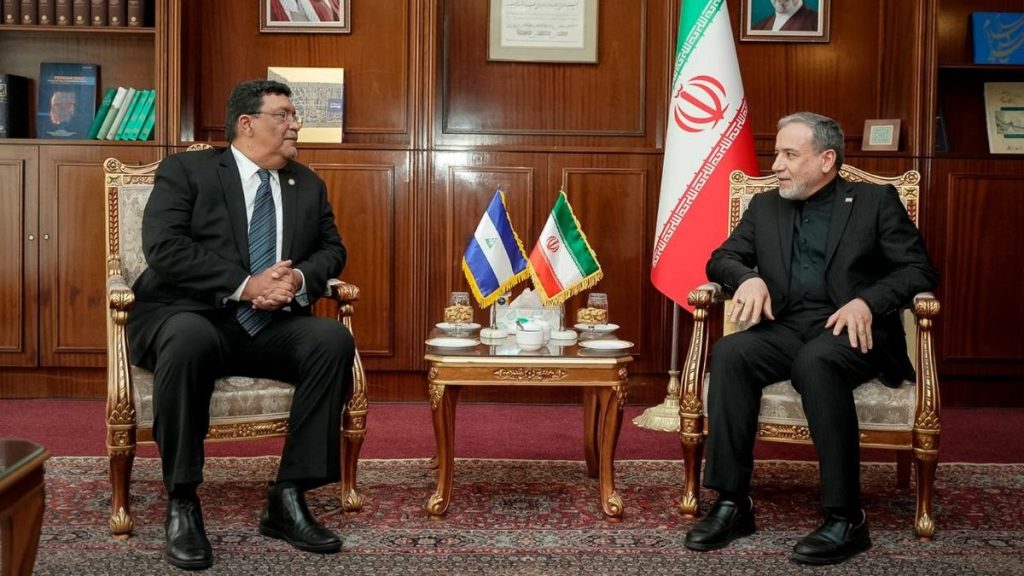
During the 2018 protests, sources cited in the dossier place Jaentschke, along with Fidel Moreno, secretary general of the Managua mayor’s office, at the head of Sandinista militants who attacked civil society leaders. This allegation could not be independently verified.
At the Organization of American States and the United Nations, Jaentschke defended the regime’s response to the protests. In an interview published Sept. 26, 2018, by Los Angeles Times en Español, he said Nicaragua’s police force was “very calm and walked the streets without much weaponry” and had to “adjust to the onslaught of organized crime that these protests have revealed.”
GHREN also maintains that the regime’s diplomatic and consular structures “have been instrumentalized to track, monitor and intimidate Nicaraguans in exile.” Sources consulted for the dossier say he coordinated surveillance of exiles from the Embassy of Nicaragua in San José, Costa Rica.
Back in New York
In his most recent report, released in mid-September, U.N. High Commissioner for Human Rights Volker Türk warned that democracy in Nicaragua has been almost entirely dismantled. The report describes “the near-total capture of State institutions by the ruling party” and a crackdown that has spread beyond the country’s borders.
Despite the allegations, which are known to U.S. authorities, Jaentschke continues to enter the United States. This week, he is leading the Nicaraguan delegation to the General Assembly.
On September 18, Co-President Rosario Murillo announced that Jaentschke would travel to New York on Sunday, September 20. “We will be following his schedule, his meetings, as he is representing all of us,” she said. She added that the delegation has an “extensive program of meetings and gatherings with representatives of states, governments and organizations.”
Because he heads a delegation to the United Nations, Jaentschke’s entry into the country is protected under the 1947 Headquarters Agreement, which requires Washington to grant transit to representatives of member states. An OFAC sanction would freeze his assets in the United States but would not necessarily prevent him from attending the U.N., as was the case with Arreaza after he was sanctioned.