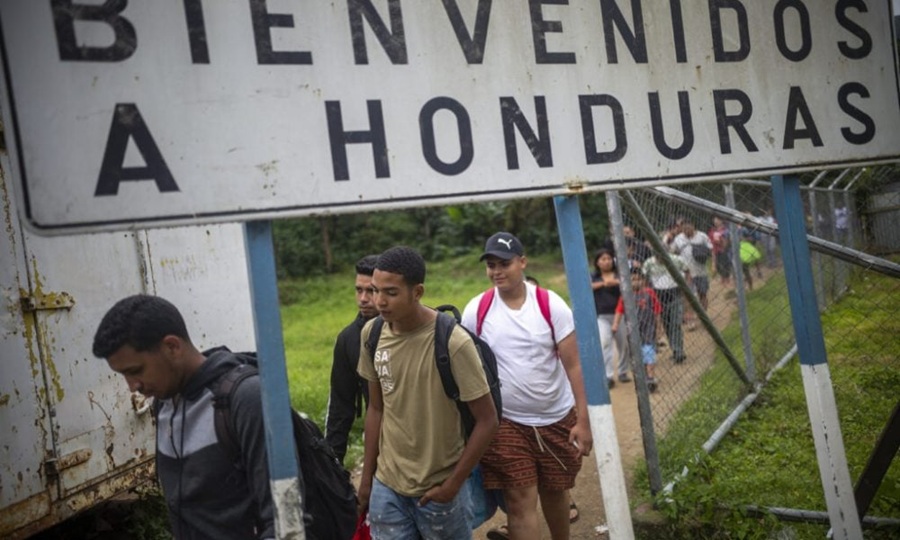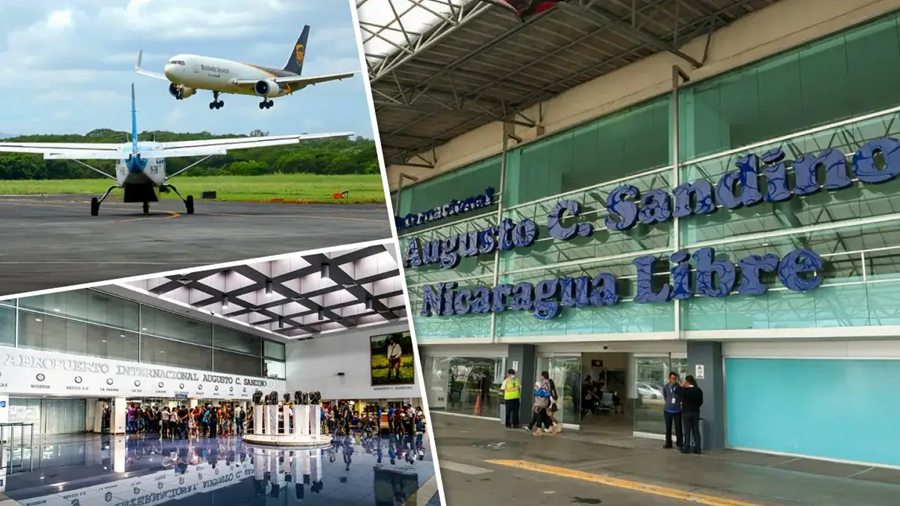
Despite the U.S. government’s ongoing crackdowns on irregular migration, people continue to transit through Central America in hopes of reaching the United States. In the first half of 2026, more than 5,000 undocumented migrants crossed into Honduras from Nicaragua. However, migrants are no longer relying on Managua’s Augusto C. Sandino International Airport to shorten their journey. Official reports indicate that air departures from Managua now exceeds incoming passenger arrivals.
Tourism industry leaders do not rule out the possibility that authorities are cooking the books to conceal human smuggling, given that airport passenger statistics historically almost never show higher departures than arrivals. Furthermore, the majority of migrants currently entering Honduras without legal authorization originate from Ecuador, a country excluded from the list of 128 countries required to obtain a visa to enter Nicaragua since February 2026.
Passenger movement statistics published by the Central Bank of Nicaragua (BCN) present a sharp contrast to the figures recorded between 2022 and 2025. During those years, under a strategy designed to generate revenue while weaponizing migration to pressure the United States politically, the Ortega-Murillo regime facilitated human smuggling for migrants worldwide who used the Managua airport as a springboard to shorten their trip north.
The Trafficking of Undocumented Migrants
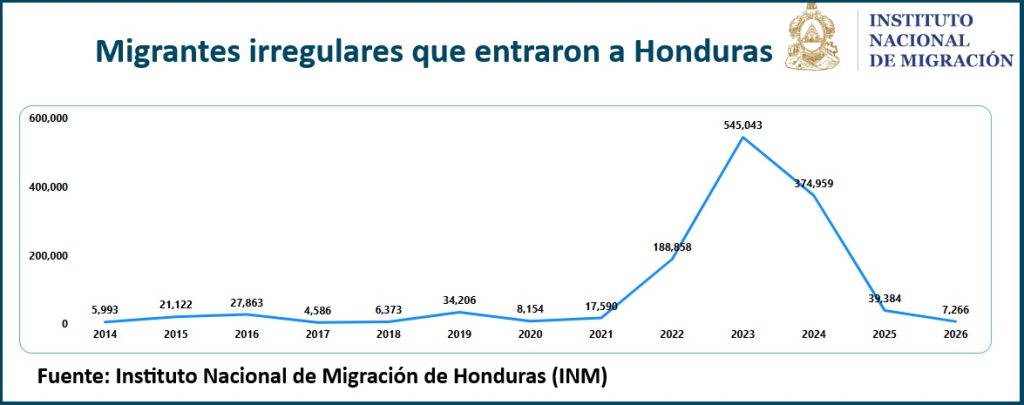
During that period, inbound air passenger volume in Nicaragua far outpaced outbound departures. Peak profitability occurred in 2022, following the elimination of visa requirements for Cuban nationals in November 2021 and the establishment of direct flight routes between Havana and Managua. Out of 634,900 air arrivals that year, roughly 322,500 people never exited through the airport, opting instead to stay and continue overland toward the U.S. border. That same year, Honduras reported 188,858 irregular migrant entries into its territory.
In subsequent years, charter flight routes expanded from various global locations, though total air-bridge passengers gradually slowed. Between 2022 and 2025, an estimated 804,600 migrants from around the globe used Managua’s airport as an aerial bridge to bypass the Darién Gap in search of the American Dream. Thousands more traveled entirely by land through Panama and Costa Rica.
There are no detailed figures regarding the migrants who passed through Nicaragua because the Institute of Tourism (Intur) stopped publishing the statistical yearbooks that recorded their nationalities and other data. However, despite the dictatorship’s censorship efforts, irregular migration data published by Honduras’s National Migration Institute (INM) corroborated the state-sponsored human smuggling operations running through Managua.
Honduras Continues Reporting Irregular Entry
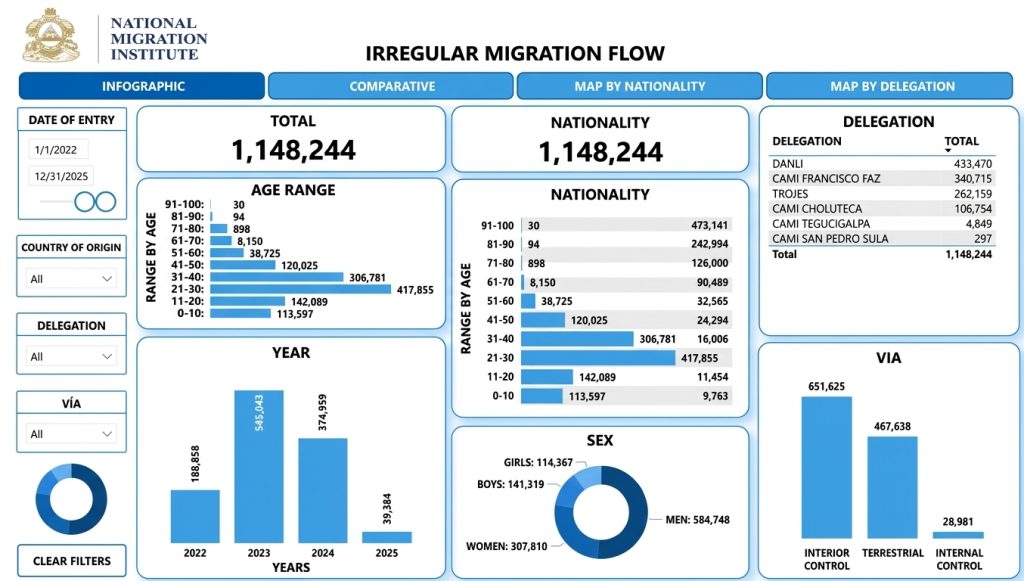
The INM reported that between January 1, 2022, and December 31, 2025, 1.14 million undocumented migrants entered Honduran territory, primarily crossing the southern border with Nicaragua. Among them were 473,141 Venezuelans, 242,944 Cubans, 126,000 Haitians, 90,489 Ecuadorians, 32,565 Colombians, 24,294 Chinese nationals, and individuals from nearly 100 other countries across Europe, Asia, Africa, and South America. Inflows peaked in Honduras in 2023, reaching 545,043 irregular entries.
But now, the situation has shifted dramatically. Central Bank of Nicaragua (BCN) data show 320,600 people arrived in Nicaragua by air during the first half of 2026, while 326,500 departed, meaning 5,900 more people left the country by air than arrived via that same mode of transportation.
Private sector representatives in the tourism industry find these numbers suspect. They suggest the BCN figures may be altered, noting that arrival and departure tallies historically balance out unless major disruptive events occur. Given increased deportations and individuals returning voluntarily from the U.S. out of fear of immigration raids, inbound travel ought to outweigh departures. With local tourism remaining severely depressed, industry insiders argue the disparity indicates that native Nicaraguans themselves are continuing to flee the country in high numbers.
Ecuadorians and Cubans Lead Border Crossings
Analysts attribute this exodus to the ongoing sociopolitical crisis that began in 2018, which has forced nearly one million Nicaraguans into exile. Many who settled abroad in recent years are now bringing over children and remaining family members.
Even though U.S.-bound international migrants rely less on Managua’s airport, transit through Nicaragua into Honduras persists.
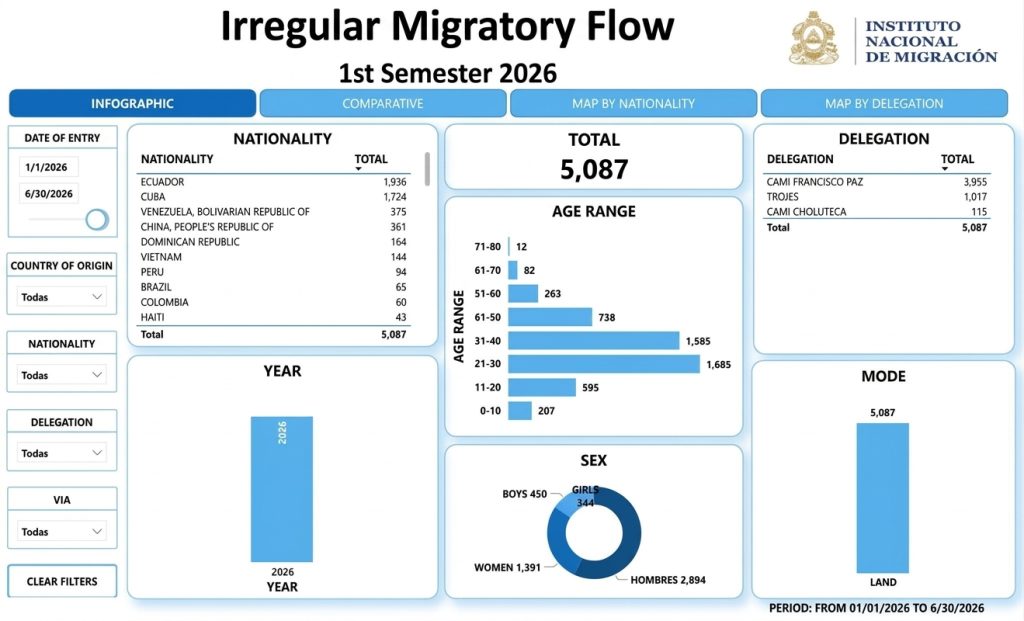
According to the INM, 5,087 undocumented migrants crossed the Nicaraguan border into Honduras between January 1 and June 30, 2026. The breakdown includes 1,836 Ecuadorians, 1,724 Cubans, 375 Venezuelans, 361 Chinese, 244 Dominicans, 175 Vietnamese, and citizens from nearly 60 other nations.
Travel Offers to Nicaragua Still Promoted in Ecuador
INM records show that historically, the highest migration volumes occur during July, August, and September, and 2026 is following the same pattern. To the 5,087 migrants recorded in the first six months of the year, an additional 2,179 entered between July and September 17.
This brings the total number of irregular migrant entries into Honduras to 7,266 through mid-September, with nearly all entering via its southern border shared with Nicaragua. The vast majority were Ecuadorian and Cuban nationals.
Meanwhile, between January and August, U.S. Customs and Border Protection (CBP) reported 257,093 irregular migrant encounters at the U.S. border.
That Ecuadorians represent the largest group of undocumented migrants entering Honduras from Nicaragua is no coincidence. In 2022 —the final year INTUR released statistical reports— Ecuadorian arrivals to Nicaragua jumped nearly 2,000 percent compared to 2017 levels.
Cubans Require Visas, but Continue Transiting Nicaragua
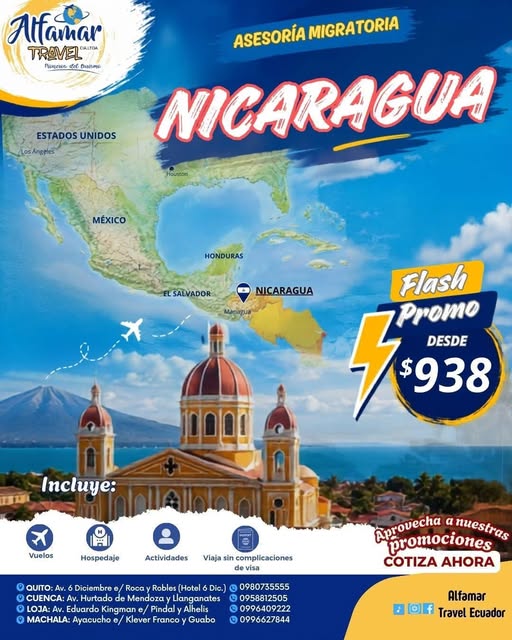
Unlike citizens of Cuba, Venezuela, and China—who represent the highest overall irregular entries into Honduras—Ecuador was not included in the list of 128 countries required to obtain a visa to enter Nicaragua since last February. As a result, Ecuadorians can arrive legally by any mode of transportation before proceeding north. Conversely, Cuban nationals, who now require a visa, appear to be entering Nicaragua irregularly via land borders. According to press reports, Nicaragua is one of 47 countries where Ecuadorian citizens enjoy visa-free entry. Taking advantage of this policy—and despite growing reports of Ecuadorian deportations from the U.S.—travel packages from Ecuador to Nicaragua are widely advertised on social media, keeping Ecuadorian nationals at the top of irregular entry statistics into Honduras from Nicaragua.